KiwiBee printable
Compare observations of speed and describe the pattern you notice
Free printable Grade 6 science worksheet for "Compare observations of speed and describe the pattern you notice" — practice forces and motion. No-prep, print or assign online.
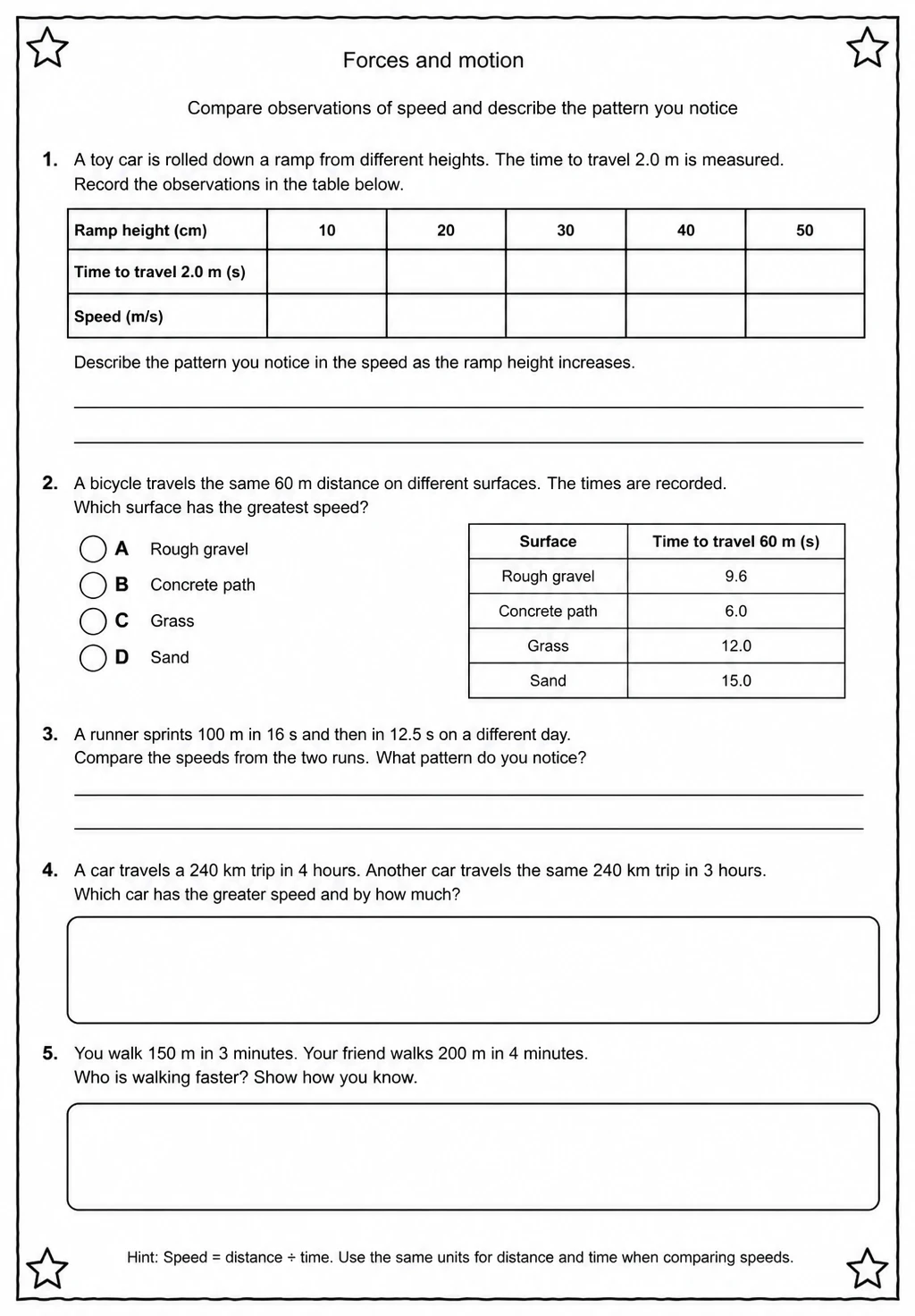
Middle school students compare observations about speed across different scenarios and identify the patterns that emerge in this Forces and Motion worksheet. Teachers can assign it to develop the analytical skill of moving from data to generalizations, a key step in scientific reasoning. It fits well within a forces and motion unit and supports students in articulating evidence-based explanations about how objects move.
Learning objectives
- Compare observations of speed in multiple contexts and note differences
- Describe the pattern that emerges across the speed observations
- Explain what the pattern reveals about the relationship between forces and motion
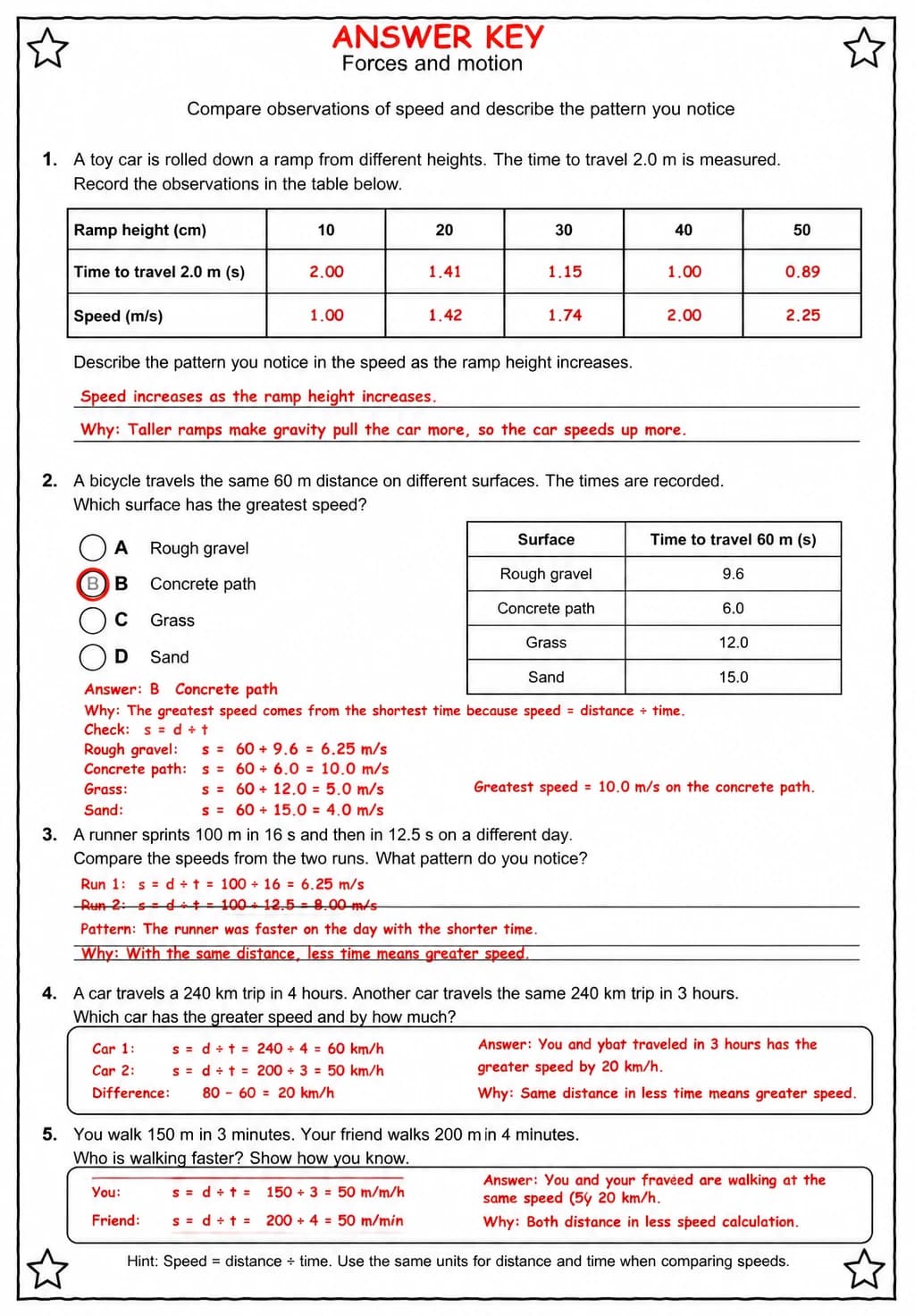
Answer Key
How to use this worksheet
- Click “Download Worksheet” and sign in with Google or email to get the PDF instantly.
- Print at home or in class for Middle School; it's no-prep, with no extra materials needed.
- Use the included answer key to mark it in seconds.
Frequently asked questions
Is the “Compare observations of speed and describe the pattern you notice” worksheet free?
Yes. “Compare observations of speed and describe the pattern you notice” is a free printable Science worksheet. Sign in with Google or email to download the PDF instantly.
What grade or age is this Science worksheet for?
It's designed for Middle School (ages 11–14), covering Forces and motion.
Does it come with an answer key?
Yes — a matching answer key is included so you can grade it in seconds.
Likes & comments
See what other teachers think and share a helpful note.
Create more worksheets in our Worksheet Studio
Generate fresh worksheets for any grade, topic, and language — free.
Open the Worksheet StudioYou might also like
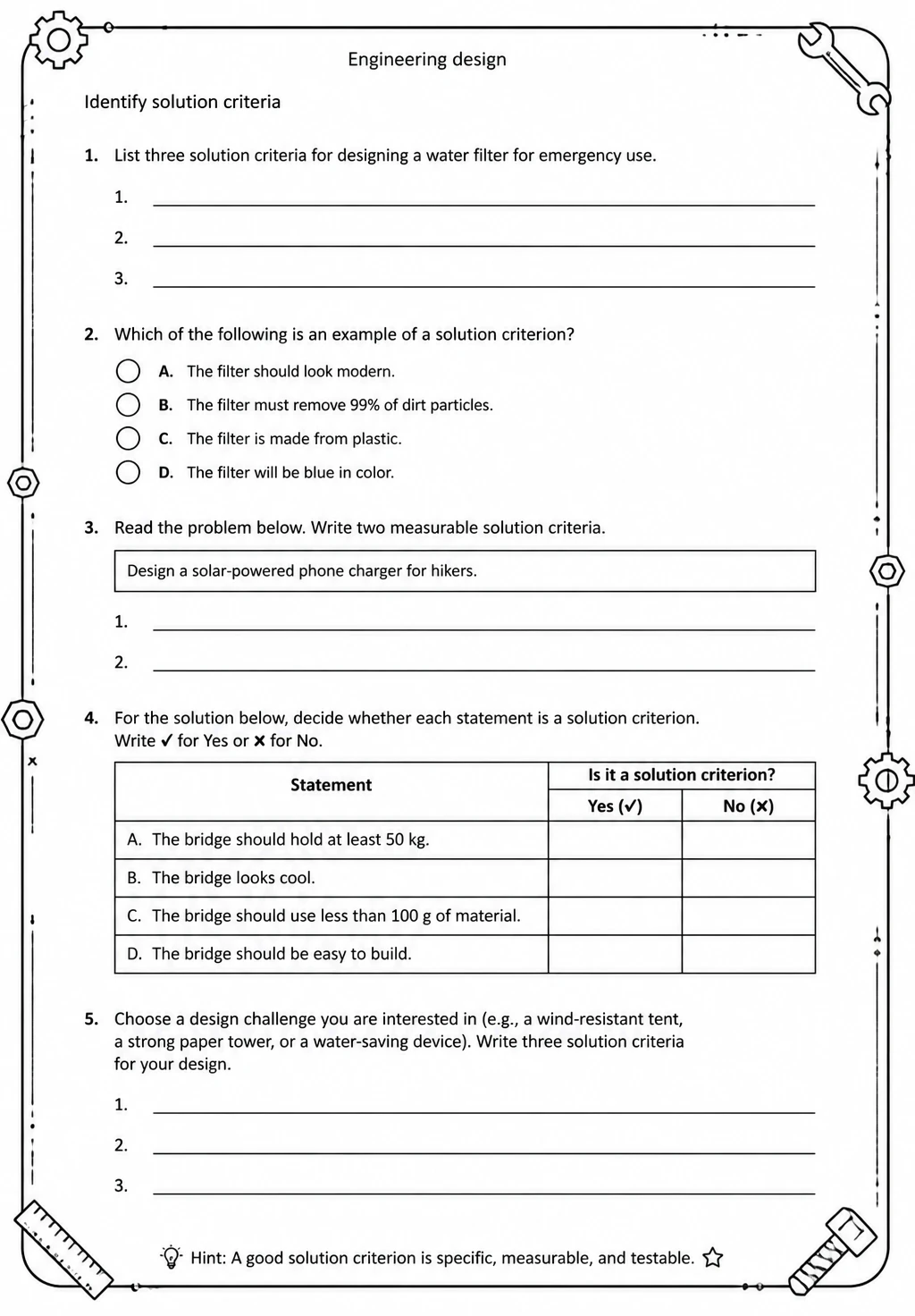
Identify solution criteria
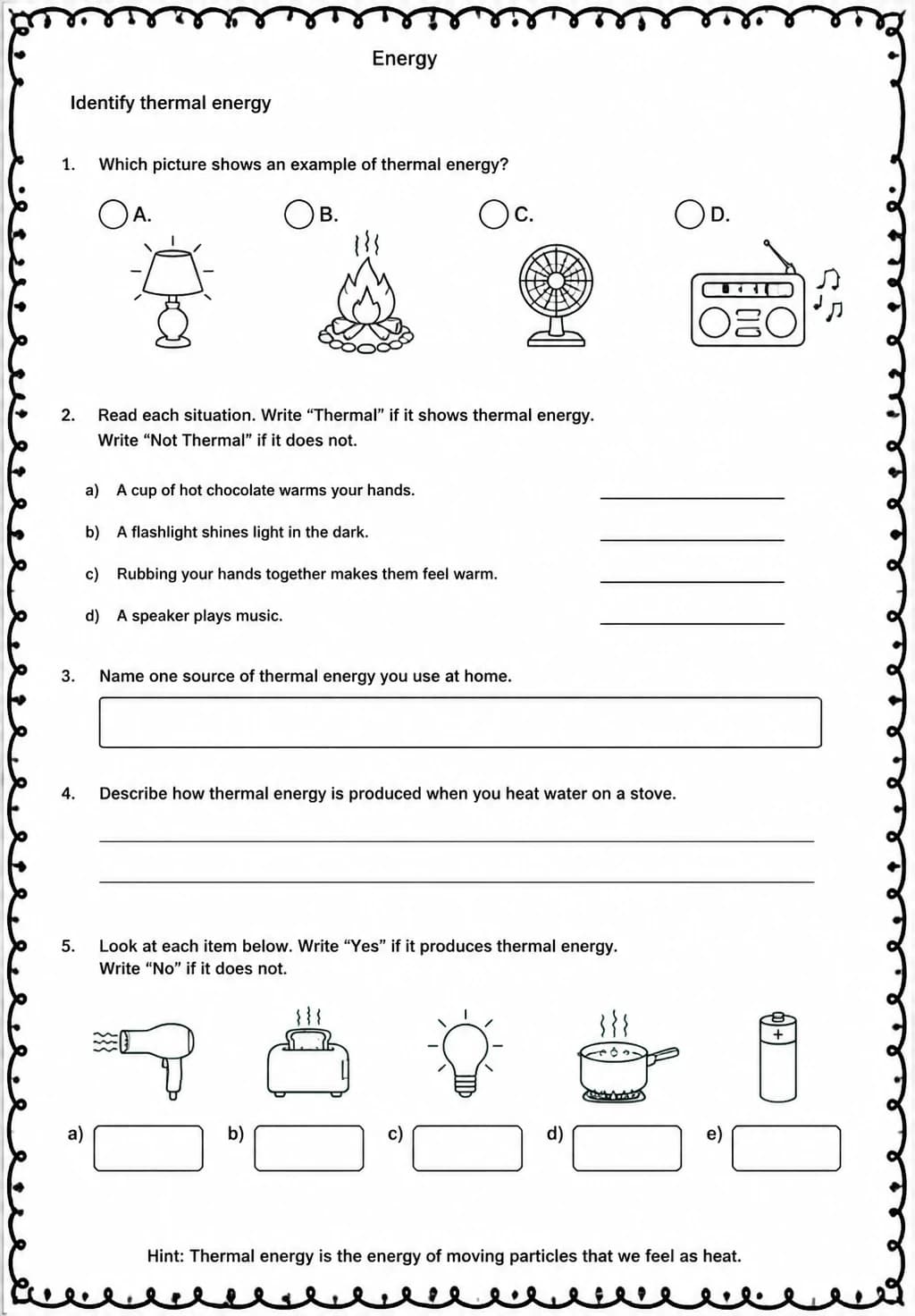
Identify thermal energy
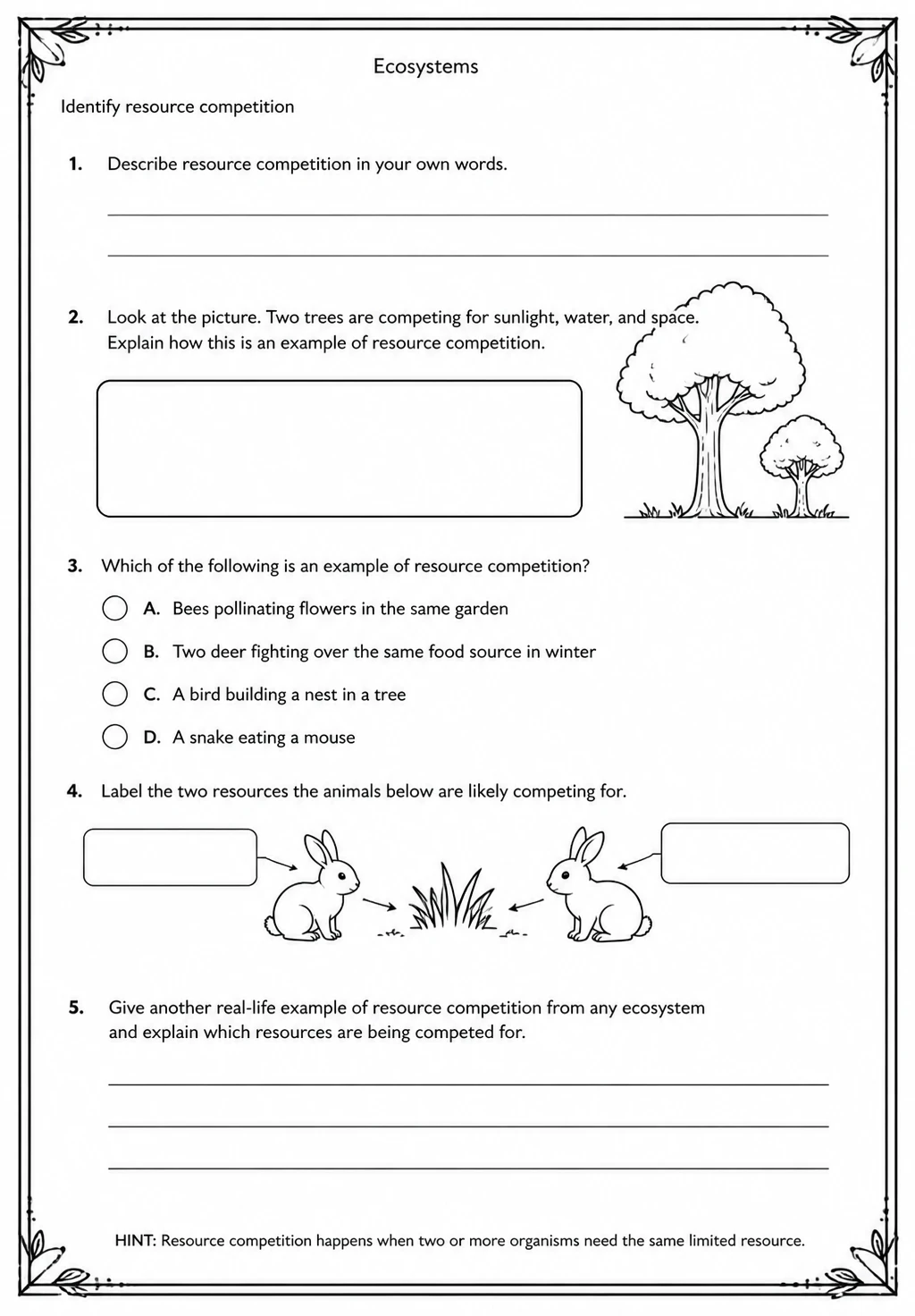
Identify resource competition
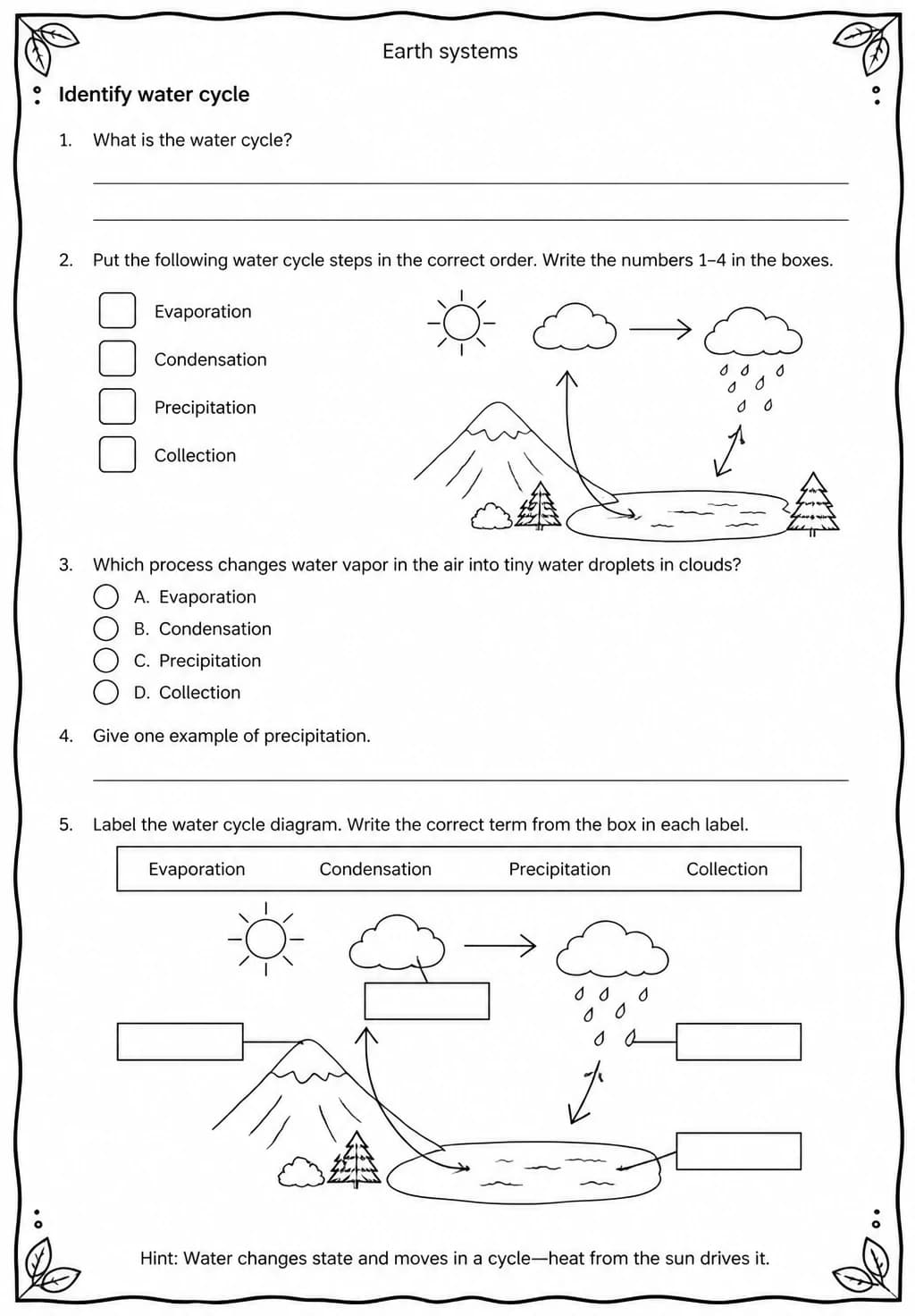
Identify water cycle
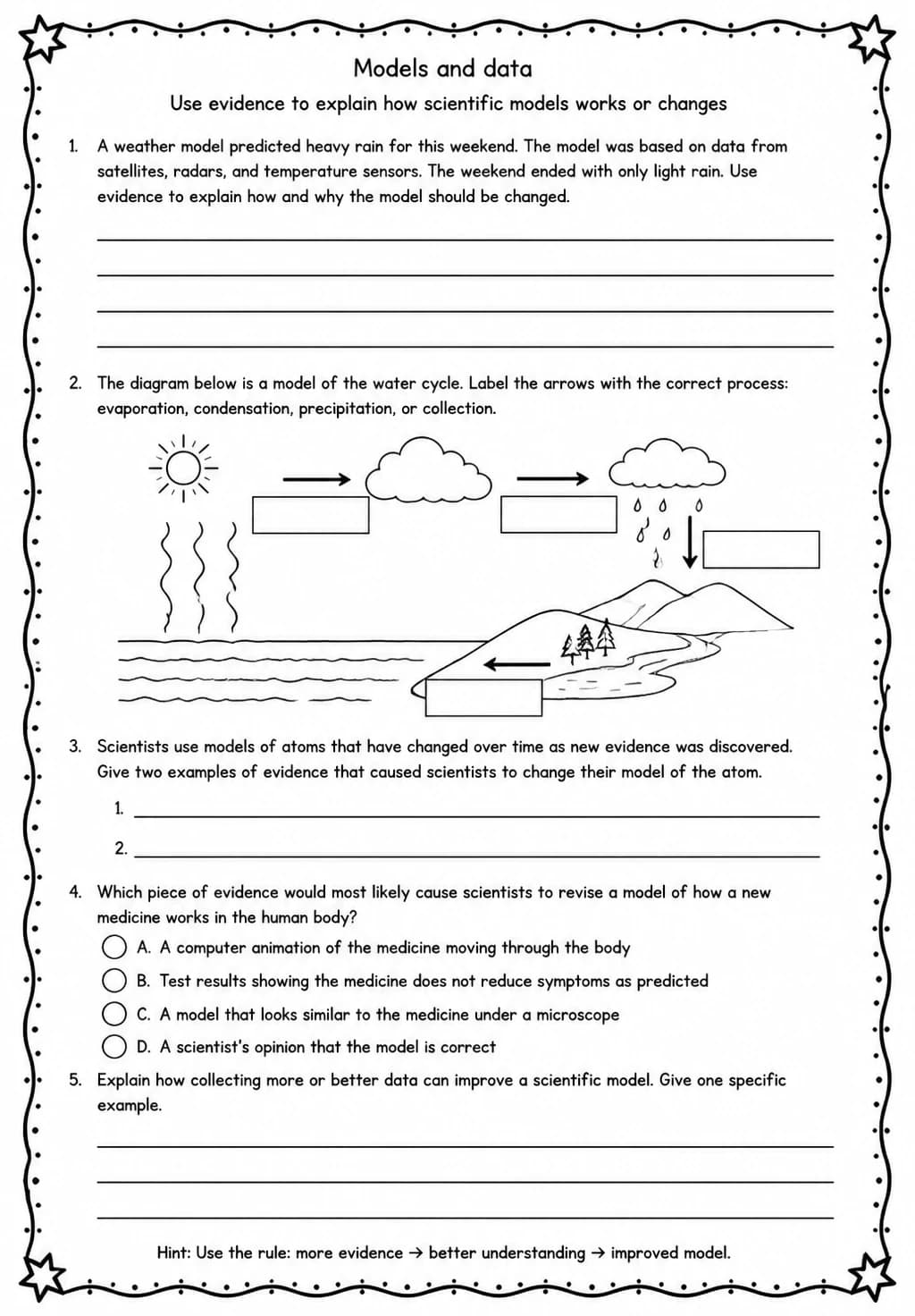
Use evidence to explain how scientific models works or changes