KiwiBee printable
Multiplication patterns over increasing place values
Free printable Grade 4 math worksheet for "Multiplication patterns over increasing place values" — practice multiply by one-digit numbers. No-prep, print or assign online.
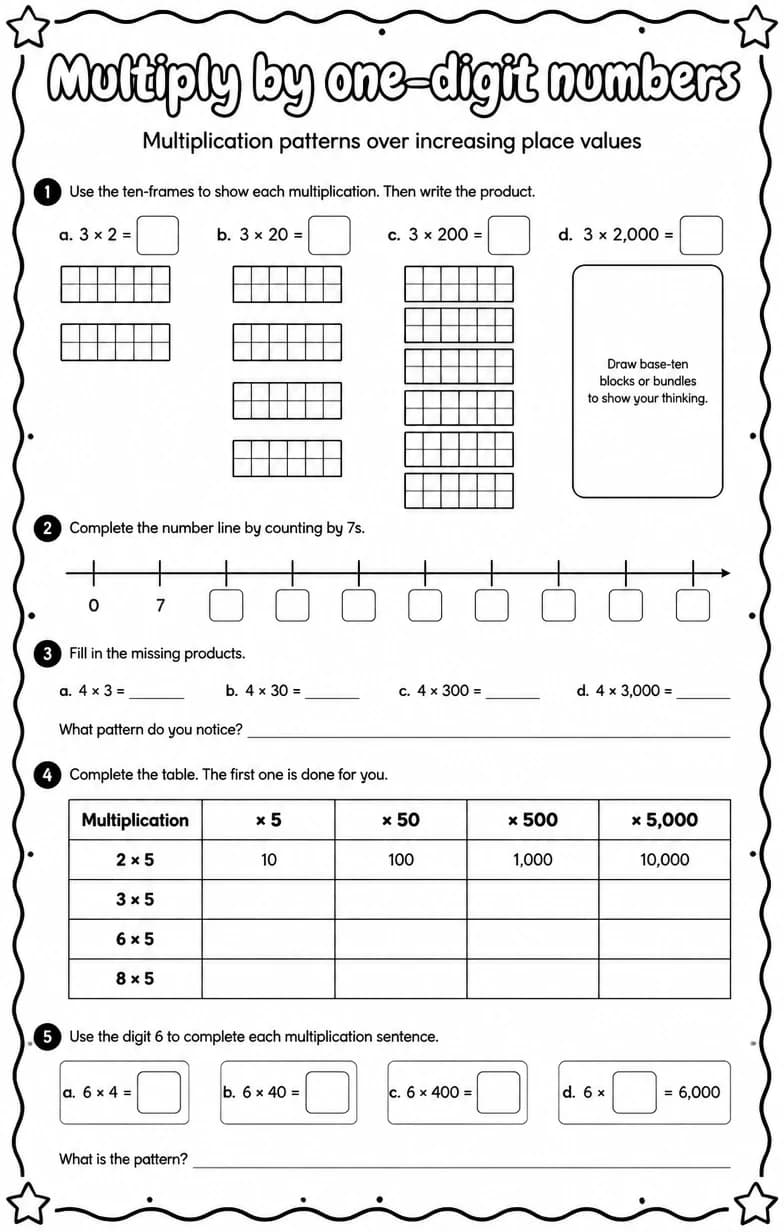
This worksheet explores multiplication patterns over increasing place values, helping students deepen their understanding of multiplying by one-digit numbers. Teachers can use it to reinforce pattern recognition and strategic multiplication skills in Grade 4 learners. The exercises promote critical thinking and fluency in handling multi-digit multiplication problems.
Learning objectives
- Identify and describe multiplication patterns when multiplying numbers by one-digit numbers across increasing place values.
- Apply multiplication strategies to solve problems involving multi-digit numbers multiplied by single-digit numbers.
- Analyze and extend patterns in products to predict outcomes for larger place values.
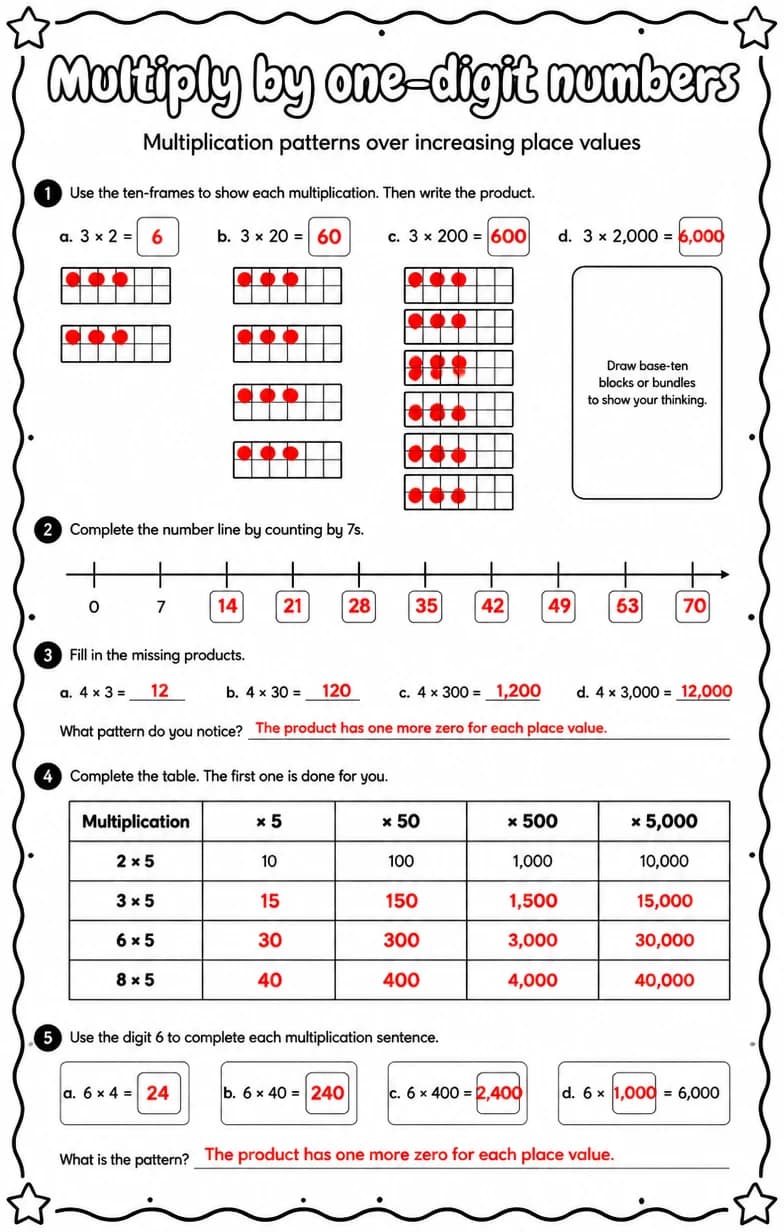
Answer Key
How to use this worksheet
- Click “Download Worksheet” and sign in with Google or email to get the PDF instantly.
- Print at home or in class for Grade 4; it's no-prep, with no extra materials needed.
- Use the included answer key to mark it in seconds.
Frequently asked questions
Is the “Multiplication patterns over increasing place values” worksheet free?
Yes. “Multiplication patterns over increasing place values” is a free printable Math worksheet. Sign in with Google or email to download the PDF instantly.
What grade or age is this Math worksheet for?
It's designed for Grade 4 (ages 9–10), covering Multiply by one-digit numbers.
Does it come with an answer key?
Yes — a matching answer key is included so you can grade it in seconds.
Likes & comments
See what other teachers think and share a helpful note.
Create more worksheets in our Worksheet Studio
Generate fresh worksheets for any grade, topic, and language — free.
Open the Worksheet StudioYou might also like
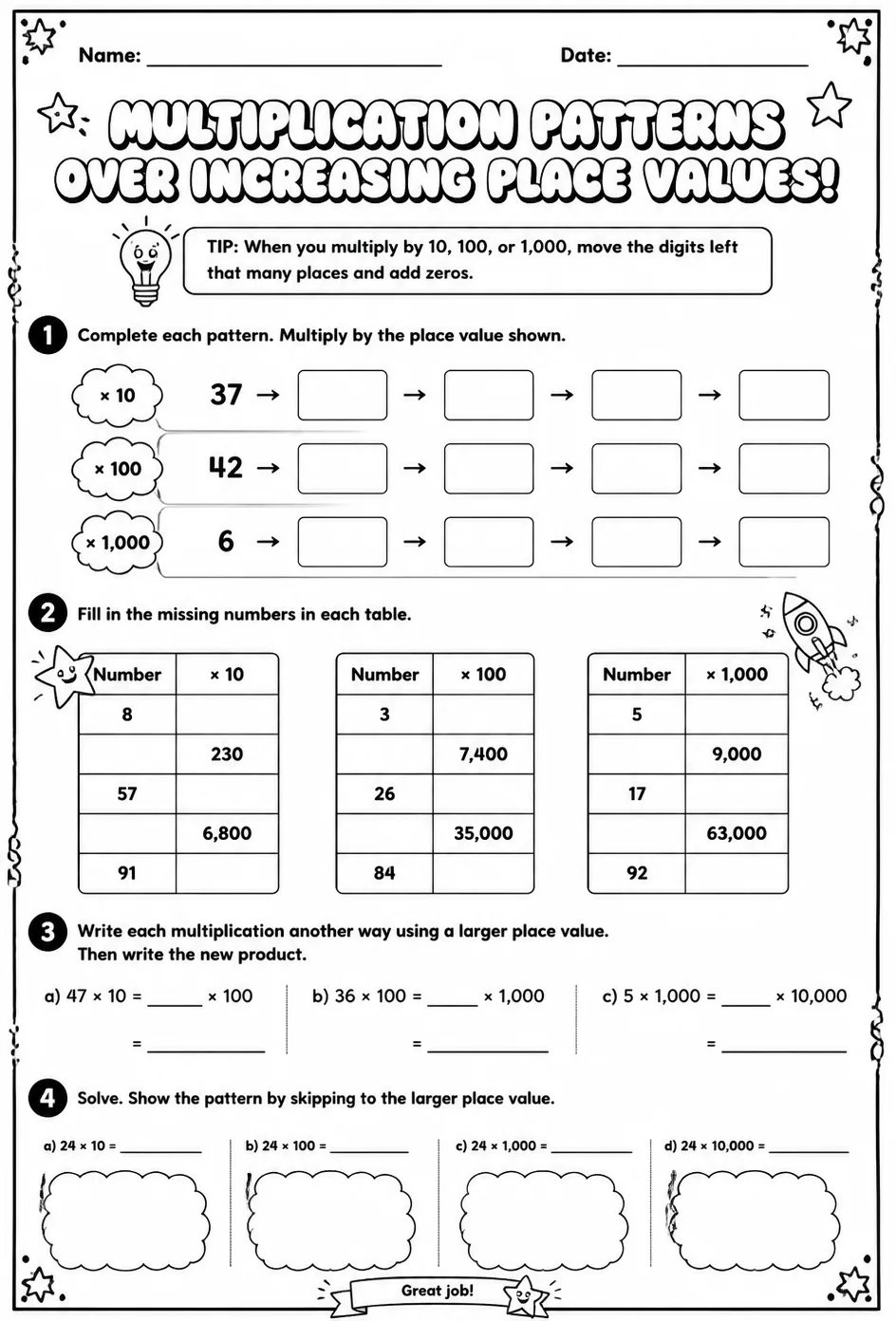
Multiplication patterns over increasing place values
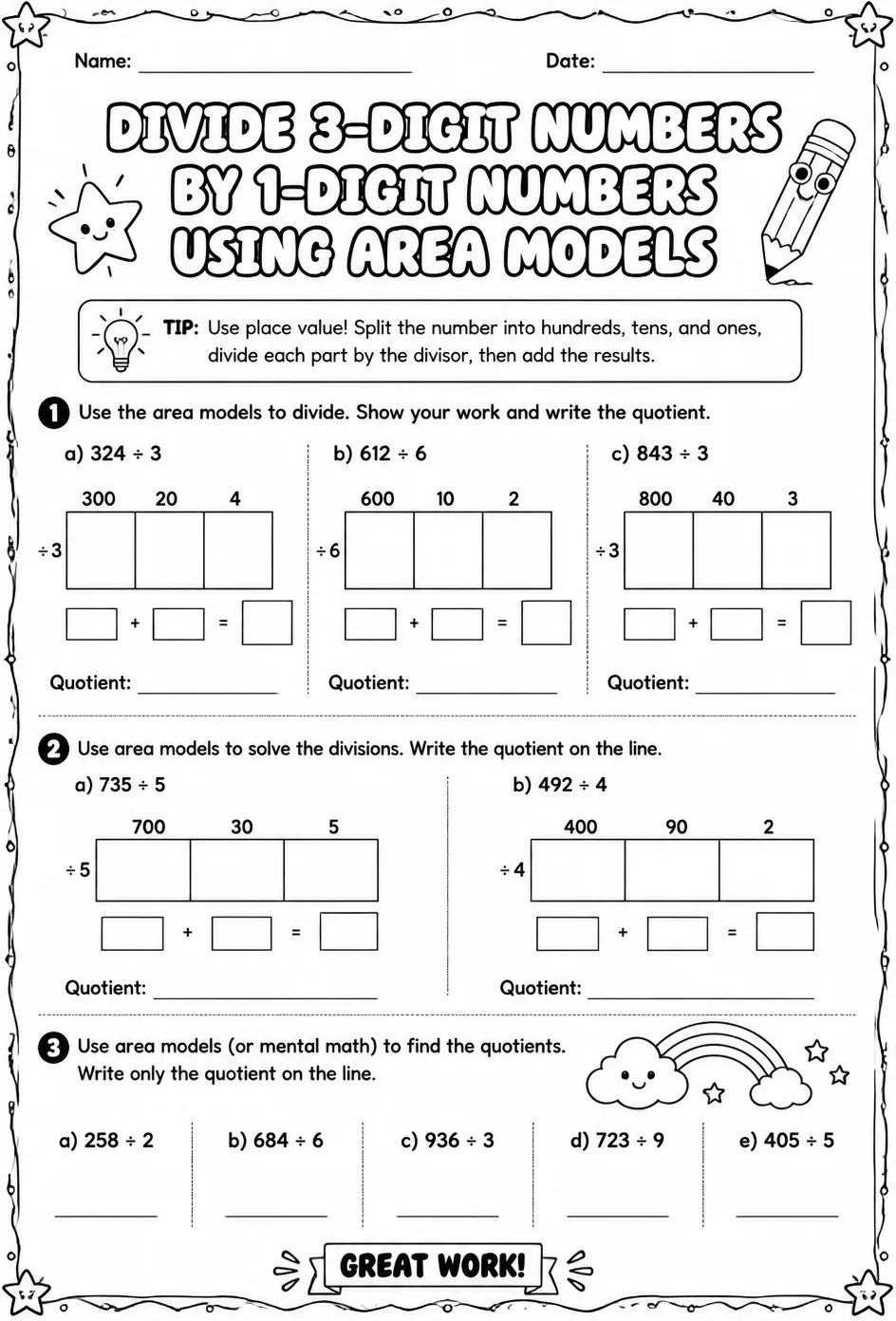
Divide 3-digit numbers by 1-digit numbers using area models
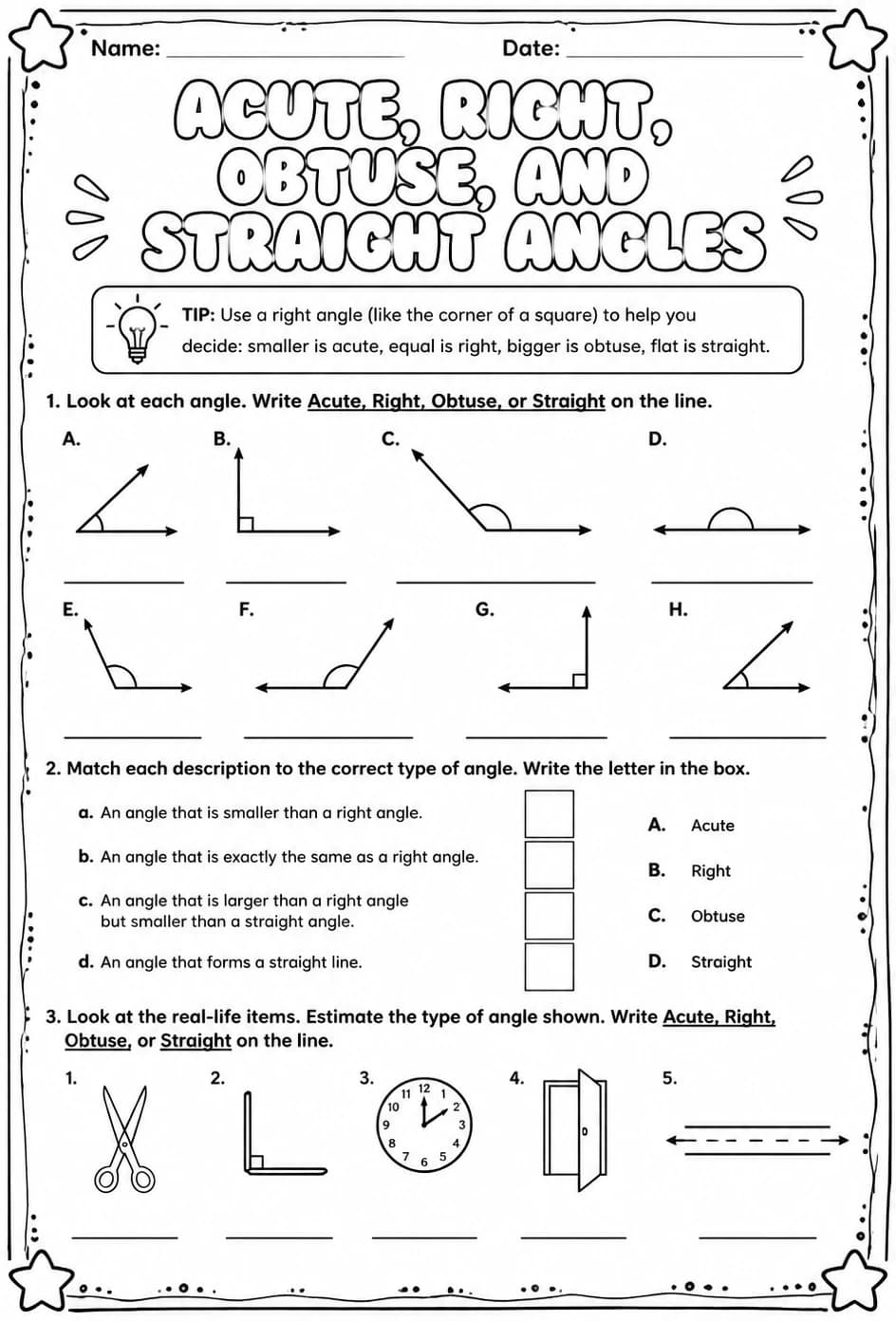
Acute, right, obtuse, and straight angles
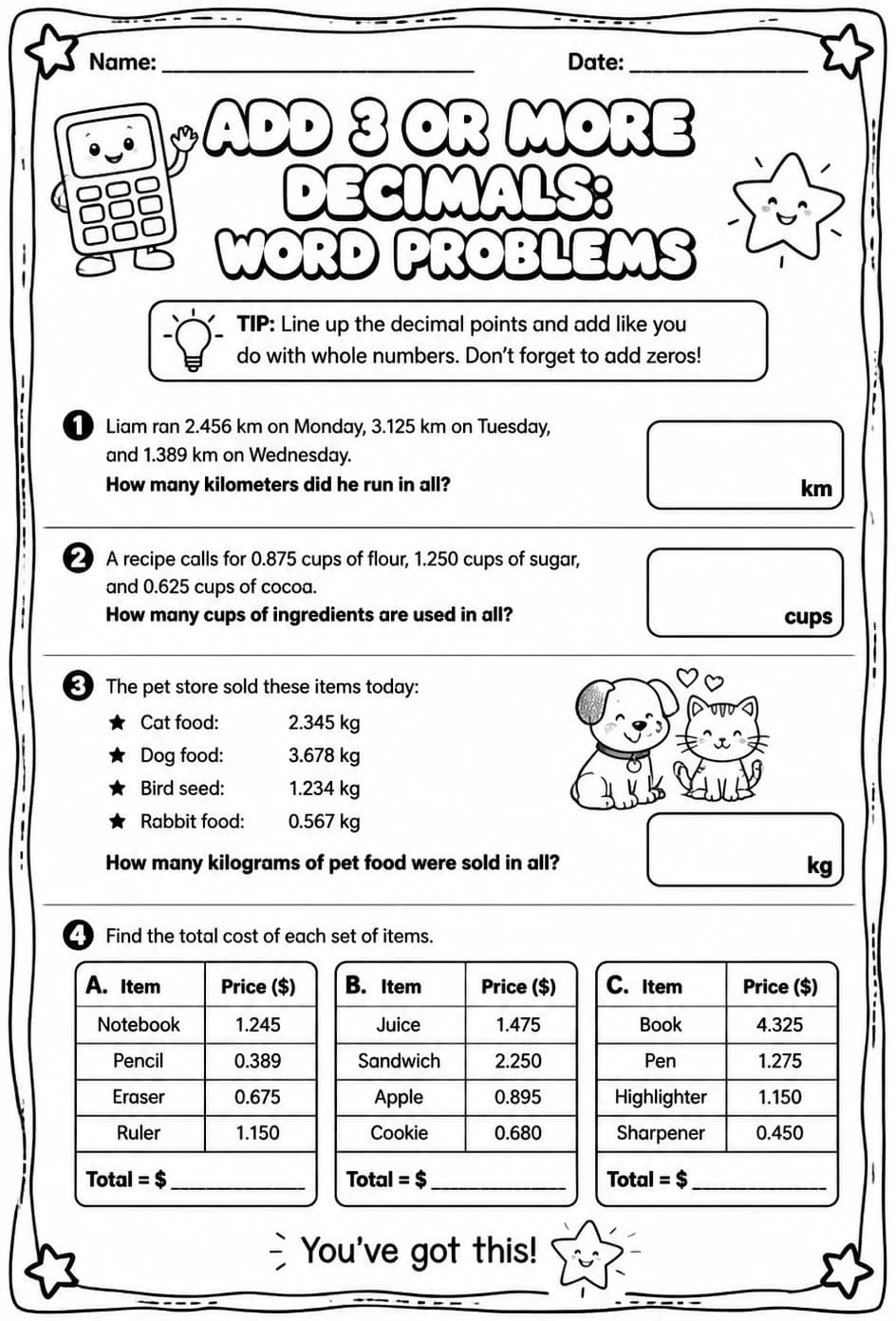
Add 3 or more decimals: word problems
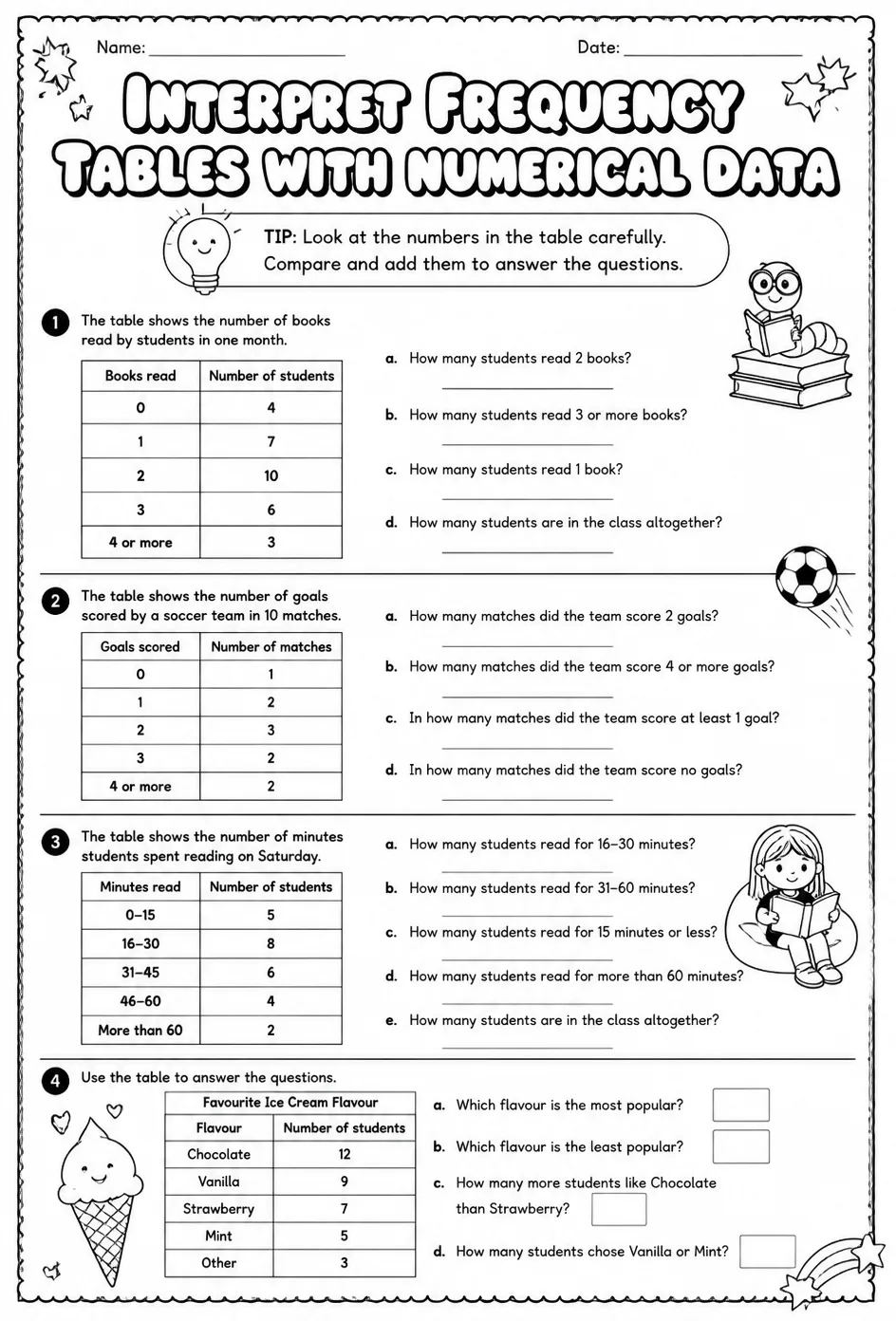
Interpret frequency tables with numerical data