
Cognitive & Fluid Intelligence Assessment 1 · Ages 11–16
内含内容
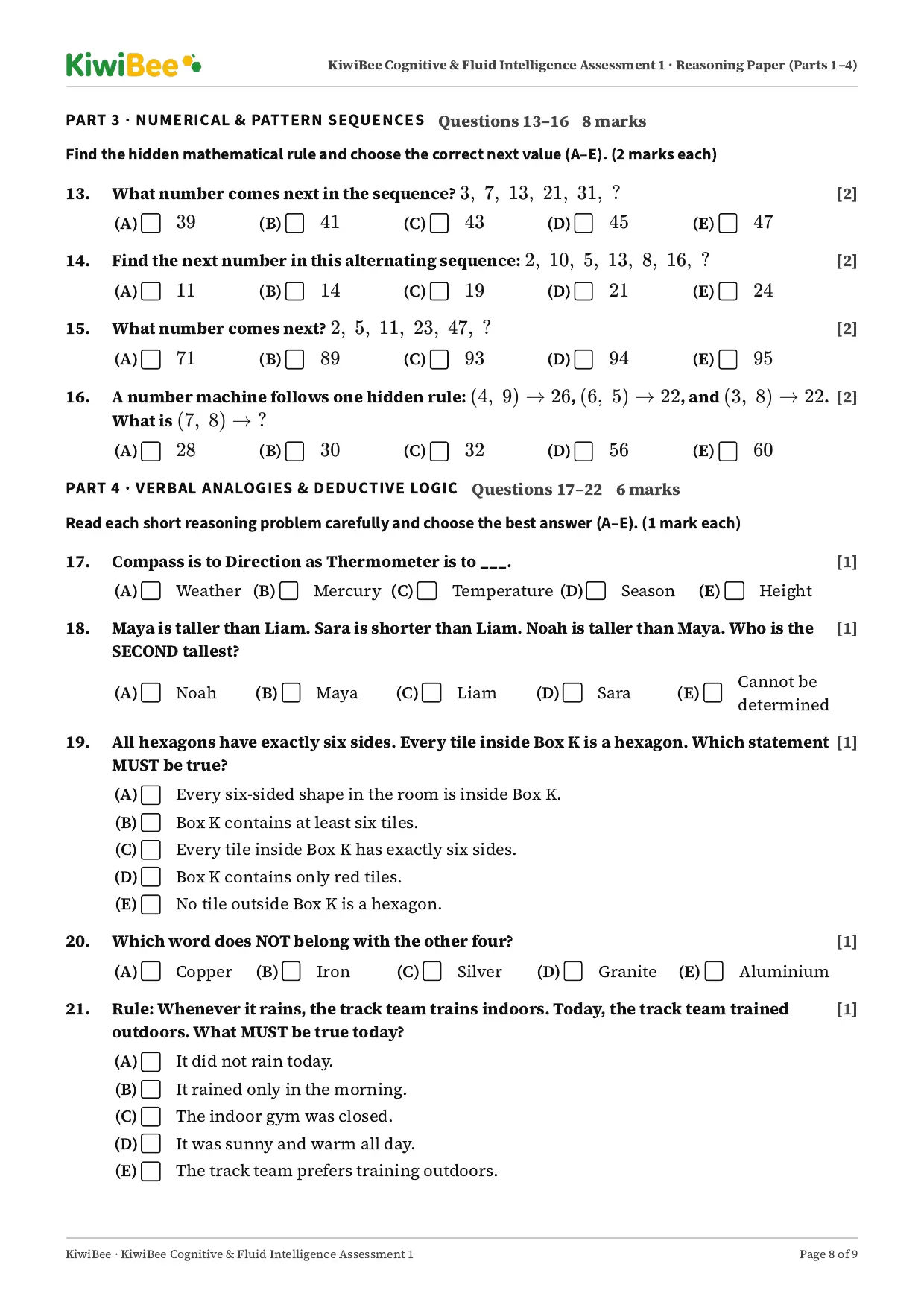
每份试卷的各部分、题数和用时。
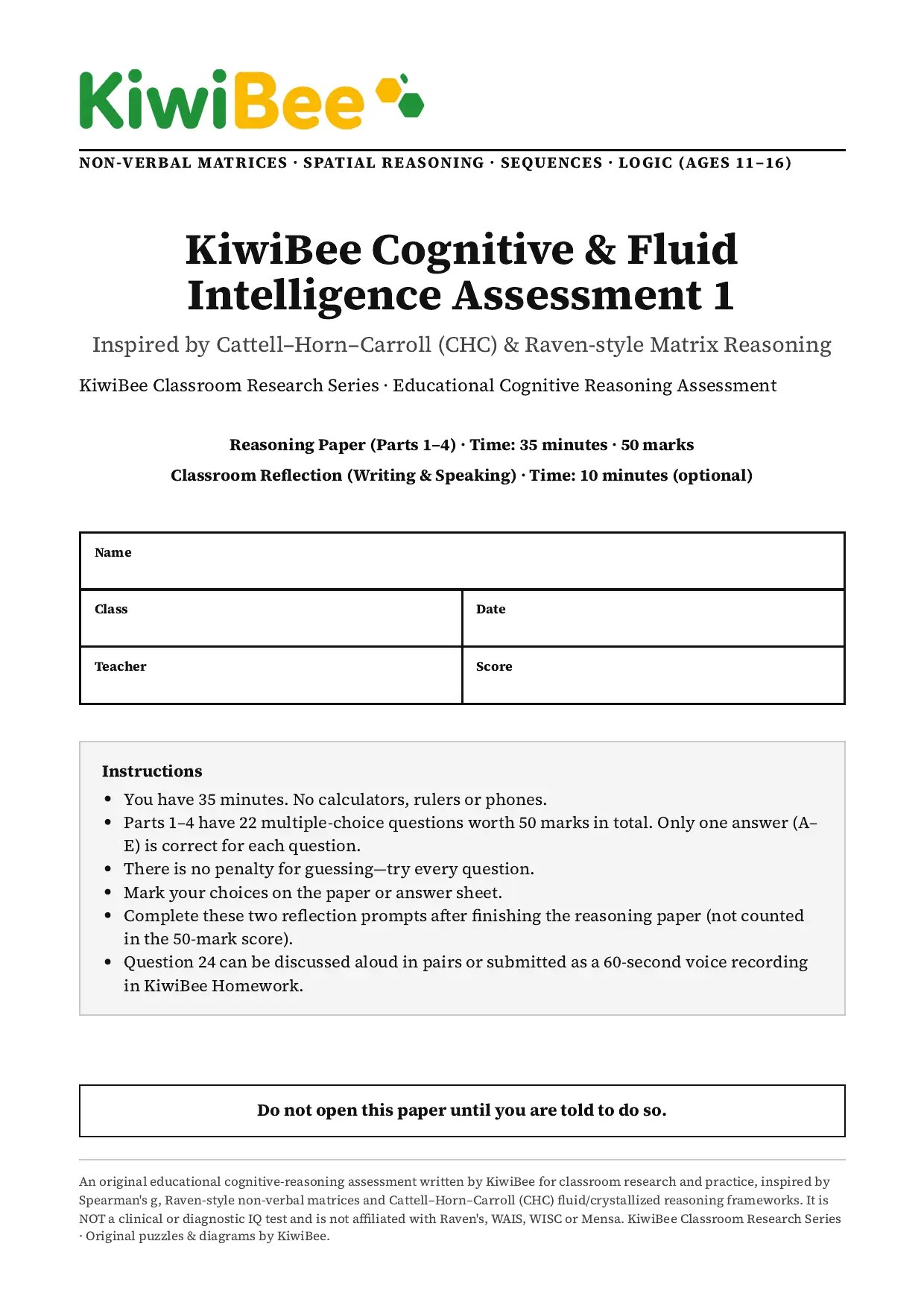
Reasoning Paper (Parts 1–4)
- 部分
- 4
- 题数
- 22
- 时间
- 35 minutes
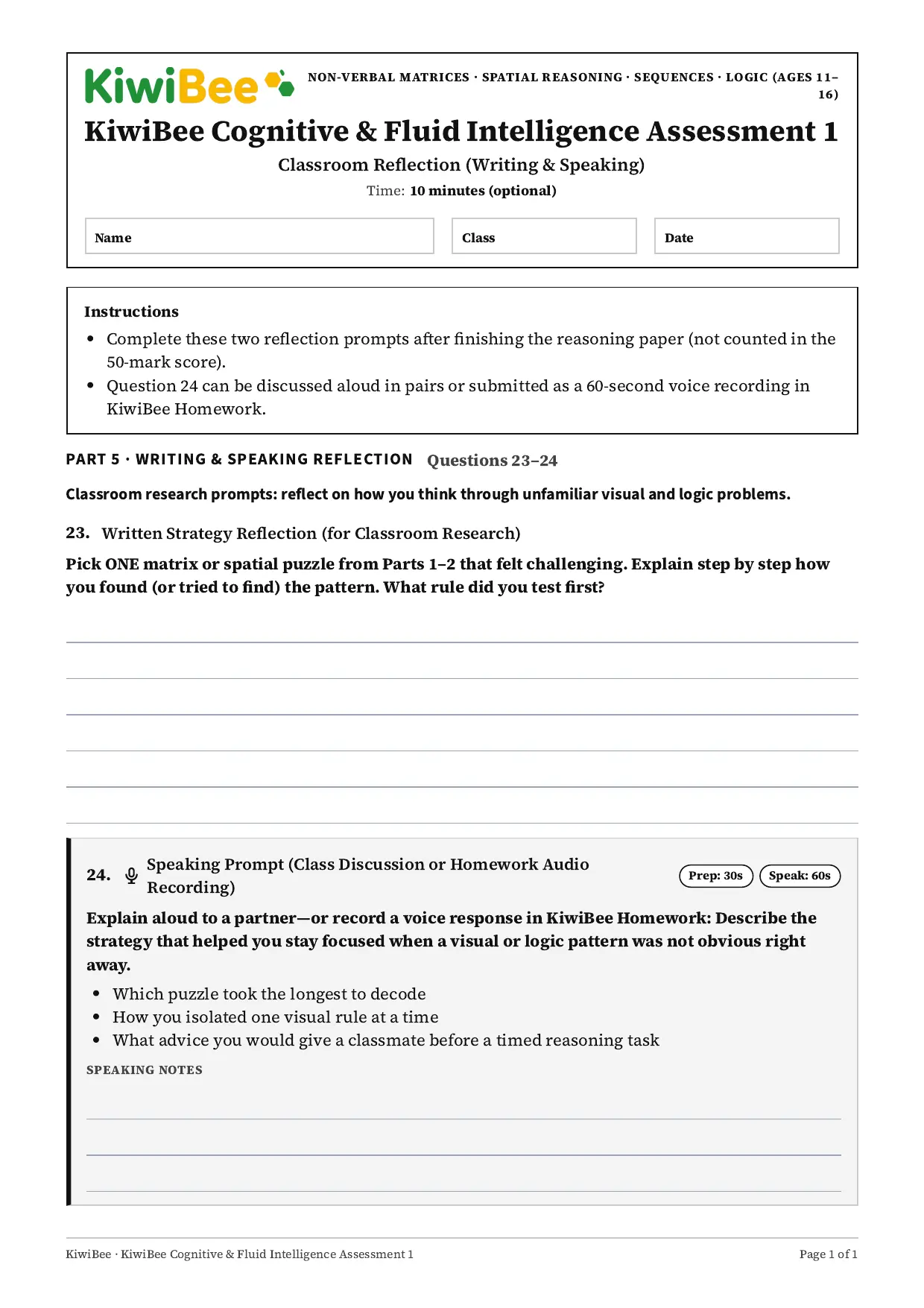
Classroom Reflection (Writing & Speaking)
- 部分
- 1
- 题数
- 2
- 时间
- 10 minutes (optional)
关于此模拟测试
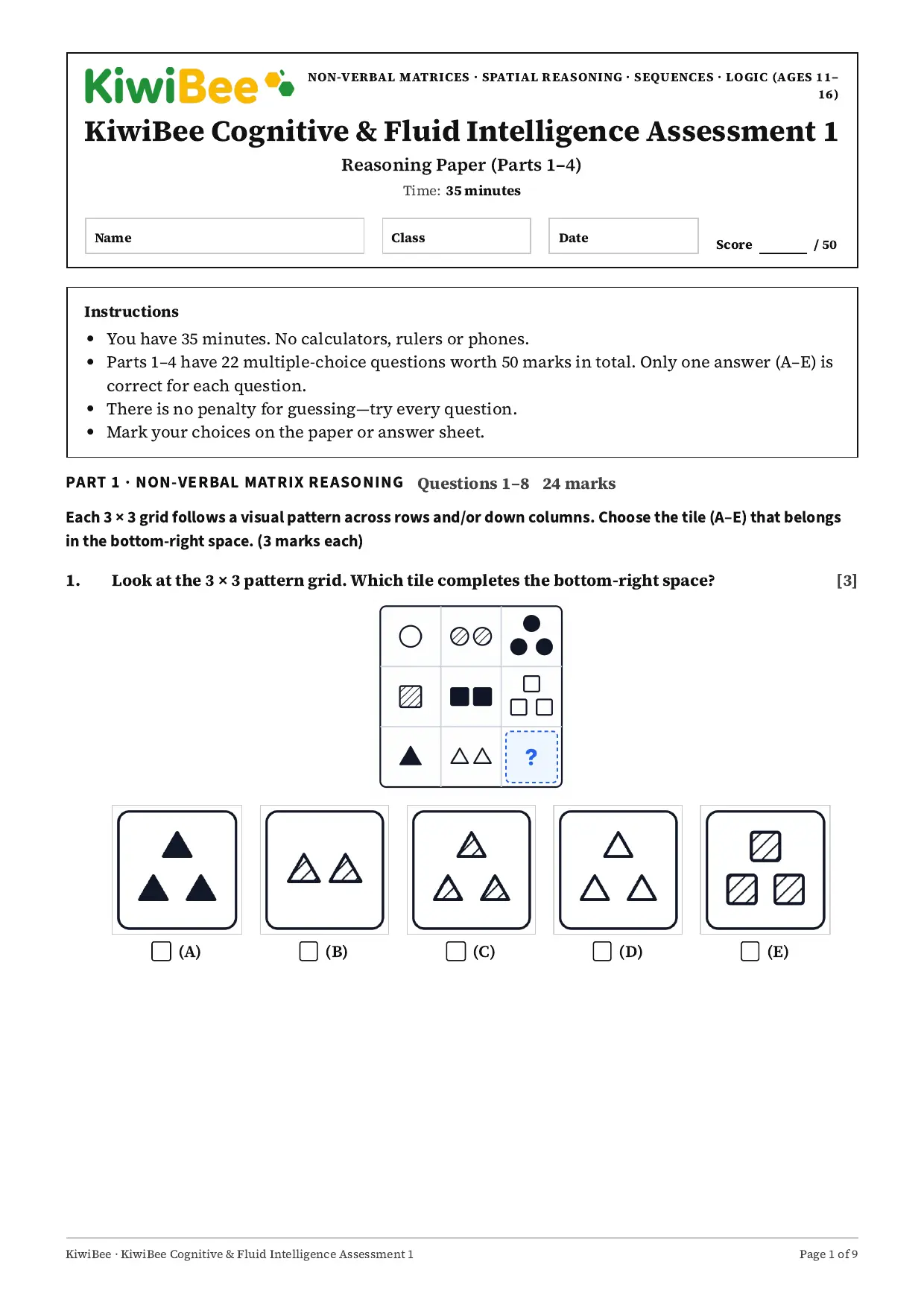
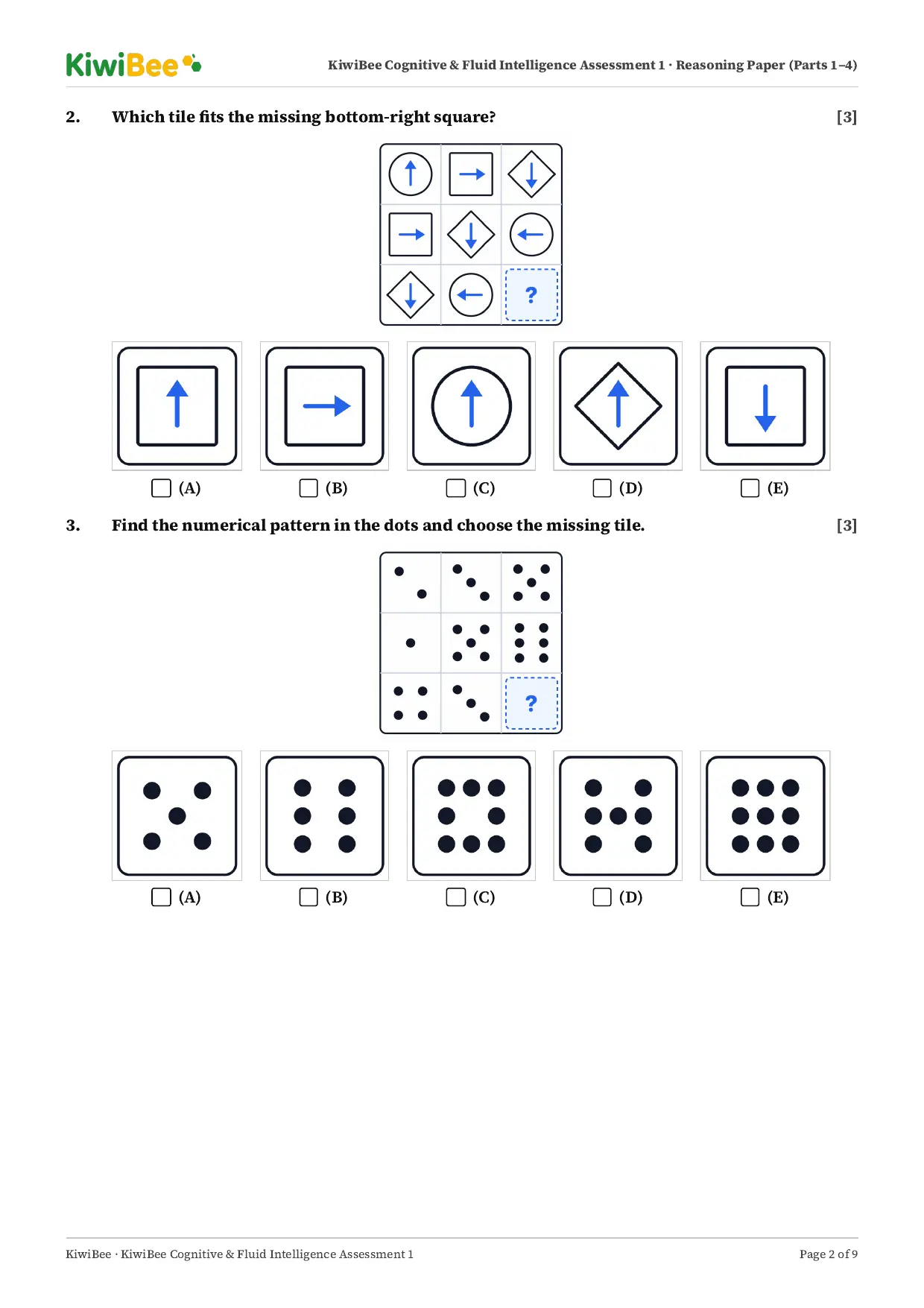
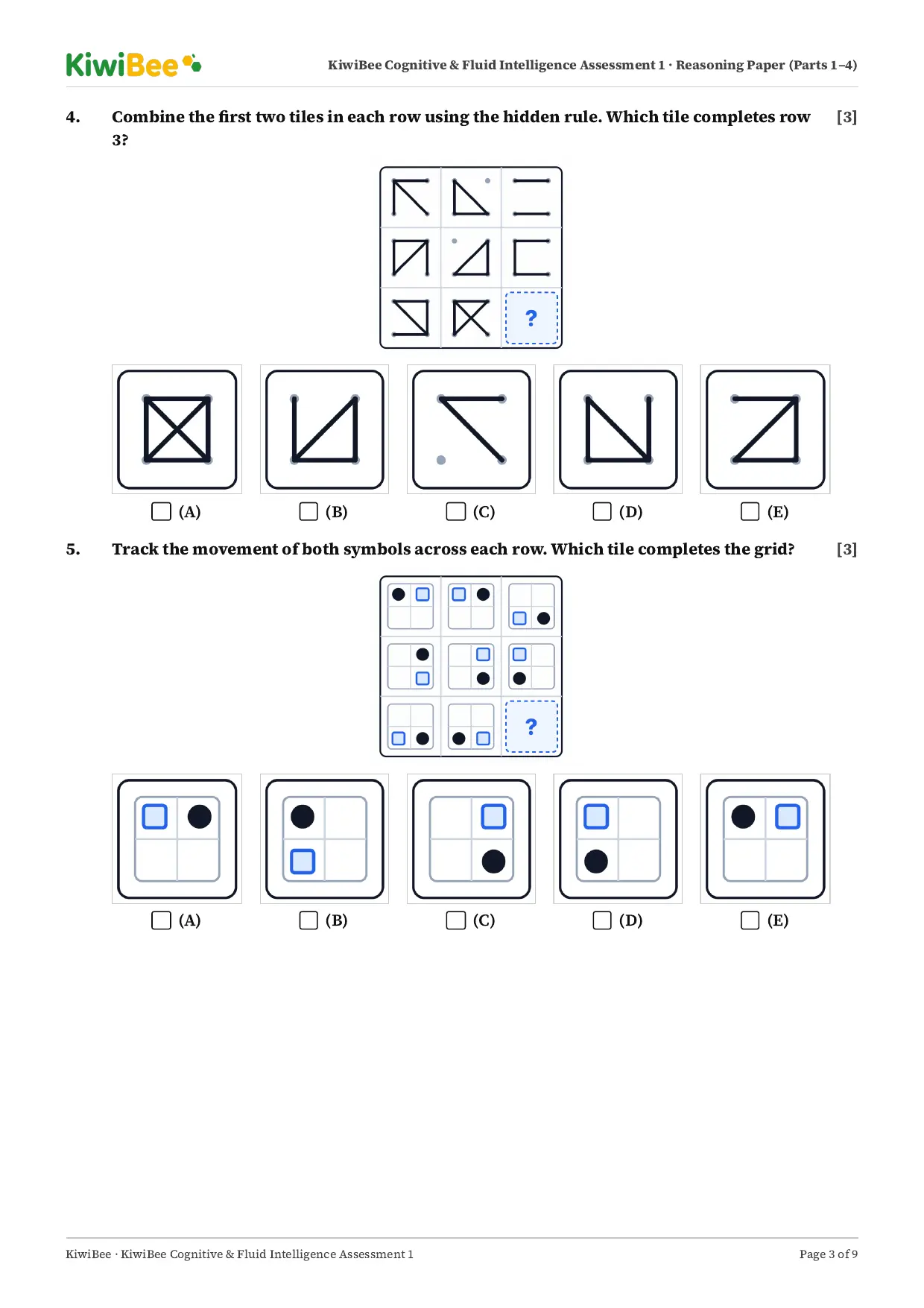
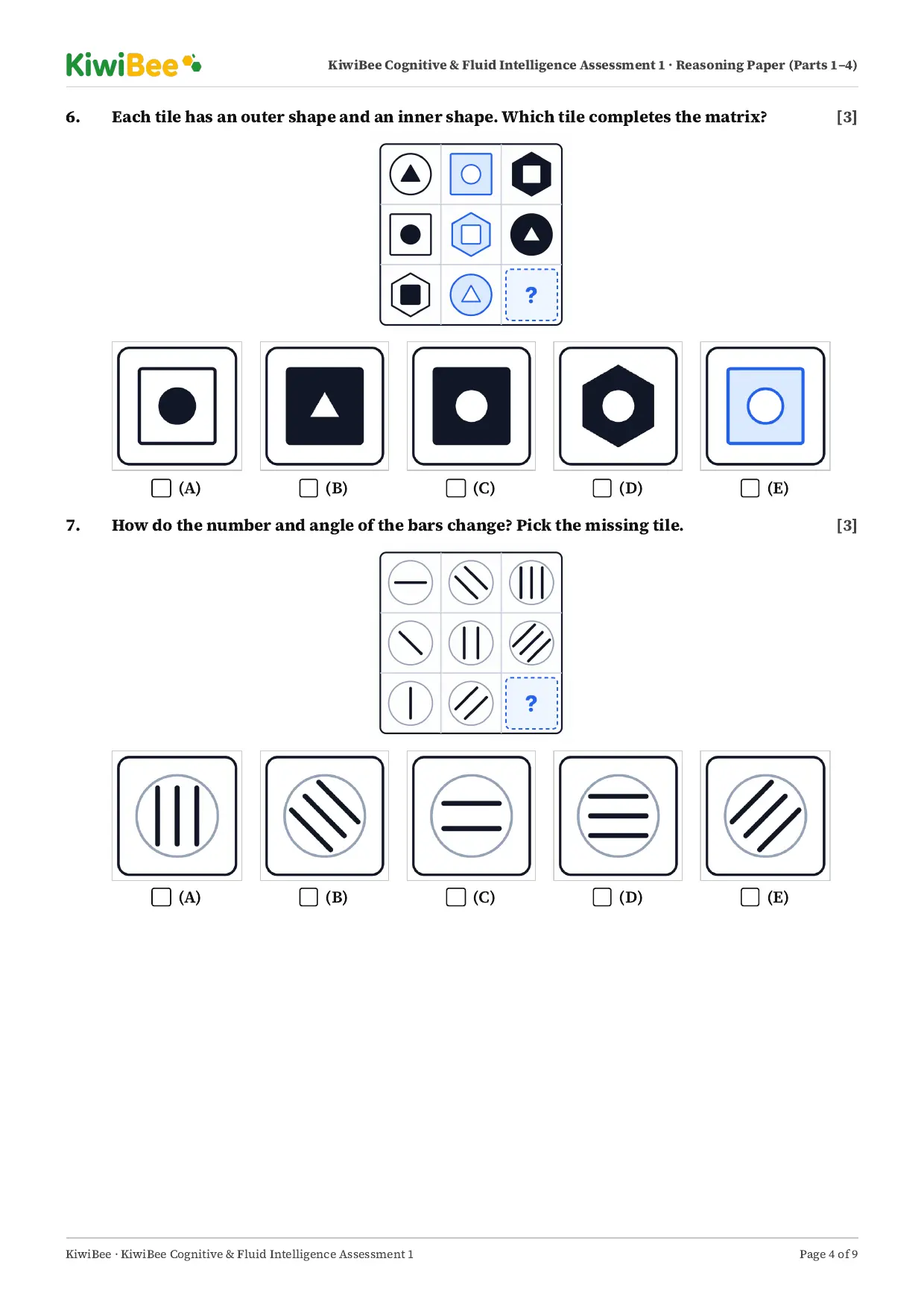
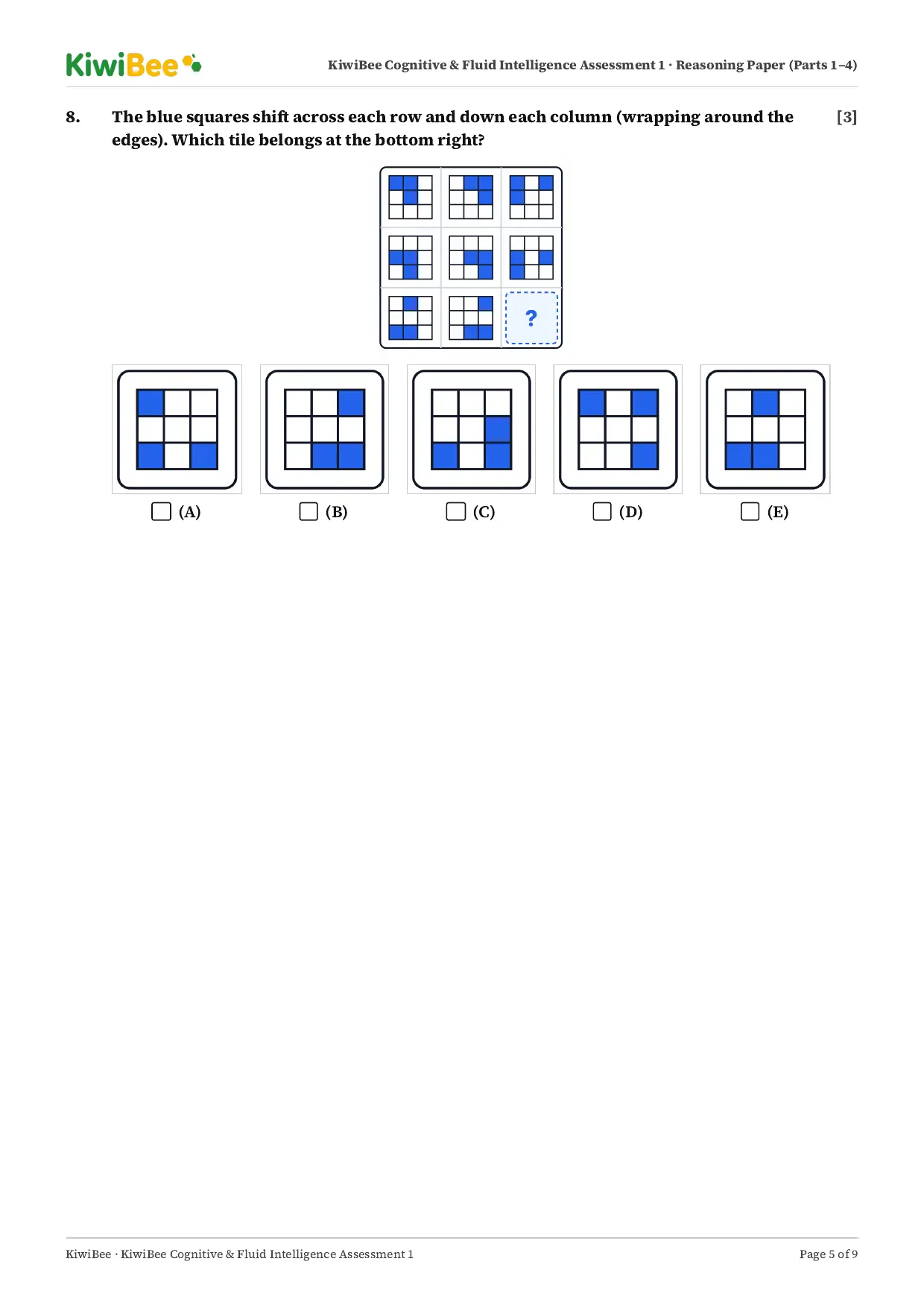
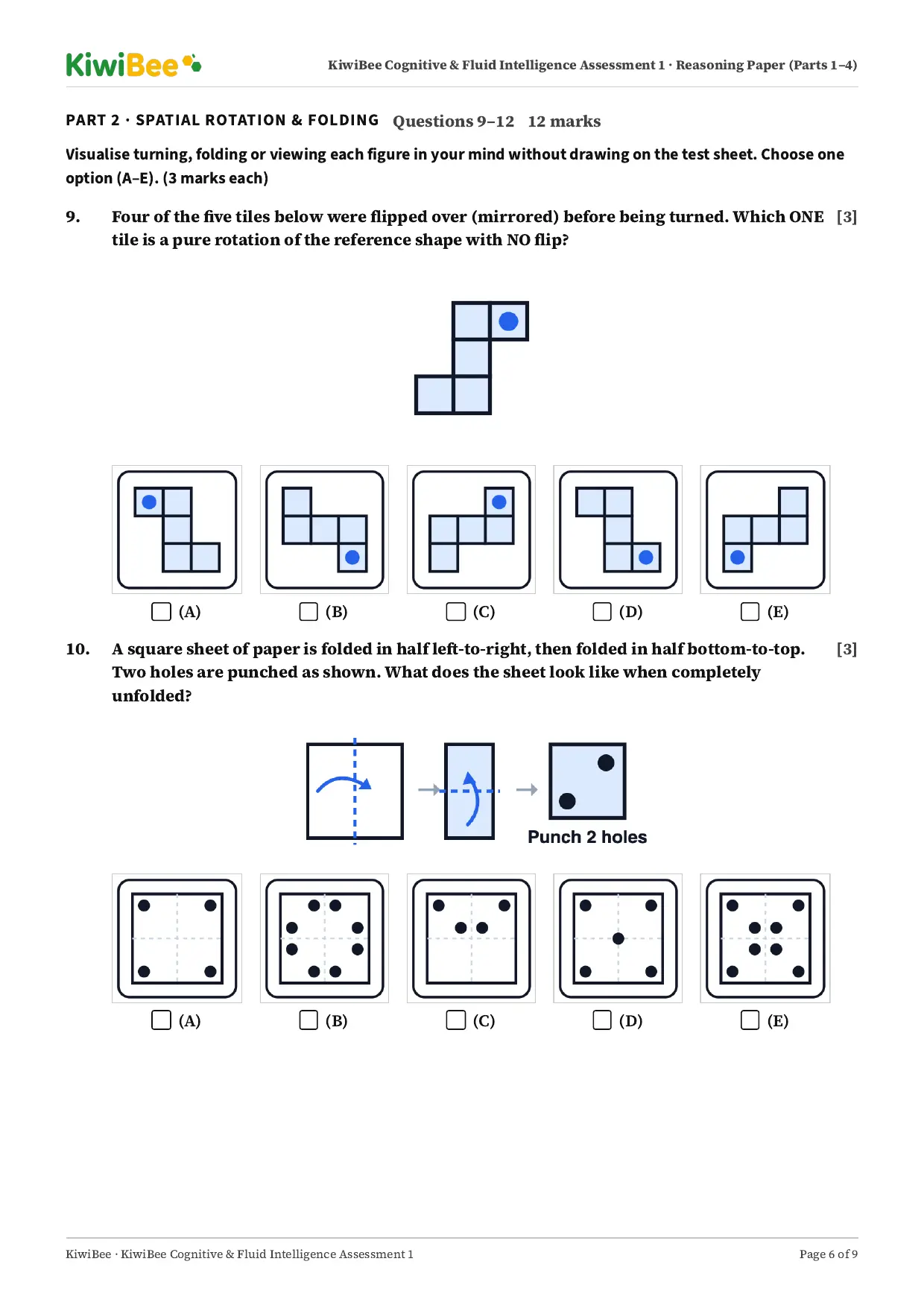
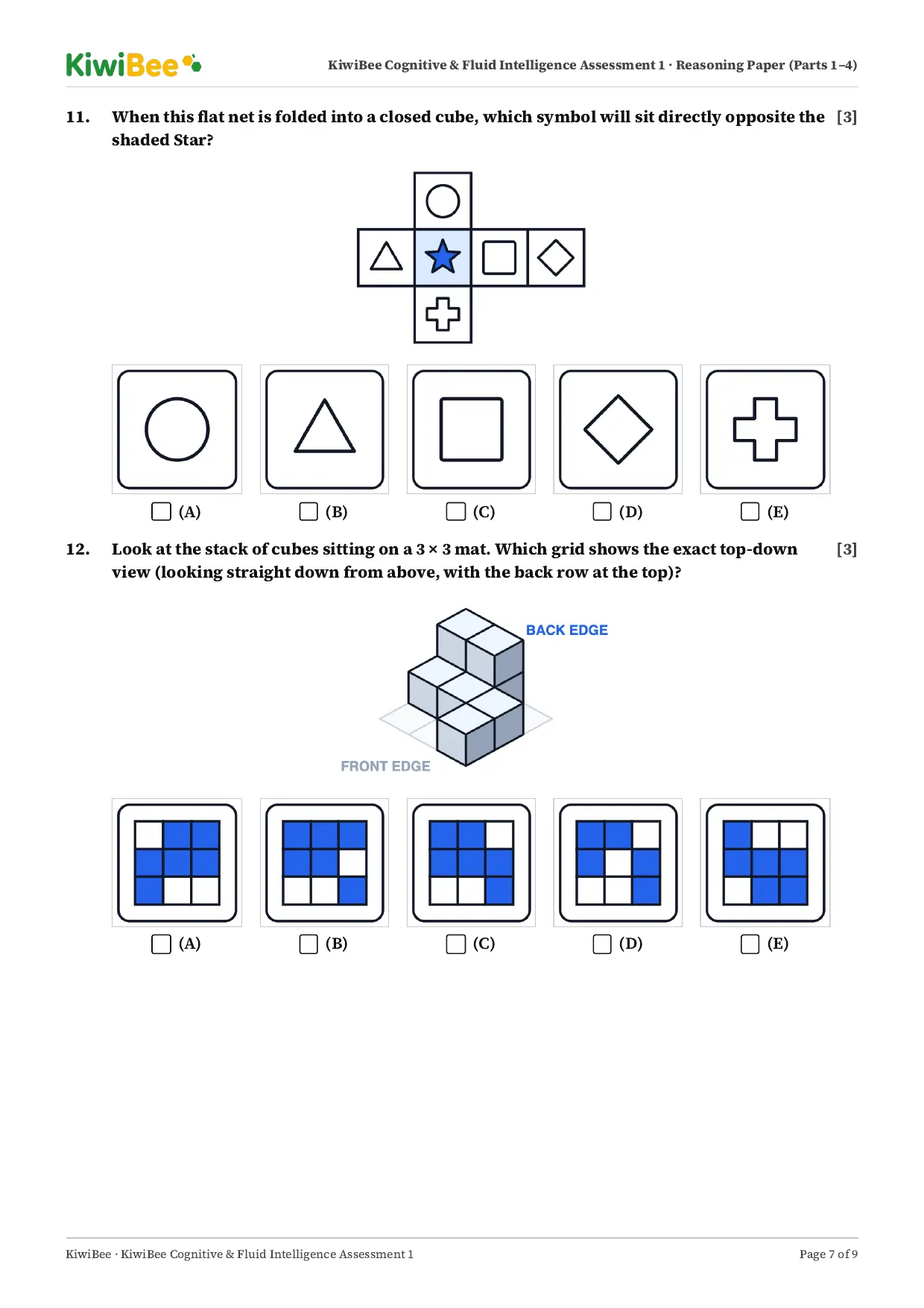
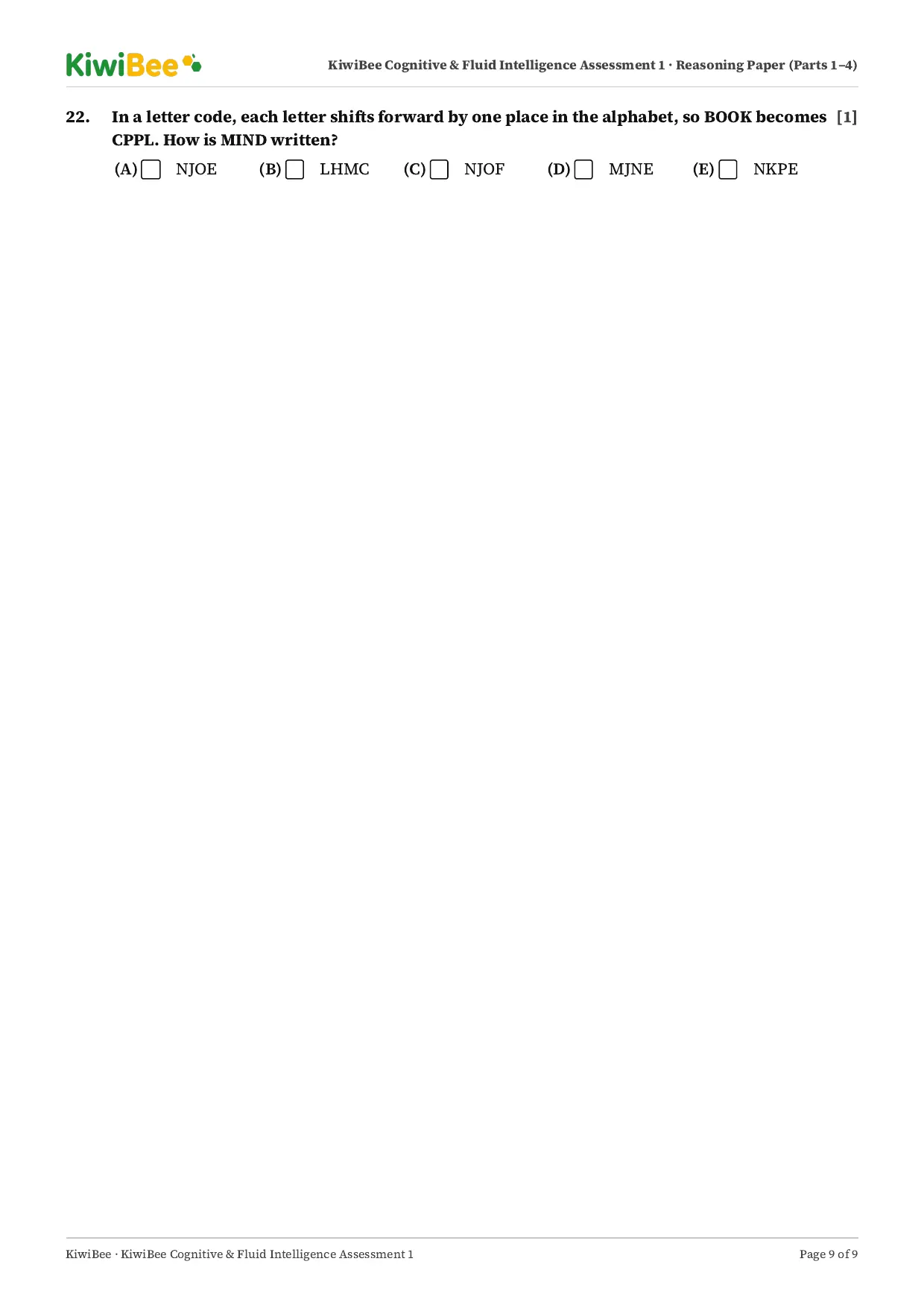
Original KiwiBee cognitive reasoning & IQ practice test for middle and high school classroom research: 8 visual 3×3 pattern matrices, 4 spatial rotation & folding puzzles, 4 numerical sequences, 6 verbal logic problems, plus writing and speaking metacognitive reflection prompts. Customise, co-brand with your school logo, print or assign in KiwiBee.
常见问题
Is this an official clinical IQ test?
No. This is an original educational cognitive-reasoning assessment written by KiwiBee for classroom research and practice. It provides domain subscores and performance bands rather than a clinical IQ diagnosis.
What cognitive skills does it measure?
It assesses four reasoning domains: non-verbal 3×3 matrix reasoning, 2D/3D spatial visualisation, numerical pattern sequences, and verbal/deductive logic, plus optional writing and speaking reflection prompts.
Can teachers print it with their own school logo?
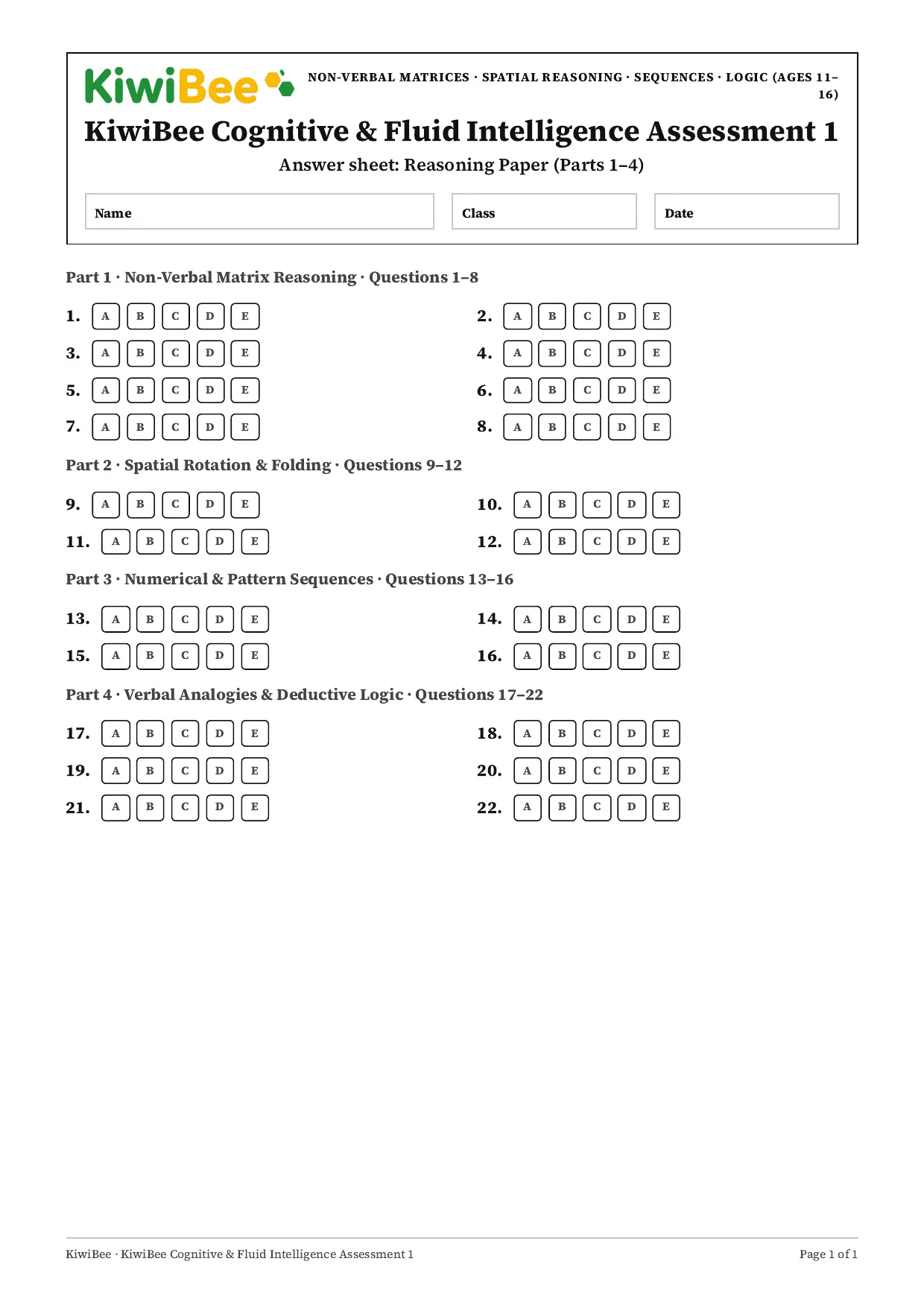
Yes. Open the test in KiwiBee Worksheet Print & Edit Studio to pick from 12 designs, add your school's logo (co-branding on paid and school plans), edit any question, and print student copies plus the worked answer key.
Is it suitable for multilingual classrooms?
Yes. Parts 1 and 2 (36 of the 50 marks) are visual non-verbal puzzles designed to reduce language bias when teachers compare abstract reasoning across multilingual learners.
 首页
 全部解决方案
 价格
 关于我们
 KiwiBee 非营利组织计划
 活动与网络研讨会
 面向大型教育集团
 面向学校
 面向教育中心
 面向团队负责人
 面向教师
 教学资源
 可打印练习单
 互动模拟实验
 教师工具
 灵感与研究


评论