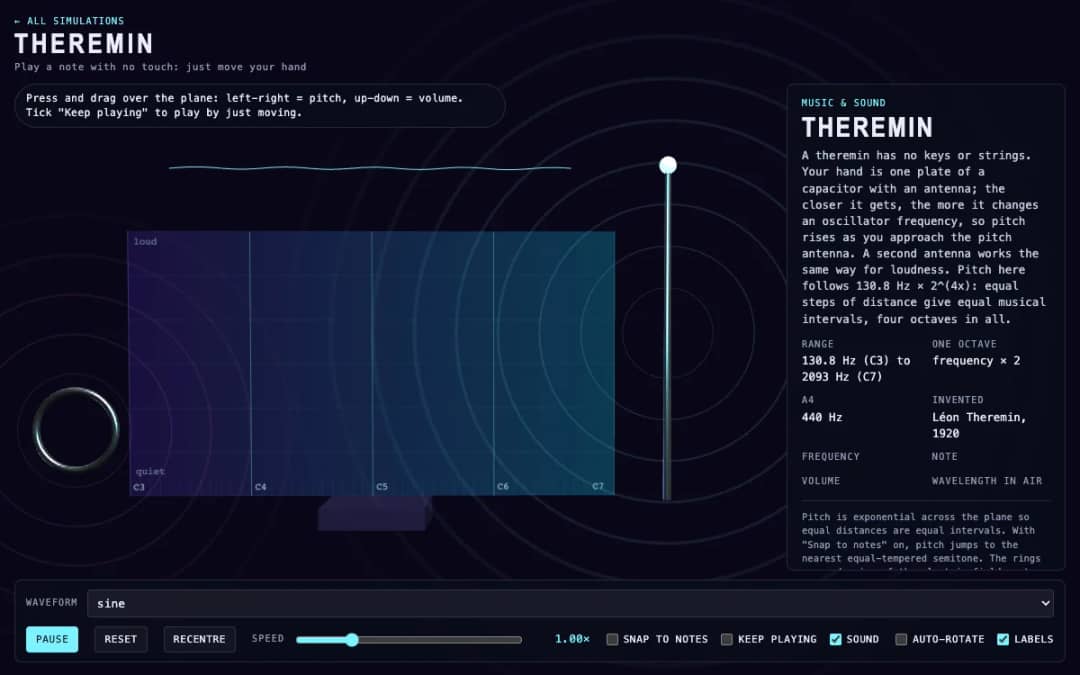
A virtual theremin where students press and drag over a plane. Moving left and right changes pitch, moving up and down changes volume, and readouts show frequency, note, volume and wavelength.
—
KiwiBee sử dụng cookie tùy chọn của Google Analytics, Google Ads và Meta Pixel để hiểu khách truy cập là người lớn, đo lường số lượt đăng ký hoàn tất và cải thiện các chiến dịch. Cookie thiết yếu luôn được bật. Pixel quảng cáo ChatGPT của OpenAI cũng đo lượt xem trang và yêu cầu đã gửi sau khi bạn đồng ý quảng cáo, và có thể dùng thông tin liên hệ đã băm để đối sánh. Chính sách quyền riêng tư
This simulation shows how the air inside a pipe makes a note. Students drag the ring at the top of a pipe up or down and hear the pitch glide as the length changes. Clicking a pipe, or pressing keys 1 to 6, blows it. A select control switches between an open pipe and a pipe closed at one end, and a slider chooses the first, second or third harmonic. Moving dots show air displacement, red for compressed and blue for stretched, slowed down so they can be seen. Readouts show length, frequency and the formula used. It teaches standing waves, resonance and why closed pipes sound an octave lower.
Yes. Flute Pipe Lengths is free, needs no sign-up and runs in any modern browser, including whiteboards, tablets and phones.
Drag the ring at the top of a pipe up or down to change its length, then click the pipe to blow it. Longer pipes sound lower.
A pipe closed at one end has a node there, so its note is f equals v over 4L, half the frequency of an open pipe of the same length. That is one octave lower.
They show air displacement in the pipe, slowed down about 120 times. Red means the air is compressed and blue means it is stretched.
Đặt vào hệ thống học tập, blog hoặc trang lớp của bạn — miễn phí.
<iframe src="https://kiwibee.io/vn/simulations/flute-pipe-lengths-3d-simulation/embed" title="Flute Pipe Lengths | KiwiBee" loading="lazy" allowfullscreen style="width:100%;height:min(70vh,620px);min-height:420px;border:0;border-radius:16px"></iframe>Tiếp tục khám phá
A virtual theremin where students press and drag over a plane. Moving left and right changes pitch, moving up and down changes volume, and readouts show frequency, note, volume and wavelength.
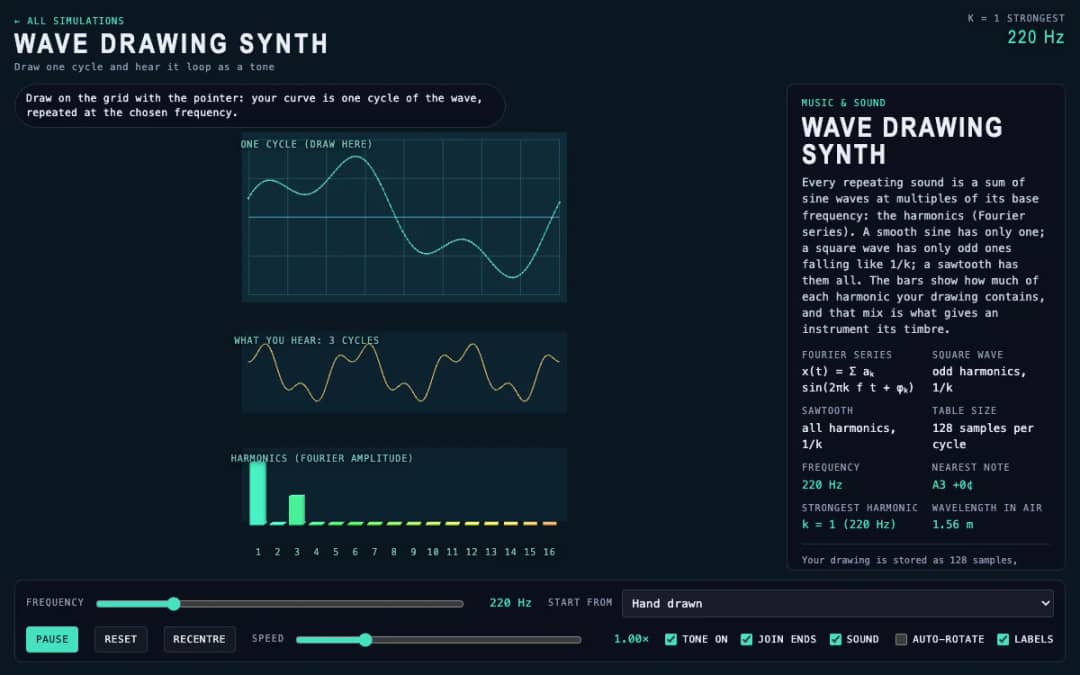
Students draw a single cycle of a wave on a grid, and the simulation plays it as a repeating tone. Frequency, preset waves and a join-ends option let them compare their drawing with sine, square and sawtooth sounds.
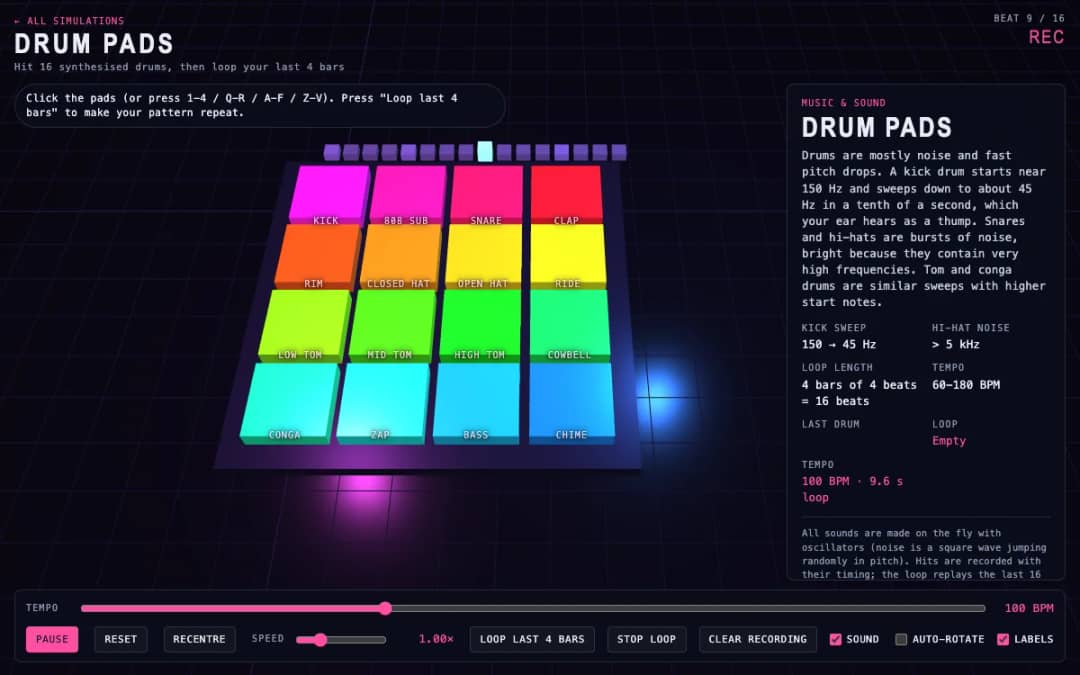
Sixteen 3D drum pads, from kick and snare to cowbell and chime, play synthesized sounds when students click them or press keys. A tempo slider sets the speed and a loop button repeats the last four bars they played.
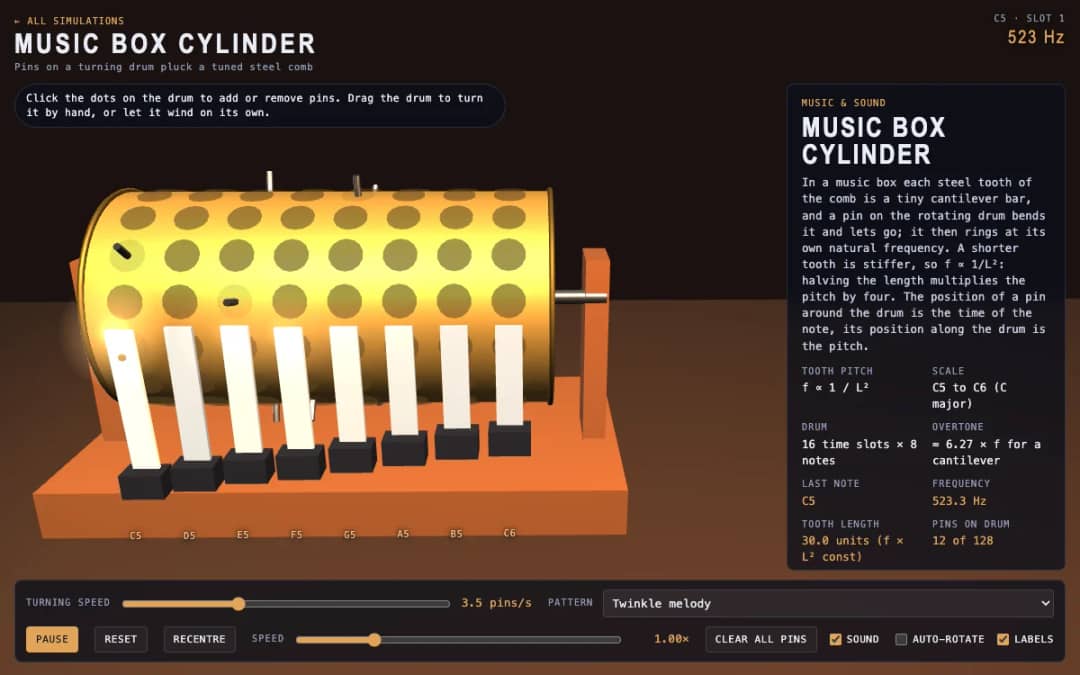
A 3D music box with a pinned drum and a steel comb. Students click dots to add or remove pins, drag the drum to turn it or let it wind itself, and see how tooth length sets each note.
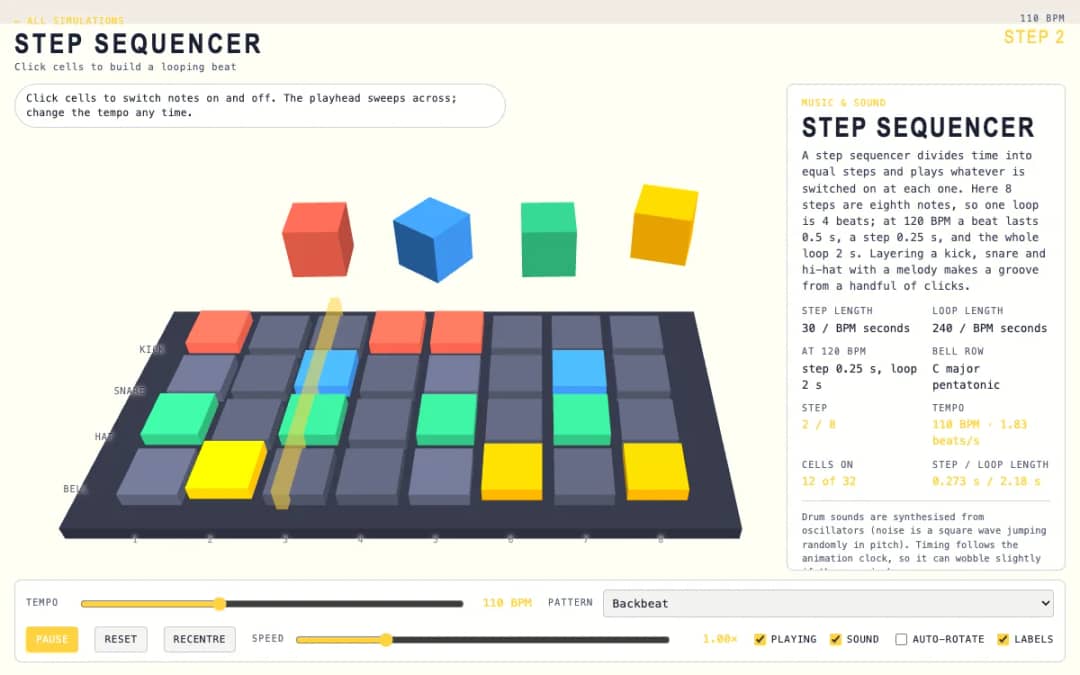
A 3D grid of 8 steps and 4 rows: kick, snare, hat and bell. Students click cells on and off while a playhead sweeps across, and a tempo slider and pattern presets change the groove.
Không gian giáo viên miễn phí của KiwiBee gộp soạn bài, phiếu bài tập, công cụ lớp học và sổ điểm vào cùng một nơi.
Bắt đầu miễn phí và tạo lớp học đầu tiên Trang chủ
 Tất cả giải pháp
 Bảng giá
 Về chúng tôi
 KiwiBee cho tổ chức phi lợi nhuận
 Sự kiện & webinar
 Dành cho tổ chức lớn
 Dành cho trường học
 Dành cho trung tâm
 Dành cho trưởng nhóm
 Dành cho giáo viên
 AI và học liệu
 Học liệu
 Worksheet in được
 Gói bài học
 Mô phỏng tương tác
 Công cụ giáo viên
 Studio AI
 Ý tưởng và nghiên cứu