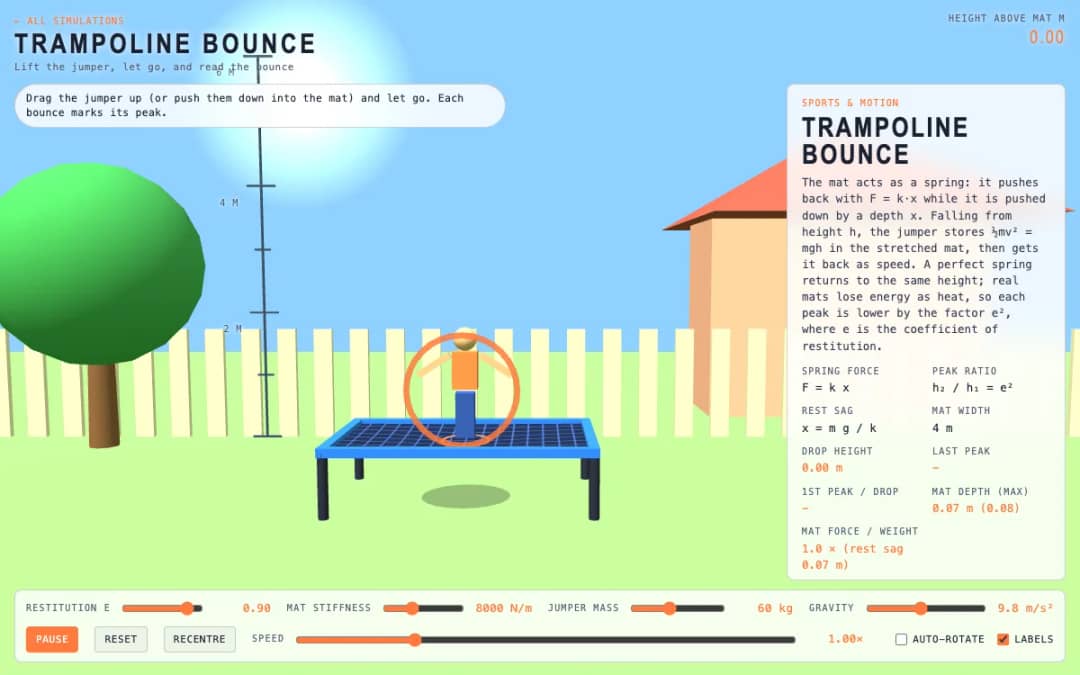
A jumper hovers above a trampoline mat. Students drag them up or push them into the mat, let go, and watch each bounce mark its peak while sliders change stiffness, mass, gravity and restitution.
—
KiwiBee sử dụng cookie tùy chọn của Google Analytics, Google Ads và Meta Pixel để hiểu khách truy cập là người lớn, đo lường số lượt đăng ký hoàn tất và cải thiện các chiến dịch. Cookie thiết yếu luôn được bật. Pixel quảng cáo ChatGPT của OpenAI cũng đo lượt xem trang và yêu cầu đã gửi sau khi bạn đồng ý quảng cáo, và có thể dùng thông tin liên hệ đã băm để đối sánh. Chính sách quyền riêng tư
This simulation treats the diving board as a cantilever spring. The farther the diver stands beyond the fulcrum, the softer the board, because stiffness is 3 E I over the cube of that distance. Pushing in time with the bounce pumps up the motion like a swing. Students move the fulcrum or diver, jump, and watch the dive arc into the water. Readouts show board deflection, stiffness, bounce frequency, jump height and diver state. Sliders adjust board stiffness, diver mass, jump force, forward lean and somersault. Teachers can use it for springs and resonance.
Yes. It is free, needs no sign-up, and works in any modern browser, including whiteboards, tablets and phones.
The board acts like a cantilever with stiffness k equals 3EI over d cubed. Doubling the distance d from the fulcrum makes the board eight times softer.
Drag the diver or fulcrum to set up, then click the diver or press the up arrow or Enter to jump. Pushing in time with the board's bounce makes the jump higher.
Frequency is the square root of k over m, divided by 2 pi. A softer board or a heavier diver bounces more slowly.
Đặt vào hệ thống học tập, blog hoặc trang lớp của bạn — miễn phí.
<iframe src="https://kiwibee.io/vn/simulations/diving-board-3d-simulation/embed" title="Diving Board | KiwiBee" loading="lazy" allowfullscreen style="width:100%;height:min(70vh,620px);min-height:420px;border:0;border-radius:16px"></iframe>Tiếp tục khám phá
A jumper hovers above a trampoline mat. Students drag them up or push them into the mat, let go, and watch each bounce mark its peak while sliders change stiffness, mass, gravity and restitution.
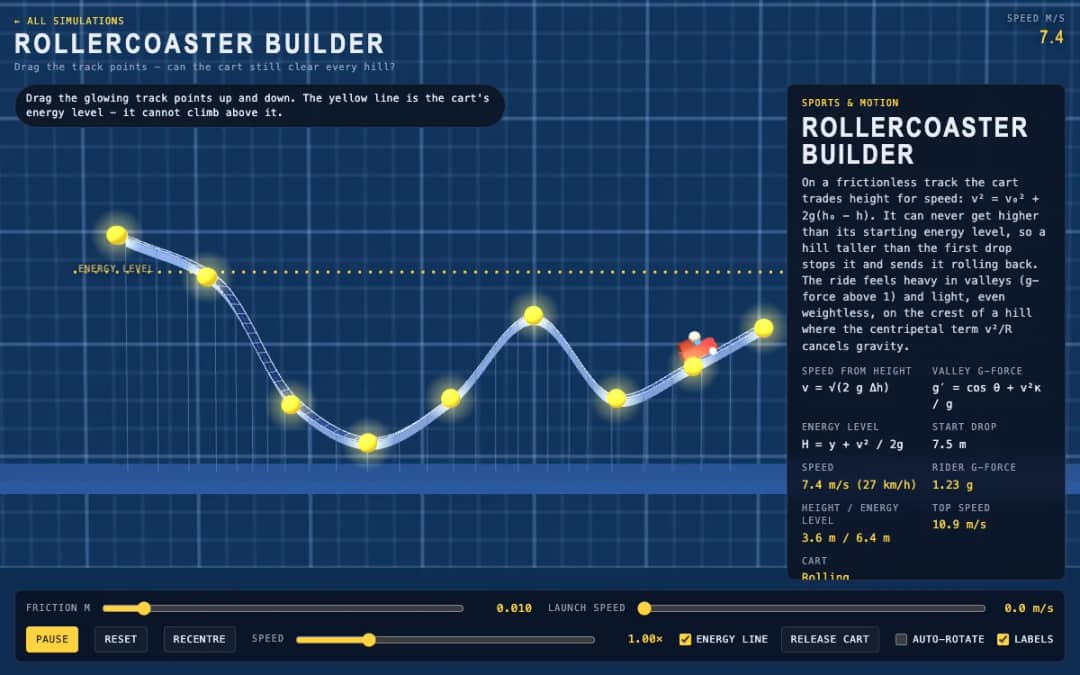
A smooth coaster track runs through glowing control points. Students drag points up and down to reshape hills, press Release cart, and see whether the cart can clear every hill below the yellow energy line.
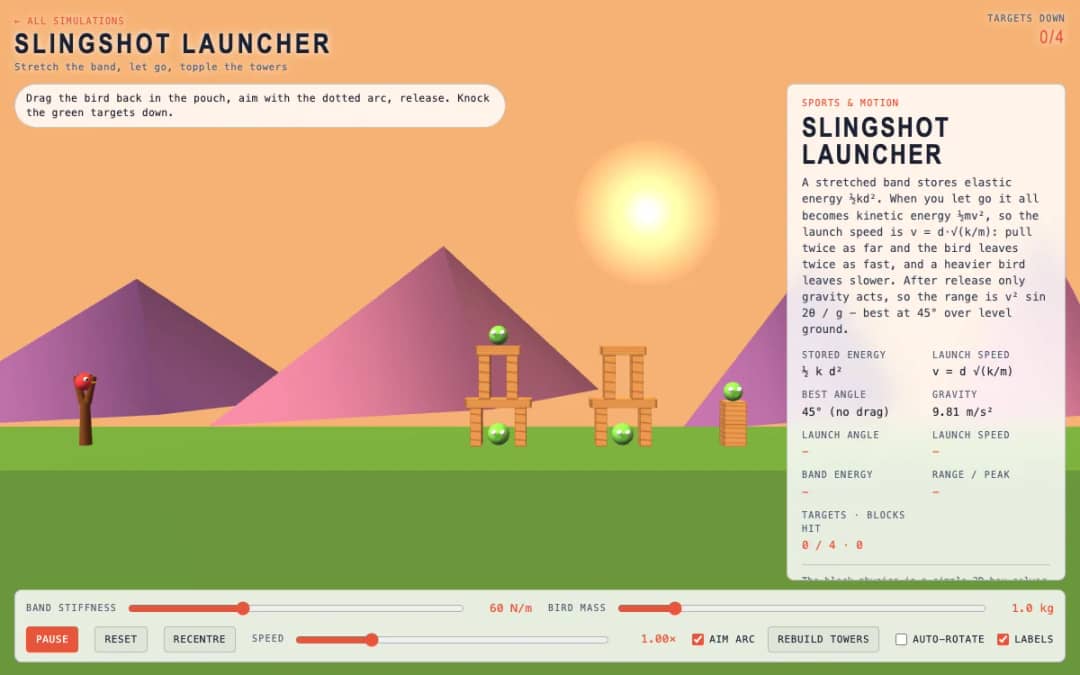
A slingshot faces towers with green targets. Students drag the bird back in the pouch, follow the dotted aim arc, release, and try to knock down the targets using the right stretch and angle.
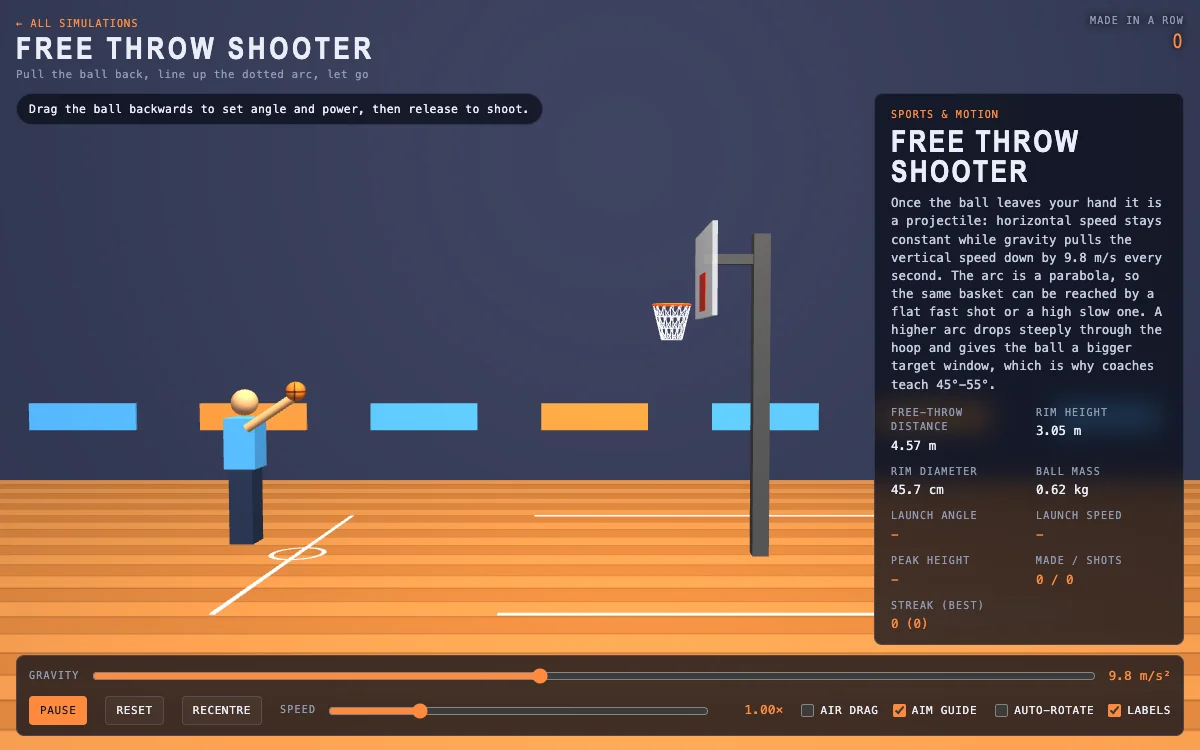
A basketball court shows the free throw line, hoop and a dotted aim arc. Students drag the ball backward to set launch angle and power, release to shoot, and read speed, peak height and streak.
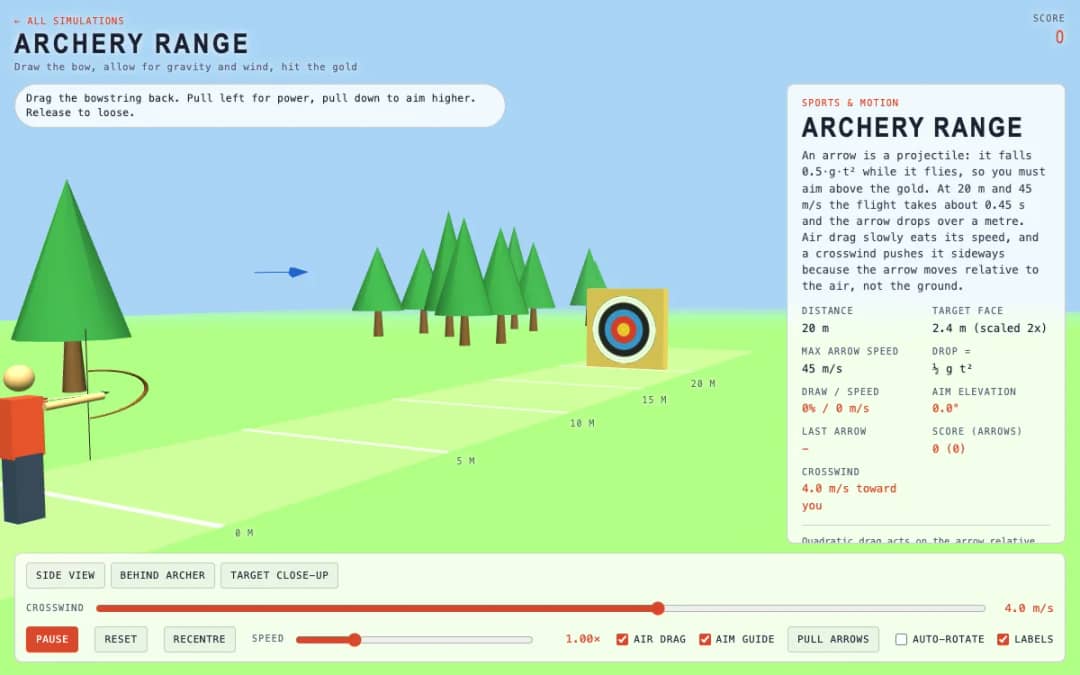
An archery range with a target 20 meters away lets students drag the bowstring back to set power and aim, then loose six arrows while allowing for gravity, drag and a crosswind.
Không gian giáo viên miễn phí của KiwiBee gộp soạn bài, phiếu bài tập, công cụ lớp học và sổ điểm vào cùng một nơi.
Bắt đầu miễn phí và tạo lớp học đầu tiên Trang chủ
 Tất cả giải pháp
 Bảng giá
 Về chúng tôi
 KiwiBee cho tổ chức phi lợi nhuận
 Sự kiện & webinar
 Dành cho tổ chức lớn
 Dành cho trường học
 Dành cho trung tâm
 Dành cho trưởng nhóm
 Dành cho giáo viên
 AI và học liệu
 Học liệu
 Worksheet in được
 Gói bài học
 Mô phỏng tương tác
 Công cụ giáo viên
 Studio AI
 Ý tưởng và nghiên cứu