KiwiBee printable
Multiply a 2-digit number by a 2-digit number: complete the missing steps
Free printable Grade 4 math worksheet for "Multiply a 2-digit number by a 2-digit number: complete the missing steps" — practice multiply by two-digit numbers. No-prep, print or assign online.
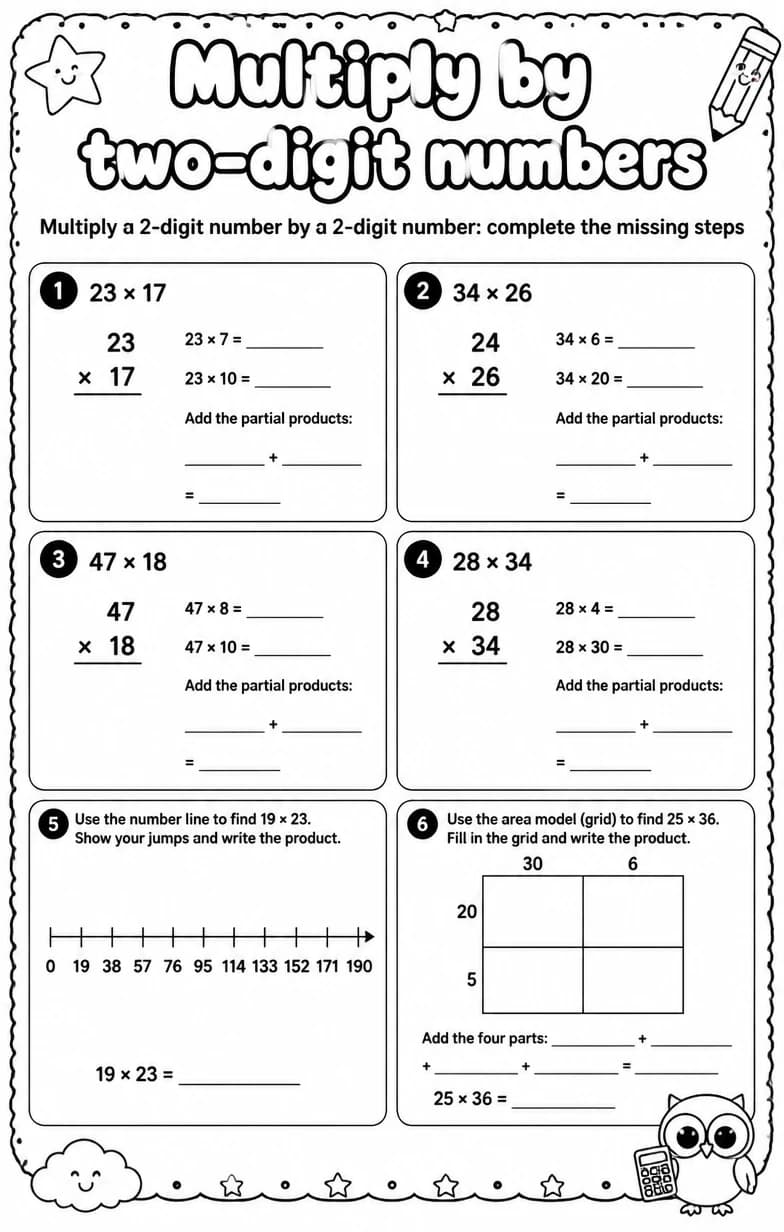
This worksheet provides practice multiplying two-digit numbers by two-digit numbers through partially completed problems where students fill in missing steps. Teachers can use it to reinforce procedural fluency and deepen students' understanding of multi-digit multiplication strategies. Ideal for challenging Grade 4 learners, it supports mastery of multiplication algorithms and place value concepts.
Learning objectives
- Multiply two-digit numbers using the standard algorithm.
- Identify and complete missing steps in multi-digit multiplication problems.
- Demonstrate understanding of place value in the multiplication process.
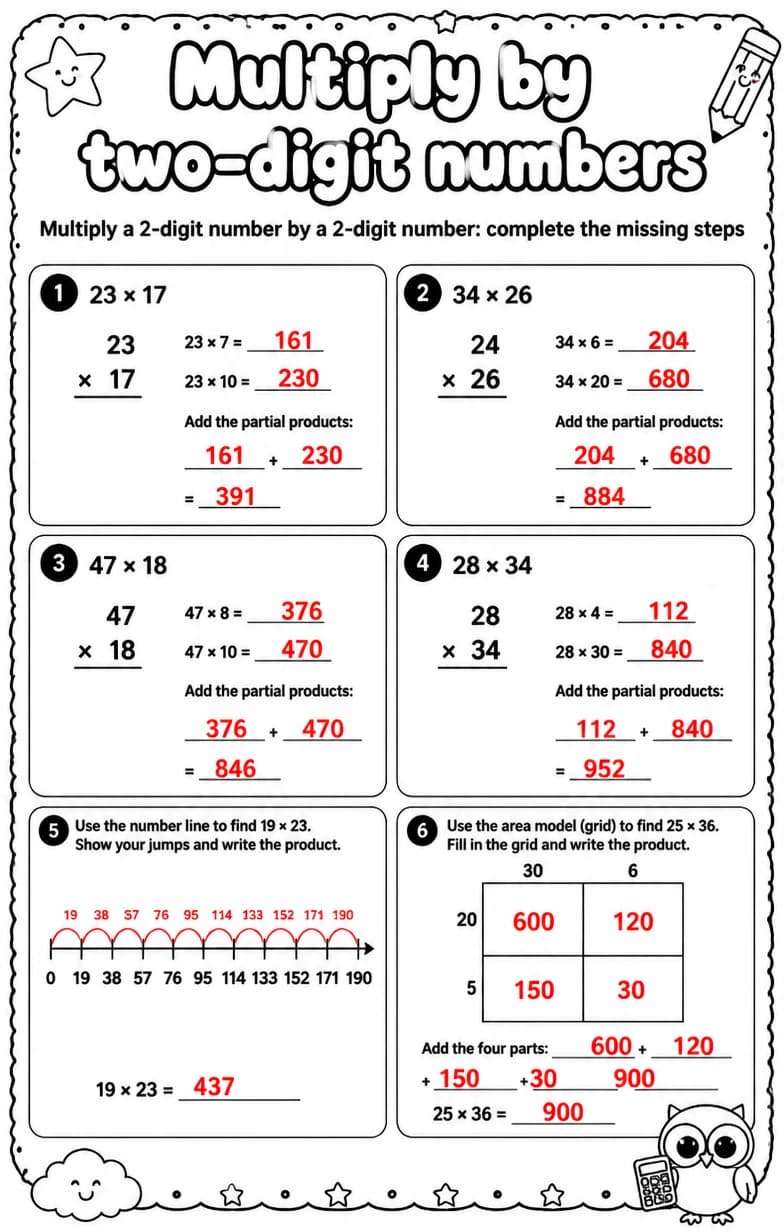
Answer Key
How to use this worksheet
- Click “Download Worksheet” and sign in with Google or email to get the PDF instantly.
- Print at home or in class for Grade 4; it's no-prep, with no extra materials needed.
- Use the included answer key to mark it in seconds.
Frequently asked questions
Is the “Multiply a 2-digit number by a 2-digit number: complete the missing steps” worksheet free?
Yes. “Multiply a 2-digit number by a 2-digit number: complete the missing steps” is a free printable Math worksheet. Sign in with Google or email to download the PDF instantly.
What grade or age is this Math worksheet for?
It's designed for Grade 4 (ages 9–10), covering Multiply by two-digit numbers.
Does it come with an answer key?
Yes — a matching answer key is included so you can grade it in seconds.
Likes & comments
See what other teachers think and share a helpful note.
Create more worksheets in our Worksheet Studio
Generate fresh worksheets for any grade, topic, and language — free.
Open the Worksheet StudioYou might also like
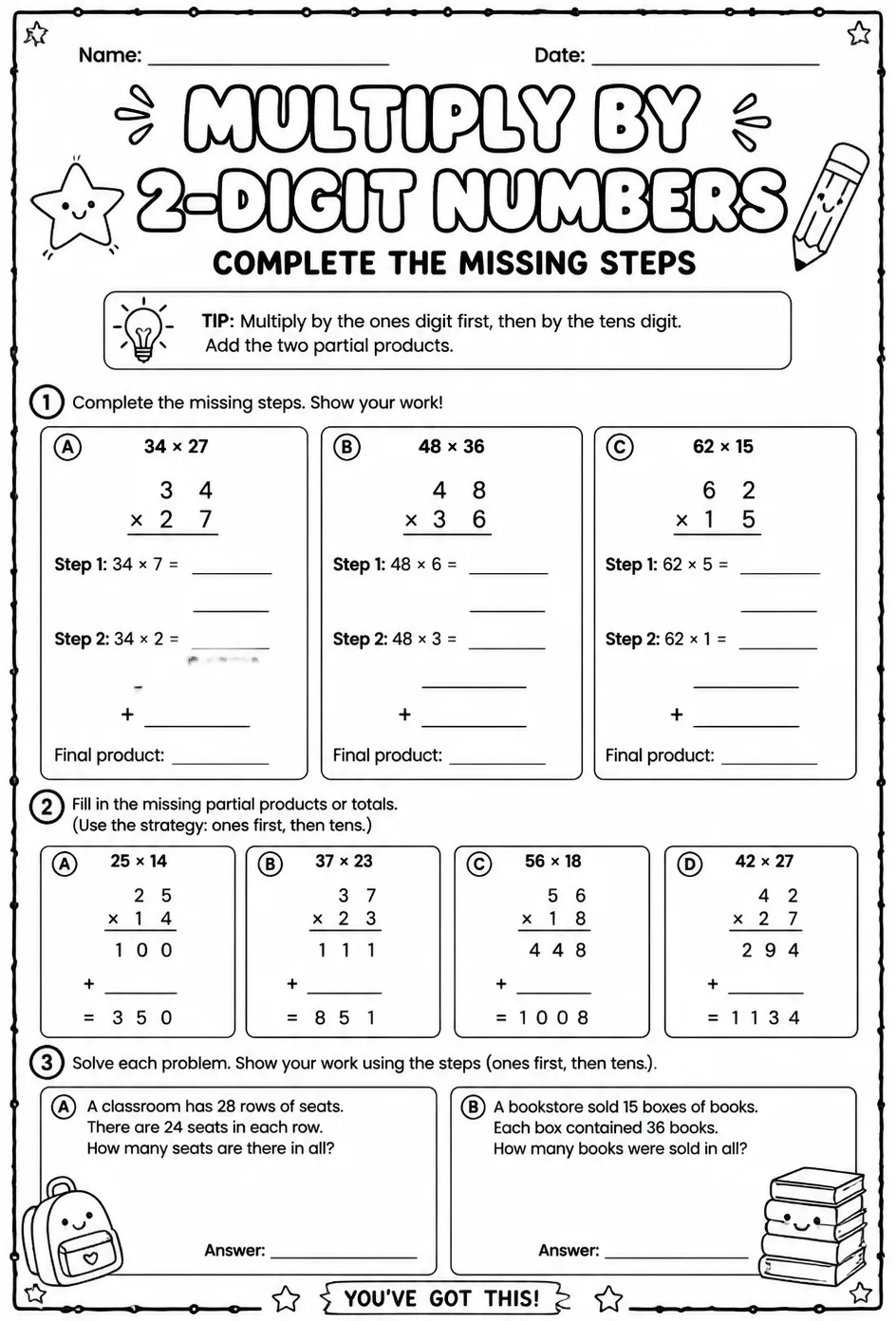
Multiply by 2-digit numbers: complete the missing steps
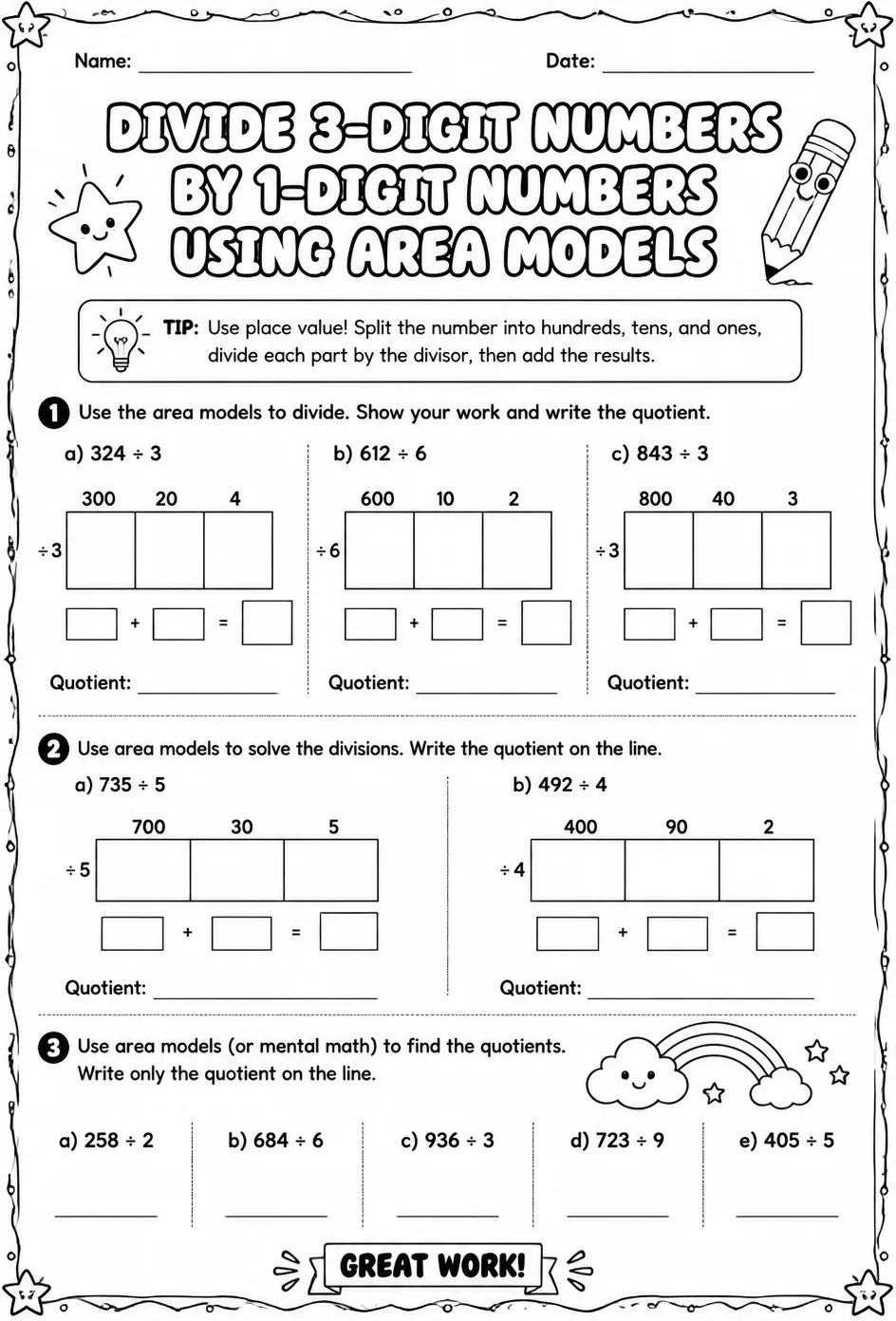
Divide 3-digit numbers by 1-digit numbers using area models
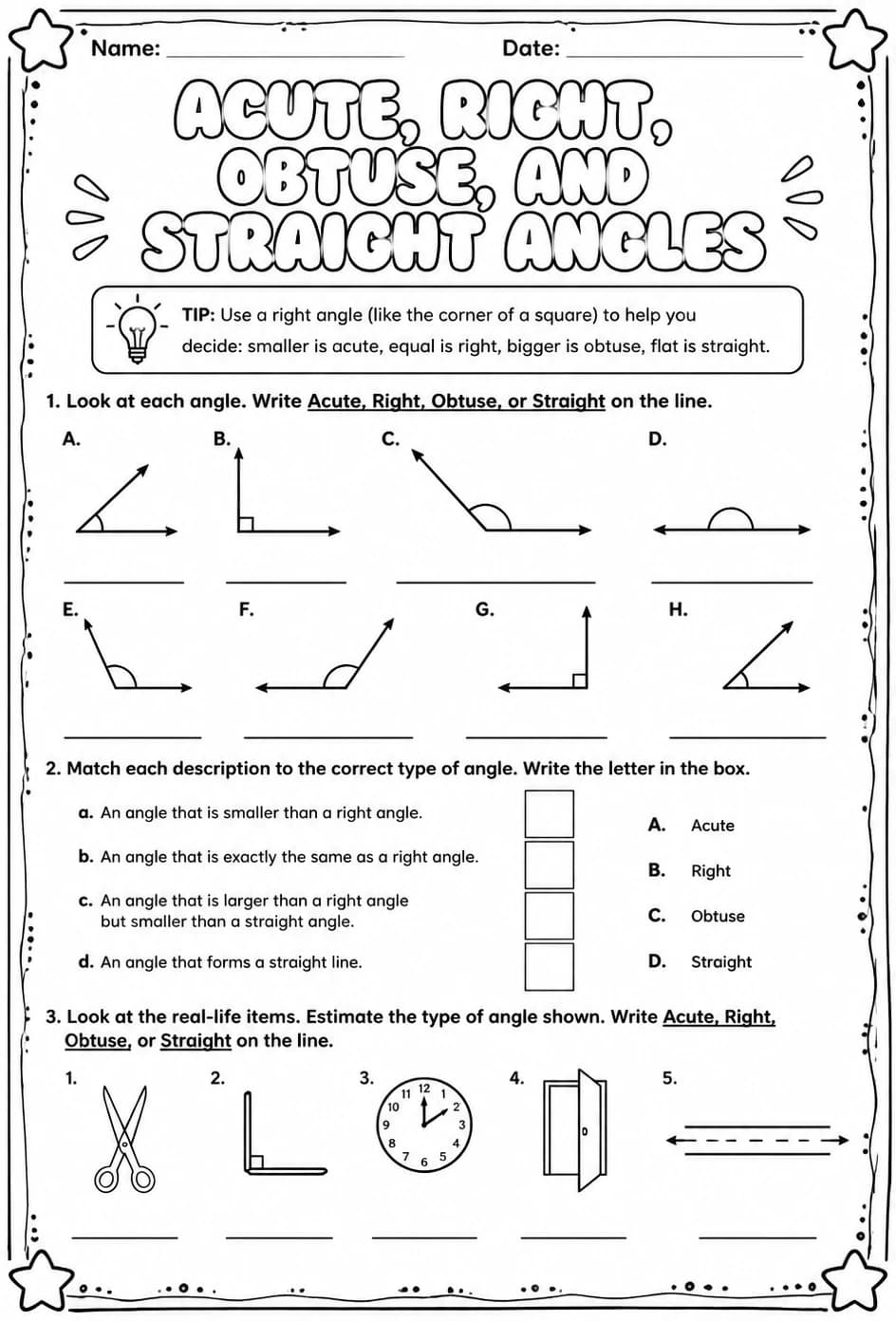
Acute, right, obtuse, and straight angles
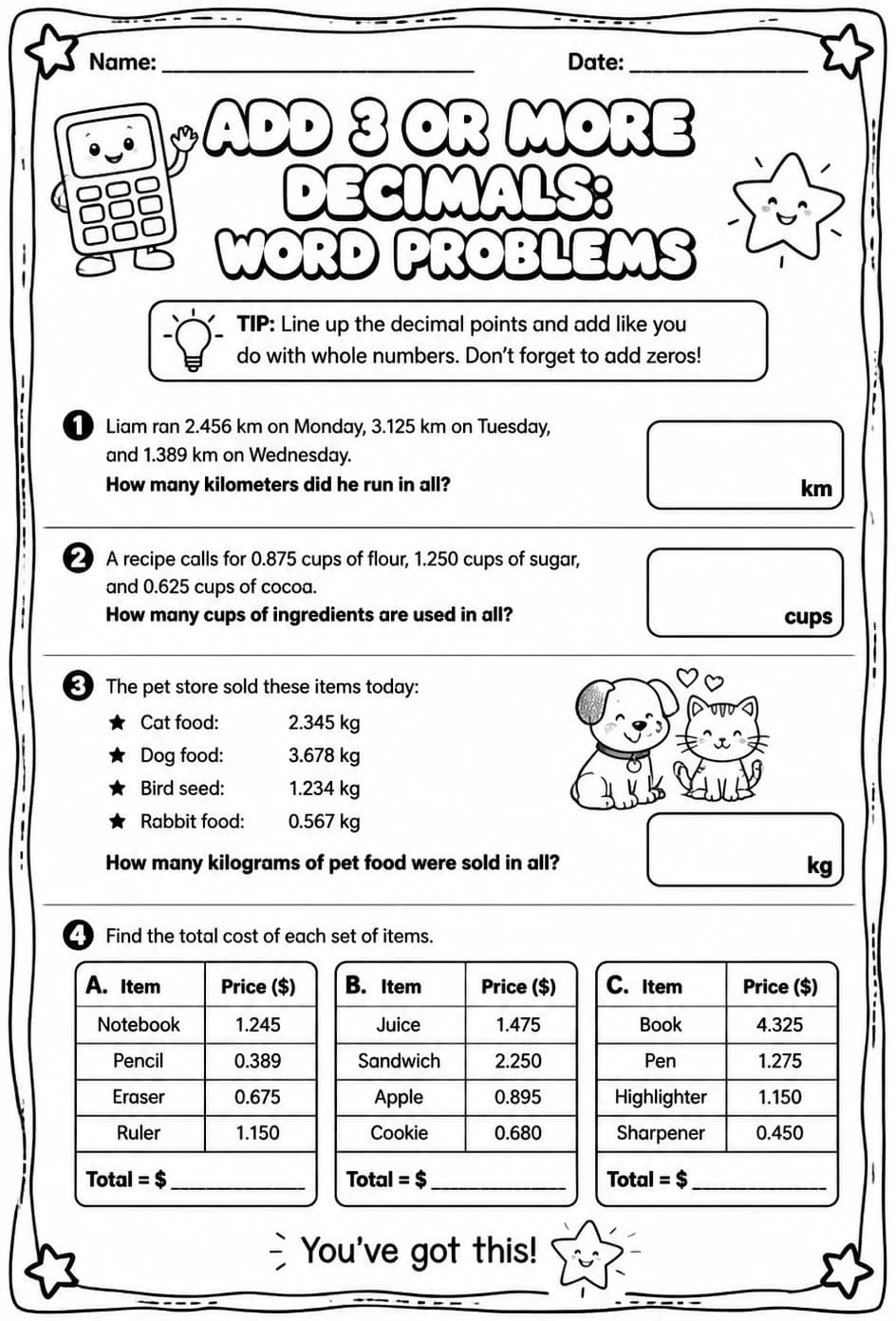
Add 3 or more decimals: word problems
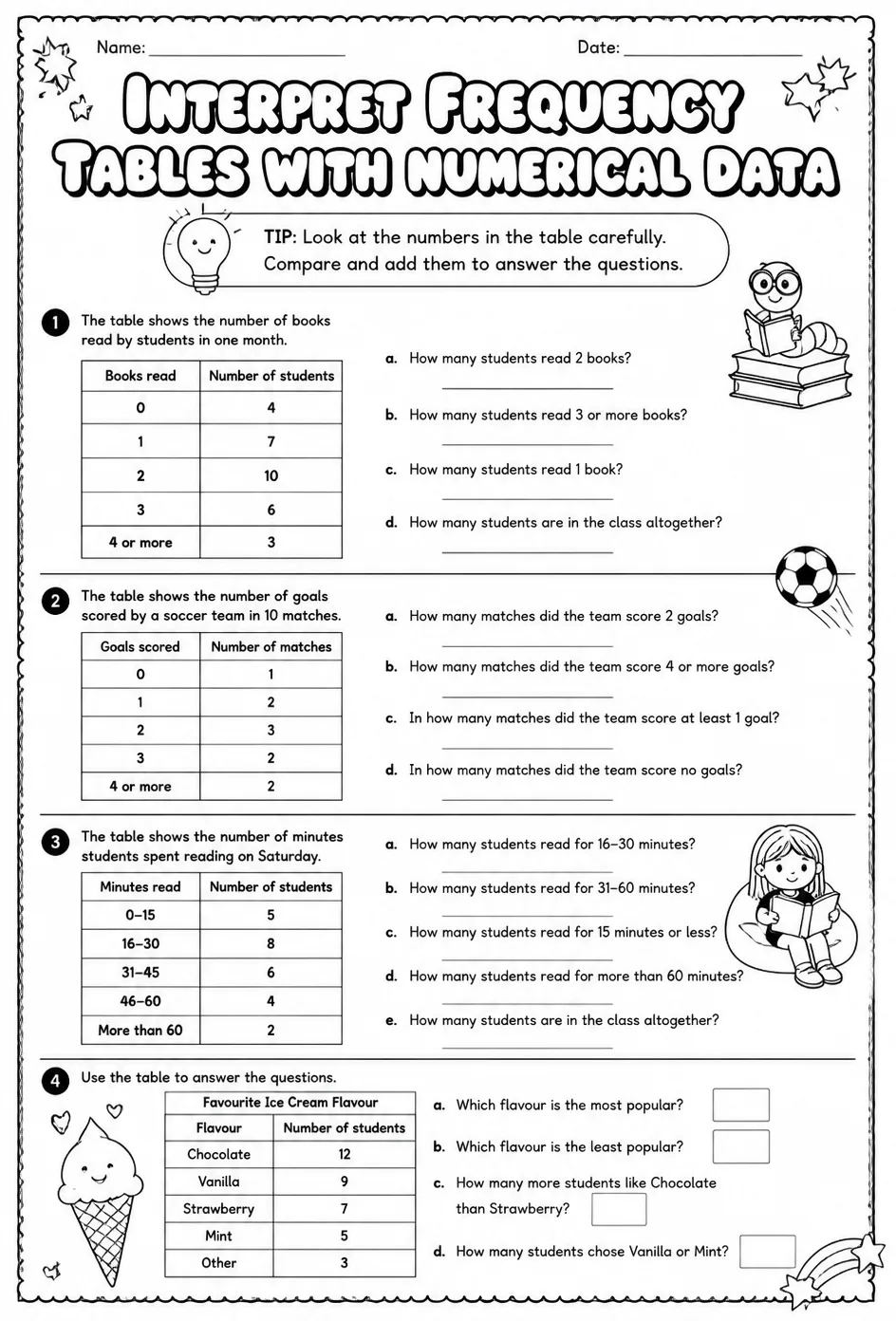
Interpret frequency tables with numerical data