
Lemon Battery
- Química
Comentários
Relacionados a esta simulação
Escolhidos pelo significado entre jogos, atividades, simulações, ferramentas para professores e vídeos.
Sobre esta simulação
Students drag zinc nails and copper coins into lemons, then drag from one clip to another to make a wire, and click a wire to remove it. Readouts show how many lemons are ready, the voltmeter reading, whether the LED is on and the current, plus a hint for the next step. Each lemon gives about 0.9 V, so a red LED needing about 1.8 V needs lemons joined in series. Moving dots show electrons travelling through the wire. Teachers can use it to connect chemistry with electricity and to show why batteries are connected in series.
O que os alunos podem explorar
- Drag a zinc nail and a copper coin into one lemon and read the Voltmeter value.
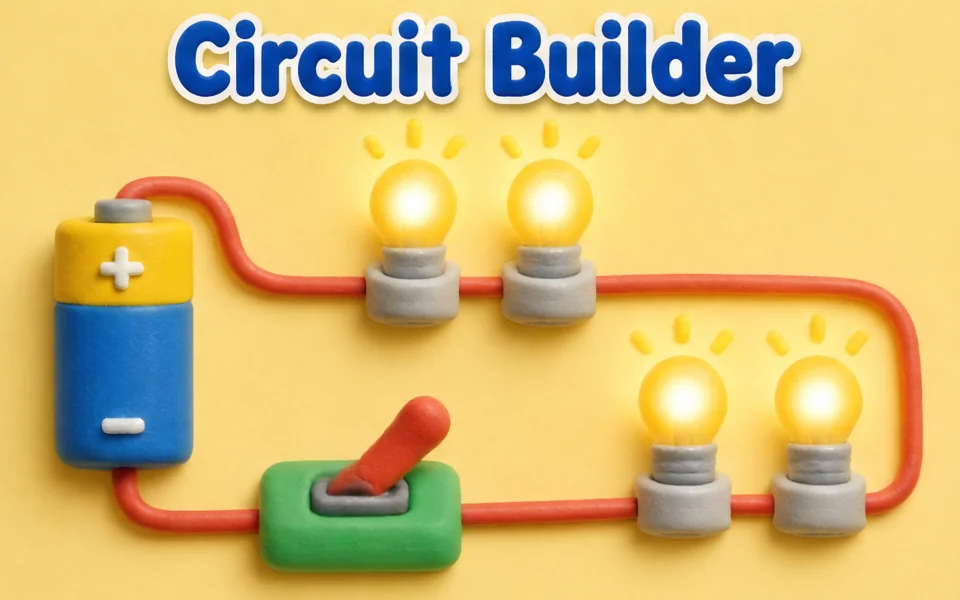
- Wire the copper clip of one lemon to the zinc clip of the next to build a series chain.
- Connect enough lemons to the LED and watch the LED and Current readouts.
- Click a wire to remove it, then try joining lemons the wrong way and see the voltage drop.
- Press Build it for me to see a working circuit, then Remove wires and rebuild it yourself.
Objetivos de aprendizagem
- 1Explain that a lemon cell converts chemical energy into electrical energy.
- 2Predict how connecting cells in series adds their voltages.
- 3Build a closed circuit that lights an LED.
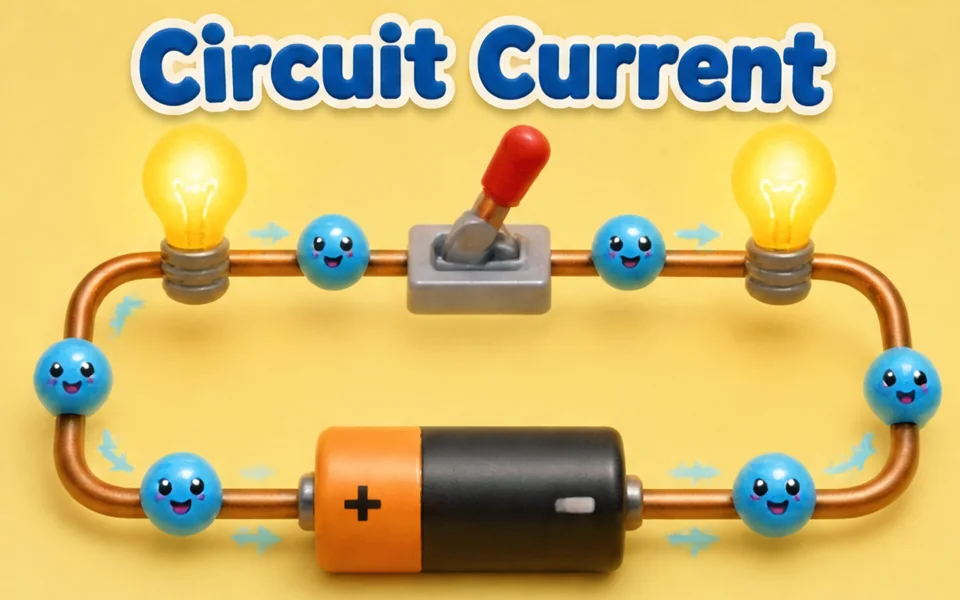
- 4Describe the direction electrons travel from the zinc side to the copper side.
Perguntas frequentes dos professores
Is it free to use?
Yes. It is completely free, needs no sign-up, and runs in any modern browser, including classroom whiteboards, tablets and phones. Just open the page and start.
Why does one lemon not light the LED?
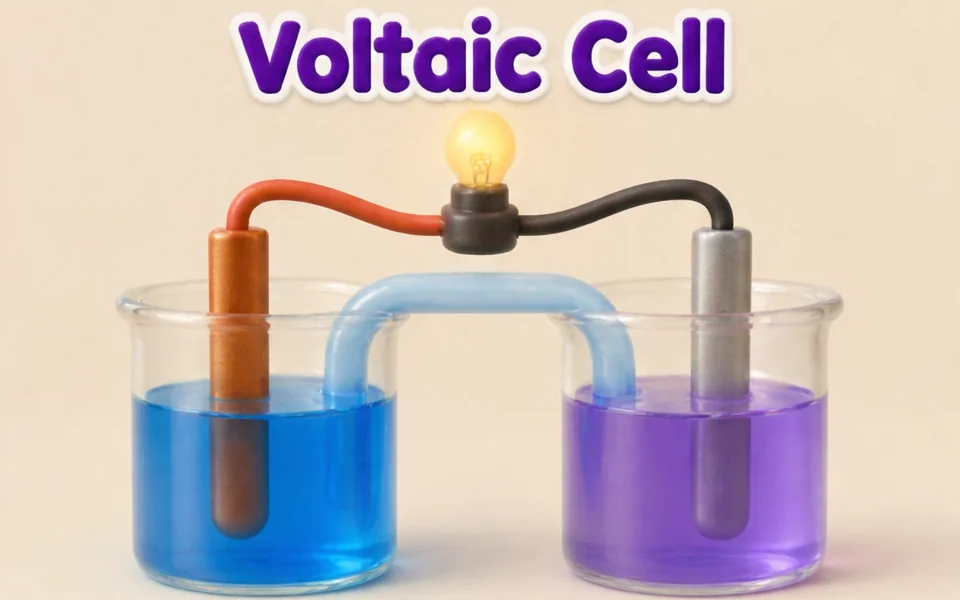
A single lemon cell gives only about 0.9 V, while a red LED needs about 1.8 V to turn on. Connecting two or more lemons in series adds their voltages so the LED can light.
How do I connect the parts?
Drag nails and coins into the lemons, then drag from one clip to another to create a wire. Link the copper clip of one lemon to the zinc clip of the next. Click a wire to remove it.
How does a lemon make electricity?
Zinc gives up electrons more readily than copper, and the acid juice lets ions carry charge between the metals. Electrons flow through the wire from the zinc side to the copper side.
Incorporar esta simulação
Coloque no seu AVA, blog ou site da turma — de graça.
<iframe src="https://kiwibee.io/pt/simulations/lemon-battery-3d-simulation/embed" title="Lemon Battery | KiwiBee" loading="lazy" allowfullscreen style="width:100%;height:min(70vh,620px);min-height:420px;border:0;border-radius:16px"></iframe>Padrões curriculares
Cambridge
- 7Pe.01Use a simple model to describe electricity as a flow of electrons around a circuit.Cambridge Lower Secondary Science (0893) — Stage 7 › Physics › Electricity and magnetism
Learning objectives © UCLES (Cambridge University Press & Assessment), quoted with attribution.
Leve a ciência interativa para a sua sala de aula
O espaço gratuito do professor da KiwiBee reúne em um só lugar o planejamento de aulas, as atividades, as ferramentas de sala e o diário de classe.
Comece grátis e crie sua primeira turmaAssista ao KiwiBee no YouTube
Vídeos curtos do KiwiBee para professores e escolas. Inscreva-se ou siga o KiwiBee onde você estiver.
 Início
 Todas as soluções
 Preços
 Sobre nós
 KiwiBee para organizações sem fins lucrativos
 Eventos e webinars
 Para grandes redes de ensino
 Para escolas
 Para centros educacionais
 Para líderes de equipe
 Para professores
 Recursos
 Atividades para imprimir
 Simulações interativas
 Ferramentas para professores
 Ideias e pesquisa


