
Binary Counter
- Matemática
Comentários
Relacionados a esta simulação
Escolhidos pelo significado entre jogos, atividades, simulações, ferramentas para professores e vídeos.
Sobre esta simulação
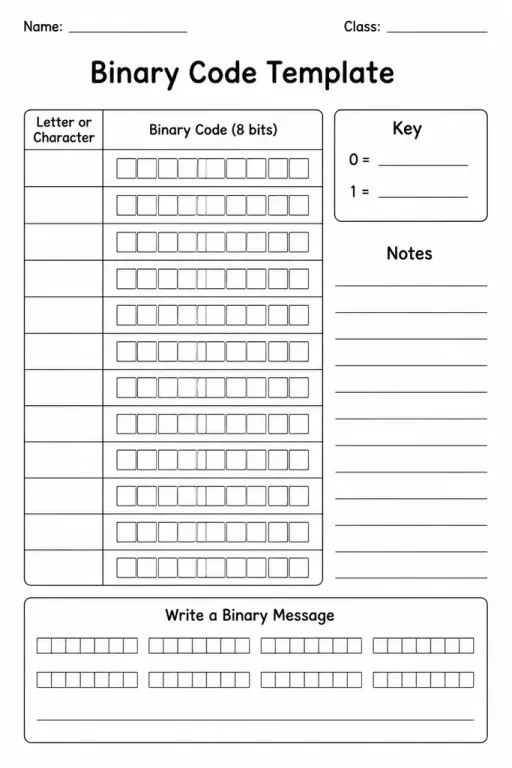
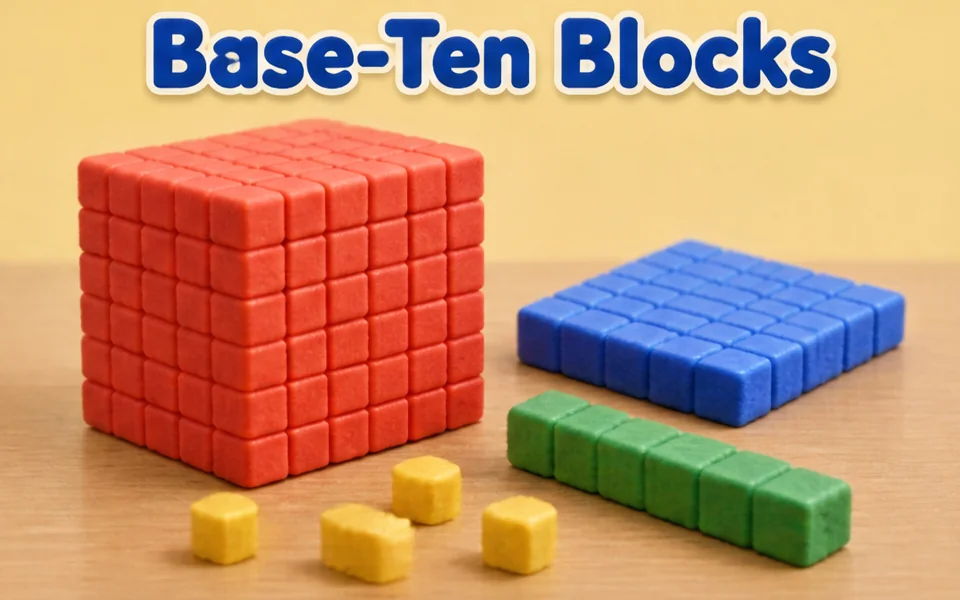
Each cube is one bit with a place value of 128, 64, 32, 16, 8, 4, 2 or 1. Students click cubes to switch them on or off and see the binary, decimal and hex readouts update, with optional sums shown on the cubes. Add one counts upward, wrapping from 255 back to 0, and New challenge picks a random target from 1 to 255 for students to build. The sim shows that each place is double the one on its right and that eight bits hold 0 to 255. Teachers can use it for counting in base 2 and as a warm-up to data storage.
O que os alunos podem explorar
- Click the rightmost cube, then press Add one repeatedly and watch the pattern count in binary.
- Turn on the 128 and 1 cubes and add their place values to confirm the Decimal readout.
- Press New challenge and flip cubes until the number matches the target.
- Toggle Show sums on cubes off to test yourself without place value hints.
- Count to 255 and press Add one once more to see the overflow wrap back to 0.
Objetivos de aprendizagem
- 1Convert binary numbers to decimal using place values.
- 2Explain that each bit position is worth double the one to its right.
- 3State the range of numbers an 8-bit byte can hold.
- 4Relate binary to hexadecimal digits.
Perguntas frequentes dos professores
Is it free to use?
Yes. It is completely free, needs no sign-up, and runs in any modern browser, including classroom whiteboards, tablets and phones. Just open the page and start.
How do I read a binary number?
Each lit cube adds its place value: 128, 64, 32, 16, 8, 4, 2 and 1. Add up the values of the lit cubes to get the decimal number. For example, cubes 8 and 2 lit gives 10.
What is the biggest number eight bits can store?
255, when all eight cubes are on (128 + 64 + 32 + 16 + 8 + 4 + 2 + 1). With all bits off the value is 0, so a byte holds 256 different values.
How do I play the challenge?
Press New challenge to get a random target from 1 to 255, then click cubes to flip bits until the Decimal readout matches. The Solved counter tracks your successes.
Incorporar esta simulação
Coloque no seu AVA, blog ou site da turma — de graça.
<iframe src="https://kiwibee.io/pt/simulations/binary-counter-3d-simulation/embed" title="Binary Counter | KiwiBee" loading="lazy" allowfullscreen style="width:100%;height:min(70vh,620px);min-height:420px;border:0;border-radius:16px"></iframe>Leve a ciência interativa para a sua sala de aula
O espaço gratuito do professor da KiwiBee reúne em um só lugar o planejamento de aulas, as atividades, as ferramentas de sala e o diário de classe.
Comece grátis e crie sua primeira turmaAssista ao KiwiBee no YouTube
Vídeos curtos do KiwiBee para professores e escolas. Inscreva-se ou siga o KiwiBee onde você estiver.
 Início
 Todas as soluções
 Preços
 Sobre nós
 KiwiBee para organizações sem fins lucrativos
 Eventos e webinars
 Para grandes redes de ensino
 Para escolas
 Para centros educacionais
 Para líderes de equipe
 Para professores
 Recursos
 Atividades para imprimir
 Simulações interativas
 Ferramentas para professores
 Ideias e pesquisa


