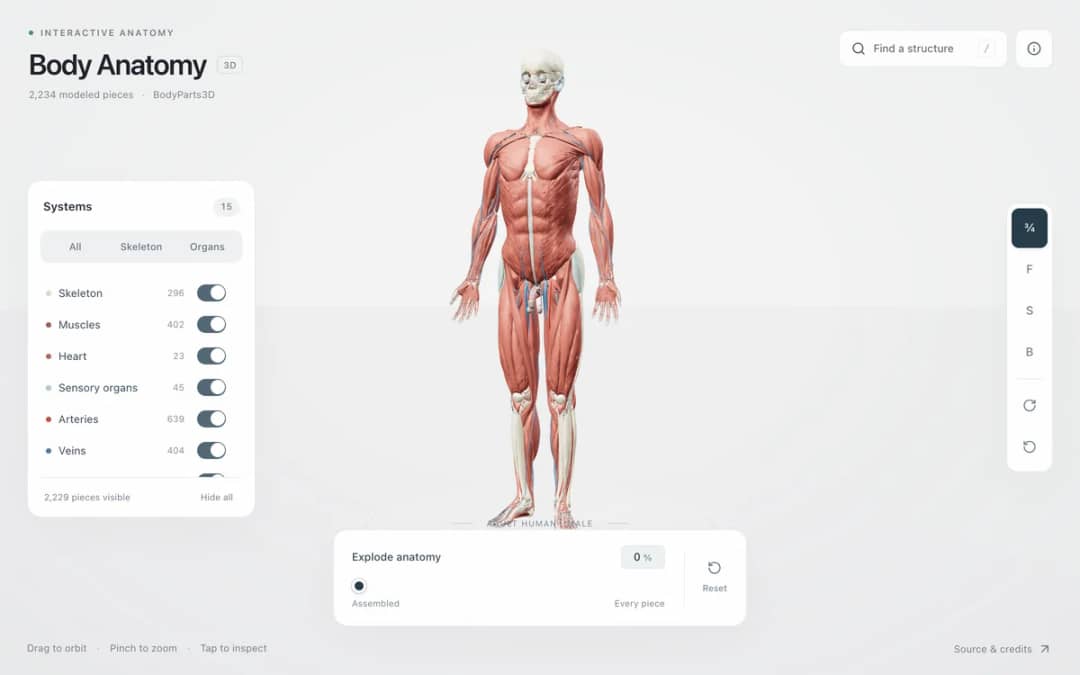
Explore an adult male reference body in 3D. Reveal 14 anatomical systems, search thousands of named structures, isolate organs, and pull 2,209 modeled pieces apart to see how the body is organized.
—
KiwiBee usa cookies opcionales de Google Analytics, Google Ads y Meta Pixel para entender a los visitantes adultos, medir los registros completados y mejorar las campañas. Las cookies esenciales siempre permanecen activas. El píxel de anuncios de ChatGPT de OpenAI también mide las visitas y las consultas enviadas tras aceptar la publicidad, y puede usar datos de contacto cifrados mediante hash para la atribución. Política de privacidad
Osmosis & Tonicity 3D compares how animal and plant cells respond to extracellular solute concentration and water potential. On the left floats a flexible biconcave red blood cell; on the right sits a plant cell enclosed in a rigid cellulose wall with a large central water vacuole and chloroplasts. Students drag the golden solute handle or adjust the molarity slider from 0.00 M pure water through 0.15 M isotonic saline up to 0.80 M hypertonic brine. Animated water molecules stream inward or outward while live readouts display solution tonicity, net water movement, red blood cell state, and plant cell state.
Red blood cells only have a thin phospholipid plasma membrane that tears when osmotic water inflow swells the cell. Plant cells are surrounded by a strong cellulose cell wall that pushes back with turgor pressure, stopping further water entry.
When a plant cell is immersed in a hypertonic solution with high external solute concentration, water leaves the central vacuole by osmosis. The cytoplasm and plasma membrane shrink and pull away from the rigid cell wall.
An isotonic solution has the same effective solute concentration and water potential as the cell cytoplasm—around 0.15 M NaCl for human blood—so there is no net movement of water across the membrane.
Colócala en tu LMS, blog o sitio de clase, gratis.
<iframe src="https://kiwibee.io/es/simulations/osmosis-red-blood-plant-cells-3d-simulation/embed" title="Osmosis & Tonicity 3D | KiwiBee" loading="lazy" allowfullscreen style="width:100%;height:min(70vh,620px);min-height:420px;border:0;border-radius:16px"></iframe>Sigue explorando
Explore an adult male reference body in 3D. Reveal 14 anatomical systems, search thousands of named structures, isolate organs, and pull 2,209 modeled pieces apart to see how the body is organized.
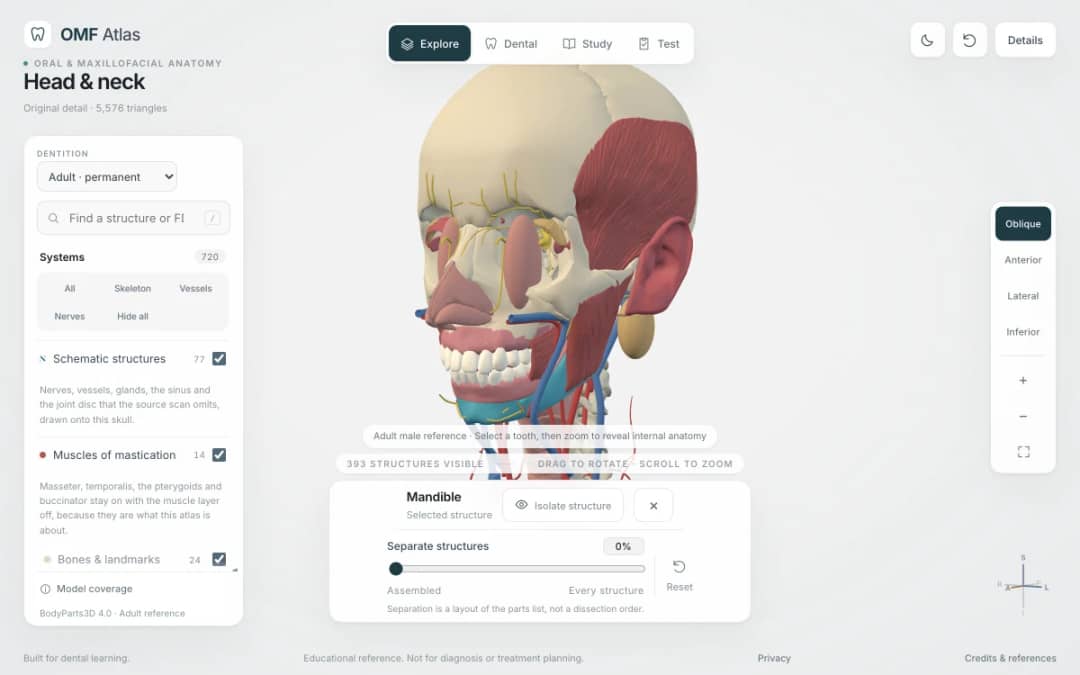
Explore the head and neck in 3D: 643 source meshes across 14 layers, 47 facial and masticatory muscles, and 77 drawn nerves, vessels and glands the source scan omits. Open any tooth onto its own pulp canal, and follow the seven stages of tooth development.

Free interactive photosynthesis simulation. Explore photosynthesis hands-on online — great for whole-class or independent practice.

Free interactive states of matter simulation. Explore states of matter hands-on online — great for whole-class or independent practice.

Free interactive shadows simulation. Explore shadows hands-on online — great for whole-class or independent practice.
Del modelo a la evidencia
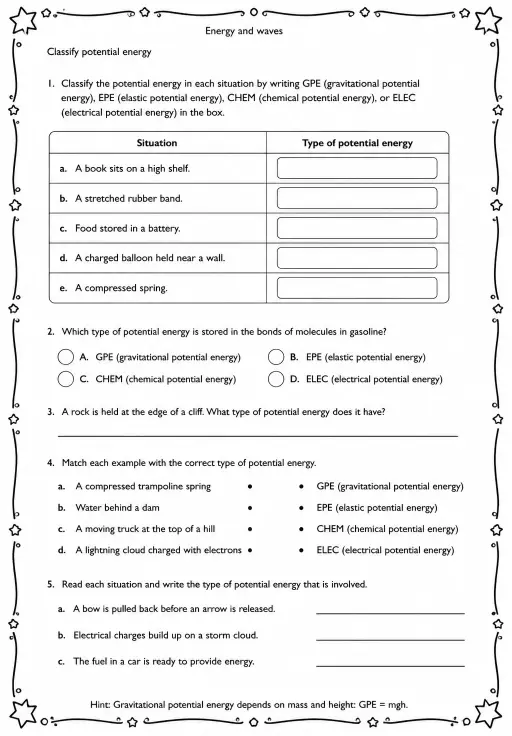
Usa una ficha para recoger predicciones, observaciones y explicaciones después de que los alumnos exploren.
El espacio de trabajo gratuito para docentes de KiwiBee reúne en un solo lugar la planificación de clases, las fichas, las herramientas de aula y el libro de calificaciones.
Empieza gratis y crea tu primera clase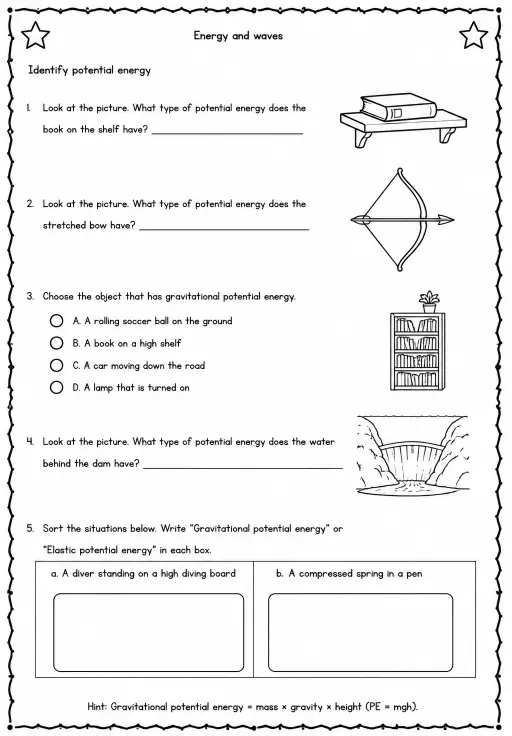
 Inicio
 Todas las soluciones
 Precios
 Quiénes somos
 KiwiBee para organizaciones sin fines de lucro
 Eventos y seminarios web
 Para grandes organizaciones
 Para escuelas
 Para centros de aprendizaje
 Para líderes de equipo
 Para docentes
 IA y recursos
 Recursos
 Hojas de trabajo imprimibles
 Paquetes didácticos
 Simulaciones interactivas
 Herramientas para docentes
 Estudio de IA
 Ideas e investigación