
Ficha imprimible
Explica una idea a un lector nuevo
CuestionarioEnglishGrado 3español

Sigue practicando con estas
Elegidos por su significado entre juegos, fichas, simulaciones, herramientas para docentes y vídeos.
 JuegoLee, deduce y señala la pista
 JuegoDetectives de palabras en un texto
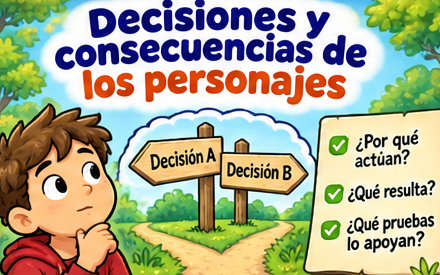 JuegoDecisiones y consecuencias de los personajes
 JuegoResume sin perder lo esencial
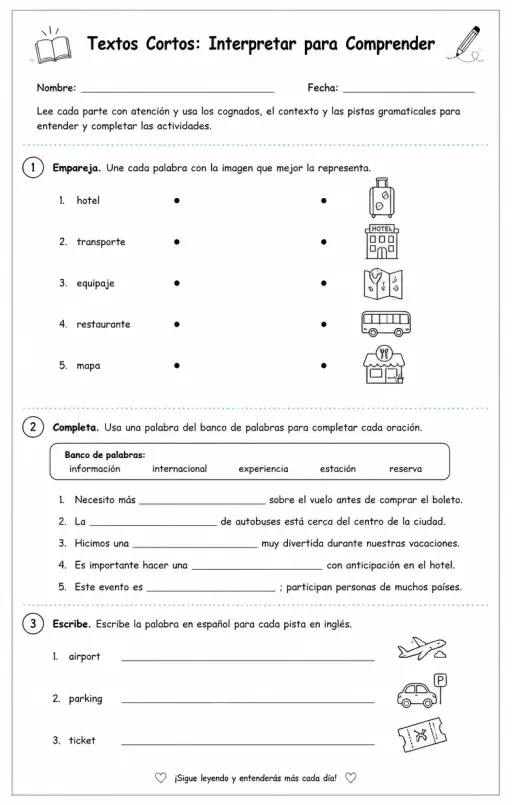 FichaUsar cognados, contexto y pistas gramaticales para interpretar textos desconocidos.
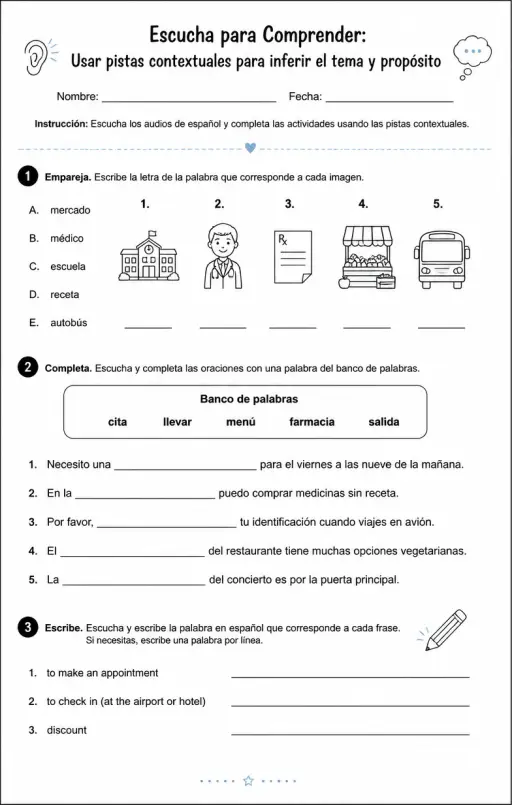 FichaUsar pistas contextuales para inferir el tema y propósito de español hablado simple.
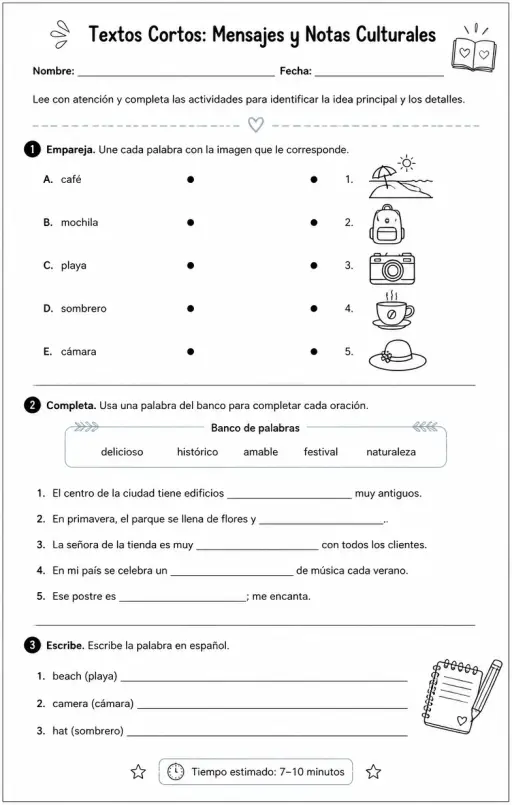 FichaLeer mensajes cortos, descripciones y notas culturales para identificar la idea principal y detalles.
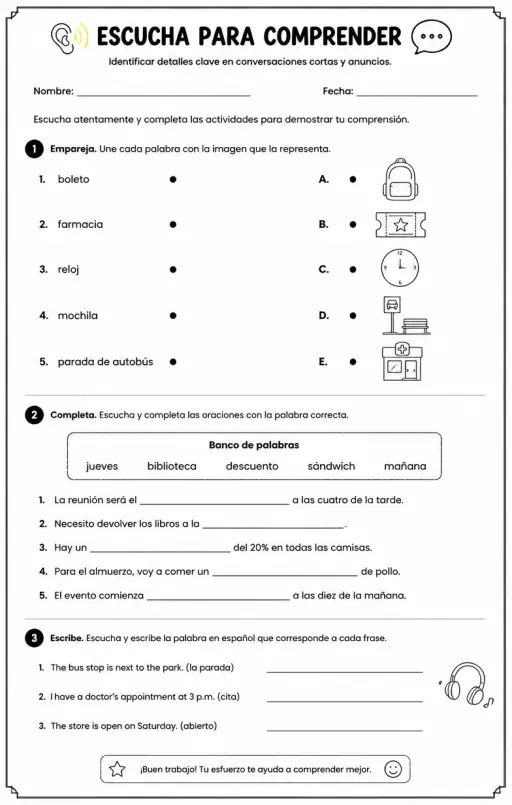 FichaIdentificar detalles clave en conversaciones cortas y anuncios.
En esta ficha
Las palabras y preguntas del juego
- 1Lee: "Tia gave a brief answer, only two words long." ¿Qué significa brief aquí?very long · short · careless · spoken loudly
- 2Verdadero o falso: Para deducir una palabra por el contexto, debes usar las pistas cercanas del texto.True · False
- 3Escucha. ¿Qué significa packed?broken apart · empty · full of things · light to carry
- 4Lee: "We huddled under the porch roof while thunder boomed and rain poured down." ¿Qué significa huddled aquí?stood close together · sang loudly · stood far apart · ran in different directions
- 5Ordena los pasos para deducir una palabra por el contexto.
- 6Lee: "After the race, Omar was exhausted. He dropped onto the bench and panted for a full minute." ¿Qué significa exhausted?full of energy · proud of winning · asleep · very tired
- 7Escucha. ¿Qué significa peered?looked carefully · shouted angrily · ran quickly · closed tightly
- 8Lee: "The class left the paint jars open overnight, so the paint became thick and hard to spread." ¿Cuál fue la causa?The paint became thick and hard to spread. · The class left the paint jars open overnight. · The class wanted brighter colors. · The class added more water the next morning.
- 9Lee: "Kai set his alarm ten minutes earlier. As a result, he caught the bus instead of missing it." ¿Cuál fue el efecto?Kai set his alarm earlier. · The alarm was painted blue. · Kai went to bed late. · Kai caught the bus.
- 10Lee: "Lena forgot her water bottle during soccer practice, so she felt thirsty before the game ended." Verdadero o falso: Olvidar la botella de agua fue la causTrue · False
- 11Un estudiante escribe: "A nocturnal animal is active at night." ¿Qué ejemplo ayudaría más a un lector nuevo?A child reading a book indoors at noon. · A bat sleeping quietly in its cave all night. · A bat leaving its cave after sunset to find insects. · A robin singing in a tree at sunrise.
- 12Un estudiante escribe: "Fragile means easy to break." Elige la imagen que mejor ayude a un lector nuevo.
- 13Lee la idea: "A cause explains why something happened." ¿Qué par de oraciones es el mejor ejemplo?Jules wore a red shirt. The shirt had short sleeves. · The path had a railing. The railing was made of metal. · The class read silently. The room had four windows. · The path was icy. Nora slipped and grabbed the rail.
- 14Lee: Enormous means "very large." Ejemplo: "The ant was very tiny, so it was enormous" Verdadero o falso: Este ejemplo respalda la definición literal dada.True · False
- 15Lee: "During the hike, Elena became weary, so she sat on a rock and asked for a short rest." ¿Qué respuesta es la mejor?Weary means tired. · Weary means excited. · Weary means impatient. · Weary means confused.
- 16Lee: "The goat pushed through a loose gate, and the garden was nibbled by morning." ¿Qué hecho fue probablemente la causa?The gate was painted green. · The goat pushed through a loose gate. · The gardener picked flowers the previous week. · The garden was nibbled by morning.
- 17Un estudiante escribe: "A slippery floor can make someone fall." ¿Qué ejemplo añadido ayudaría más a un lector nuevo?A cook stirs soup in a pot. · A person stands firmly on a dry carpet. · A person steps on a wet hallway puddle and loses balance. · A child glides across ice skates on a rink.
- 18Un estudiante escribe: "Camouflage helps an animal blend into its surroundings." Elige la imagen que mejor explique esta idea.
- 19Lee: "The sidewalk was slick after the storm, so Arun took small steps. He told Mia, 'Slick means shiny,' and pointed to the puddles." ¿Qué parte del razonamienHe decided slick means shiny instead of slippery. · He should have decided slick means warm. · He noticed there were puddles on the ground. · He used the clue that the sidewalk was after a storm.
Sobre esta ficha
Una ficha imprimible hecha a partir del juego de KiwiBee «Explica una idea a un lector nuevo». Ábrela en el Estudio de fichas gratuito para elegir el diseño y el tipo de hoja, y luego imprímela o guárdala en PDF.
Lee o escucha textos breves originales, deduce palabras mediante pistas, identifica causas y efectos y elige ejemplos que aclaren una idea.
- ms 066
- english
 Inicio
 Todas las soluciones
 Precios
 Quiénes somos
 KiwiBee para organizaciones sin fines de lucro
 Eventos y seminarios web
 Para grandes organizaciones
 Para escuelas
 Para centros de aprendizaje
 Para líderes de equipo
 Para docentes
 Recursos
 Hojas de trabajo imprimibles
 Simulaciones interactivas
 Herramientas para docentes
 Ideas e investigación


Comentarios