I Left Finance for Teaching at 35. Here's What Nobody Warned Me About.
A career changer reflects on the unexpected realities of the classroom.
 By KiwiBee· KiwiBee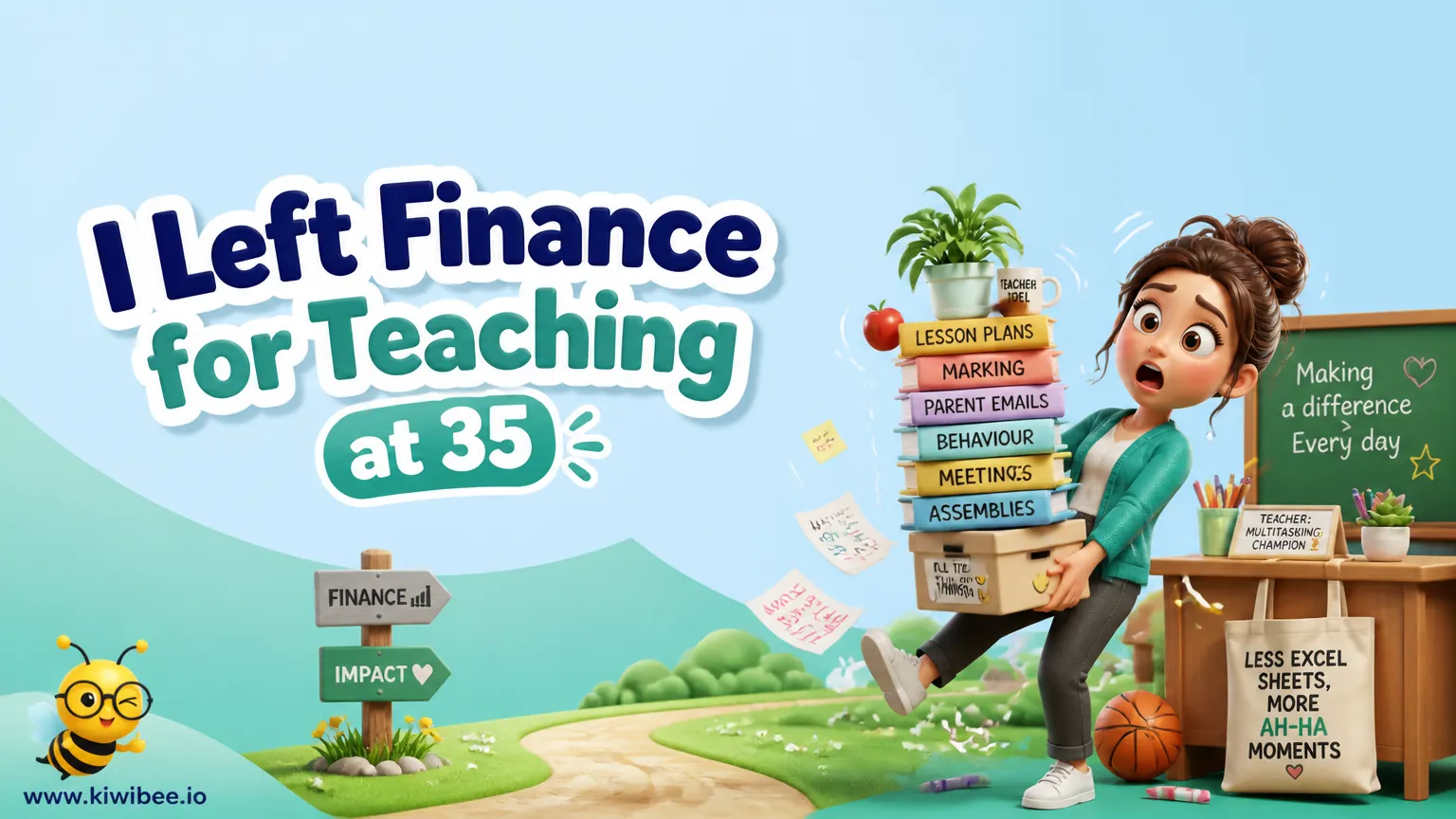
Why I Made the Switch
At 34, I was a director at a mid-sized investment bank, managing a team of analysts and earning more money than I ever imagined growing up. On paper, I'd made it. In reality, I was burned out, disconnected from meaningful work, and watching my daughter grow up through photos my wife texted me during 14-hour workdays.
I'd always been good at explaining complex concepts. Colleagues said I should teach. So at 35, I enrolled in an alternative certification program, left my bonus on the table, and joined a public high school math department. That was three years ago. Here's what I wish someone had told me.
The Hours Myth
People assume teachers work less than bankers. They don't. They work differently. In finance, my 80-hour weeks had downtime — waiting for markets, long lunches with clients, travel days with email. Teaching is relentless. From 7:30 AM to 3:30 PM, I am ON. No bathroom break if I want one. No stepping out for coffee. Thirty faces need my attention every 50 minutes.
Then comes grading, planning, parent emails, department meetings, professional development. My hours aren't longer than banking, but they're denser. I'm more exhausted at 5 PM than I ever was at midnight in the office. The mental load is constant. That's where tools like AI planning support have started to take the edge off.
What Finance Taught Me That Transferred
Project management skills transfer directly. Breaking complex processes into steps, creating timelines, managing multiple workstreams — I use these daily. My lesson planning improved dramatically once I treated units like client deliverables with clear milestones and checkpoints.
Client relationship skills matter too. In banking, you learn to read rooms, adjust your communication style, handle difficult personalities. Parents are stakeholders. Students are clients. Administration is executive leadership. The interpersonal dynamics are remarkably similar.
What I Had to Completely Unlearn
Efficiency is valued in finance. Do more with less. Move fast. In teaching, relationships require time that looks 'inefficient.' That five-minute conversation with a struggling student about their weekend might be the most important thing I do all day — even though it produces nothing measurable.
I also had to unlearn the idea that expertise means explaining things once. In finance, if someone doesn't understand after my explanation, that's their problem. In teaching, if someone doesn't understand, I need to find a different path to understanding. My job isn't to demonstrate knowledge — it's to transfer it, however that needs to happen.
The Unexpected Joy
I expected teaching to be meaningful. I didn't expect it to be fun. Teenagers are hilarious. Their questions are wild. They push back on everything. After years of corporate conformity, I rediscovered what it's like to have genuinely surprising conversations with people who haven't learned to perform professional personas yet.
Three years in, I make a fraction of my former salary. I'm home for dinner every night. I know my students' names, their stories, their struggles. When a kid who hated math starts showing up early for extra help, something happens that spreadsheets never provided. I'm not naive — this job is hard, undersupported, and often frustrating. But I'm not going back. Read more about why I made the leap.
Explore the platform
Continue with KiwiBee
Choose the KiwiBee workspace or resource library that fits what you need next.
Related posts

After 25 Years in Education, AI Showed Me What I'd Been Missing
I thought I was an expert observer. Then AI analysis of the same lessons I watched showed patterns my experienced eyes had completely missed.
Why I Stopped Dreading Lesson Observations (A Principal's Confession)
After 20 years in education, I thought I knew what teacher observations had to be. Clipboard, checklist, anxiety. Then we discovered a better way.
As a First-Year Teacher, AI Lesson Planning Saved My Career
They told me the first year would be tough. They didn't tell me I'd be planning lessons until 2 AM every night. Here's what changed everything.
 For big organisations
 For schools
 For centers
 For team leaders
 For teachers
 AI and resources
 Printable worksheets
 Teacher tools
 AI studio
 Ideas and research