Taylor Series Approximation Simulation
Math · Taylor Series · High School
About this simulation
A Taylor polynomial is built entirely from what a function is doing at a single point: its value there, its slope there, its curvature there, and so on. Each derivative fixes one more coefficient, and each new term bends the polynomial to match the curve a little further out. Two things follow. The approximation is always best at the centre and gets worse as you walk away from it, so the useful question is not whether it works but how wide the region is where it works. And for some functions that region has a hard edge: ln(1 + x) breaks at x = -1 and 1/(1 - x) blows up at x = 1, so a series centred at a converges only within that distance of a. Inside the radius the extra terms shrink and the polynomial closes in; outside it they grow, and a higher degree makes the answer worse rather than better. Students can change degree and centre and compare what happens. Use it for math inquiry with High School on a projector or student device.
Standards: Common Core CCSS.MATH.CONTENT.HSA.SSE.B.4, CCSS.MATH.CONTENT.HSF.BF.A.1
What students can explore
- Start at degree 0 and add one term at a time, watching how much further the match reaches each time
- Switch to 1/(1 - x) and find the point where more terms stop helping, then compare it with the radius readout
- Drag the centre towards x = -1 on ln(1 + x) and watch the radius, and the shaded band, shrink with it
- Set a wide tolerance, then a narrow one, and see how much of the band was really about how fussy you were being
- Compare sin x and 1/(1 - x) at degree 12: one is right across the whole screen, the other only near the middle
Learning objectives
- 1Predict how changing degree will affect the polynomial says, then test the prediction.
- 2Use evidence from the live calculation and visual to explain the result.
Questions teachers ask
Is the Taylor Series Approximation simulation free?
Yes. Open the Taylor Series Approximation simulation in a modern browser with no download or sign-up required.
Is it suitable for High School?
The simulation includes learning-level presets spanning High School. Choose the level that matches your class, then use it on a projector or student devices.
Embed this simulation
Drop it into your LMS, blog, or class site — free.
<iframe src="https://kiwibee.io/en/simulations/taylor-series-approximation-simulation/embed" title="Taylor Series Approximation Simulation | KiwiBee" loading="lazy" allowfullscreen style="width:100%;height:min(70vh,620px);min-height:420px;border:0;border-radius:16px"></iframe>Continue exploring
More interactive science models

Spin a spinner, flip a coin or roll a die and watch two sets of bars: the chances the shapes predict, and the results you actually got. Ten spins prove nothing; a few hundred and the two are hard to tell apart.

Type any function and see its shape straight away. Plot up to three at once in three colours to compare them, drag the trace point to read a value off a curve, and see where each one crosses zero.

Two bodies under gravity trace an ellipse forever and you can write the formula down. Add a third and no such formula exists. Run the figure-eight orbit, nudge one mass, and watch a stable pattern become unpredictable while the total energy stays put.

Approximate the area under a curve with strips and choose how each takes its height: left edge, right edge, middle, or a sloping top. Push the strip count up and watch the error fall, with the running total plotted as its own curve.

Move m and watch the line tilt; move b and watch it slide. Or drag the two points on the line and read the equation it writes back. A rise-over-run staircase climbs the line so slope becomes something you can count.
From model to evidence
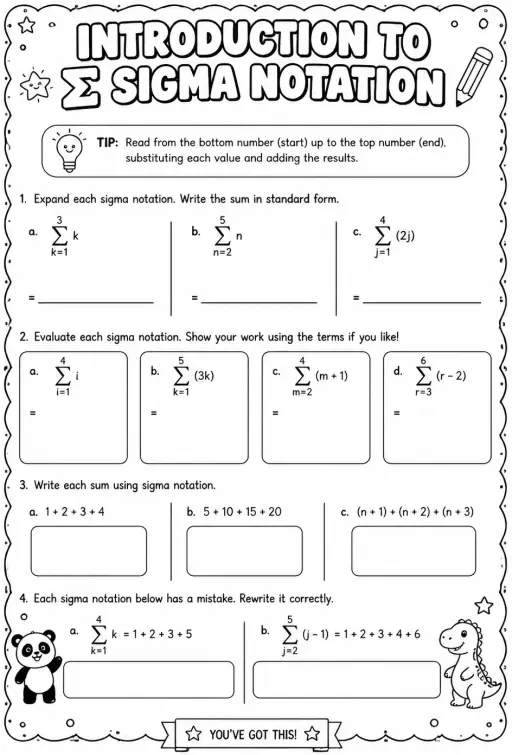
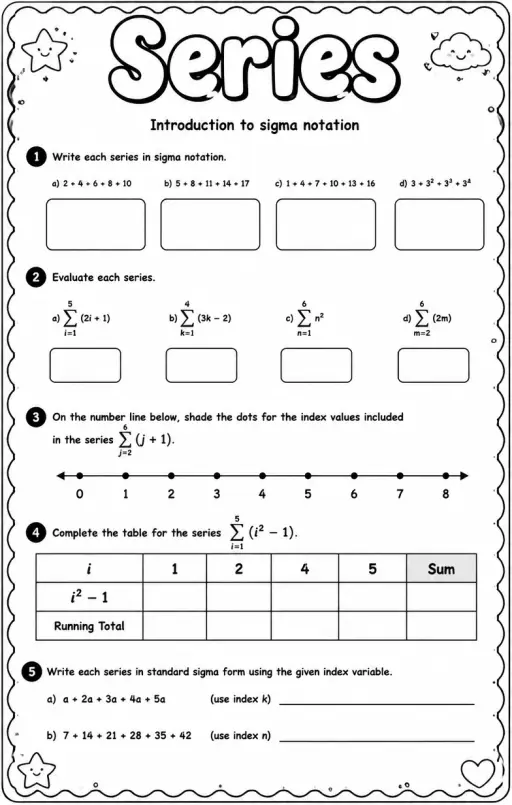
Pair this simulation with a printable
Use a worksheet to capture predictions, observations, and explanations after students explore.
Bring interactive science into your classroom
KiwiBee's free teacher workspace brings lesson planning, worksheets, classroom tools, and gradebook together in one place.
Start free and create your first class For big organisations
 For schools
 For centers
 For team leaders
 For teachers
 AI and resources
 মুদ্রণযোগ্য ওয়ার্কস
 ইন্টারেকটিভ সিমুলেশন
 শিক্ষক টুল
 AI স্টুডিও
 ভাবনা এবং গবেষণা