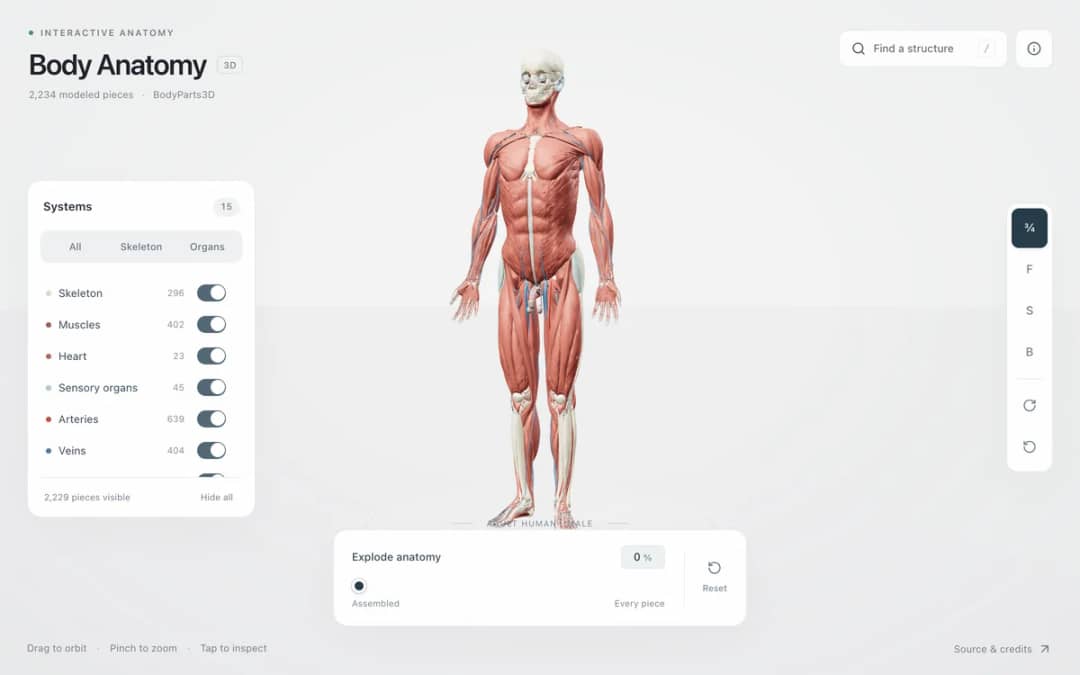
Explore an adult male reference body in 3D. Reveal 14 anatomical systems, search thousands of named structures, isolate organs, and pull 2,209 modeled pieces apart to see how the body is organized.
—
প্রাপ্তবয়স্ক দর্শকদের বুঝতে, সম্পন্ন সাইন-আপ পরিমাপ করতে এবং ক্যাম্পেইন উন্নত করতে KiwiBee ঐচ্ছিক Google Analytics, Google Ads ও Meta Pixel কুকি ব্যবহার করে। প্রয়োজনীয় কুকি সবসময় চালু থাকে। OpenAI-এর ChatGPT Ads Pixel বিজ্ঞাপনের সম্মতির পরে পৃষ্ঠা দেখা ও জমা দেওয়া অনুসন্ধানও পরিমাপ করে এবং মিল খোঁজার জন্য হ্যাশ করা যোগাযোগের তথ্য ব্যবহার করতে পারে। গোপনীয়তা নীতি
Students choose a mass from moon to star, click to place a body and drag before releasing to give it a velocity. Gravity acts between all bodies, so they can build a star with a planet in circular orbit, a small system with one button, or a chaotic three-body dance. Trails show paths, and readouts show body count, total and kinetic energy, next mass and the number of merges. Bodies that touch combine. The sim shows that orbits are falling paths shaped by F = G m1 m2 / r squared. Teachers can ask for stable orbits.
Yes. It is completely free, needs no sign-up, and runs in any modern browser, including classroom whiteboards, tablets and phones. Just open the page and start.
With two bodies the orbits are tidy ellipses, but with three or more there is no general formula for the motion. Small changes grow quickly, so the orbits can become chaotic.
Select a mass, click where you want the body, and drag before releasing. The drag sets the launch velocity. Keep Click places bodies switched on, and press Clear all to remove everything.
Gravity pulls the planet toward the star while its sideways motion carries it onward. It keeps falling toward the star but keeps missing it, so it circles around.
আপনার এলএমএস, ব্লগ বা ক্লাসের সাইটে বসিয়ে দিন — বিনামূল্যে।
<iframe src="https://kiwibee.io/bn/simulations/nbody-gravity-sandbox-3d-simulation/embed" title="N-Body Gravity Sandbox | KiwiBee" loading="lazy" allowfullscreen style="width:100%;height:min(70vh,620px);min-height:420px;border:0;border-radius:16px"></iframe>অনুসন্ধান চালিয়ে যান
Explore an adult male reference body in 3D. Reveal 14 anatomical systems, search thousands of named structures, isolate organs, and pull 2,209 modeled pieces apart to see how the body is organized.
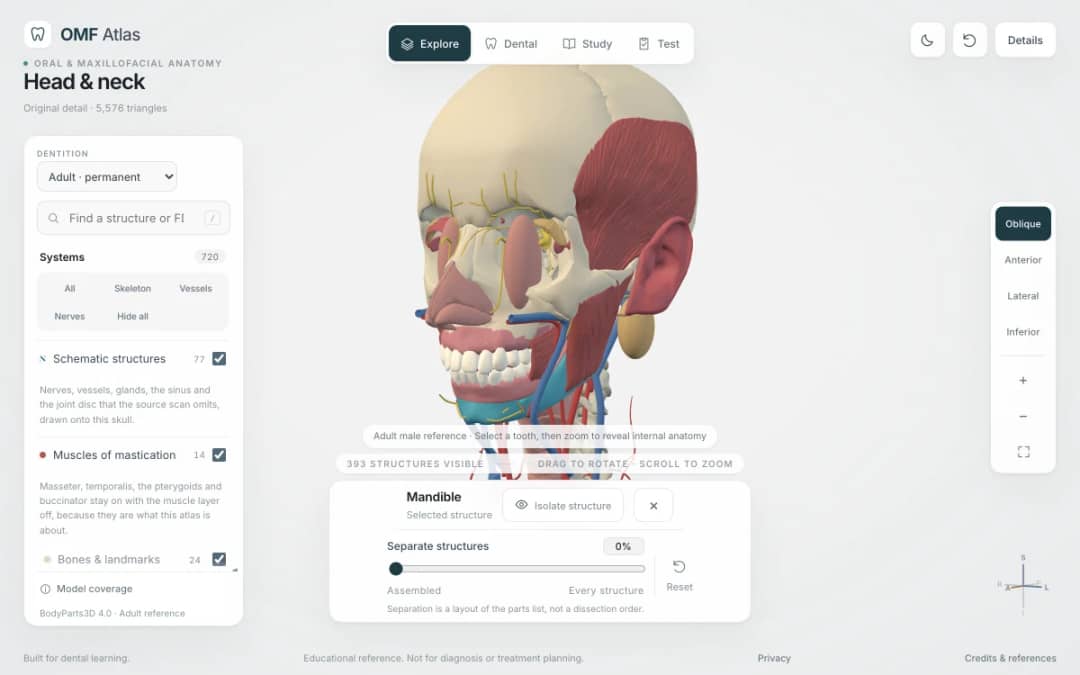
Explore the head and neck in 3D: 643 source meshes across 14 layers, 47 facial and masticatory muscles, and 77 drawn nerves, vessels and glands the source scan omits. Open any tooth onto its own pulp canal, and follow the seven stages of tooth development.

Free interactive photosynthesis simulation. Explore photosynthesis hands-on online — great for whole-class or independent practice.

Free interactive states of matter simulation. Explore states of matter hands-on online — great for whole-class or independent practice.

Free interactive shadows simulation. Explore shadows hands-on online — great for whole-class or independent practice.
মডেল থেকে প্রমাণে
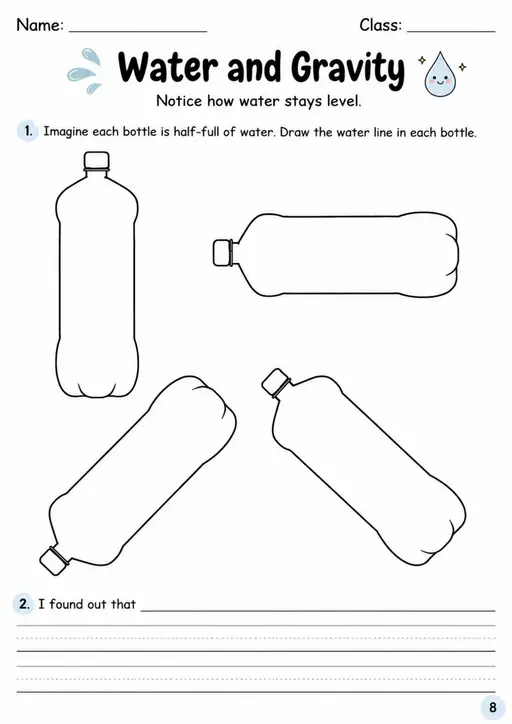
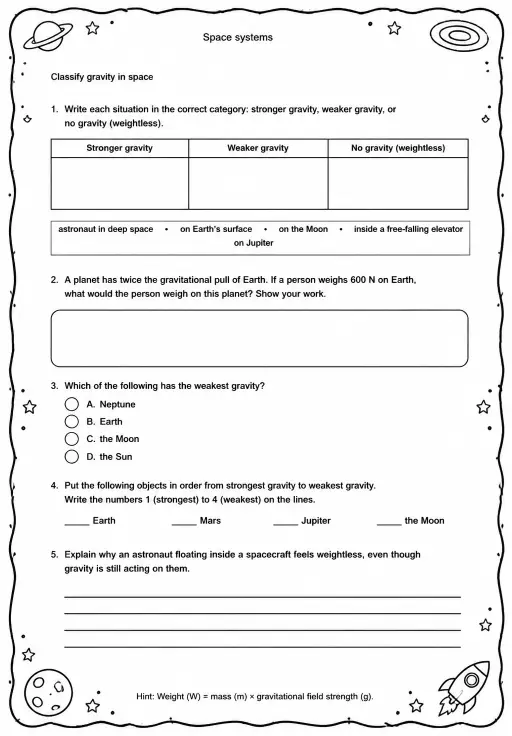
শিক্ষার্থীরা অনুসন্ধান করার পর তাদের অনুমান, পর্যবেক্ষণ ও ব্যাখ্যা লিখে রাখতে ওয়ার্কশিট ব্যবহার করুন।

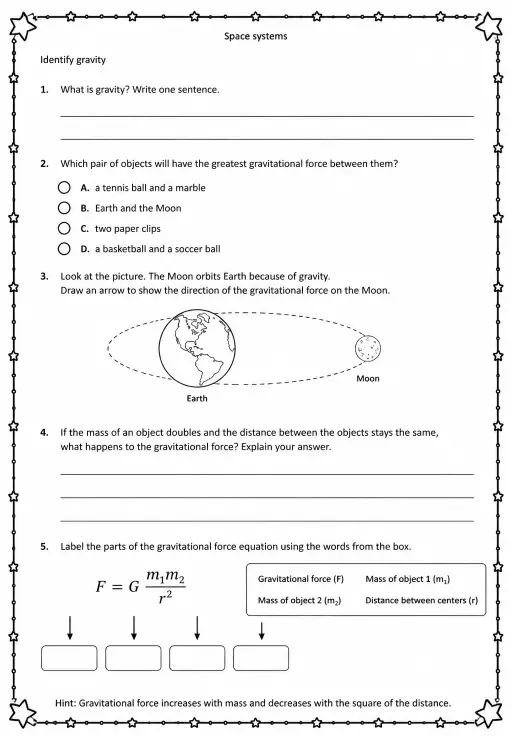
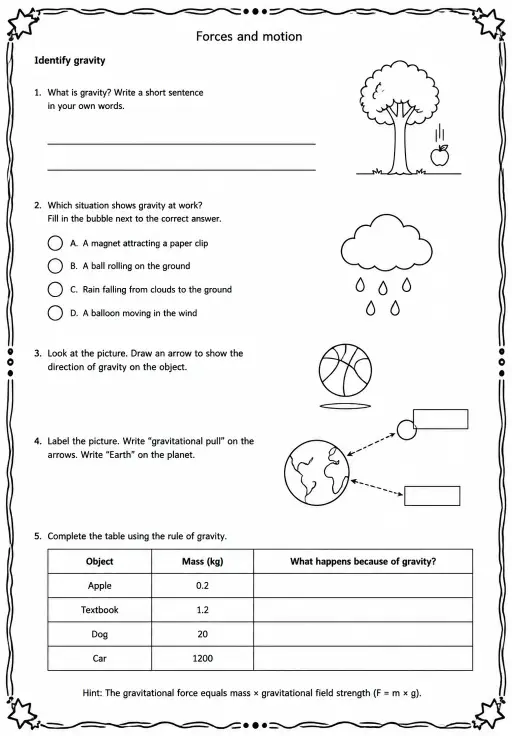
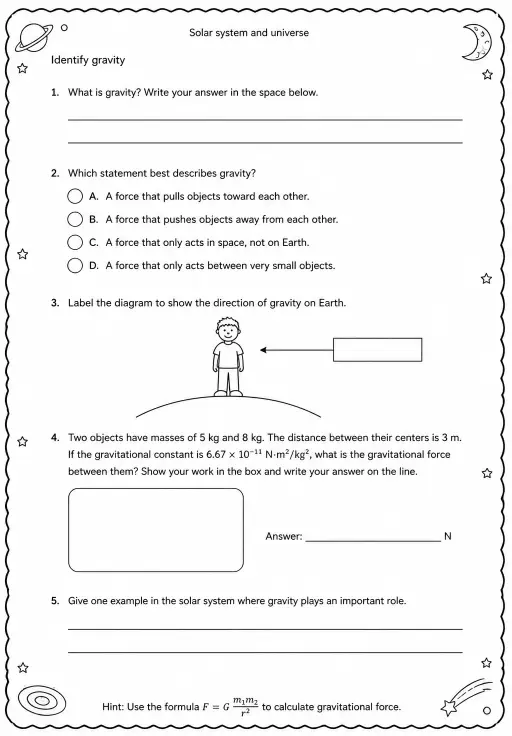
KiwiBee-এর বিনামূল্যের শিক্ষক কর্মক্ষেত্র পাঠ পরিকল্পনা, ওয়ার্কশিট, শ্রেণিকক্ষের সরঞ্জাম ও গ্রেডবুক এক জায়গায় নিয়ে আসে।
বিনামূল্যে শুরু করুন এবং আপনার প্রথম ক্লাস তৈরি করুন হোম
 সব সমাধান
 মূল্য
 আমাদের সম্পর্কে
 অলাভজনক সংস্থার জন্য KiwiBee
 ইভেন্ট ও ওয়েবিনার
 বড় প্রতিষ্ঠানের জন্য
 স্কুলের জন্য
 শিক্ষাকেন্দ্রের জন্য
 টিম লিডারদের জন্য
 শিক্ষকদের জন্য
 AI ও উপকরণ
 উপকরণ
 ছাপার উপযোগী ওয়ার্কশিট
 পাঠ প্যাক
 ইন্টারঅ্যাকটিভ সিমুলেশন
 শিক্ষকের সরঞ্জাম
 AI স্টুডিও
 ভাবনা ও গবেষণা