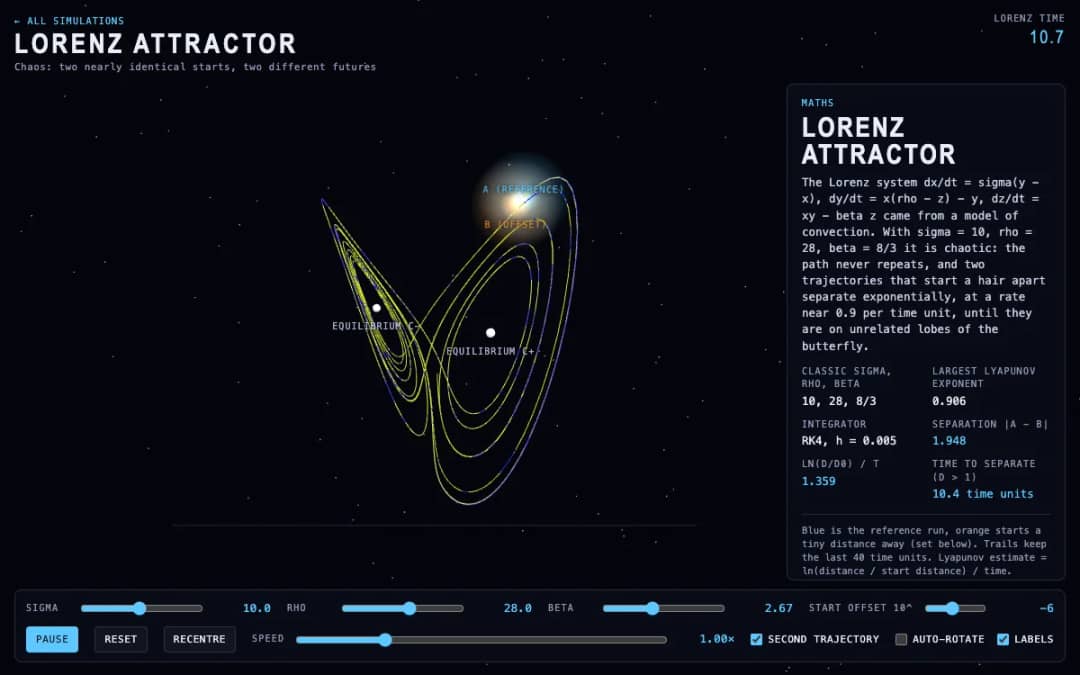
লরেঞ্জ সমীকরণ একটি উজ্জ্বল 3D প্রজাপতি বক্ররেখা আঁকে। শিক্ষার্থীরা সিগমা, রো ও বিটা বদলায় এবং প্রায় একই দুটি শুরু তুলনা করে দেখে সেগুলো কত দ্রুত আলাদা হয়।
—
প্রাপ্তবয়স্ক দর্শকদের বুঝতে, সম্পন্ন সাইন-আপ পরিমাপ করতে এবং ক্যাম্পেইন উন্নত করতে KiwiBee ঐচ্ছিক Google Analytics, Google Ads ও Meta Pixel কুকি ব্যবহার করে। প্রয়োজনীয় কুকি সবসময় চালু থাকে। OpenAI-এর ChatGPT Ads Pixel বিজ্ঞাপনের সম্মতির পরে পৃষ্ঠা দেখা ও জমা দেওয়া অনুসন্ধানও পরিমাপ করে এবং মিল খোঁজার জন্য হ্যাশ করা যোগাযোগের তথ্য ব্যবহার করতে পারে। গোপনীয়তা নীতি
এডওয়ার্ড লরেন্স ১৯৬৩ সালে একটি আবহাওয়া-মডেলকে ছেঁটে একেবারে হাড়ে নামিয়ে আনতে গিয়ে এই তিনটি সমীকরণ পান। এদের মধ্যে কিছুই এলোমেলো নয়, কিছুই আসন্ন নয়: একই তিনটি শুরুর সংখ্যা দুবার দিন, দুবারই একই পথ পাবেন, চিরকাল। তবুও তাদের একটির অষ্টম দশমিক স্থানটি বদলে দিন, আর প্রায় বিশটি সময়-একক পরে দুটি পথ প্রজাপতির দুই বিপরীত ডানায় গিয়ে পড়বে। এটিই শুরুর অবস্থার প্রতি সংবেদনশীল নির্ভরতা, আর এটি সমীকরণেরই ধর্ম, কম্পিউটারের ত্রুটি নয়। এর একটি সুইচও আছে: ডানাদুটির কেন্দ্র থাকে ±বর্গমূল(বিটা(রো − ১)) এ, আর রো সিগমা(সিগমা + বিটা + ৩)/(সিগমা − বিটা − ১) না ছাড়ানো পর্যন্ত তারা স্থিতিশীল থাকে, যা লরেন্সের নিজের সংখ্যায় দাঁড়ায় ৪৭০/১৯, প্রায় ২৪.৭৪। তার নিচে দুই যমজই একই বিন্দুতে থিতু হয় আর ভবিষ্যৎ পুরোপুরি অনুমেয় থাকে। তার উপরে থিতু হওয়ার জায়গাই আর অবশিষ্ট থাকে না। (কঠোরভাবে বললে, প্রায় রো = ২৪.০৬ থেকেই একটি অদ্ভুত আকর্ষক ওই স্থিতিশীল বিন্দুগুলোর পাশাপাশি টিকে থাকে, তাই দুই মানের মাঝের ওই সরু জানালাটিতে শেষ পরিণতি নির্ভর করে আপনি কোথা থেকে শুরু করছেন তার উপর।) শিক্ষার্থীরা x কত দ্রুত y এর পিছু নেয় এবং কত জোরে চালানো হচ্ছে বদলে দেখতে ও তুলনা করতে পারে কী ঘটে। উচ্চ মাধ্যমিক-এর সঙ্গে গণিত অনুসন্ধানের জন্য এটি ব্যবহার করুন — প্রজেক্টরে কিংবা প্রত্যেক শিক্ষার্থীর ডিভাইসে।
মানদণ্ড: Common Core CCSS.MATH.CONTENT.HSF.IF.B.4
হ্যাঁ। আধুনিক যেকোনো ব্রাউজারে লরেন্স আকর্ষক সিমুলেশনটি খুলুন — ডাউনলোড বা সাইন-আপ কিছুই লাগবে না।
সিমুলেশনটিতে উচ্চ মাধ্যমিক জুড়ে বিস্তৃত শিখন-স্তর আগে থেকেই দেওয়া আছে। আপনার শ্রেণির সঙ্গে মেলে এমন স্তর বেছে নিন, তারপর প্রজেক্টরে বা শিক্ষার্থীদের ডিভাইসে ব্যবহার করুন।
আপনার এলএমএস, ব্লগ বা ক্লাসের সাইটে বসিয়ে দিন — বিনামূল্যে।
<iframe src="https://kiwibee.io/bn/simulations/lorenz-attractor-simulation/embed" title="লরেন্স আকর্ষক ইন্টারঅ্যাকটিভ সিমুলেশন | KiwiBee" loading="lazy" allowfullscreen style="width:100%;height:min(70vh,620px);min-height:420px;border:0;border-radius:16px"></iframe>অনুসন্ধান চালিয়ে যান
লরেঞ্জ সমীকরণ একটি উজ্জ্বল 3D প্রজাপতি বক্ররেখা আঁকে। শিক্ষার্থীরা সিগমা, রো ও বিটা বদলায় এবং প্রায় একই দুটি শুরু তুলনা করে দেখে সেগুলো কত দ্রুত আলাদা হয়।

যেকোনো অপেক্ষক টাইপ করুন আর সঙ্গে সঙ্গে তার আকৃতি দেখুন। তুলনার জন্য তিন রঙে একসঙ্গে তিনটি পর্যন্ত আঁকুন, বক্ররেখা থেকে মান পড়তে অনুসরণ-বিন্দু টানুন, আর দেখুন কোনটি কোথায় শূন্য কাটে।

চাকা ঘোরান, মুদ্রা ছুড়ুন বা ছক্কা ফেলুন, আর দুই সারি দণ্ড দেখুন: আকৃতিগুলো যে সম্ভাব্যতা বলে, আর আপনি সত্যিই যা পেলেন। দশবার ঘোরালে কিছুই প্রমাণ হয় না; কয়েকশো বারের পর দুটোকে আলাদা করাই কঠিন হয়ে পড়ে।

m সরান আর সরলরেখাটিকে হেলতে দেখুন; b সরান আর সেটিকে উপর-নিচে সরতে দেখুন। কিংবা রেখার দুটি বিন্দু টানুন আর রেখাটি যে সমীকরণ ফিরিয়ে লেখে সেটি পড়ুন। 'উত্থান বনাম সরণ' সিঁড়িটি রেখা বেয়ে ওঠে, যাতে ঢাল এমন কিছু হয়ে ওঠে যা আপনি গুনে দেখতে পারেন।
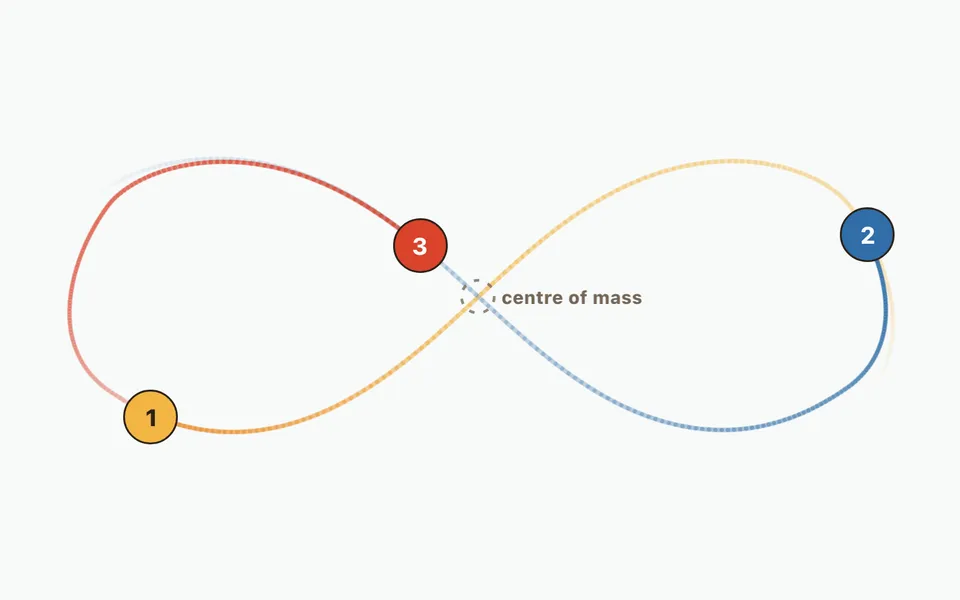
দুটি বস্তুর কক্ষপথের সঙ্গে তিনটি বস্তুর আট-আকৃতির গতির তুলনা করুন, তারপর বারোটি পর্যন্ত বস্তু যোগ করুন। প্রাথমিক ভর, বেগ ও অবস্থান বদলান; গতিপথ এবং সাংখ্যিক শক্তির ত্রুটি দেখুন।
KiwiBee-এর বিনামূল্যের শিক্ষক কর্মক্ষেত্র পাঠ পরিকল্পনা, ওয়ার্কশিট, শ্রেণিকক্ষের সরঞ্জাম ও গ্রেডবুক এক জায়গায় নিয়ে আসে।
বিনামূল্যে শুরু করুন এবং আপনার প্রথম ক্লাস তৈরি করুন হোম
হোম সব সমাধান
 মূল্য
মূল্য আমাদের সম্পর্কে
 অলাভজনক সংস্থার জন্য KiwiBee
 ইভেন্ট ও ওয়েবিনার
 বড় প্রতিষ্ঠানের জন্য
 স্কুলের জন্য
 শিক্ষাকেন্দ্রের জন্য
 টিম লিডারদের জন্য
 শিক্ষকদের জন্য
 AI ও উপকরণ
 উপকরণ
উপকরণ ছাপার উপযোগী ওয়ার্কশিট
 পাঠ প্যাক
 ইন্টারঅ্যাকটিভ সিমুলেশন
 শিক্ষকের সরঞ্জাম
 AI স্টুডিও
 ভাবনা ও গবেষণা