Chemical Reactions and Balancing Equations Simulation
Science · Chemical Reactions · Grade 5, Middle School, and High School
About this simulation
Chemical reactions rearrange atoms without creating or destroying them. The balanced equation 2H₂ + O₂ → 2H₂O fixes the reacting ratio and reveals the limiting reactant. Students can change hydrogen molecules and oxygen molecules and compare what happens. Use it for chemistry inquiry with Grade 5, Middle School, and High School on a projector or student device.
Standards: NGSS MS-PS1-5
What students can explore
- Count atoms before and after a reaction
- Identify the limiting reactant from molecule ratios
- Observe how temperature changes collision rate but not the balanced ratio
Learning objectives
- 1Predict how changing hydrogen molecules will affect the water molecules formed, then test the prediction.
- 2Use evidence from the interactive visual to explain the result.
Questions teachers ask
Is the Chemical Reactions and Balancing Equations simulation free?
Yes. Open the Chemical Reactions and Balancing Equations simulation in a modern browser with no download or sign-up required.
Is it suitable for Grade 5, Middle School, and High School?
The simulation includes learning-level presets spanning Grade 5, Middle School, and High School. Choose the level that matches your class, then use it on a projector or student devices.
Embed this simulation
Drop it into your LMS, blog, or class site — free.
<iframe src="https://kiwibee.io/en/simulations/chemical-reactions-simulation/embed" title="Chemical Reactions and Balancing Equations Simulation | KiwiBee" loading="lazy" allowfullscreen style="width:100%;height:min(70vh,620px);min-height:420px;border:0;border-radius:16px"></iframe>Continue exploring
More interactive science models
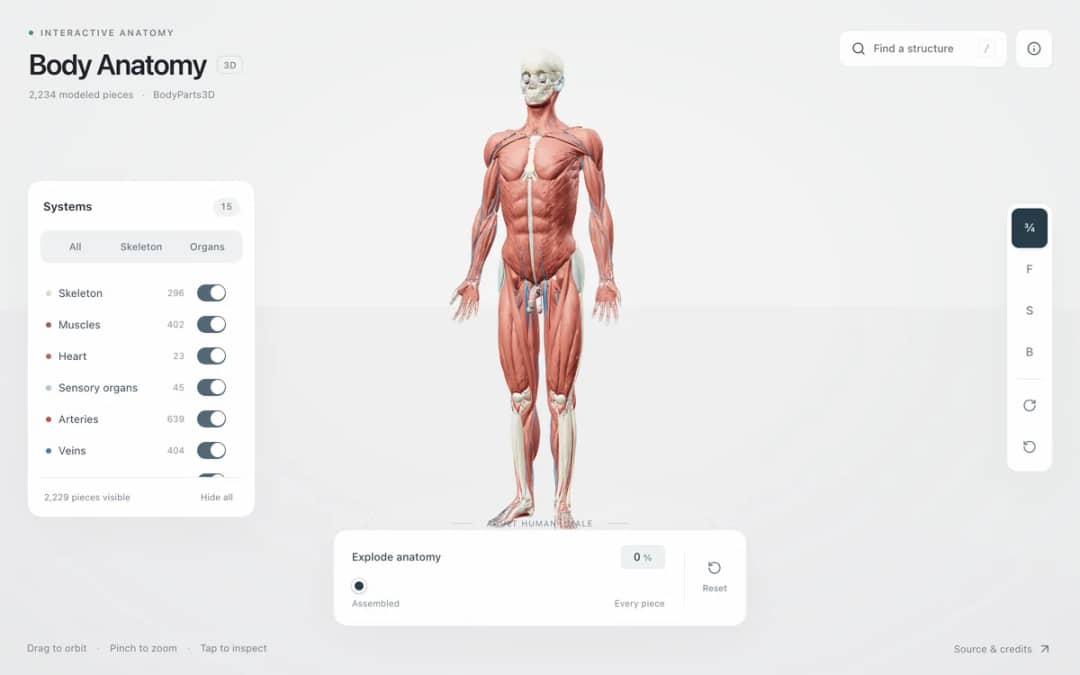
Explore an adult male reference body in 3D. Reveal 14 anatomical systems, search thousands of named structures, isolate organs, and pull 2,209 modeled pieces apart to see how the body is organized.
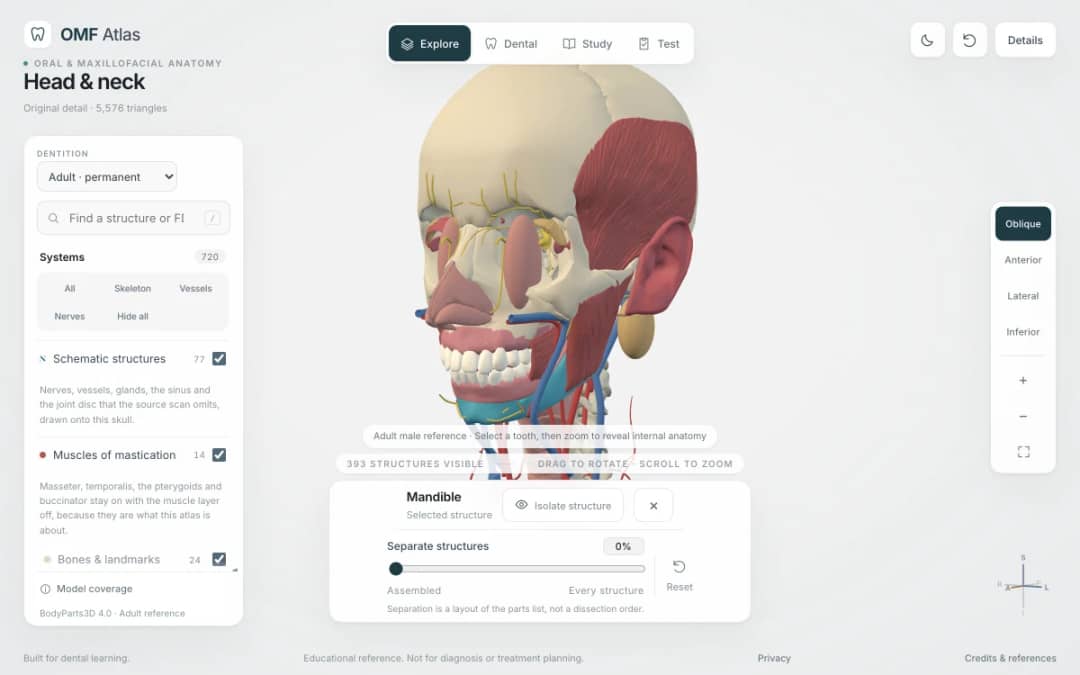
Explore the head and neck in 3D: 643 source meshes across 14 layers, 47 facial and masticatory muscles, and 77 drawn nerves, vessels and glands the source scan omits. Open any tooth onto its own pulp canal, and follow the seven stages of tooth development.

Free interactive photosynthesis simulation. Explore photosynthesis hands-on online — great for whole-class or independent practice.

Free interactive weather simulation. Explore weather hands-on online — great for whole-class or independent practice.

Free interactive shadows simulation. Explore shadows hands-on online — great for whole-class or independent practice.
From model to evidence
Pair this simulation with a printable
Use a worksheet to capture predictions, observations, and explanations after students explore.
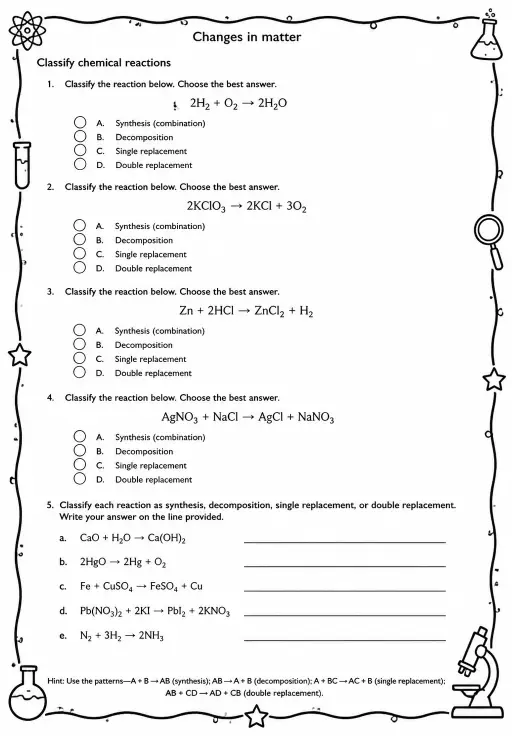
Classify chemical reactions

Identify chemical reactions
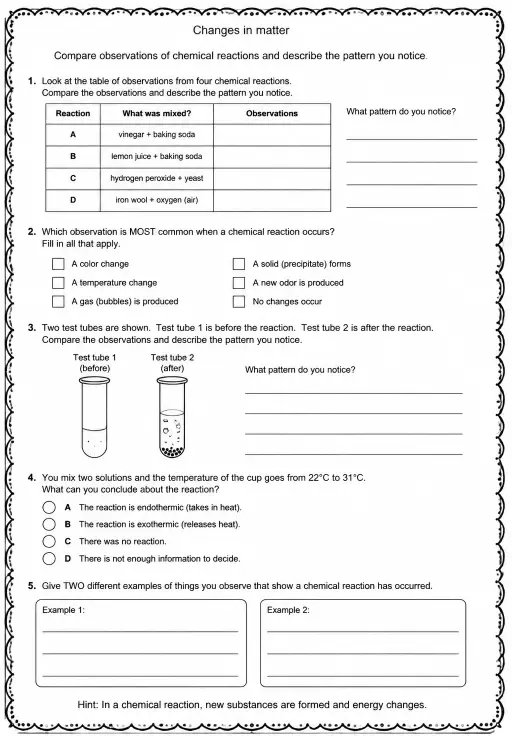
Compare observations of chemical reactions and describe the pattern you notice
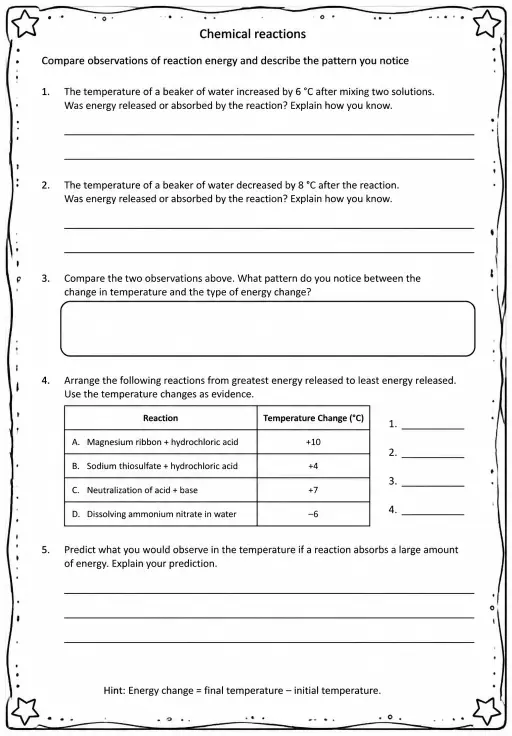
Compare observations of reaction energy and describe the pattern you notice
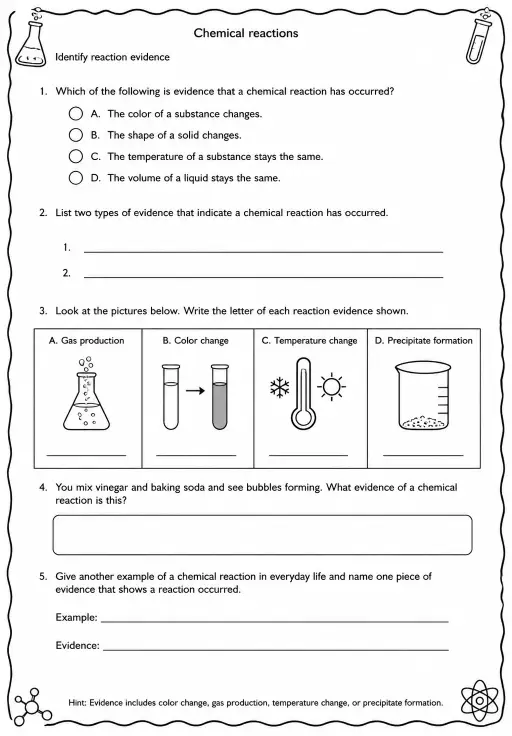
Identify reaction evidence
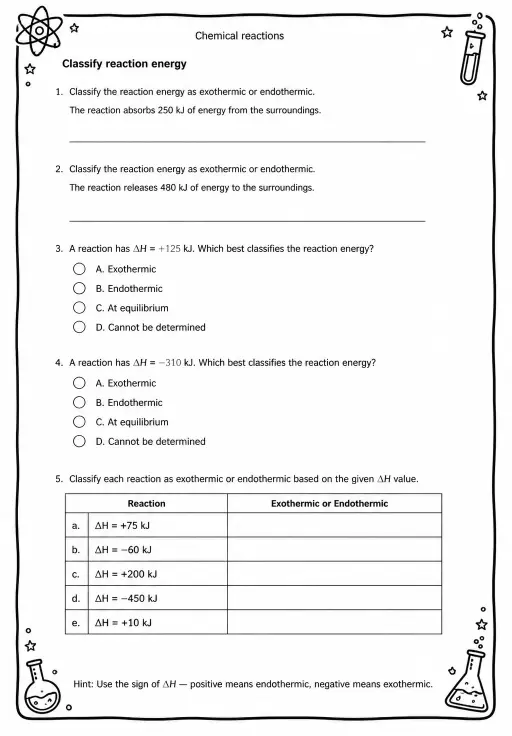
Classify reaction energy
Bring interactive science into your classroom
KiwiBee's free teacher workspace brings lesson planning, worksheets, classroom tools, and gradebook together in one place.
Start free and create your first class For big organisations
 For schools
 For centers
 For team leaders
 For teachers
 AI and resources
 মুদ্রণযোগ্য ওয়ার্কস
 ইন্টারেকটিভ সিমুলেশন
 শিক্ষক টুল
 AI স্টুডিও
 ভাবনা এবং গবেষণা