
Globe & Time Zones
- ارضی سائنس
تبصرے
اس سمیولیشن سے متعلق
کھیلوں، ورک شیٹس، سمیولیشنز، اساتذہ کے اوزار اور ویڈیوز میں سے معنی کی بنیاد پر منتخب۔

اس سمیولیشن کے بارے میں
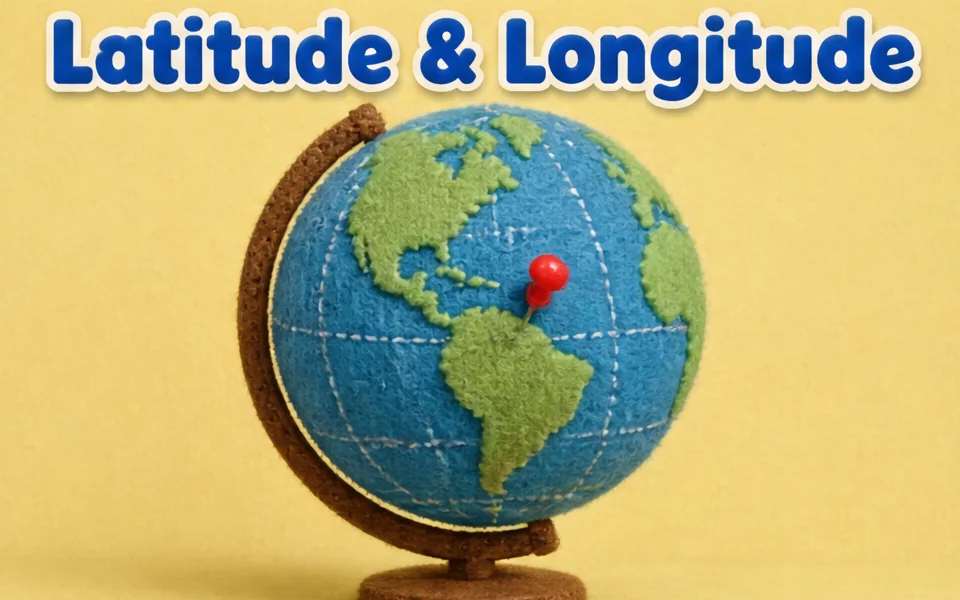
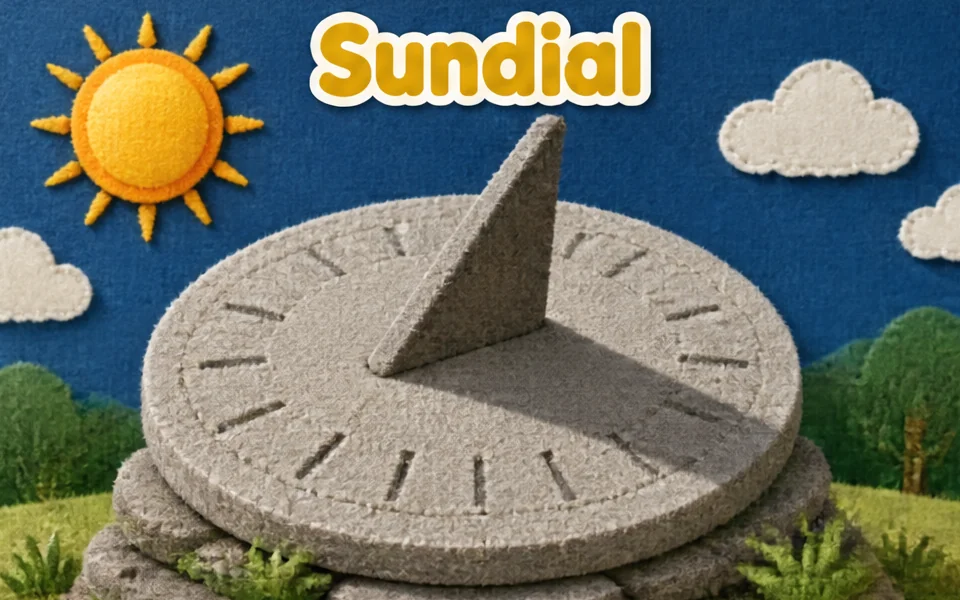
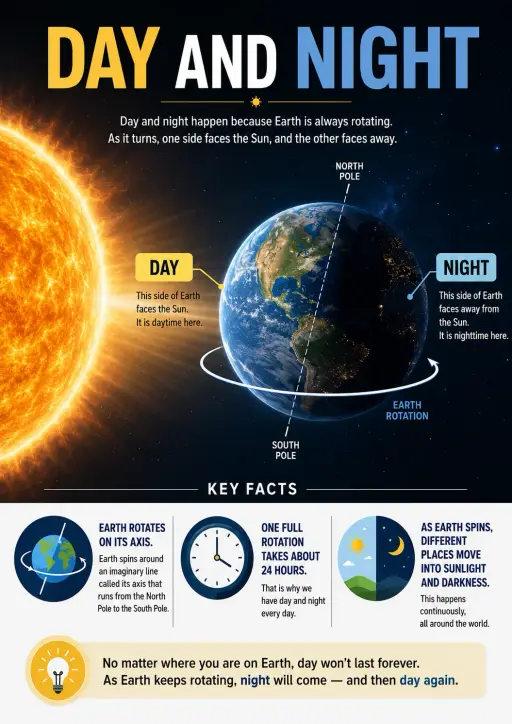
This simulation shows a spinning Earth lit by the Sun, with the boundary between day and night marked and the 24 time zone meridians drawn. Students set the UTC hour and the day of the year, or let the globe turn automatically, and read the UTC time, the Sun declination and the point where the Sun is directly overhead. They see that noon moves westward at fifteen degrees an hour, and that the day and night line tilts through the year. It supports geography and Earth science lessons on time, seasons and axial tilt.
طلبہ کیا دریافت کر سکتے ہیں
- Turn Auto spin on and watch the day and night line sweep around the globe.
- Drag UTC hour and watch the Sun overhead at readout move westward.
- Set Day of year near 172 and then near 355 and compare the Sun declination.
- Find where it is noon by looking at the point under the Sun.
- Count the meridians to see why neighboring time zones differ by about one hour.
تدریسی مقاصد
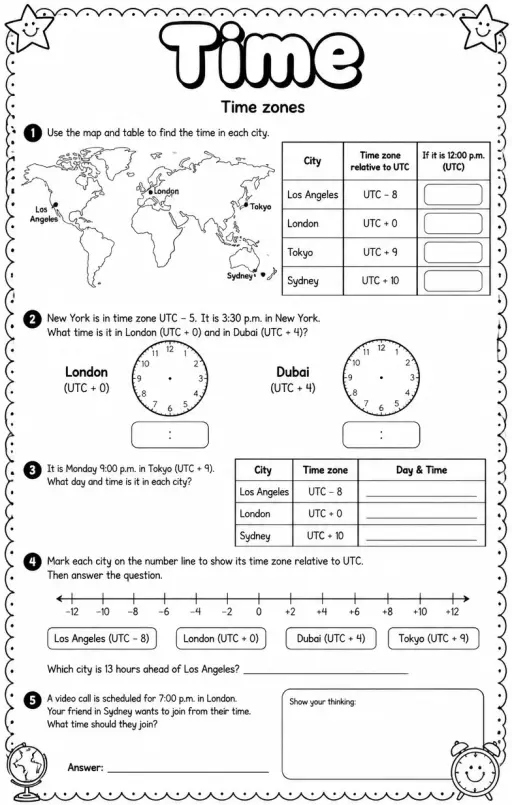
- 1Explain why the Earth has 24 time zones about 15 degrees wide.
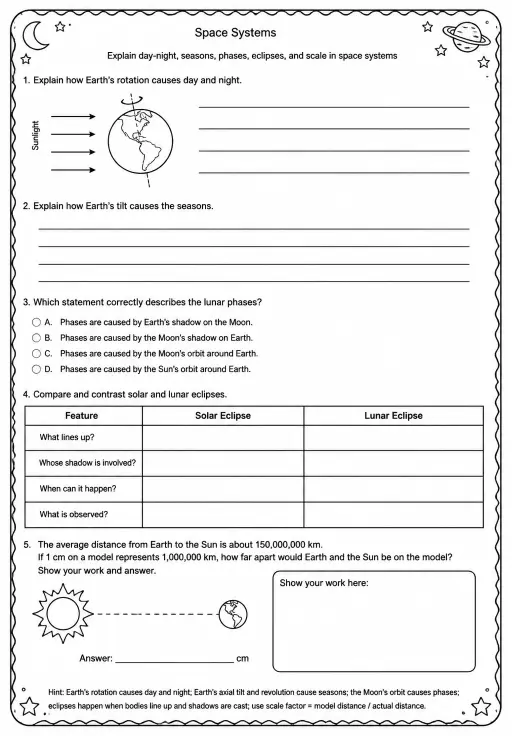
- 2Describe how Earth rotation causes day and night.
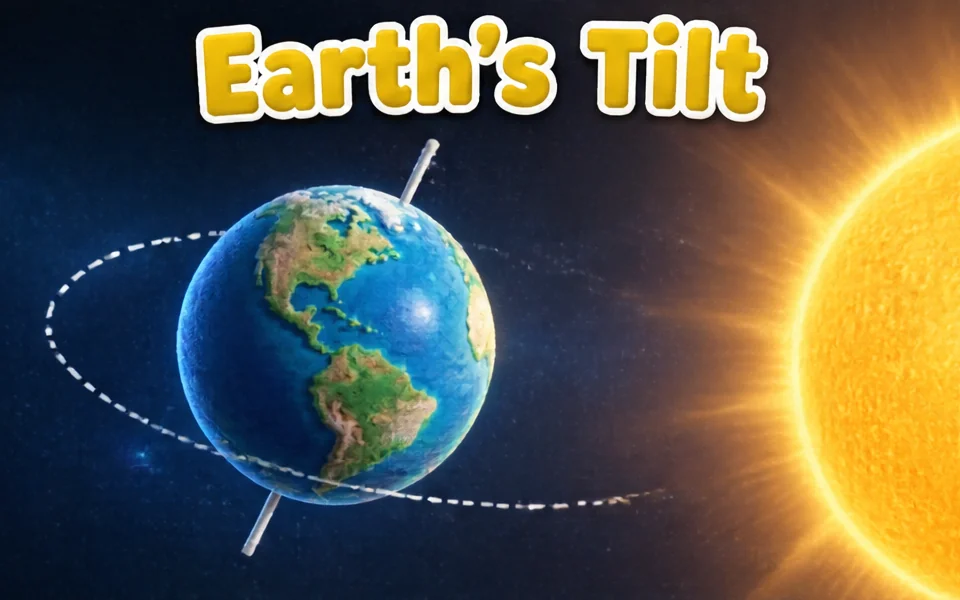
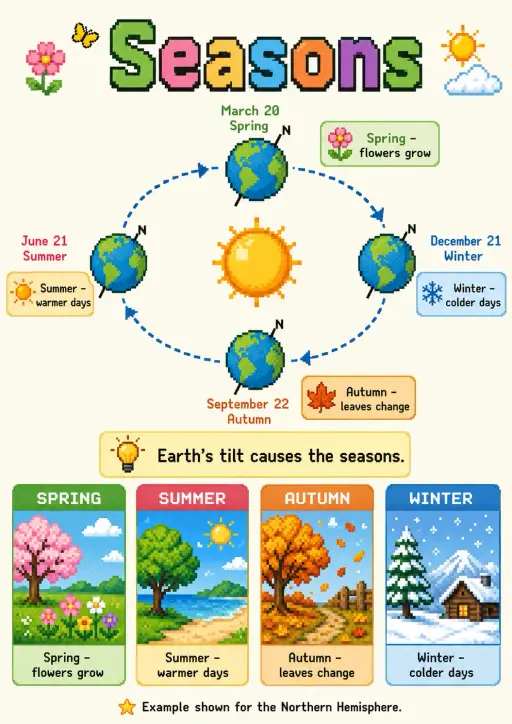
- 3Relate the tilt of the Earth to the changing Sun declination through the year.
- 4Work out the local time in one place from the time in another.
اساتذہ کے عام سوالات
Is it free to use?
Yes. It is free and runs in any modern browser, including whiteboards and tablets. There is no sign-up.
Why are there 24 time zones?
The Earth turns 360 degrees in 24 hours, which is 15 degrees every hour. Each time zone covers about 15 degrees of longitude, so neighboring zones differ by about one hour.
Why does the day and night line change during the year?
The Earth axis is tilted about 23.4 degrees. As Earth orbits the Sun, the point directly under the Sun moves between 23.4 degrees north and 23.4 degrees south, tilting the day and night boundary.
How do I use the globe simulation?
Drag UTC hour and Day of year, or switch on Auto spin. Read UTC time, Sun declination and Sun overhead at to see what is happening on Earth.
یہ سمیولیشن اپنی سائٹ میں شامل کریں
اسے اپنے ایل ایم ایس، بلاگ یا کلاس کی ویب سائٹ پر لگائیں — مفت۔
<iframe src="https://kiwibee.io/ur/simulations/globe-time-zones-3d-simulation/embed" title="Globe & Time Zones | KiwiBee" loading="lazy" allowfullscreen style="width:100%;height:min(70vh,620px);min-height:420px;border:0;border-radius:16px"></iframe>نصاب کے معیارات
Cambridge
- 4ESs.01Explain why the spinning of the Earth on its axis leads to the apparent movement of the Sun, night and day, and changes in shadowsCambridge Primary Science (0097) — Stage 4 › Earth and Space › Earth in space
Learning objectives © UCLES (Cambridge University Press & Assessment), quoted with attribution.
تعاملی سائنس اپنے کلاس روم میں لائیں
KiwiBee کا مفت اساتذہ ورک اسپیس سبق کی منصوبہ بندی، ورک شیٹس، کلاس روم اوزار اور گریڈ بک کو ایک ہی جگہ لے آتا ہے۔
مفت شروع کریں اور اپنی پہلی کلاس بنائیںYouTube پر KiwiBee دیکھیں
اساتذہ اور اسکولوں کے لیے KiwiBee کی مختصر ویڈیوز۔ سبسکرائب کریں، یا جہاں بھی ہوں KiwiBee کو فالو کریں۔
 ہوم
 تمام حل
 قیمتیں
 ہمارے بارے میں
 غیر منافع بخش اداروں کے لیے KiwiBee
 تقریبات اور ویبینارز
 بڑے اداروں کے لیے
 اسکولوں کے لیے
 تعلیمی مراکز کے لیے
 ٹیم لیڈرز کے لیے
 اساتذہ کے لیے
 وسائل
 قابلِ طباعت ورک شیٹس
 تعاملی سمیولیشنز
 اساتذہ کے اوزار
 خیالات اور تحقیق


