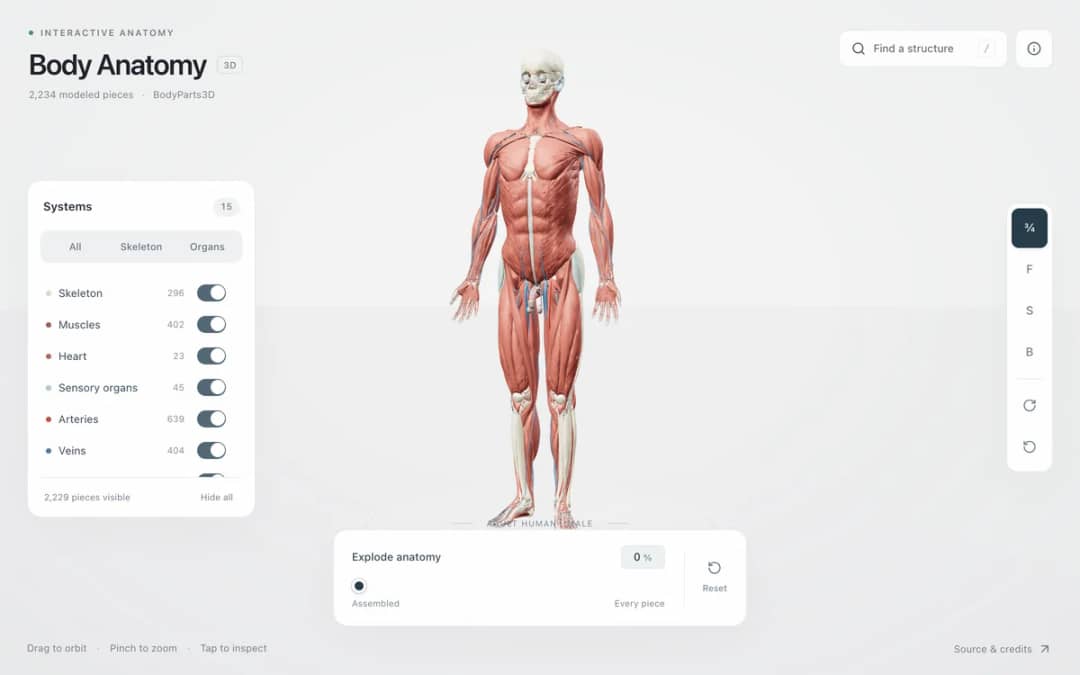
Explore an adult male reference body in 3D. Reveal 14 anatomical systems, search thousands of named structures, isolate organs, and pull 2,209 modeled pieces apart to see how the body is organized.
—
KiwiBee بالغ وزیٹرز کو سمجھنے، مکمل ہونے والے سائن اپس کی پیمائش کرنے اور مہمات کو بہتر بنانے کے لیے Google Analytics، Google Ads اور Meta Pixel کی اختیاری کوکیز استعمال کرتا ہے۔ ضروری کوکیز ہمیشہ فعال رہتی ہیں۔ OpenAI کا ChatGPT Ads Pixel اشتہارات کی رضامندی کے بعد صفحات کے مشاہدات اور بھیجی گئی درخواستیں بھی ناپتا ہے اور مماثلت کے لیے ہیش کی گئی رابطہ معلومات استعمال کر سکتا ہے۔ رازداری کی پالیسی
CRISPR-Cas9 Gene Editing 3D lets students operate the molecular scissors revolutionising modern genetics and biotechnology. A translucent bilobed Cas9 protein carrying a glowing pink 20-nucleotide guide RNA (gRNA) slides along a 3D double-stranded DNA helix. When students drag the Cas9 complex onto the golden 3-base PAM motif (5'-NGG-3'), the target DNA unwinds into an R-loop bubble and the HNH and RuvC nuclease domains make a double-strand break. Students can switch between Uncut, NHEJ Gene Knockout (indel frameshift), and HDR Precise Edit (donor template knock-in) and verify the resulting allele sizes on a 3D agarose gel electrophoresis slab.
PAM stands for Protospacer Adjacent Motif—most commonly 5'-NGG-3' for Streptococcus pyogenes Cas9. Cas9 will not unwind or cut DNA unless it first recognises a PAM right next to the 20-base target, which also prevents bacteria from cutting their own CRISPR locus.
Non-Homologous End Joining (NHEJ) ligates broken DNA ends back together directly but often inserts or deletes a few bases (indels), knocking out the gene. Homology-Directed Repair (HDR) uses a supplied donor DNA template to write in a precise new sequence.
The Cas9 protein stays exactly the same; scientists only synthesise a new 20-nucleotide guide RNA spacer sequence that is complementary to the new target gene next to a 5'-NGG-3' PAM site.
اسے اپنے ایل ایم ایس، بلاگ یا کلاس کی ویب سائٹ پر لگائیں — مفت۔
<iframe src="https://kiwibee.io/ur/simulations/crispr-cas9-gene-editing-3d-3d-simulation/embed" title="CRISPR-Cas9 Gene Editing | KiwiBee" loading="lazy" allowfullscreen style="width:100%;height:min(70vh,620px);min-height:420px;border:0;border-radius:16px"></iframe>دریافت جاری رکھیں
Explore an adult male reference body in 3D. Reveal 14 anatomical systems, search thousands of named structures, isolate organs, and pull 2,209 modeled pieces apart to see how the body is organized.
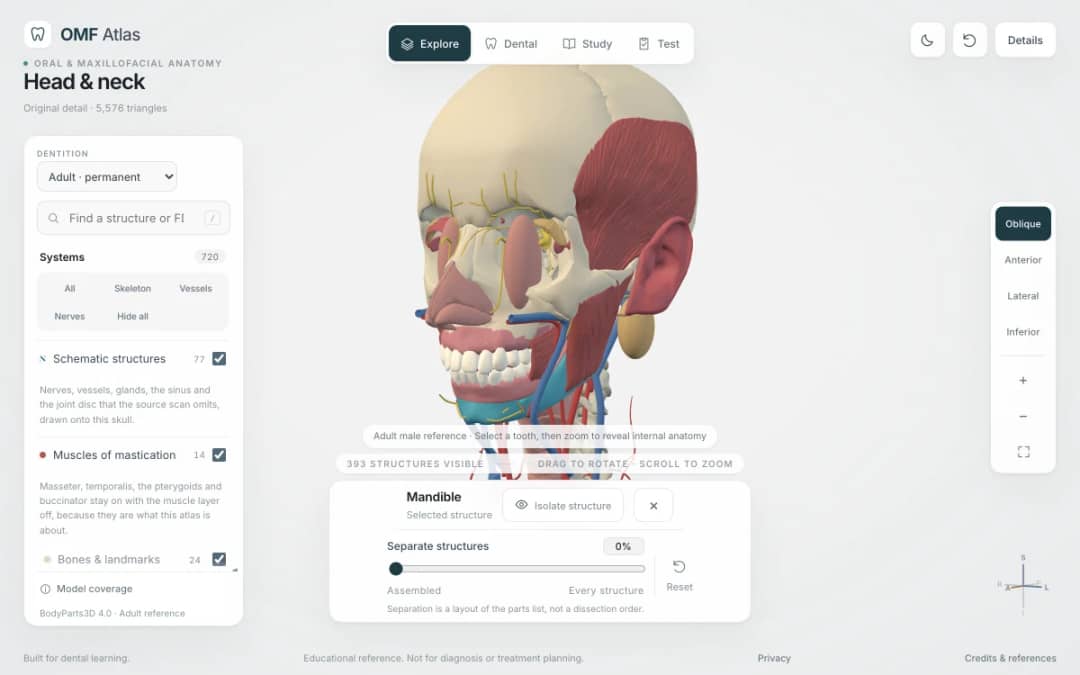
Explore the head and neck in 3D: 643 source meshes across 14 layers, 47 facial and masticatory muscles, and 77 drawn nerves, vessels and glands the source scan omits. Open any tooth onto its own pulp canal, and follow the seven stages of tooth development.

Free interactive photosynthesis simulation. Explore photosynthesis hands-on online — great for whole-class or independent practice.

Free interactive states of matter simulation. Explore states of matter hands-on online — great for whole-class or independent practice.

Free interactive shadows simulation. Explore shadows hands-on online — great for whole-class or independent practice.
KiwiBee کا مفت اساتذہ ورک اسپیس سبق کی منصوبہ بندی، ورک شیٹس، کلاس روم اوزار اور گریڈ بک کو ایک ہی جگہ لے آتا ہے۔
مفت شروع کریں اور اپنی پہلی کلاس بنائیں ہوم
 تمام حل
 قیمتیں
 ہمارے بارے میں
 غیر منافع بخش اداروں کے لیے KiwiBee
 تقریبات اور ویبینارز
 بڑے اداروں کے لیے
 اسکولوں کے لیے
 تعلیمی مراکز کے لیے
 ٹیم لیڈرز کے لیے
 اساتذہ کے لیے
 AI اور وسائل
 وسائل
 قابلِ طباعت ورک شیٹس
 سبق پیکس
 تعاملی سمیولیشنز
 اساتذہ کے اوزار
 AI اسٹوڈیو
 خیالات اور تحقیق