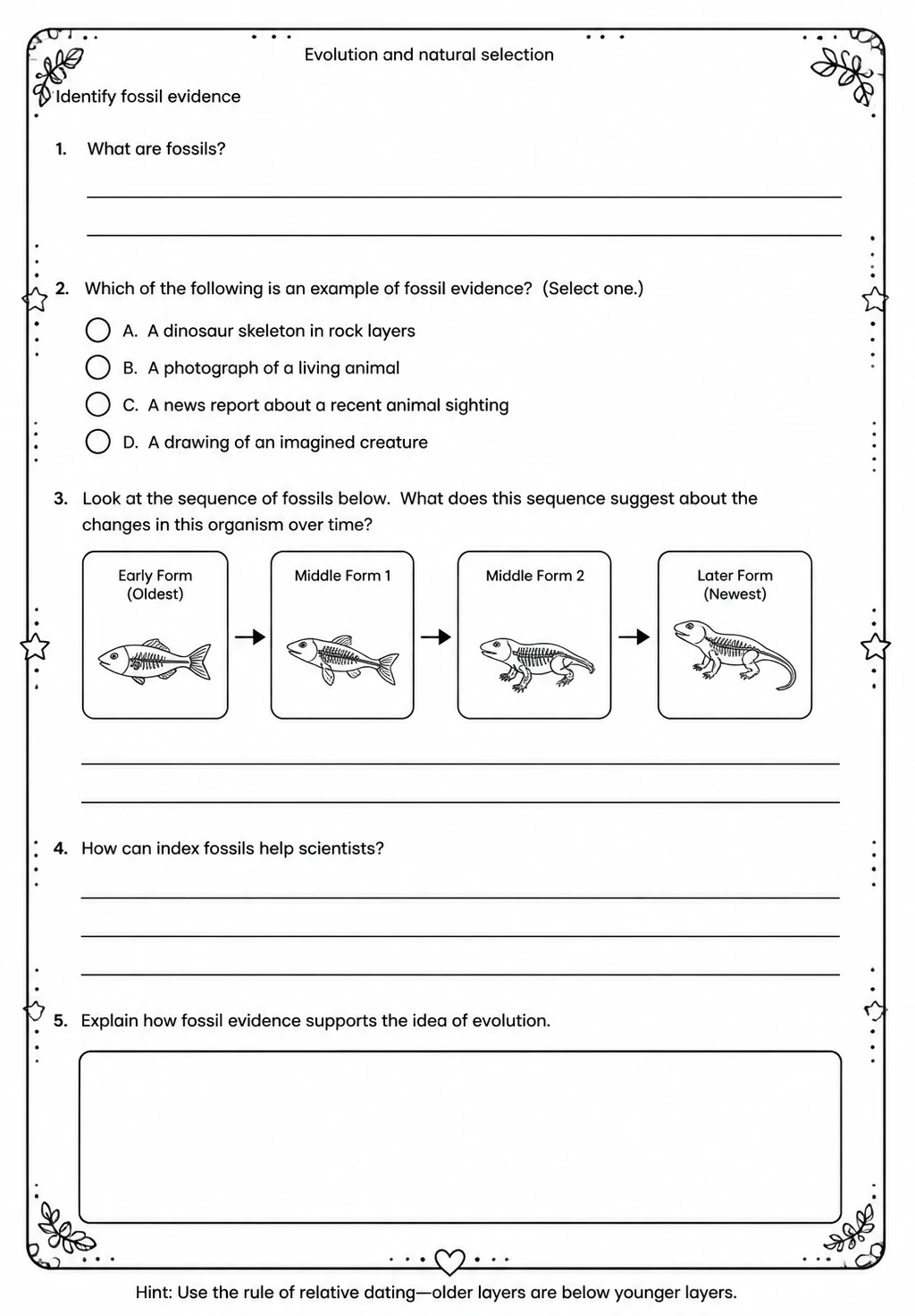
Identify fossil evidence
Free printable Grade 7 science worksheet for "Identify fossil evidence" — practice evolution and natural selection. No-prep, print or assign online.
Middle school students examine fossil evidence in this Life Science worksheet, learning how preserved remains and traces support scientific understanding of evolution and natural selection across grades 6-8. Teachers can use it to ground abstract evolutionary concepts in physical, observable data. Students practice interpreting evidence, a cornerstone skill in the Evolution and Natural Selection strand.
Learning objectives
- Identify types of fossil evidence and explain what each type reveals
- Explain how fossil evidence supports the theory of evolution by natural selection
- Analyze specific fossil examples to draw inferences about past organisms or environments
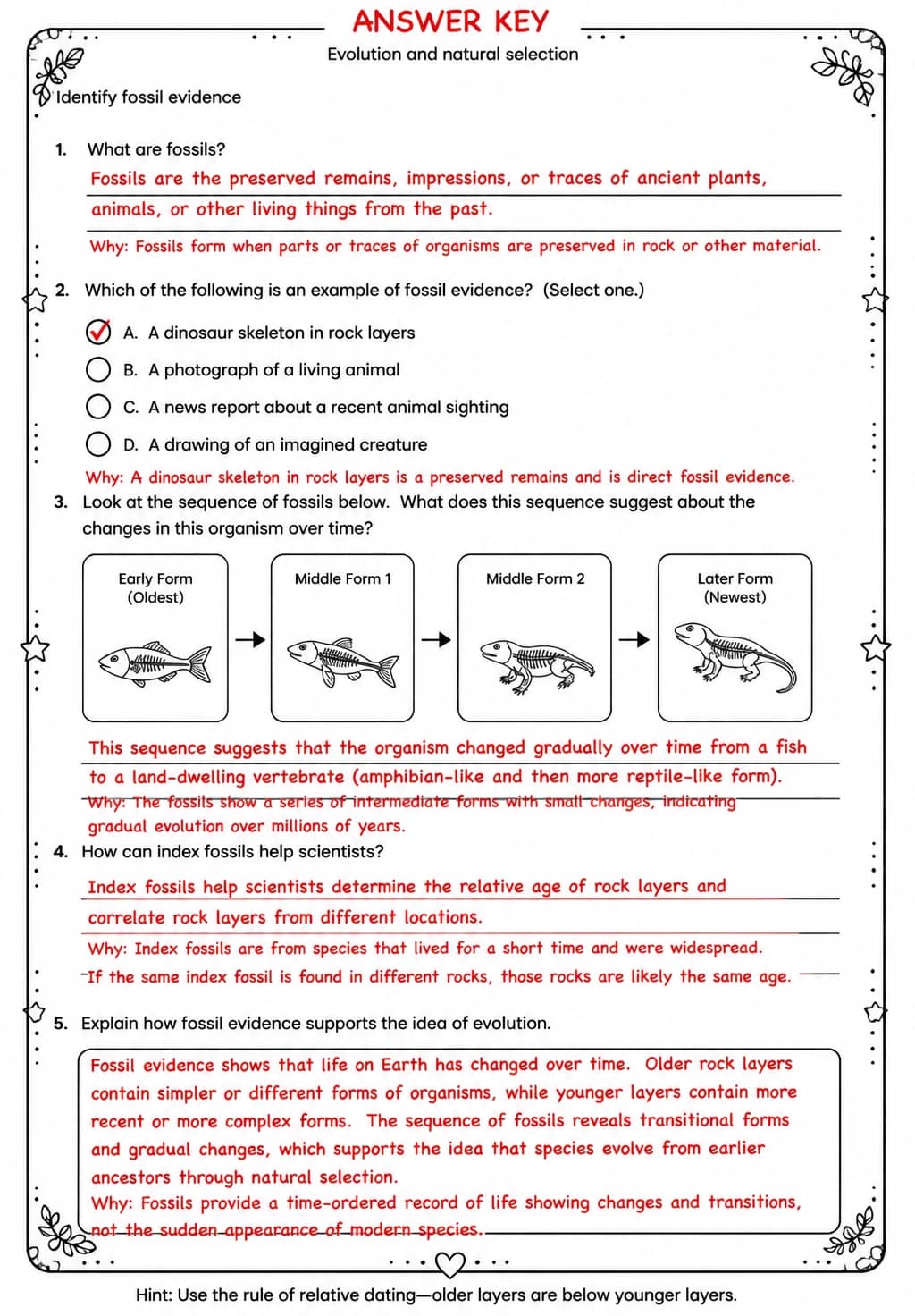
Answer Key
How to use this worksheet
- Click “Download Worksheet” and sign in with Google or email to get the PDF instantly.
- Print at home or in class for Middle School; it's no-prep, with no extra materials needed.
- Use the included answer key to mark it in seconds.
Frequently asked questions
Is the “Identify fossil evidence” worksheet free?
Yes. “Identify fossil evidence” is a free printable Science worksheet. Sign in with Google or email to download the PDF instantly.
What grade or age is this Science worksheet for?
It's designed for Middle School (ages 11–14), covering Evolution and natural selection.
Does it come with an answer key?
Yes — a matching answer key is included so you can grade it in seconds.
Create more worksheets in our Worksheet Studio
Generate fresh worksheets for any grade, topic, and language — free.
Open the Worksheet StudioMore for Middle School

Complementary and supplementary angles

Solve one-step multiplication and division equations with decimals and fractions
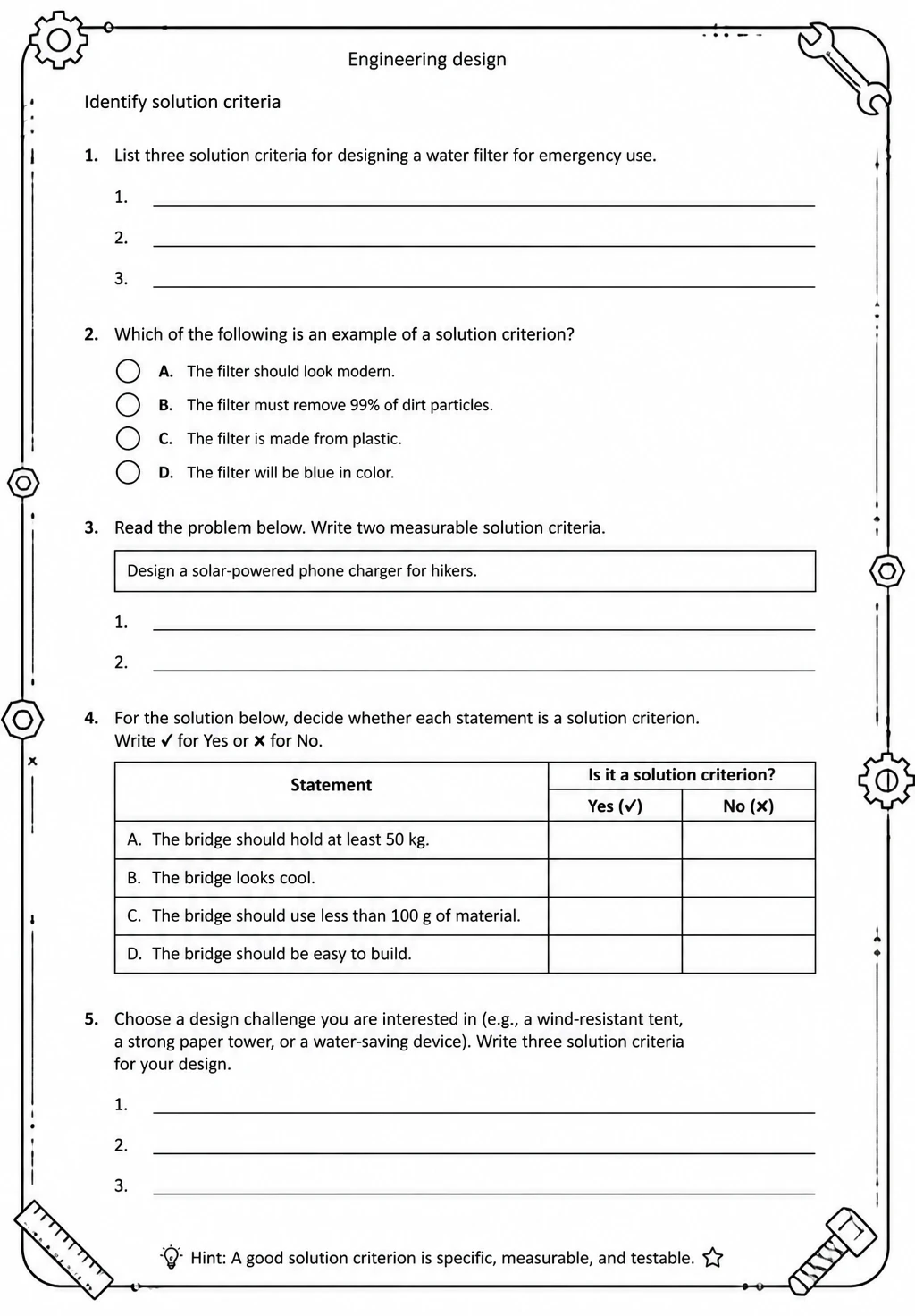
Identify solution criteria
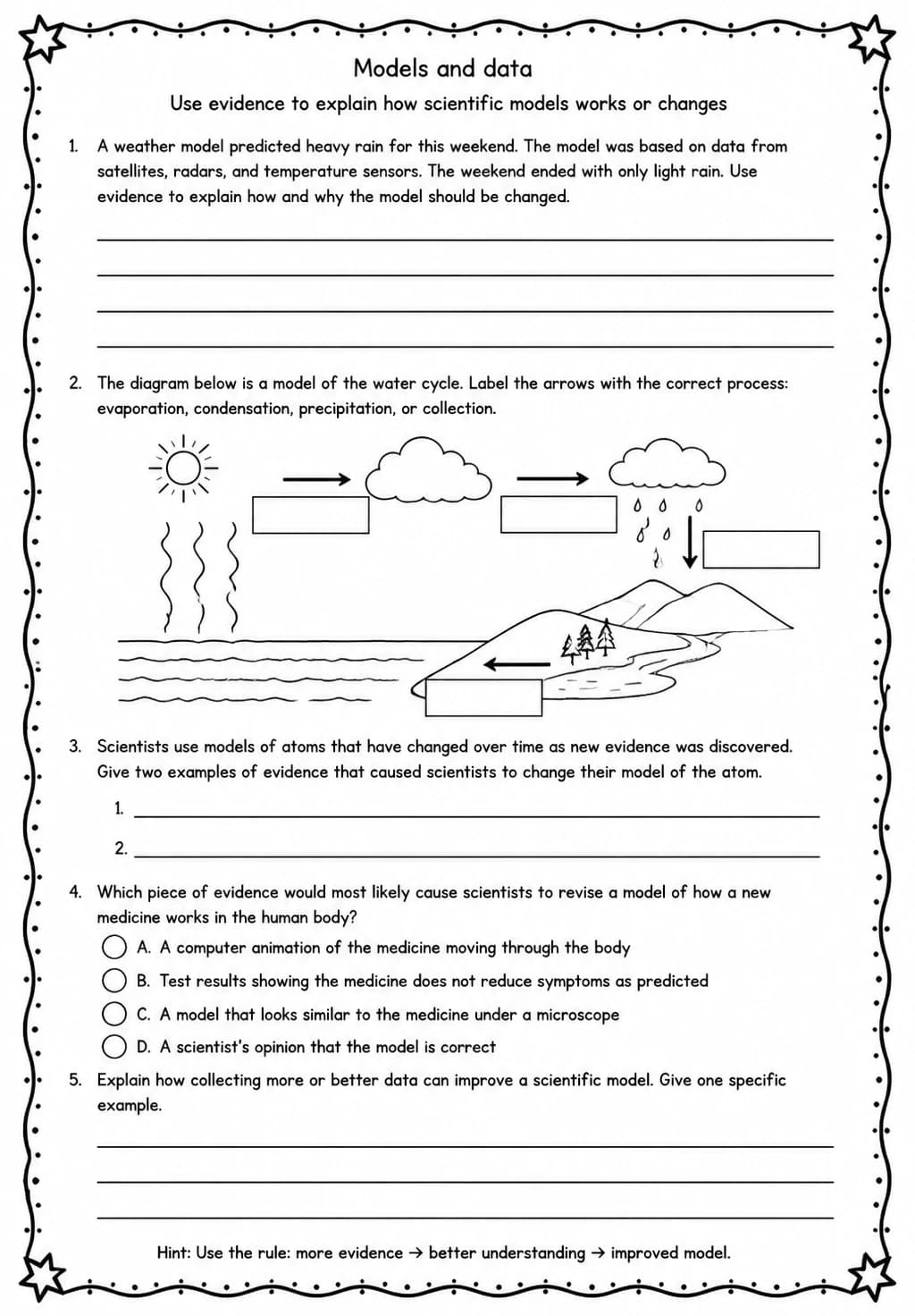
Use evidence to explain how scientific models works or changes
You might also like
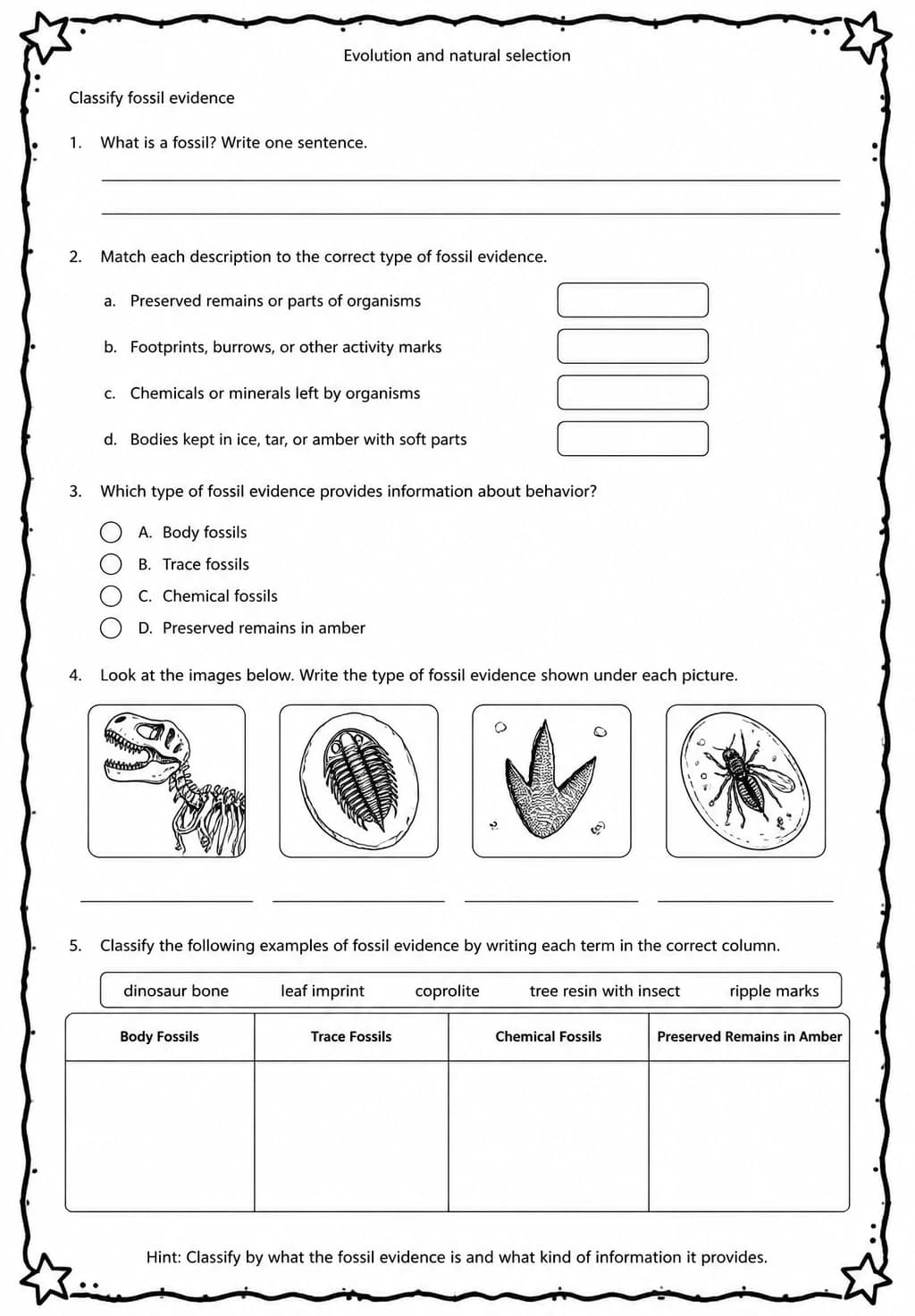
Classify fossil evidence
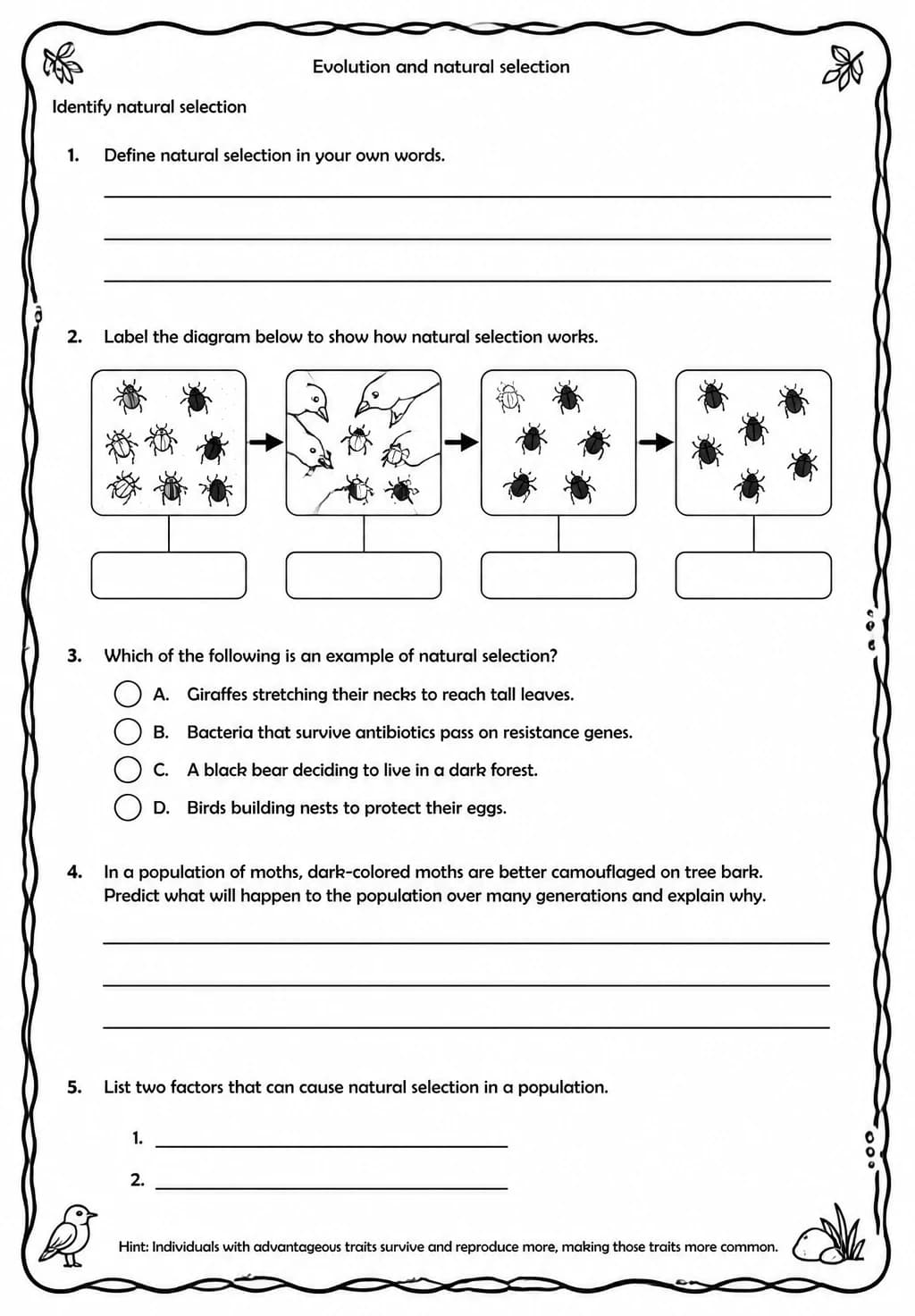
Identify natural selection
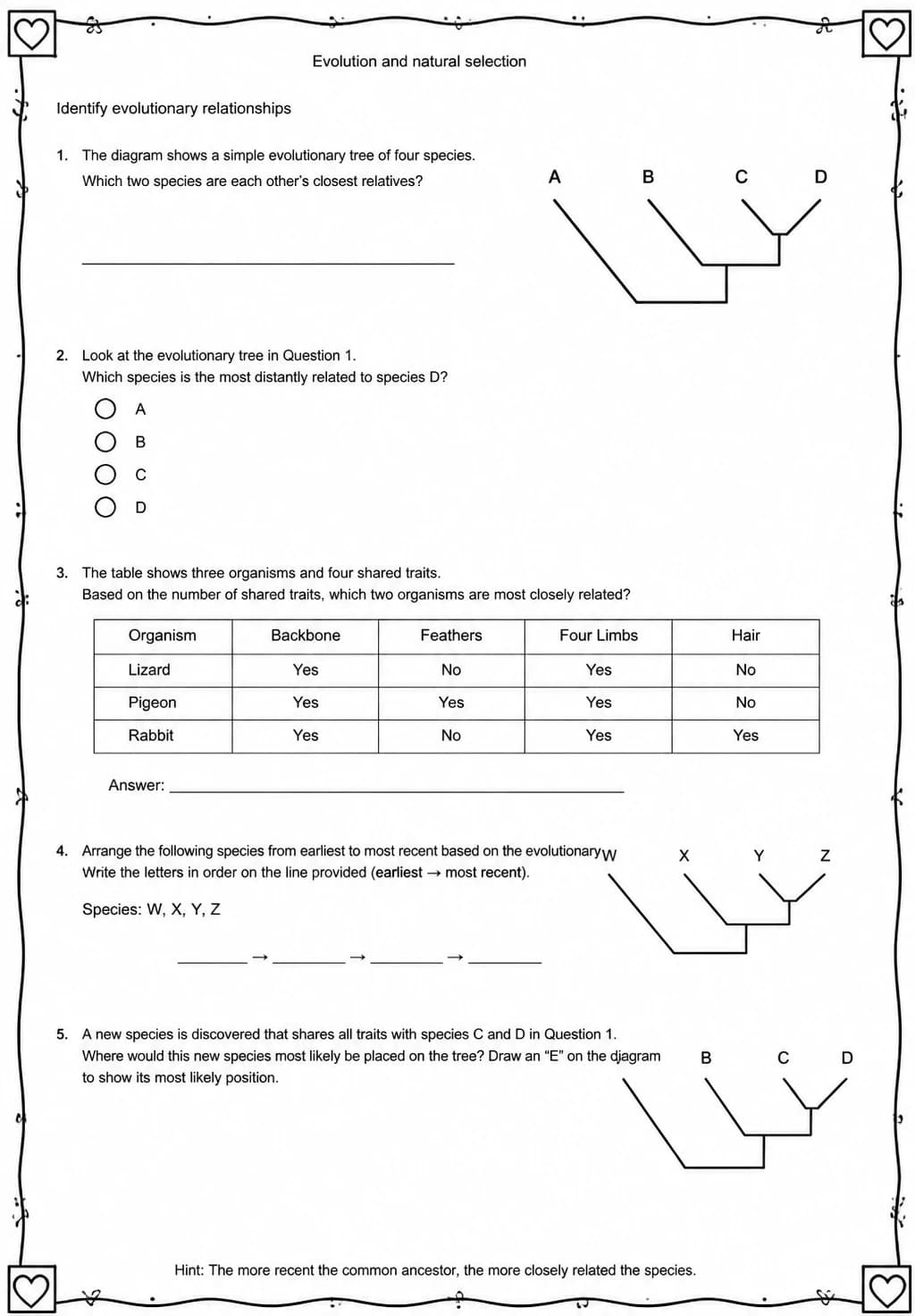
Identify evolutionary relationships
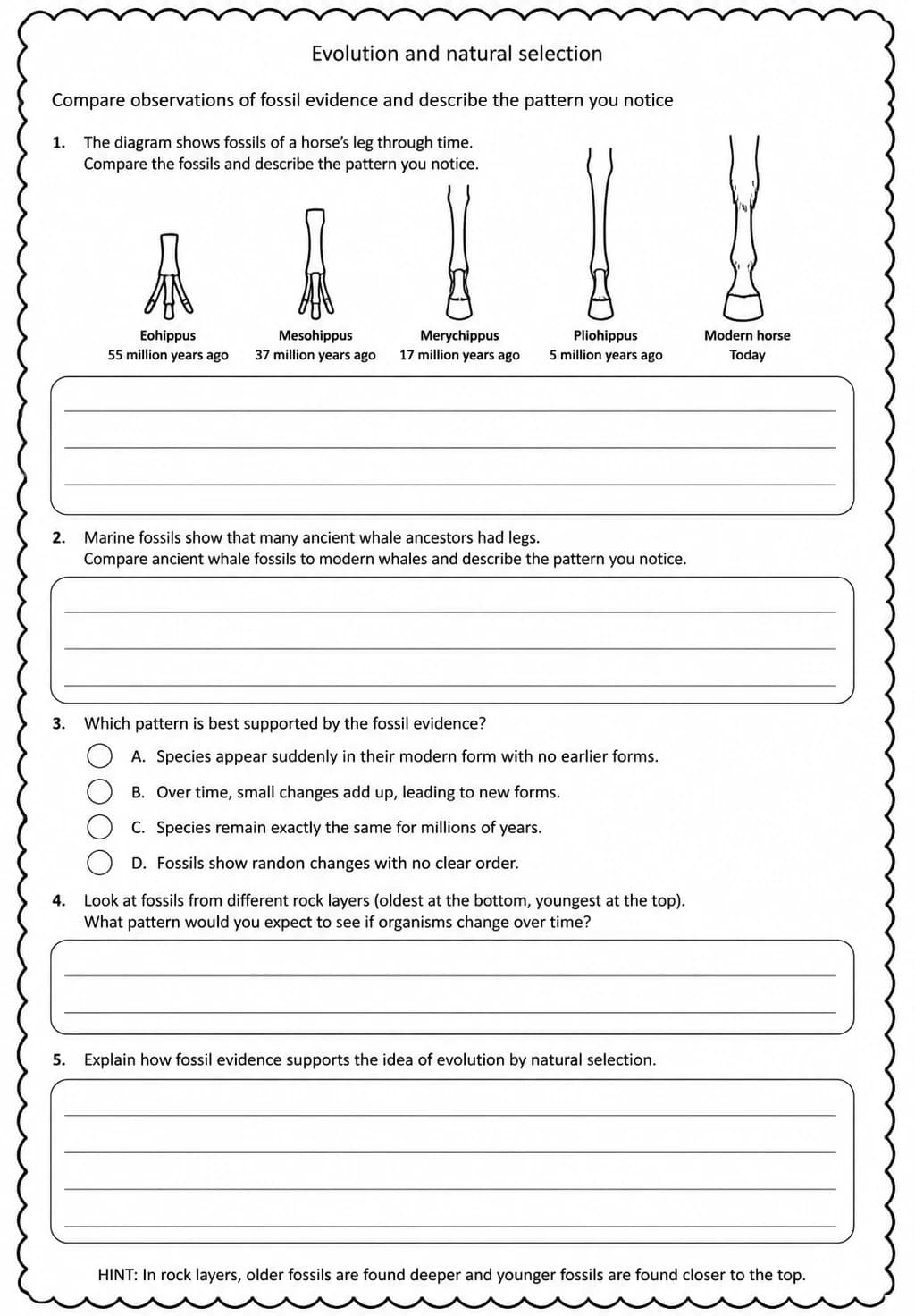
Compare observations of fossil evidence and describe the pattern you notice
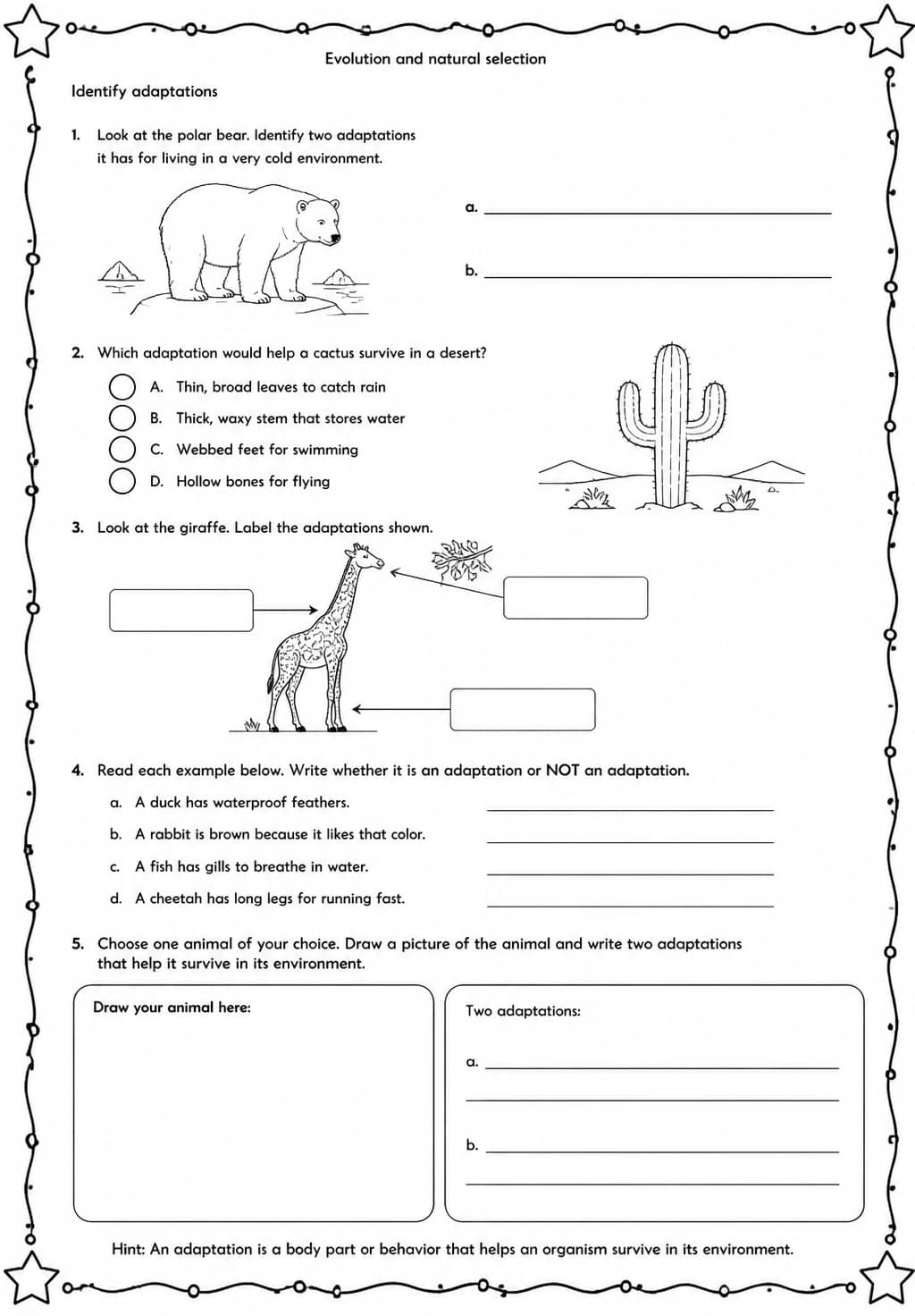
Identify adaptations