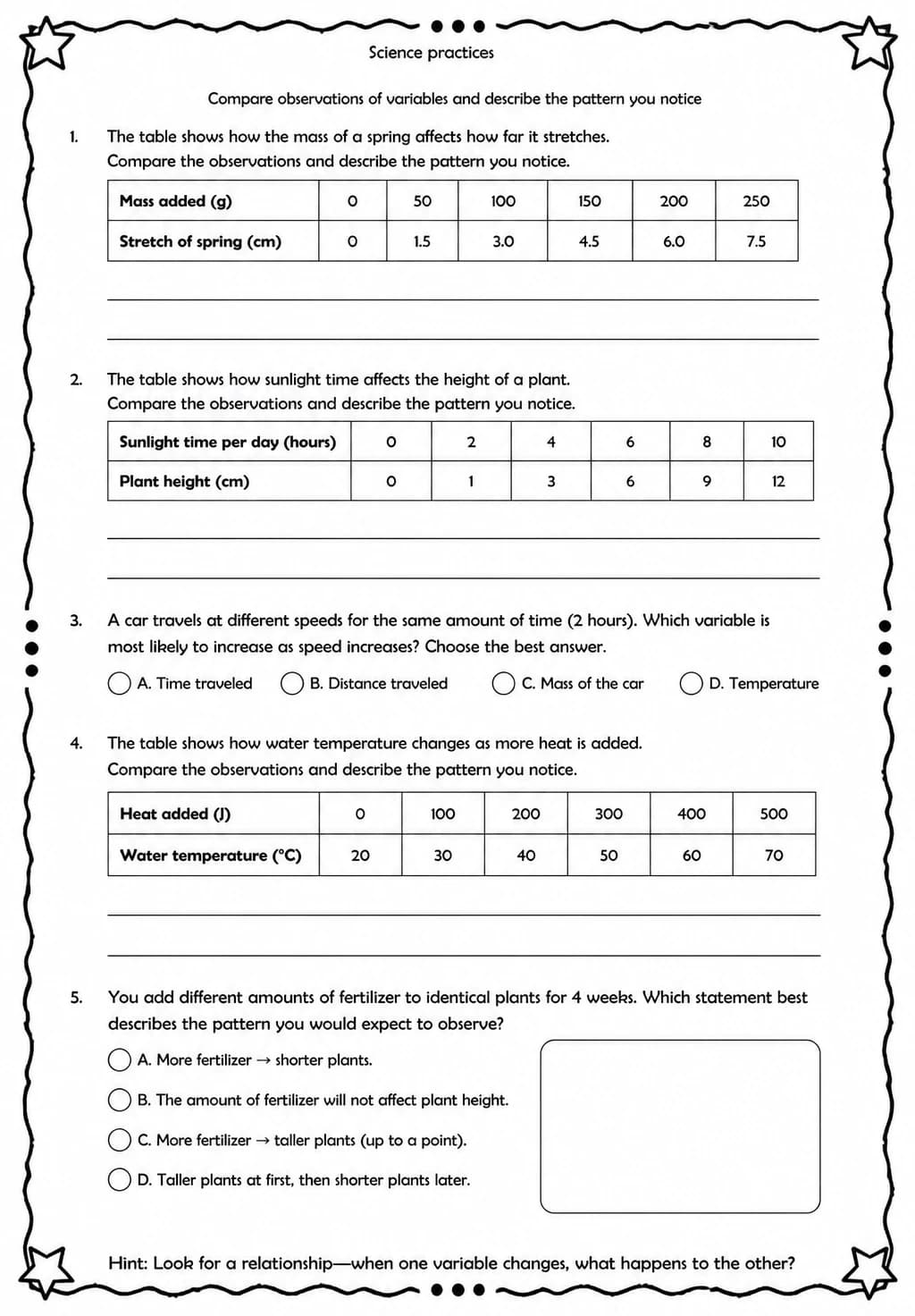
Compare observations of variables and describe the pattern you notice
Free printable Grade 6 science worksheet for "Compare observations of variables and describe the pattern you notice" — practice science practices. No-prep, print or assign online.
Middle school students compare observations of variables in scientific investigations, learning to identify independent, dependent, and controlled variables and describe the patterns they reveal. Teachers can use this worksheet as a structured reflection after a lab or investigation, helping students apply the language of experimental design to their own work. It sits within the Scientific and Engineering Practices strand and builds the rigorous vocabulary students need for all science coursework.
Learning objectives
- Identify independent, dependent, and controlled variables in a given experiment
- Compare observations across variable conditions to detect patterns or trends
- Describe how controlling variables strengthens the validity of a scientific investigation
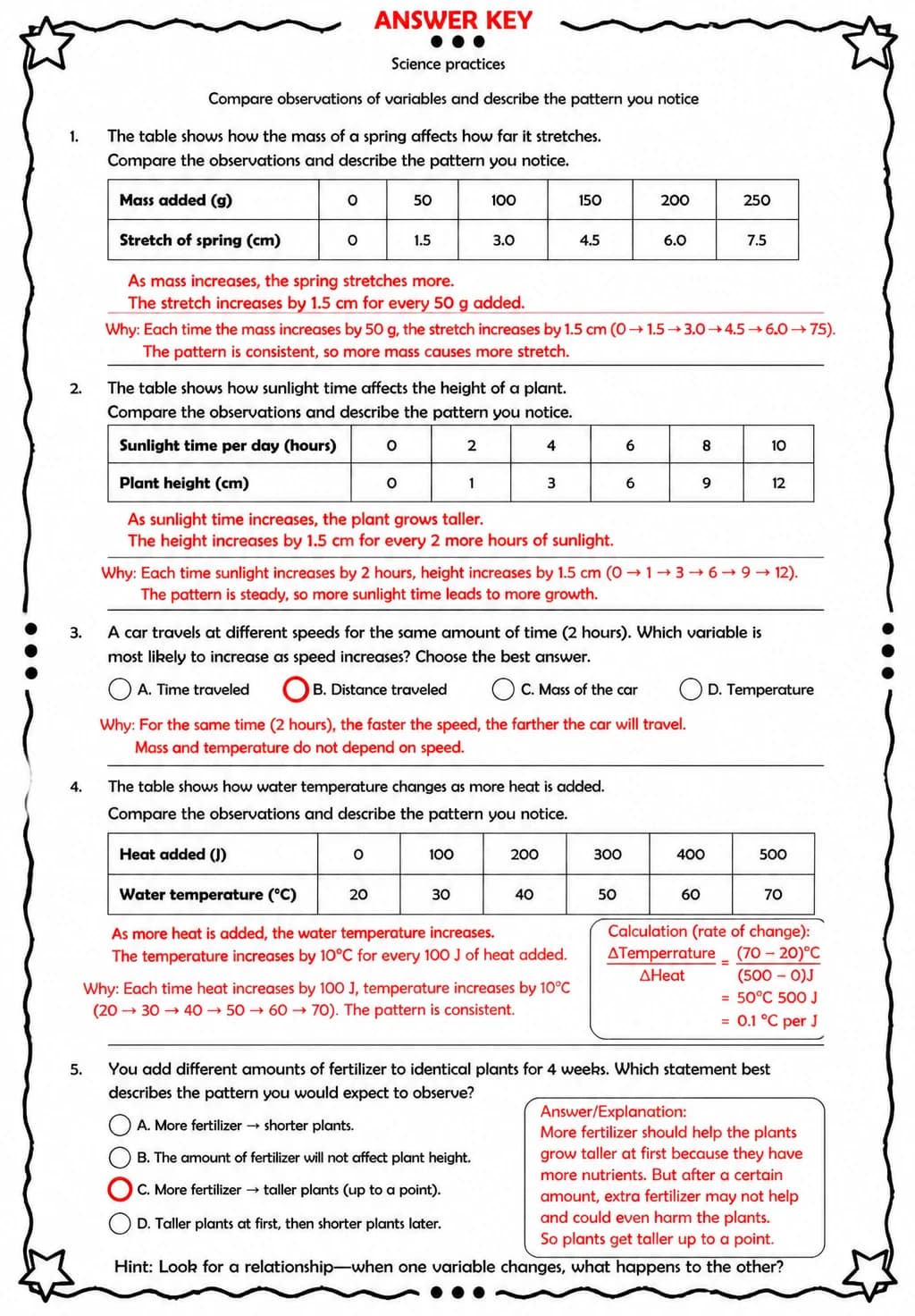
Answer Key
How to use this worksheet
- Click “Download Worksheet” and sign in with Google or email to get the PDF instantly.
- Print at home or in class for Middle School; it's no-prep, with no extra materials needed.
- Use the included answer key to mark it in seconds.
Frequently asked questions
Is the “Compare observations of variables and describe the pattern you notice” worksheet free?
Yes. “Compare observations of variables and describe the pattern you notice” is a free printable Science worksheet. Sign in with Google or email to download the PDF instantly.
What grade or age is this Science worksheet for?
It's designed for Middle School (ages 11–14), covering Science practices.
Does it come with an answer key?
Yes — a matching answer key is included so you can grade it in seconds.
Create more worksheets in our Worksheet Studio
Generate fresh worksheets for any grade, topic, and language — free.
Open the Worksheet StudioMore for Middle School

Complementary and supplementary angles

Solve one-step multiplication and division equations with decimals and fractions
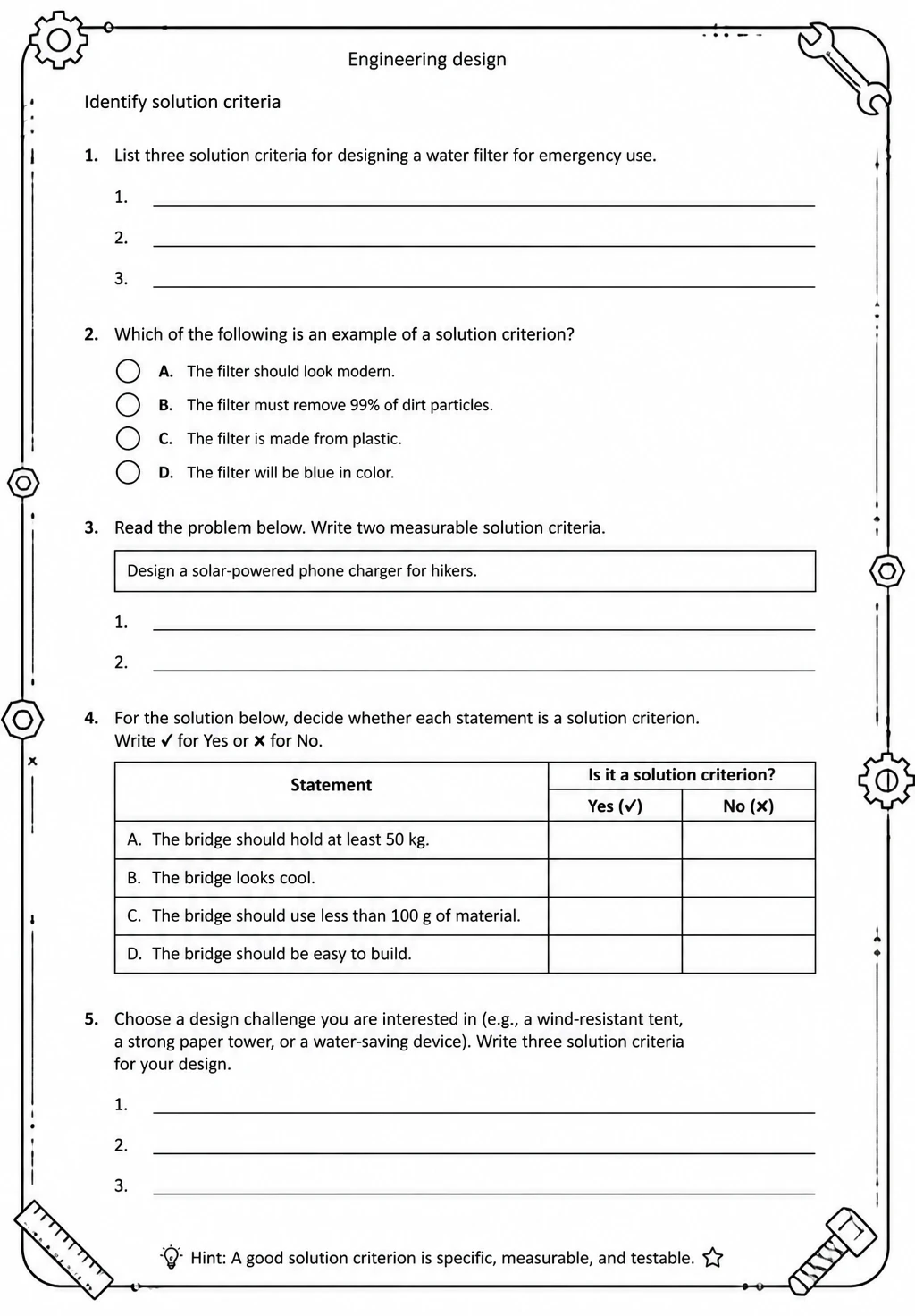
Identify solution criteria
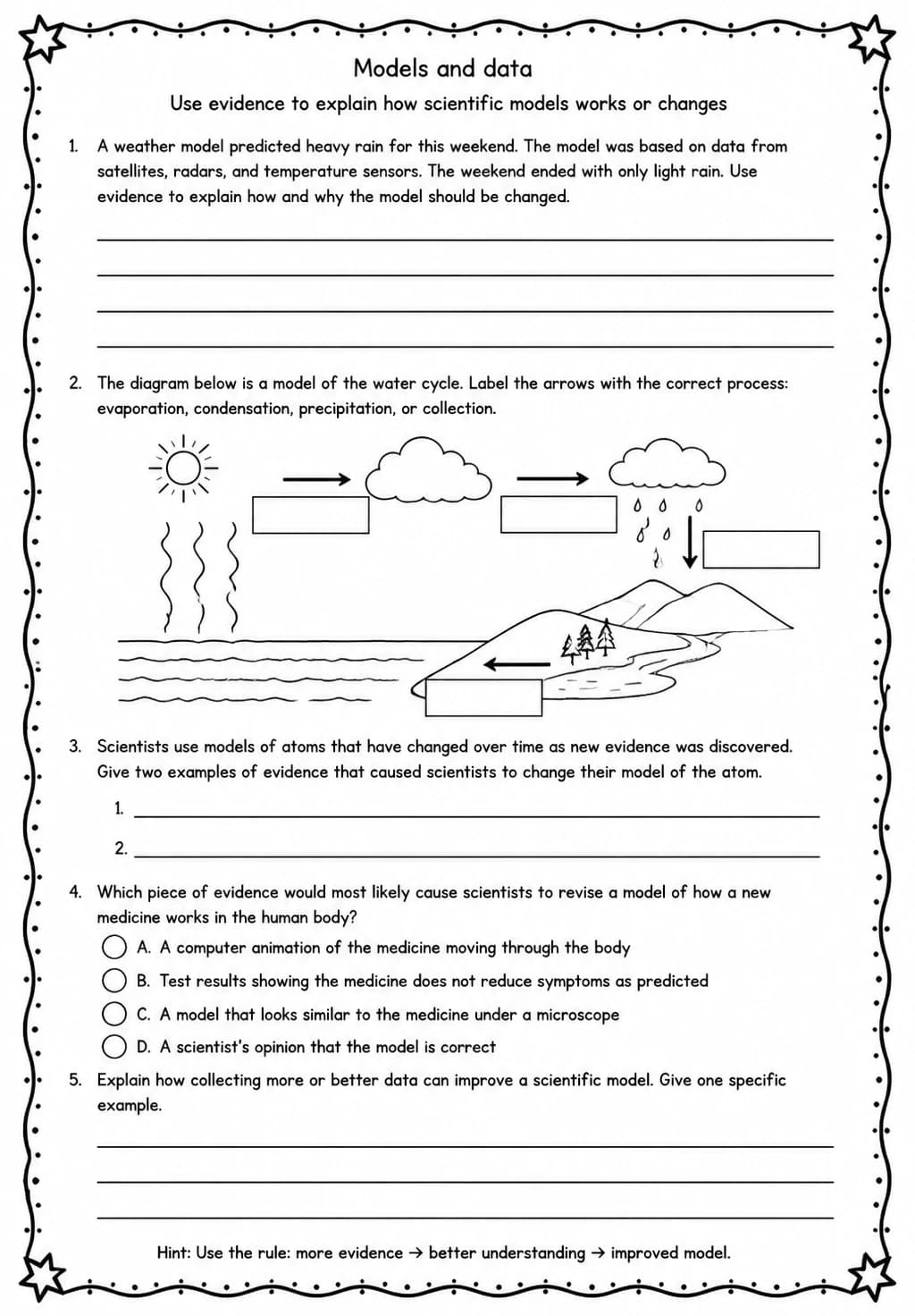
Use evidence to explain how scientific models works or changes
You might also like
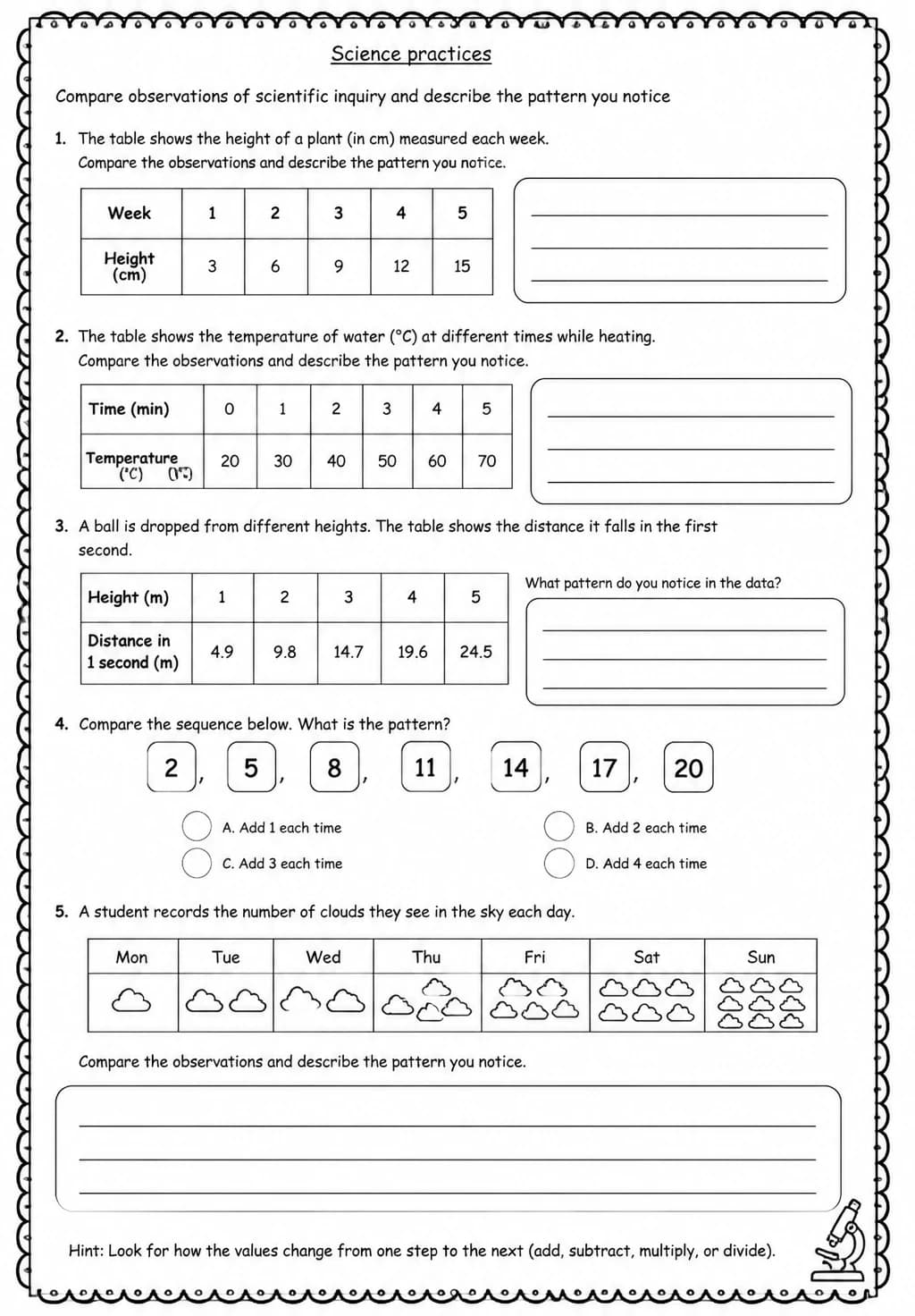
Compare observations of scientific inquiry and describe the pattern you notice
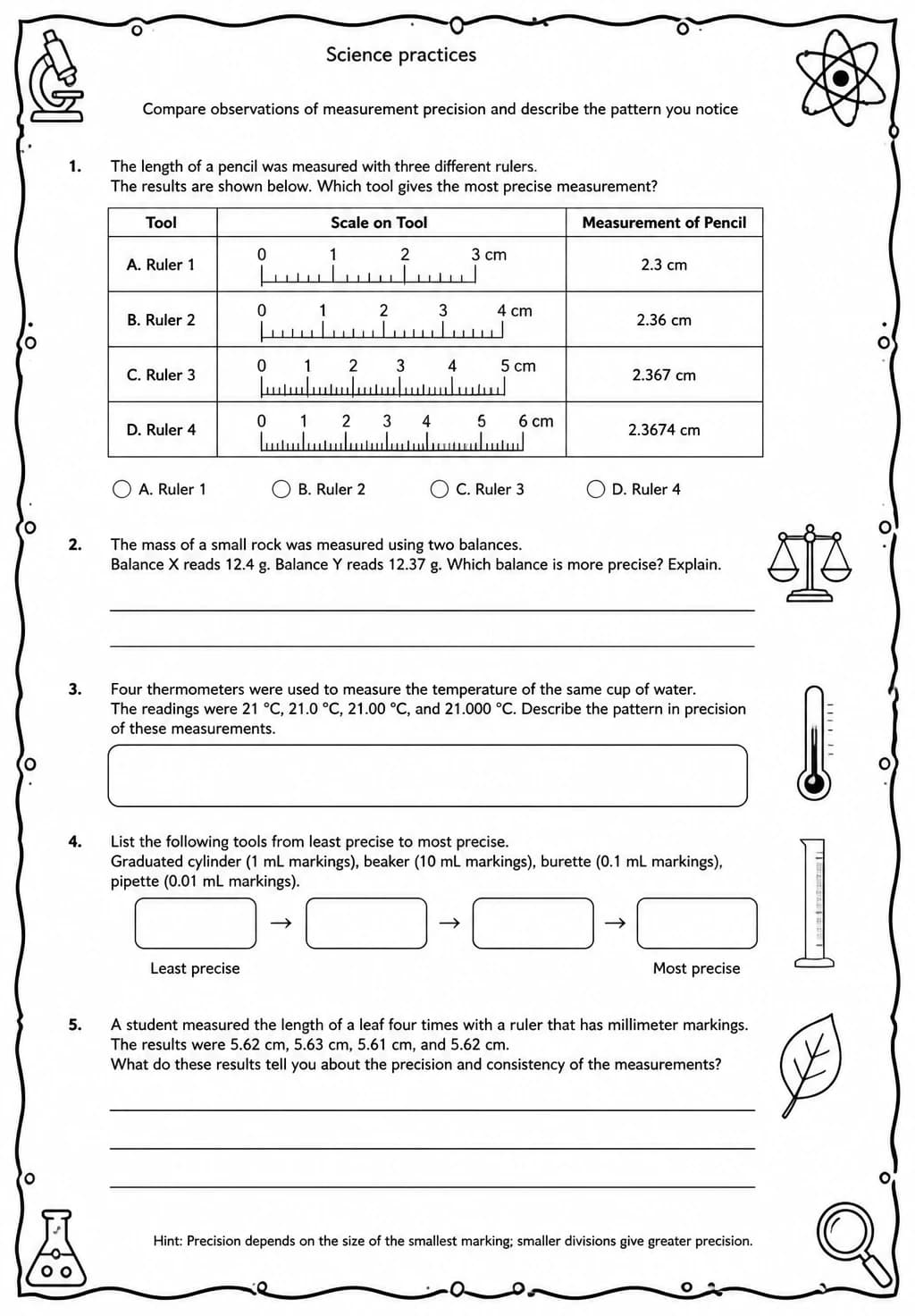
Compare observations of measurement precision and describe the pattern you notice
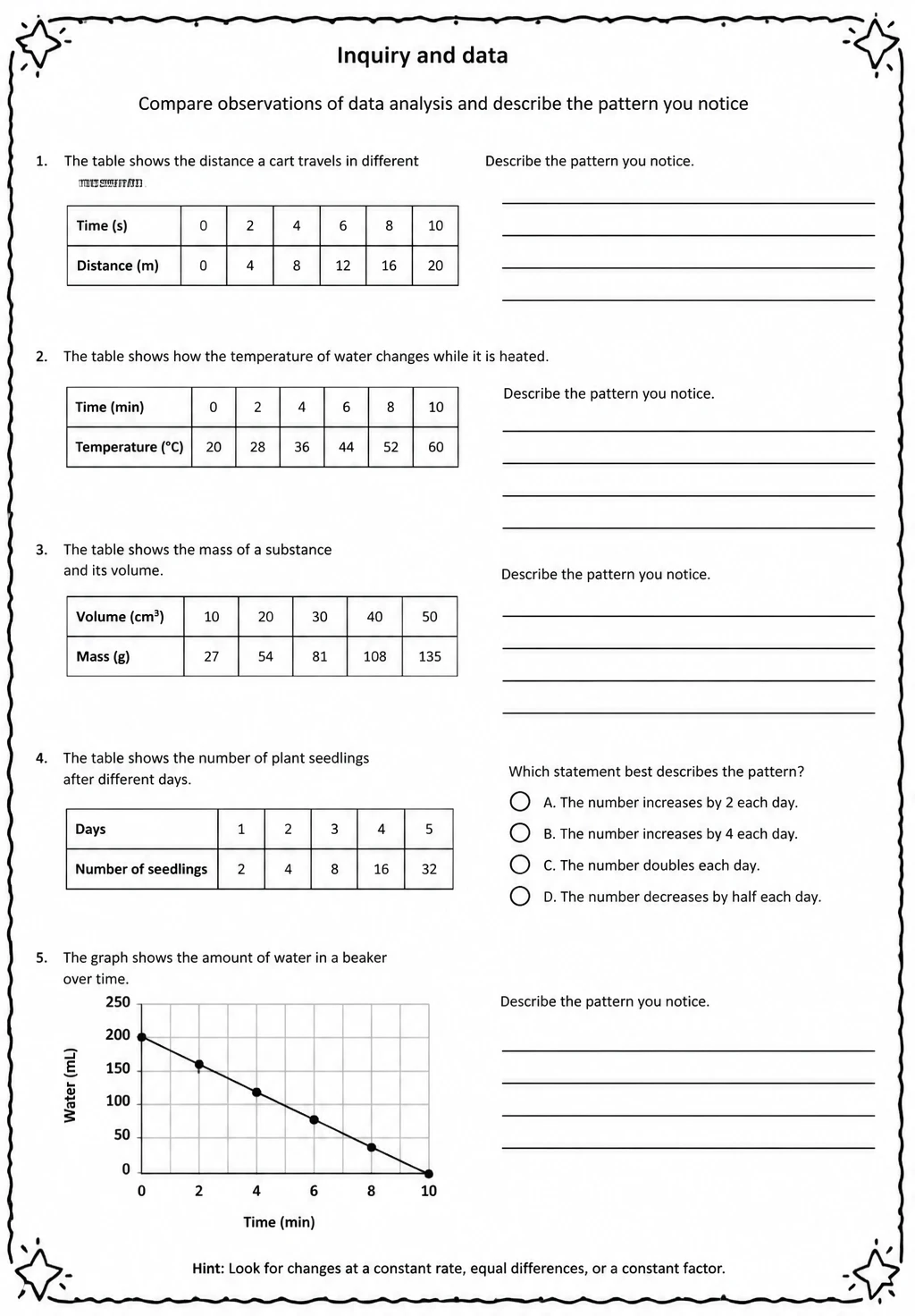
Compare observations of data analysis and describe the pattern you notice
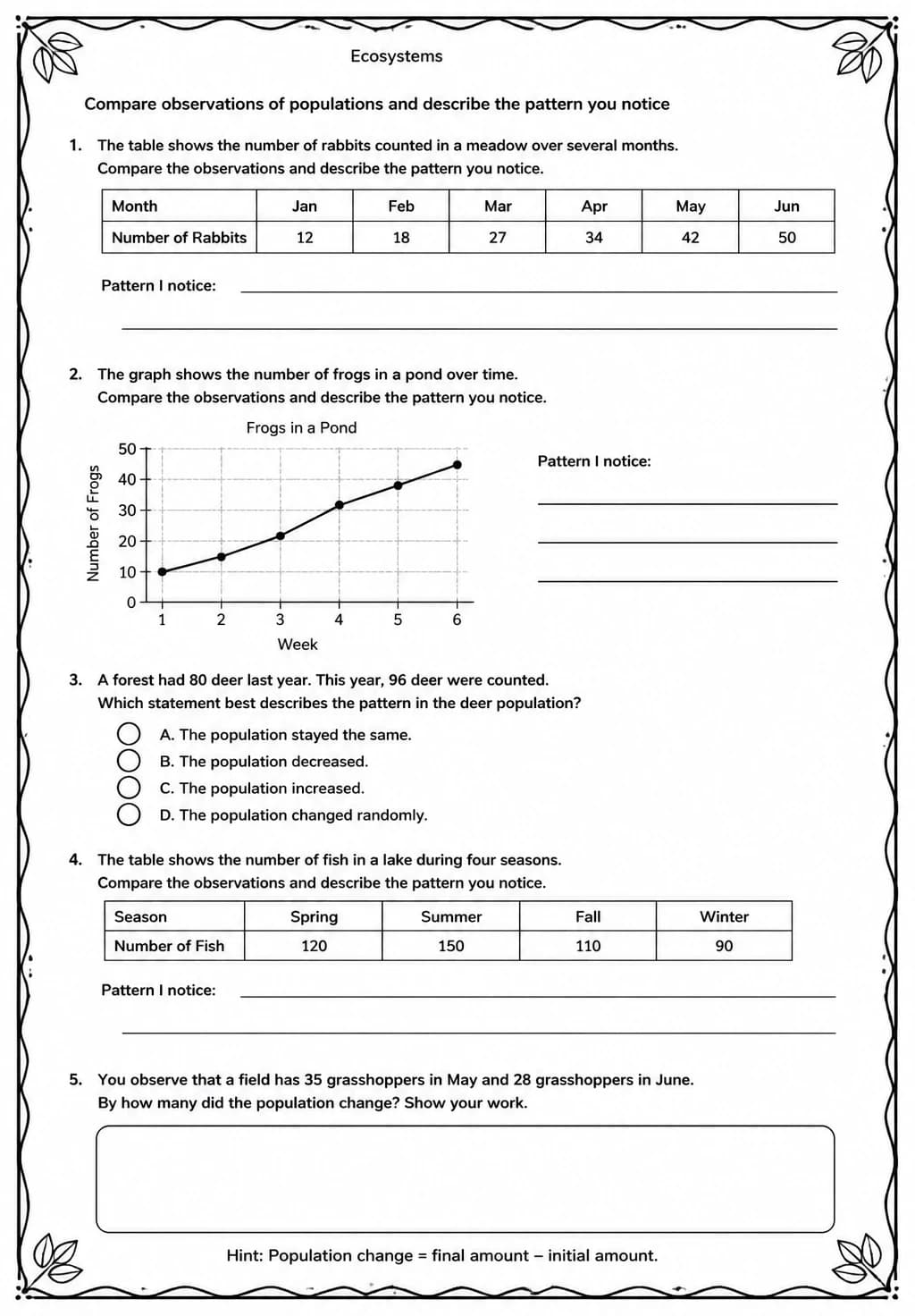
Compare observations of populations and describe the pattern you notice
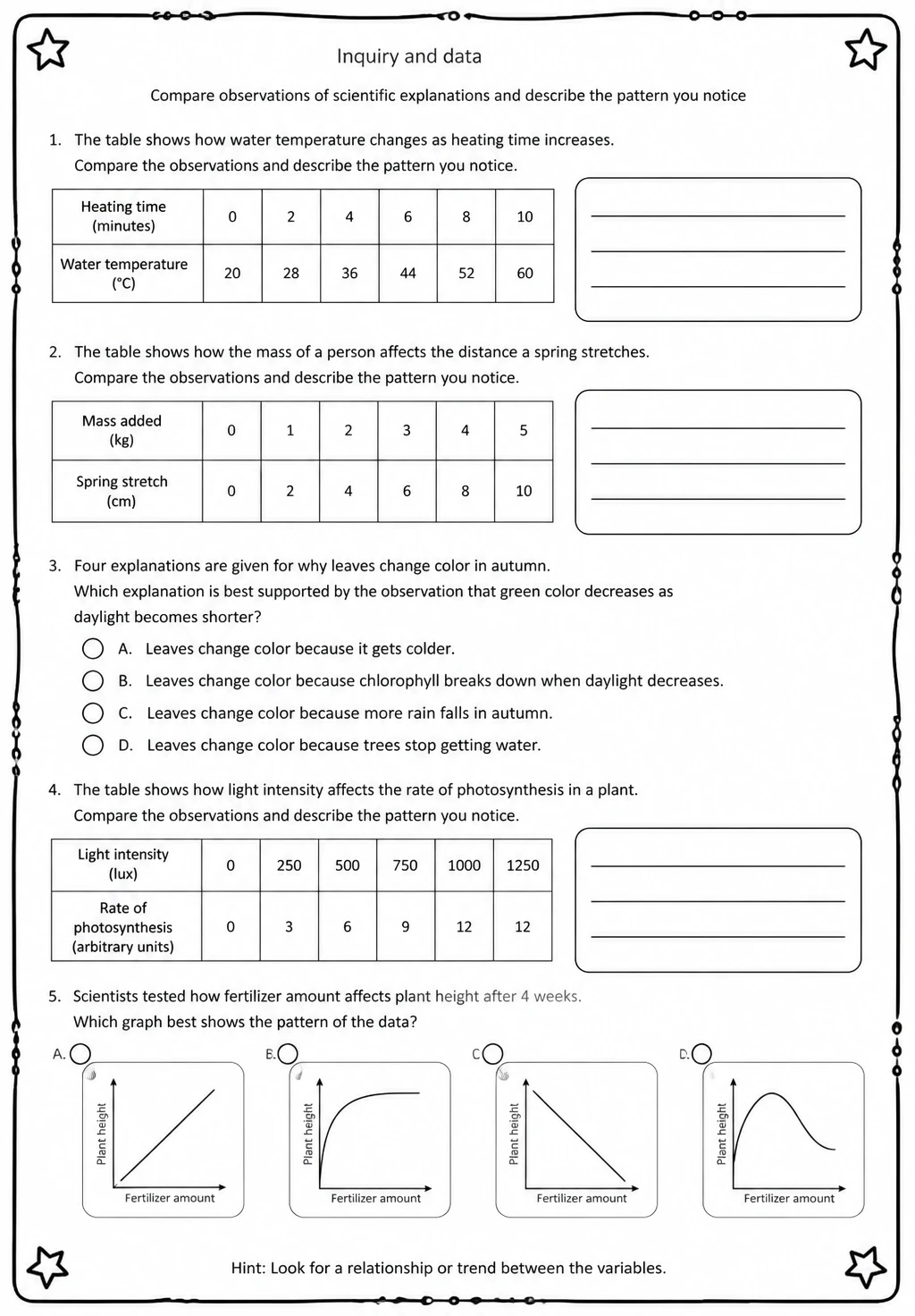
Compare observations of scientific explanations and describe the pattern you notice