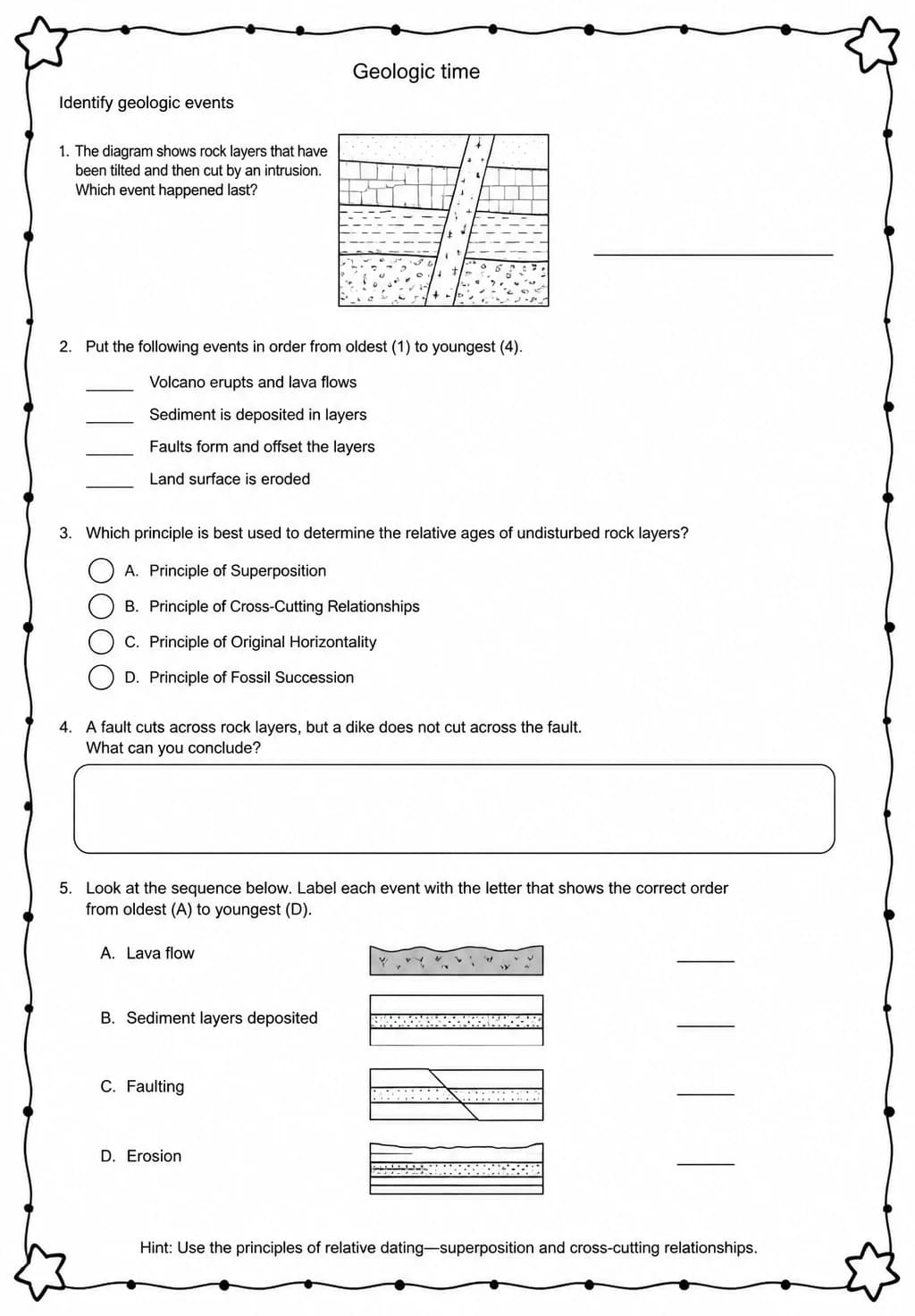
Classify relative dating
Free printable Grade 8 science worksheet for "Classify relative dating" — practice geologic time. No-prep, print or assign online.
Middle-school students classify concepts related to relative dating — such as superposition, cross-cutting relationships, and index fossils — in this challenging Earth and Space Science worksheet on Geologic Time. Teachers can use it to assess whether students can apply these principles to determine the relative age of rock layers and geological events. It fits within the Grades 6–8 geologic time sequence and supports scientific reasoning from physical evidence.
Learning objectives
- Classify relative dating principles (superposition, cross-cutting, index fossils) by type
- Apply relative dating principles to determine the sequence of geological events
- Explain how relative dating differs from absolute dating and when each is used
Answer Key

How to use this worksheet
- Click “Download Worksheet” and sign in with Google or email to get the PDF instantly.
- Print at home or in class for Middle School; it's no-prep, with no extra materials needed.
- Use the included answer key to mark it in seconds.
Frequently asked questions
Is the “Classify relative dating” worksheet free?
Yes. “Classify relative dating” is a free printable Science worksheet. Sign in with Google or email to download the PDF instantly.
What grade or age is this Science worksheet for?
It's designed for Middle School (ages 11–14), covering Geologic time.
Does it come with an answer key?
Yes — a matching answer key is included so you can grade it in seconds.
Create more worksheets in our Worksheet Studio
Generate fresh worksheets for any grade, topic, and language — free.
Open the Worksheet StudioMore for Middle School

Complementary and supplementary angles

Solve one-step multiplication and division equations with decimals and fractions
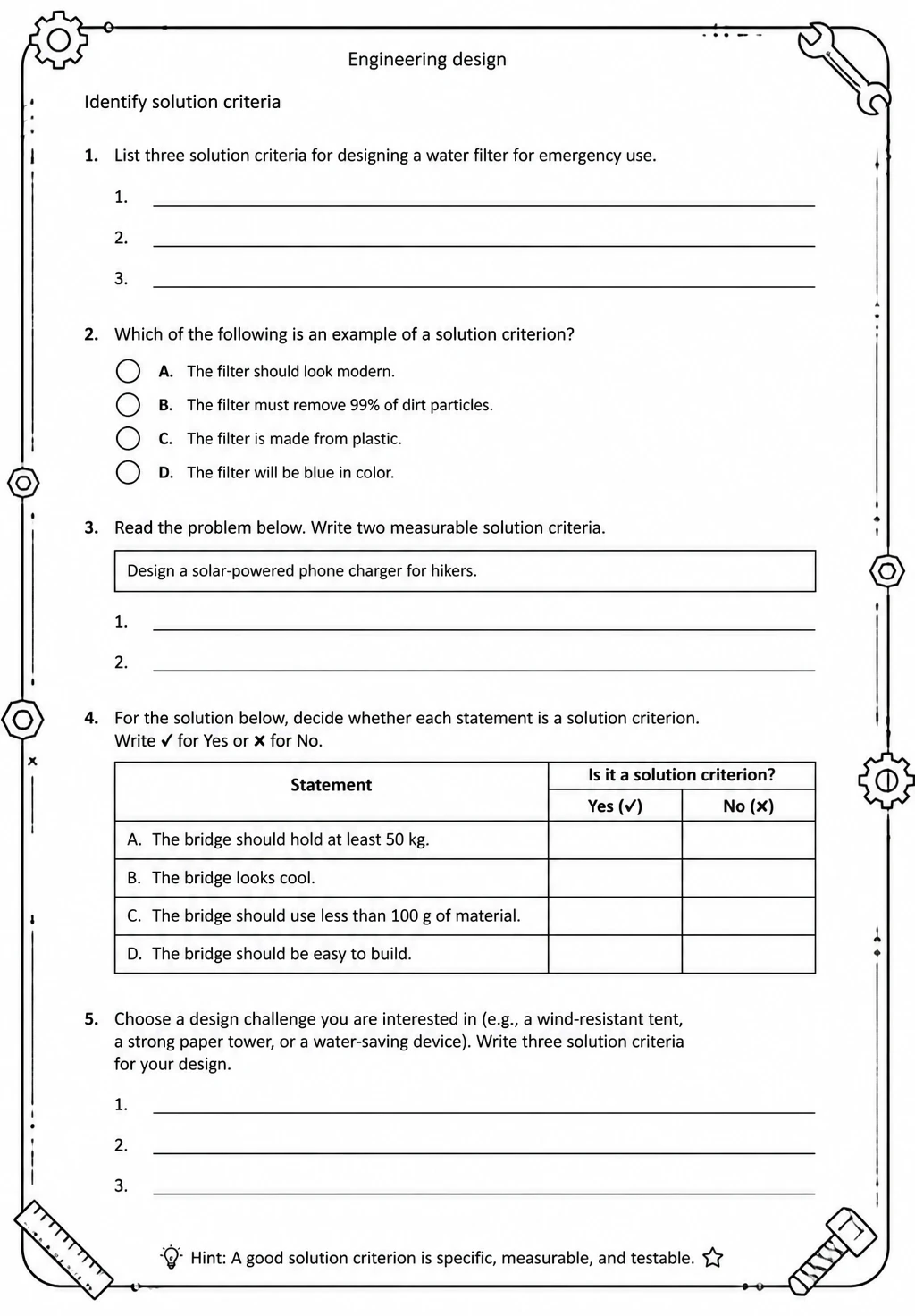
Identify solution criteria
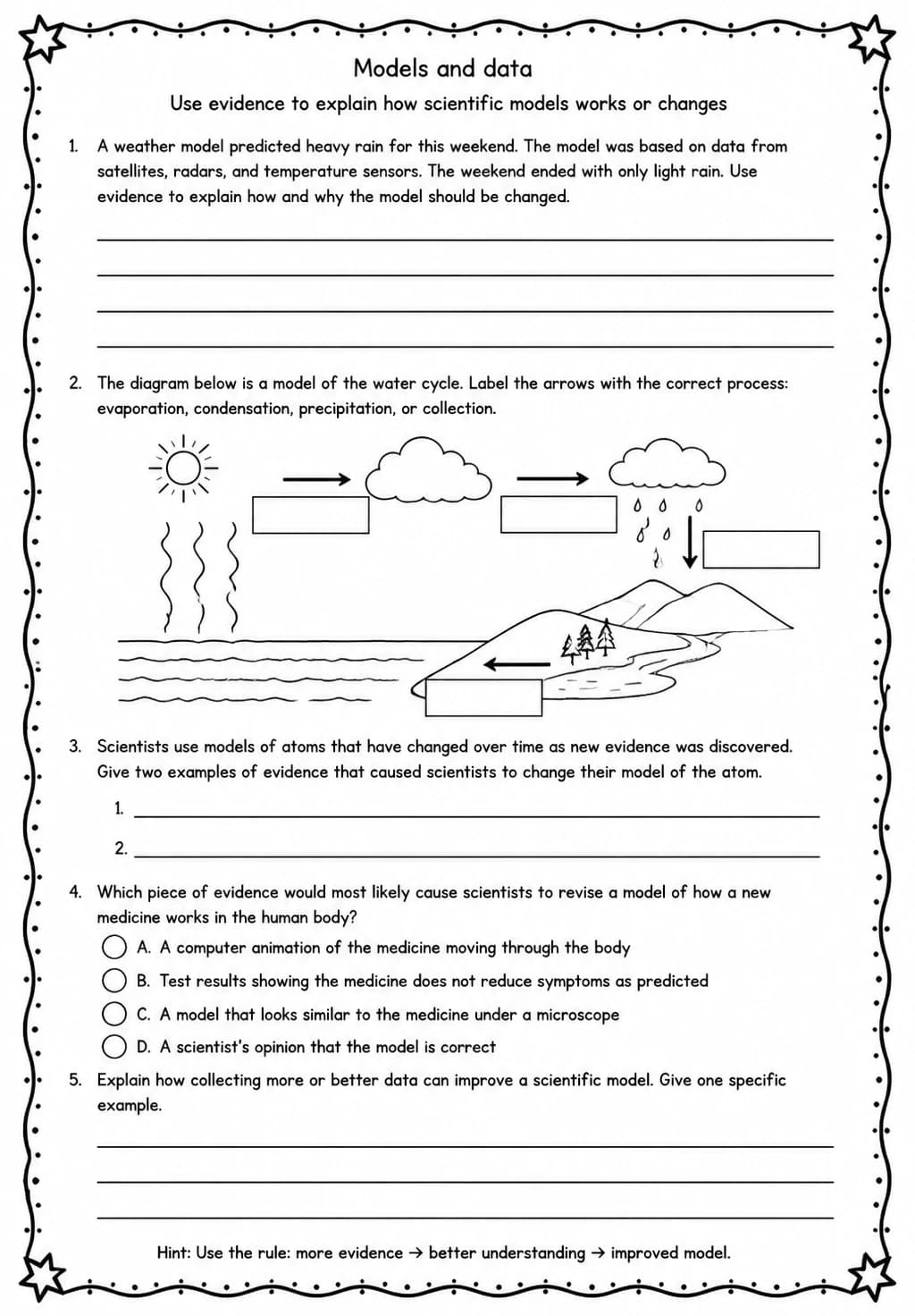
Use evidence to explain how scientific models works or changes
You might also like
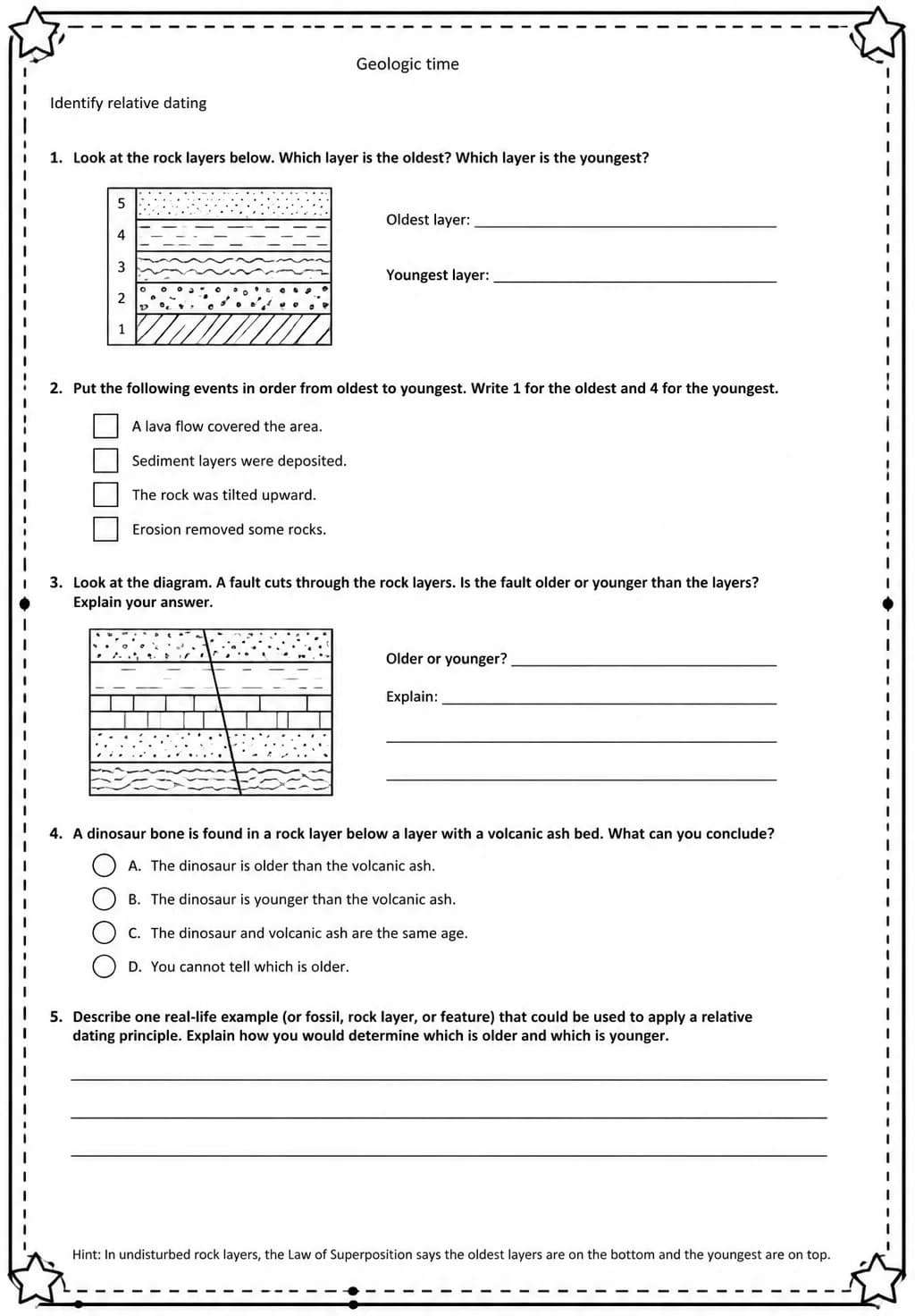
Identify relative dating
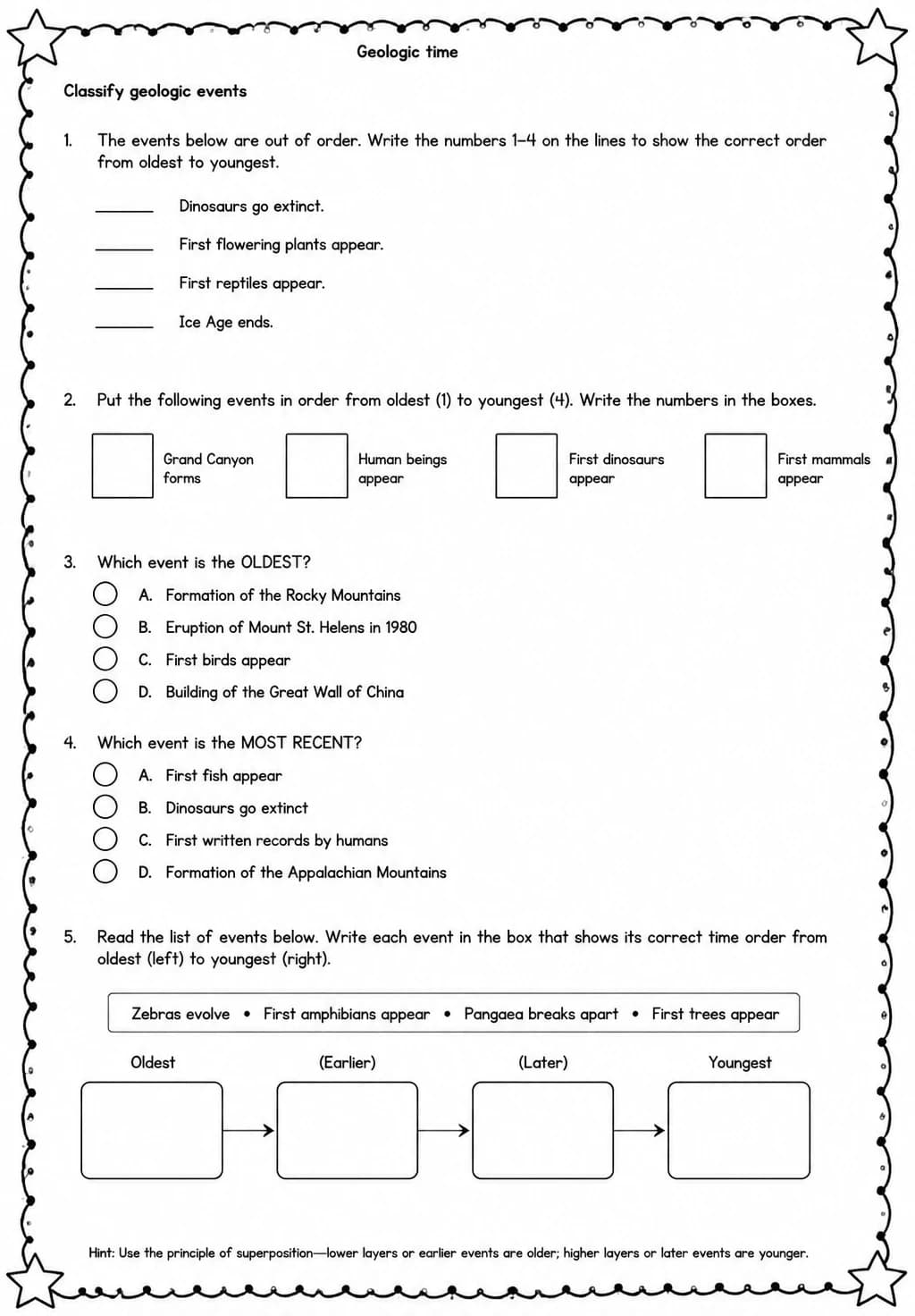
Classify geologic events
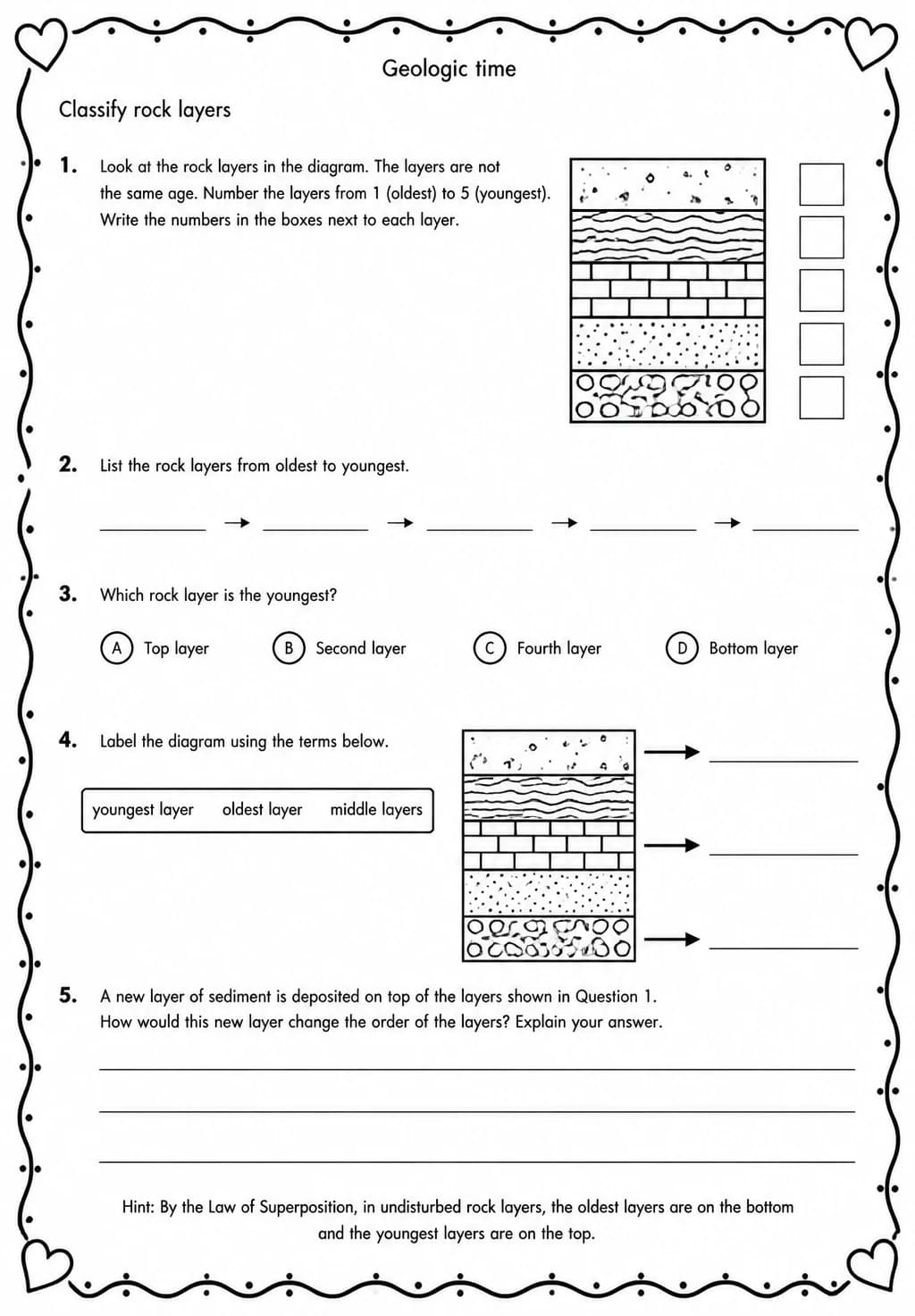
Classify rock layers
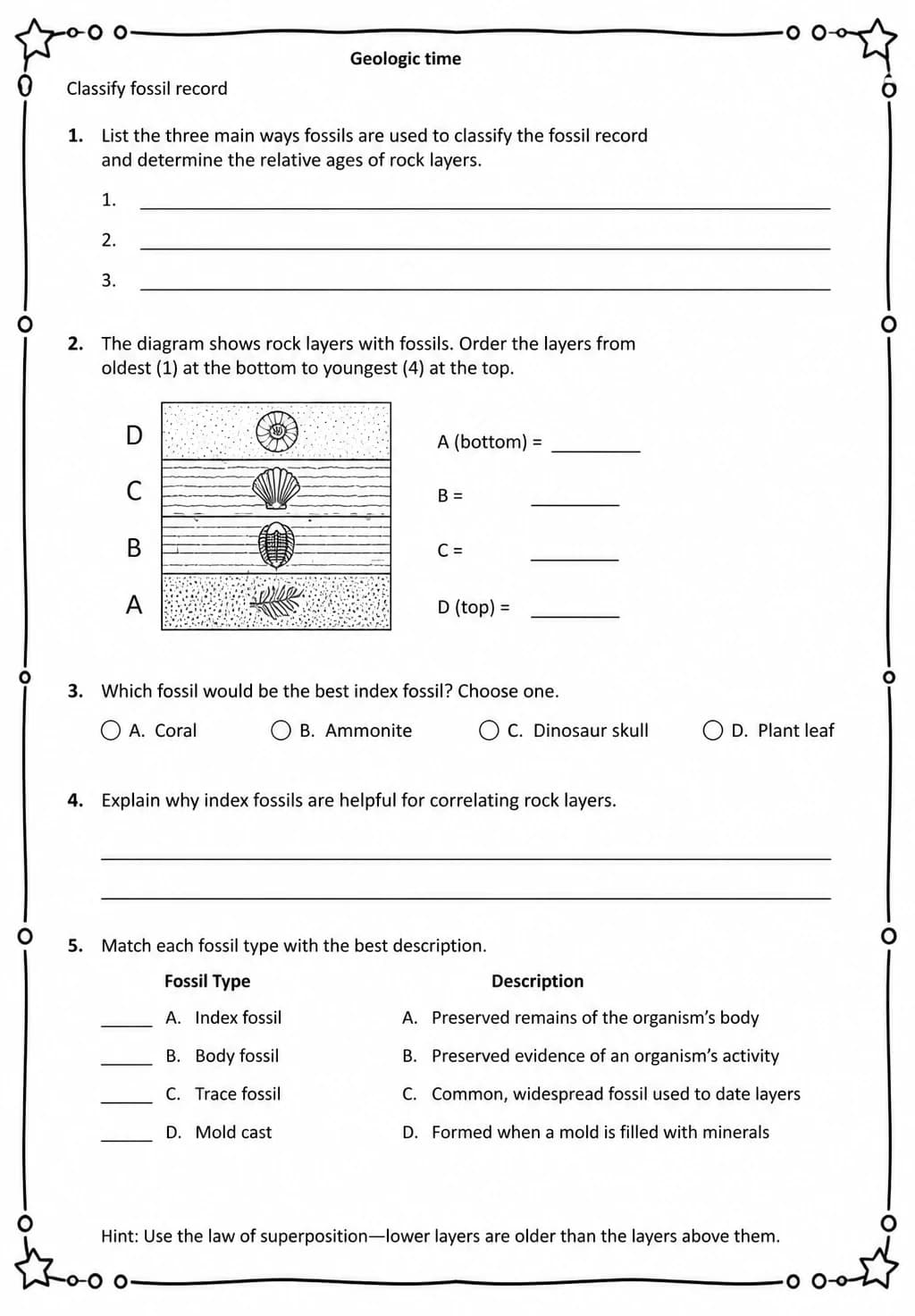
Classify fossil record
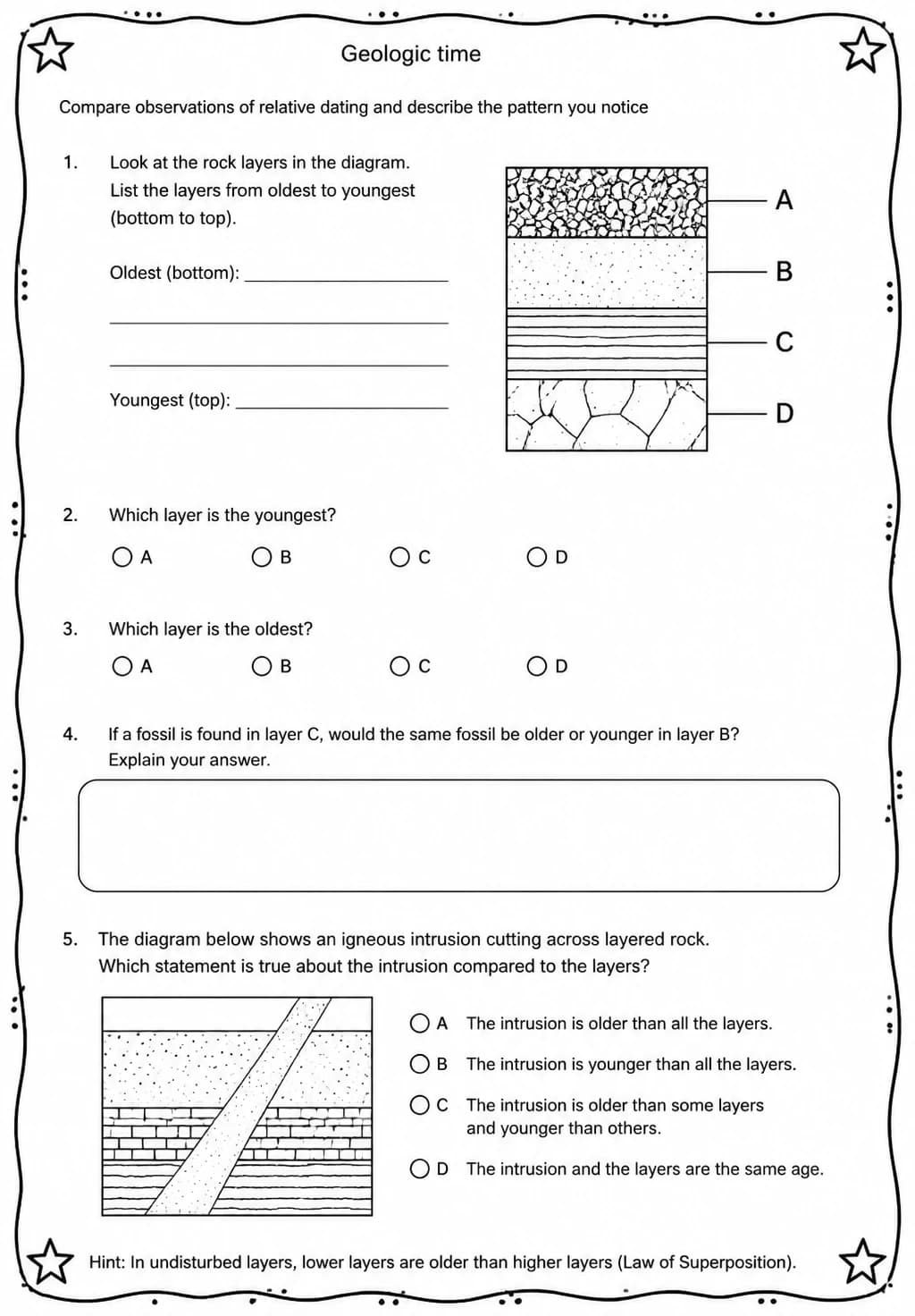
Compare observations of relative dating and describe the pattern you notice