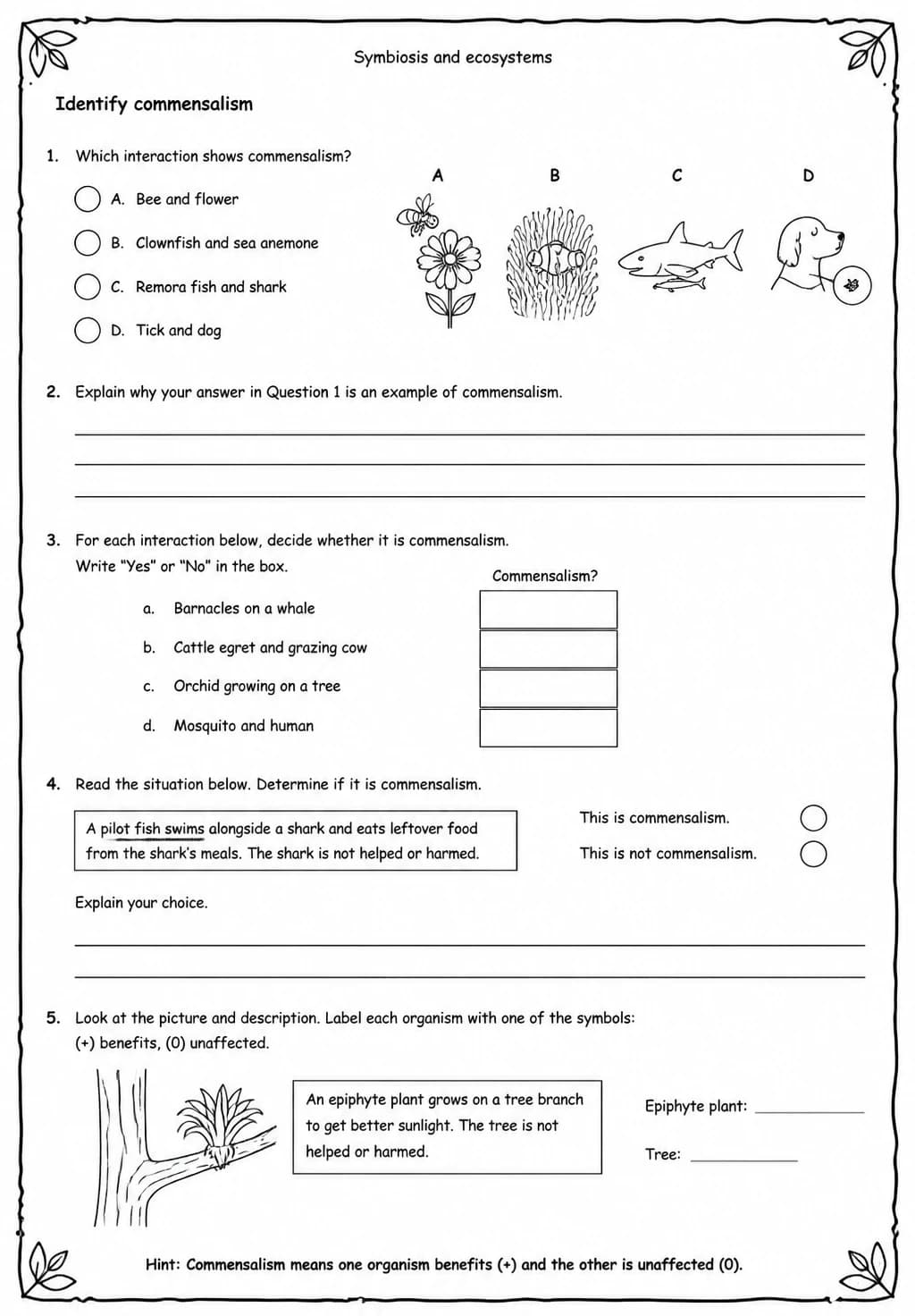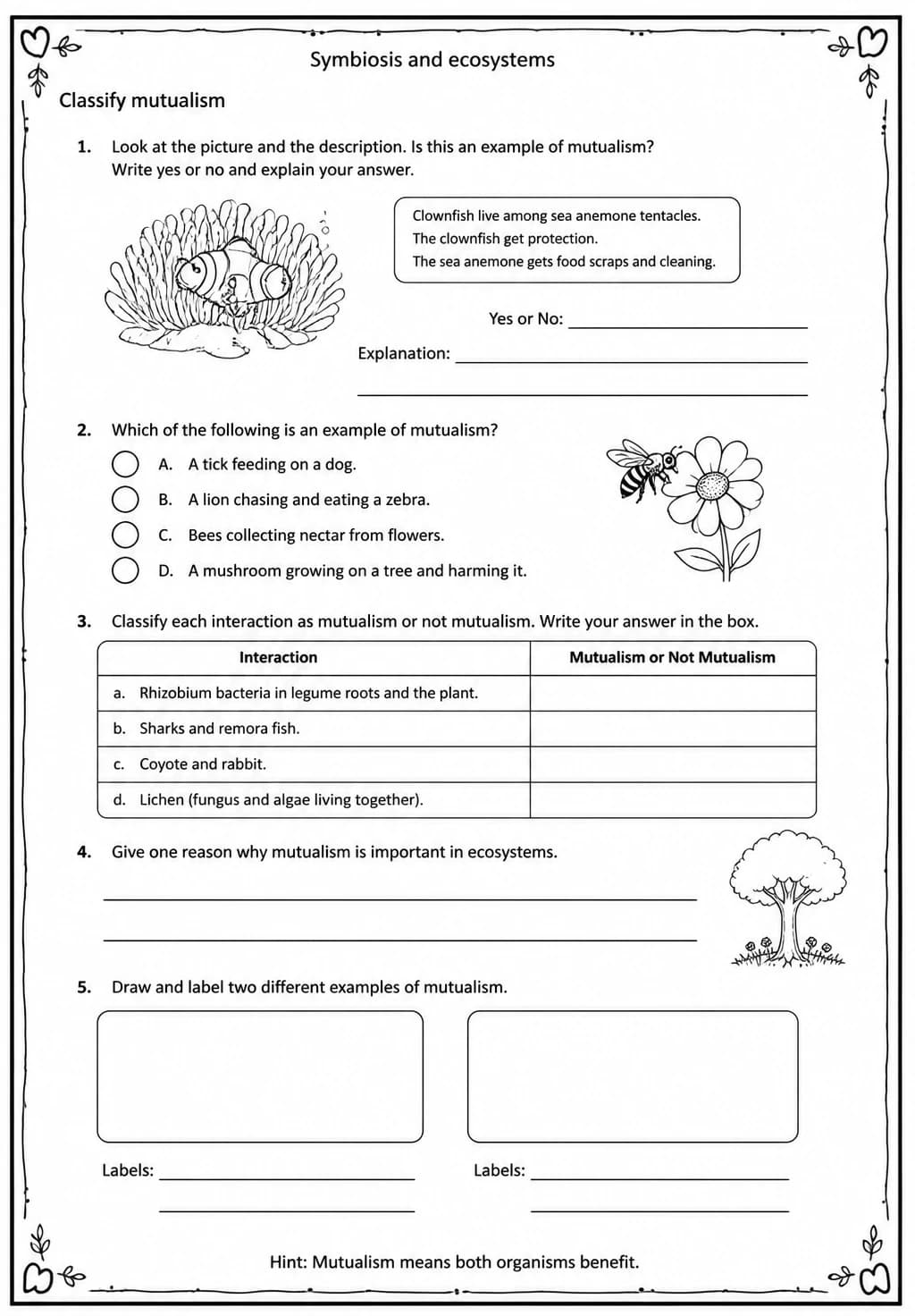
Classify mutualism
Free printable Grade 7 science worksheet for "Classify mutualism" — practice symbiosis and ecosystems. No-prep, print or assign online.
Middle-school students work through the skill of classifying mutualism as part of a broader study of symbiosis and ecosystems, learning to distinguish mutually beneficial relationships from other symbiotic types. Teachers can use this worksheet for direct instruction follow-up, small-group review, or formative assessment within a life-science unit. Accurate classification of mutualism supports deeper understanding of how species interact to sustain ecosystems.
Learning objectives
- Define mutualism and distinguish it from parasitism and commensalism
- Classify given species relationships as mutualistic using supporting evidence
- Explain how mutualistic relationships benefit both organisms involved
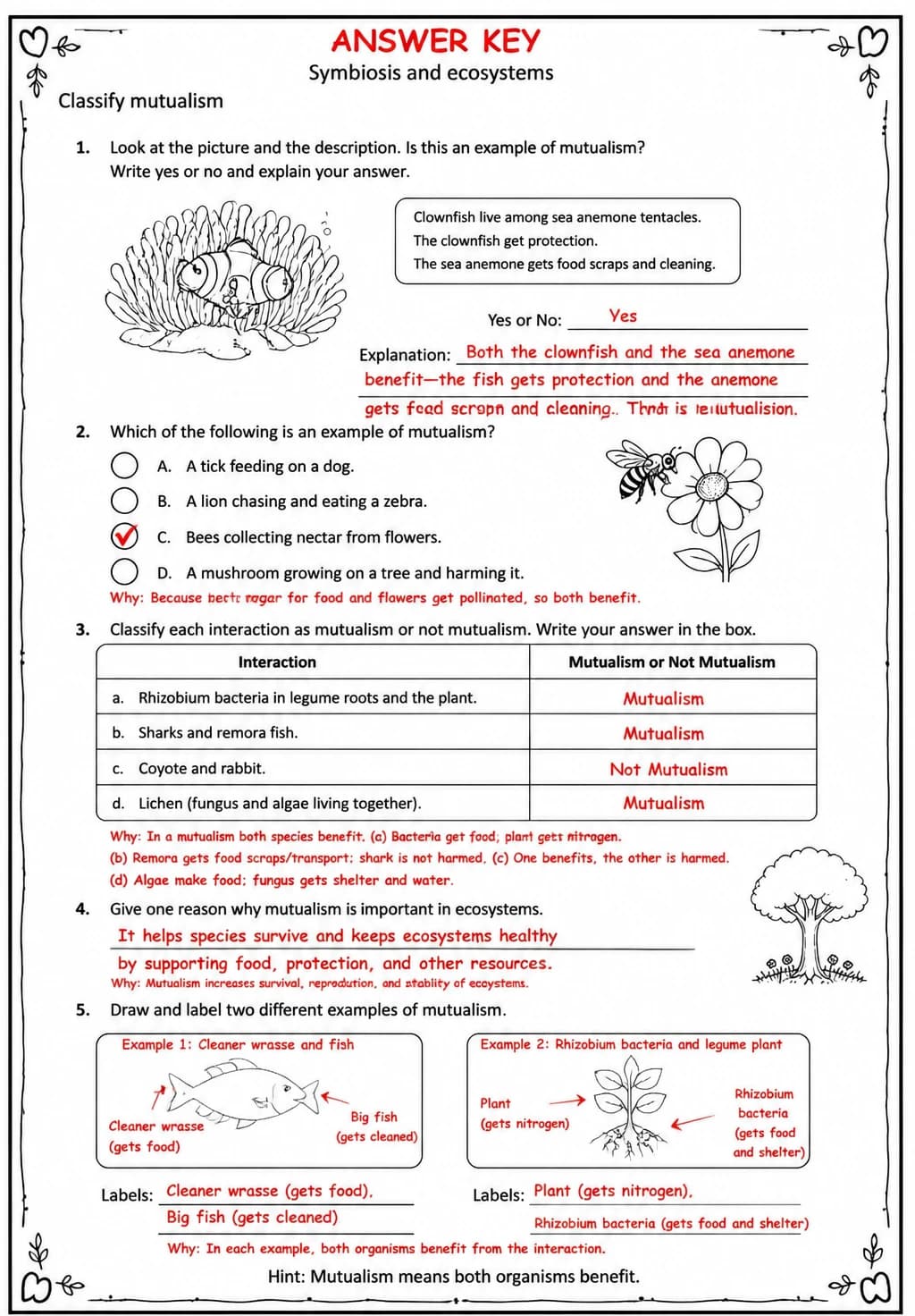
Answer Key
How to use this worksheet
- Click “Download Worksheet” and sign in with Google or email to get the PDF instantly.
- Print at home or in class for Middle School; it's no-prep, with no extra materials needed.
- Use the included answer key to mark it in seconds.
Frequently asked questions
Is the “Classify mutualism” worksheet free?
Yes. “Classify mutualism” is a free printable Science worksheet. Sign in with Google or email to download the PDF instantly.
What grade or age is this Science worksheet for?
It's designed for Middle School (ages 11–14), covering Symbiosis and ecosystems.
Does it come with an answer key?
Yes — a matching answer key is included so you can grade it in seconds.
Create more worksheets in our Worksheet Studio
Generate fresh worksheets for any grade, topic, and language — free.
Open the Worksheet StudioMore for Middle School

Complementary and supplementary angles

Solve one-step multiplication and division equations with decimals and fractions
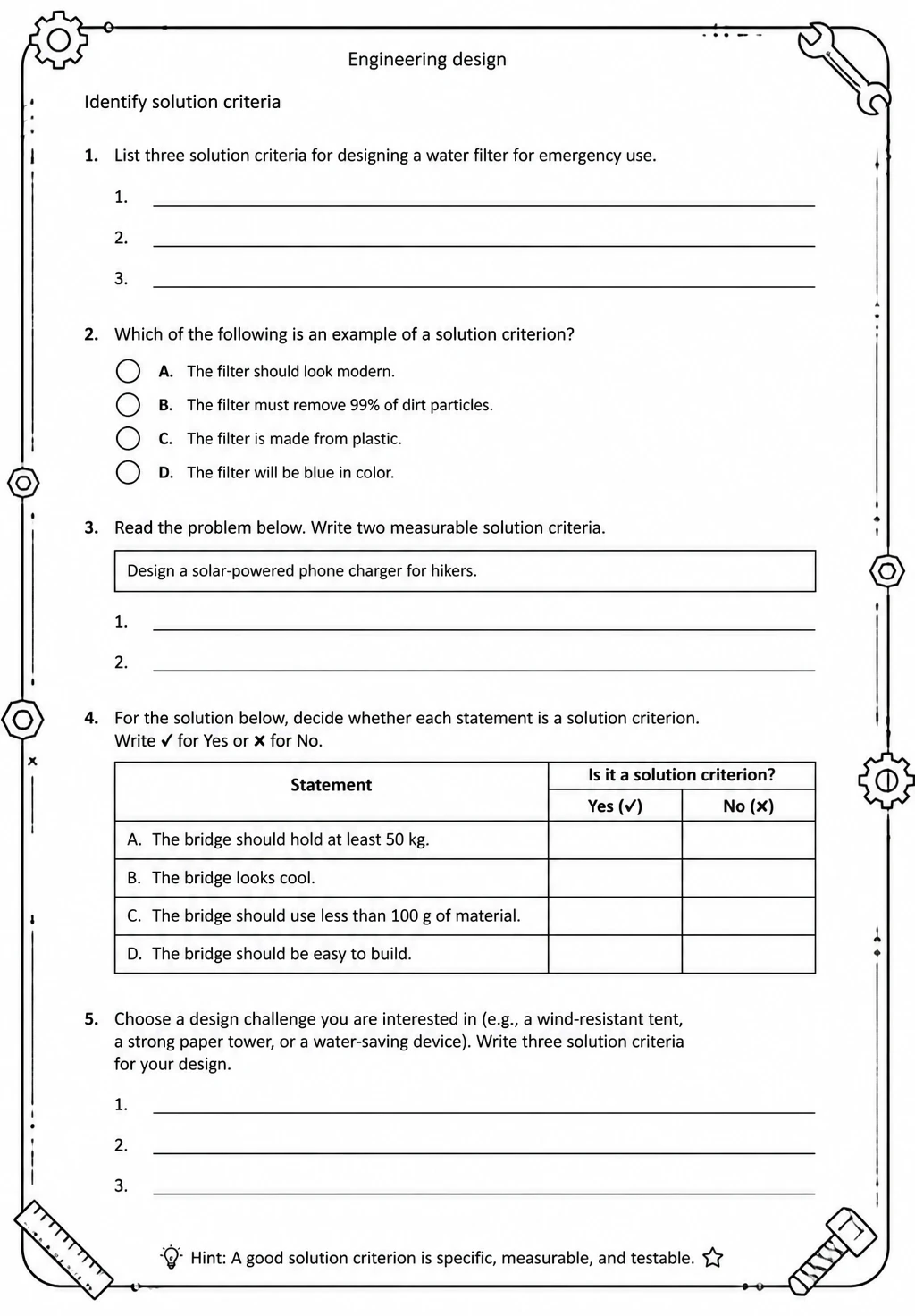
Identify solution criteria
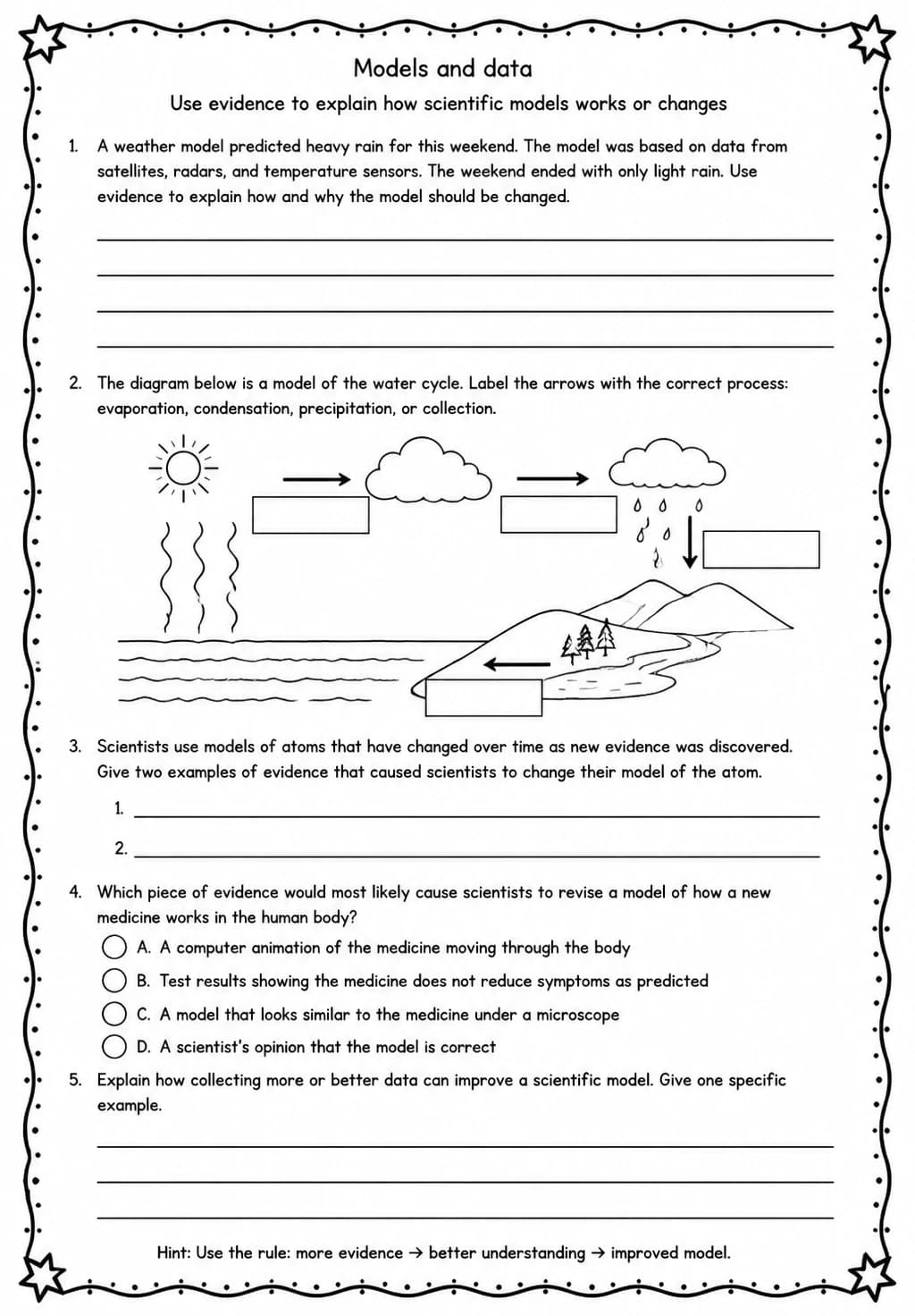
Use evidence to explain how scientific models works or changes
You might also like
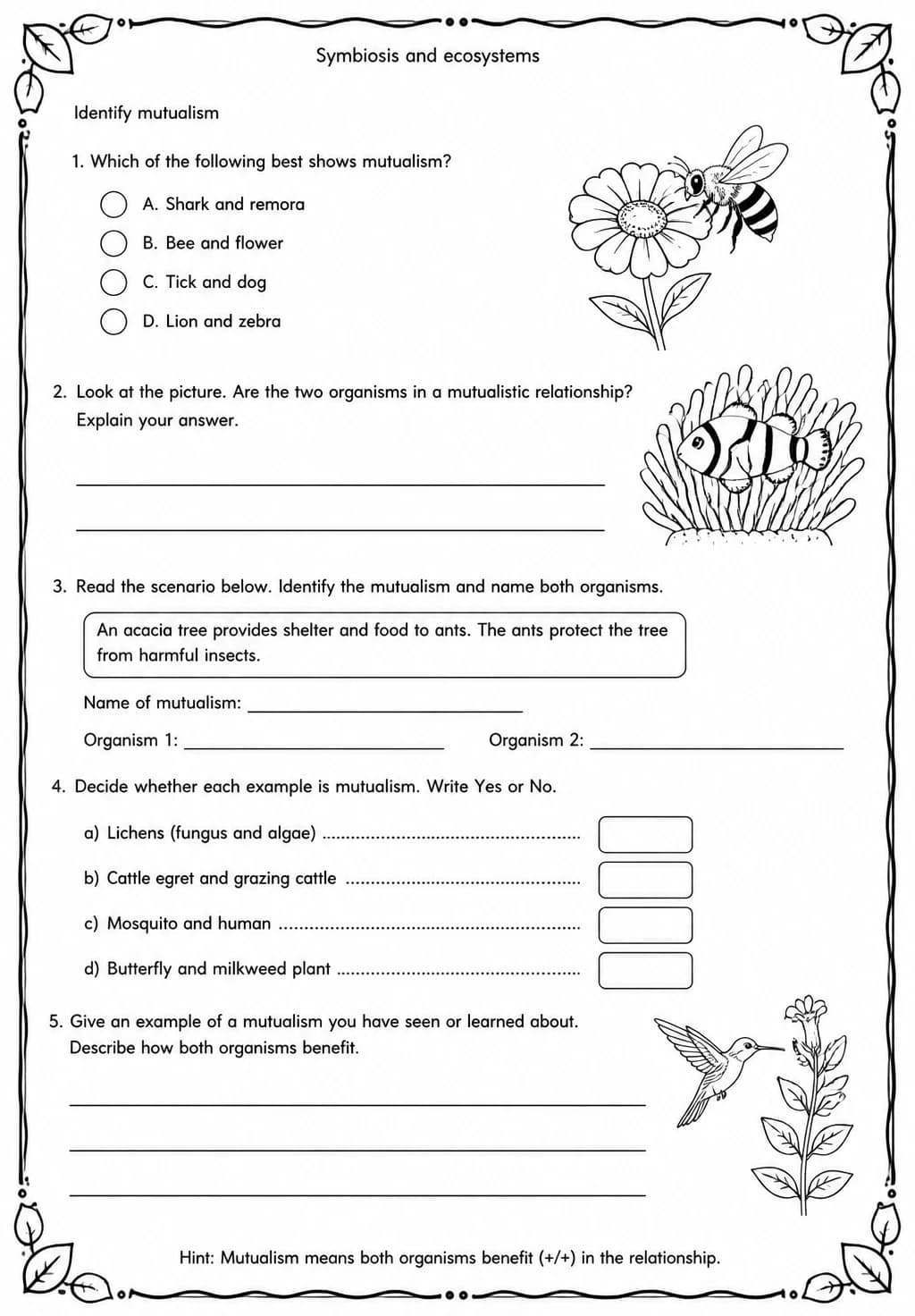
Identify mutualism
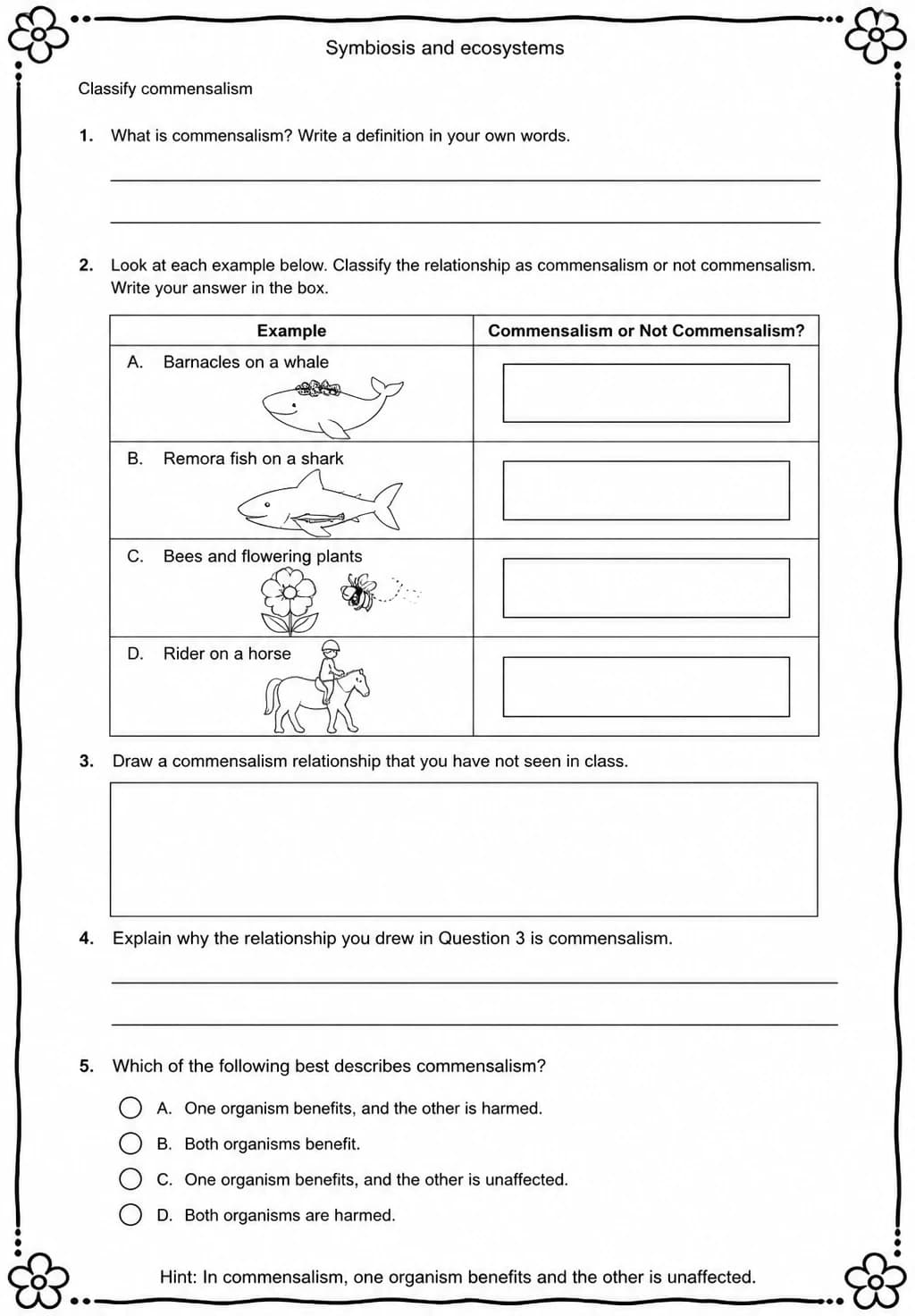
Classify commensalism
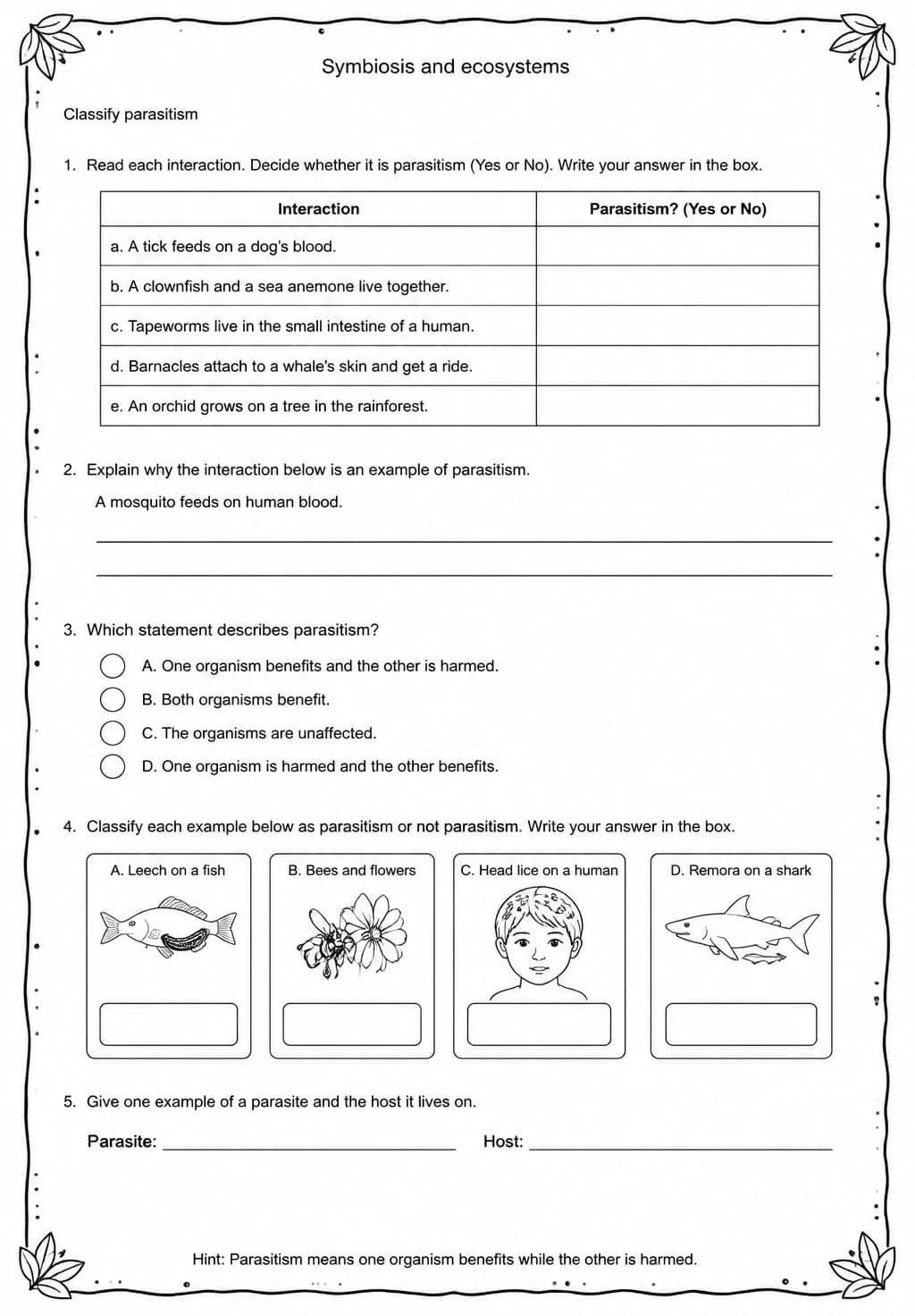
Classify parasitism
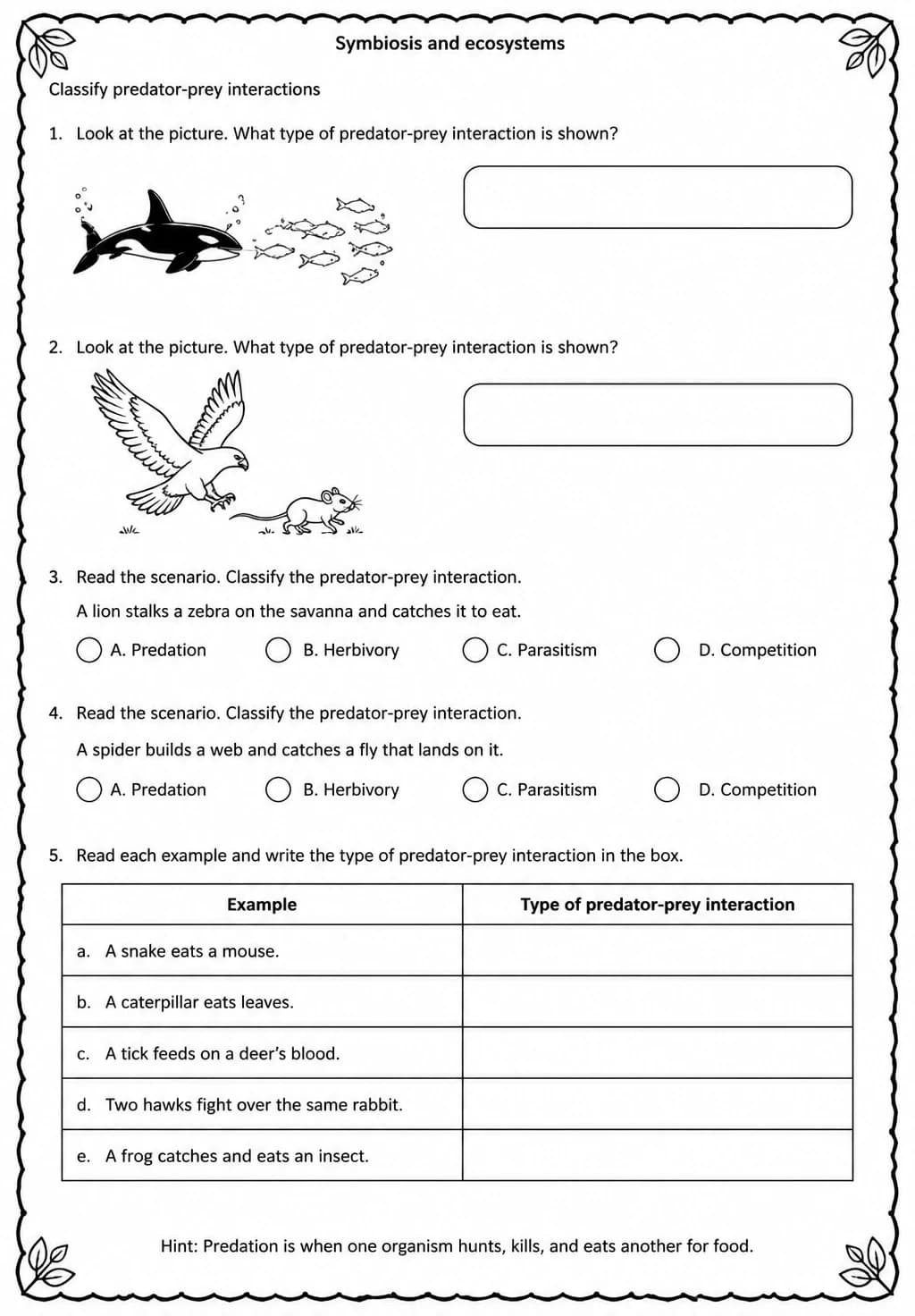
Classify predator-prey interactions
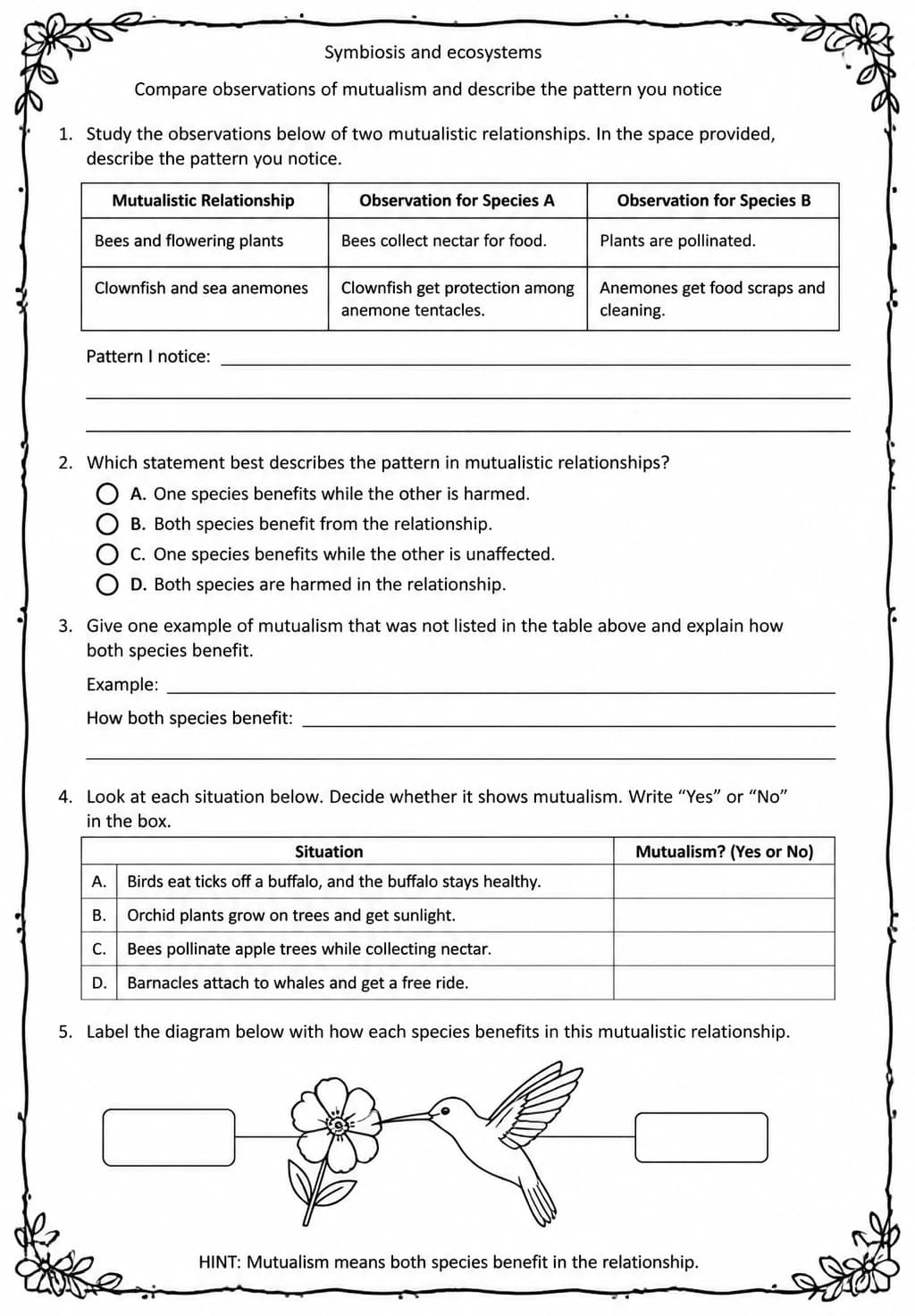
Compare observations of mutualism and describe the pattern you notice