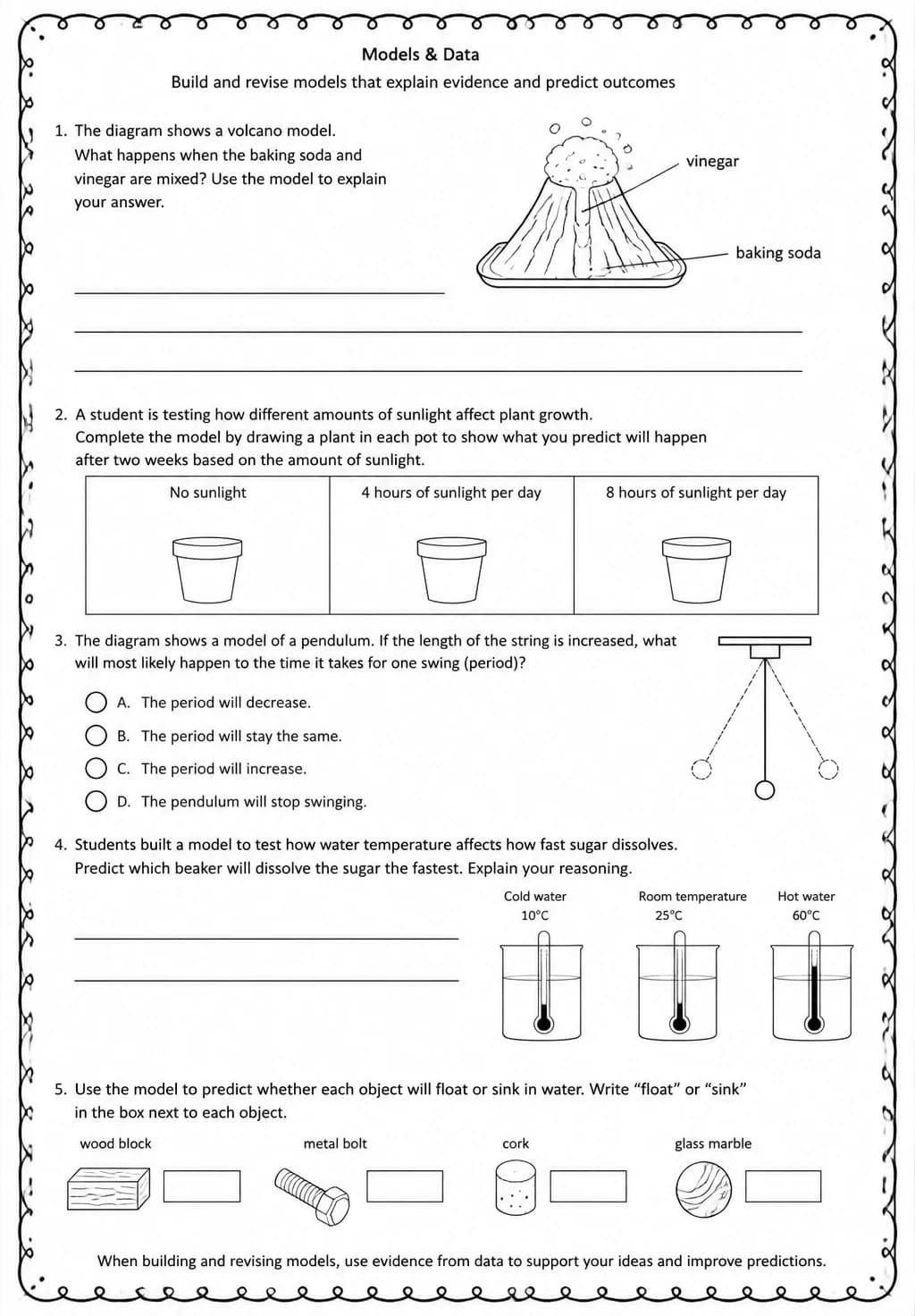
Build and revise models that explain evidence and predict outcomes
Free printable Science Literacy science worksheet for "Build and revise models that explain evidence and predict outcomes" — practice models & data. No-prep, print or assign online.
High school students engage with the iterative nature of scientific modeling, learning how to build, test, and revise models so they accurately reflect evidence and carry predictive power. This Models and Data worksheet asks learners to evaluate what a model explains well and where it falls short, then describe how they would revise it. The skill fits within Scientific and Engineering Practices and is essential preparation for lab reports, research projects, and standardized science assessments.
Learning objectives
- Construct or describe a scientific model that represents evidence from observations
- Evaluate a model's strengths and limitations in explaining a phenomenon
- Revise a model based on new evidence and articulate how the revision improves its predictive accuracy
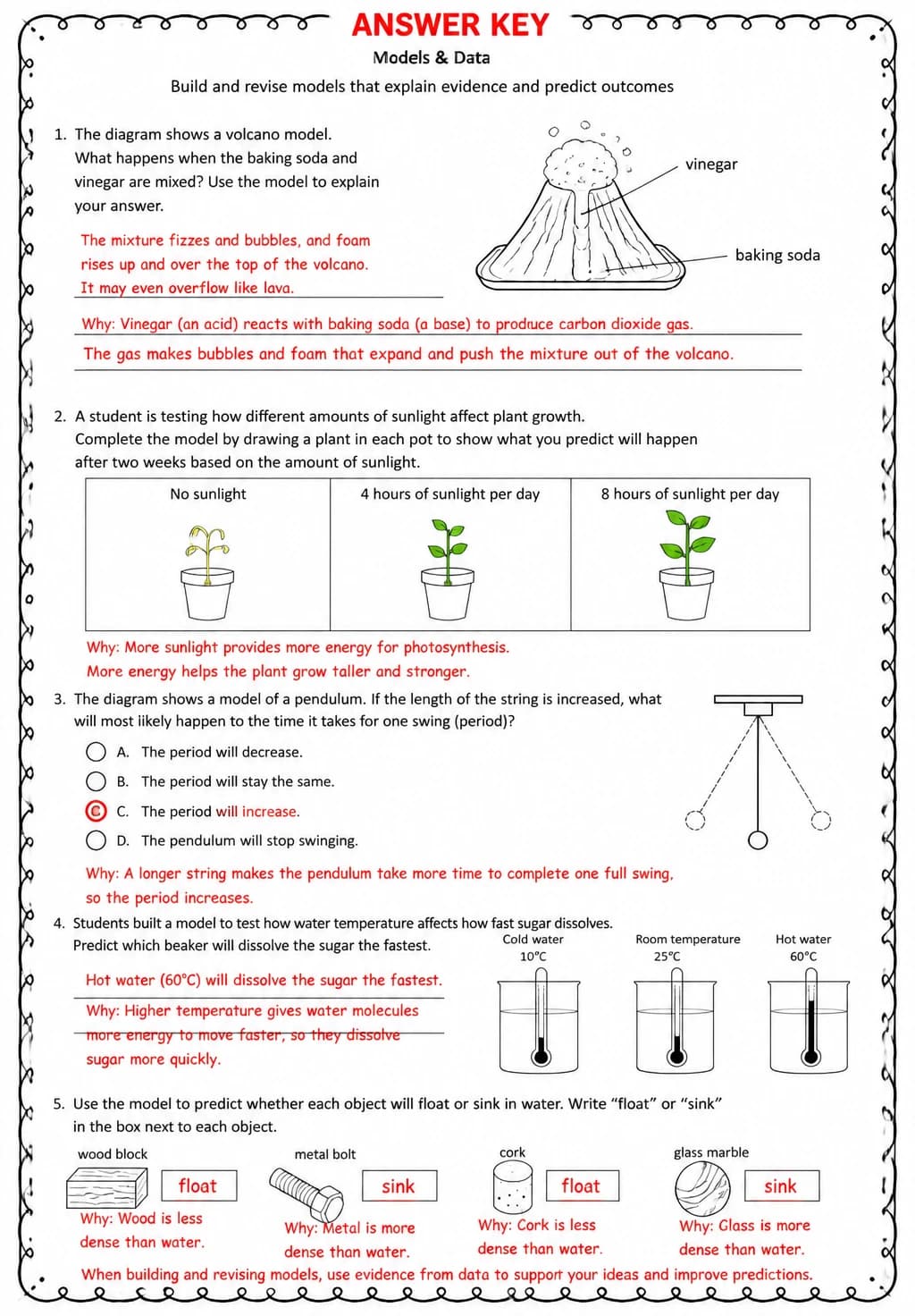
Answer Key
How to use this worksheet
- Click “Download Worksheet” and sign in with Google or email to get the PDF instantly.
- Print at home or in class for High School; it's no-prep, with no extra materials needed.
- Use the included answer key to mark it in seconds.
Frequently asked questions
Is the “Build and revise models that explain evidence and predict outcomes” worksheet free?
Yes. “Build and revise models that explain evidence and predict outcomes” is a free printable Science worksheet. Sign in with Google or email to download the PDF instantly.
What grade or age is this Science worksheet for?
It's designed for High School (ages 14–18), covering Models & Data.
Does it come with an answer key?
Yes — a matching answer key is included so you can grade it in seconds.
Create more worksheets in our Worksheet Studio
Generate fresh worksheets for any grade, topic, and language — free.
Open the Worksheet StudioMore for High School

You might also like
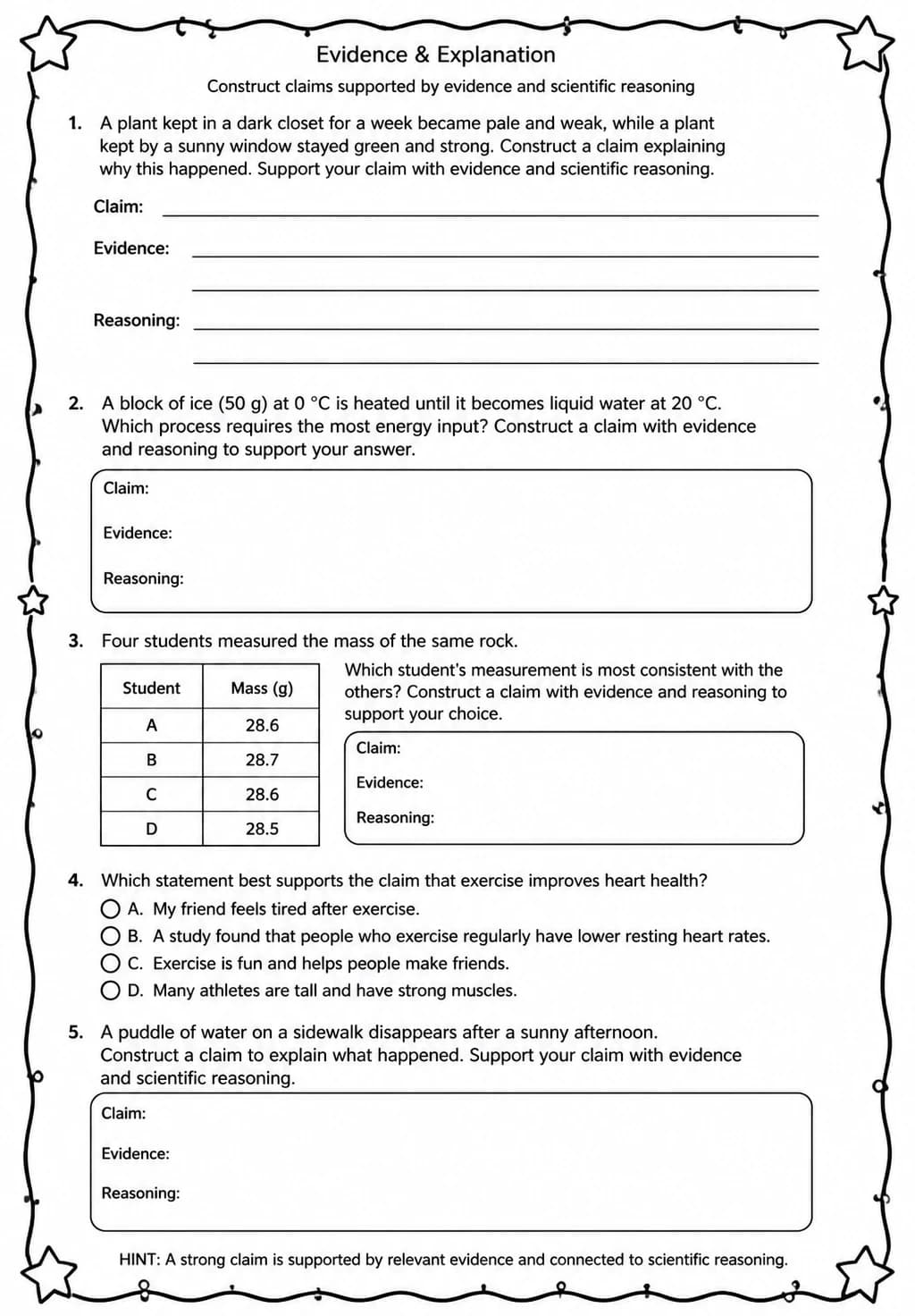
Construct claims supported by evidence and scientific reasoning
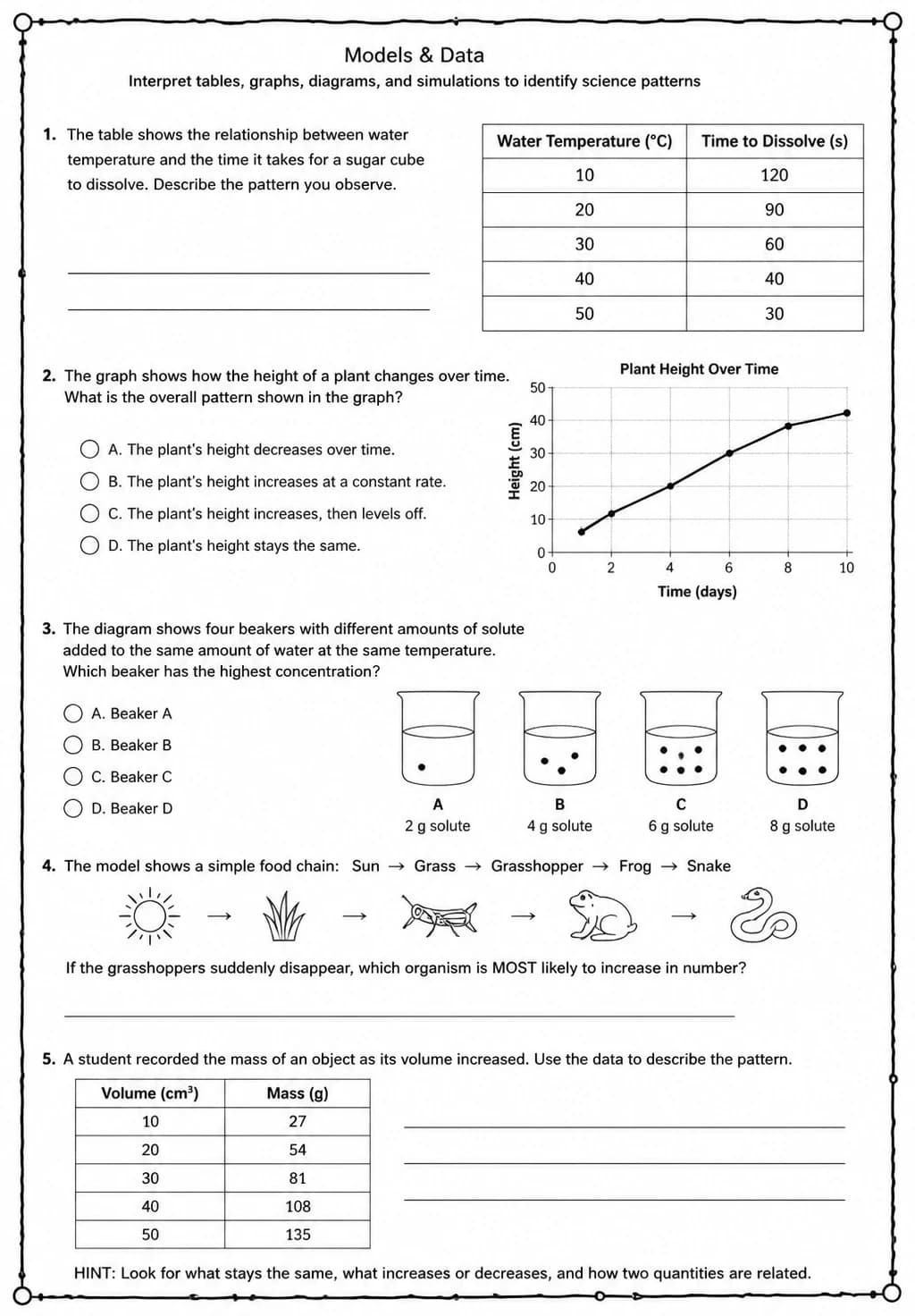
Interpret tables, graphs, diagrams, and simulations to identify science patterns
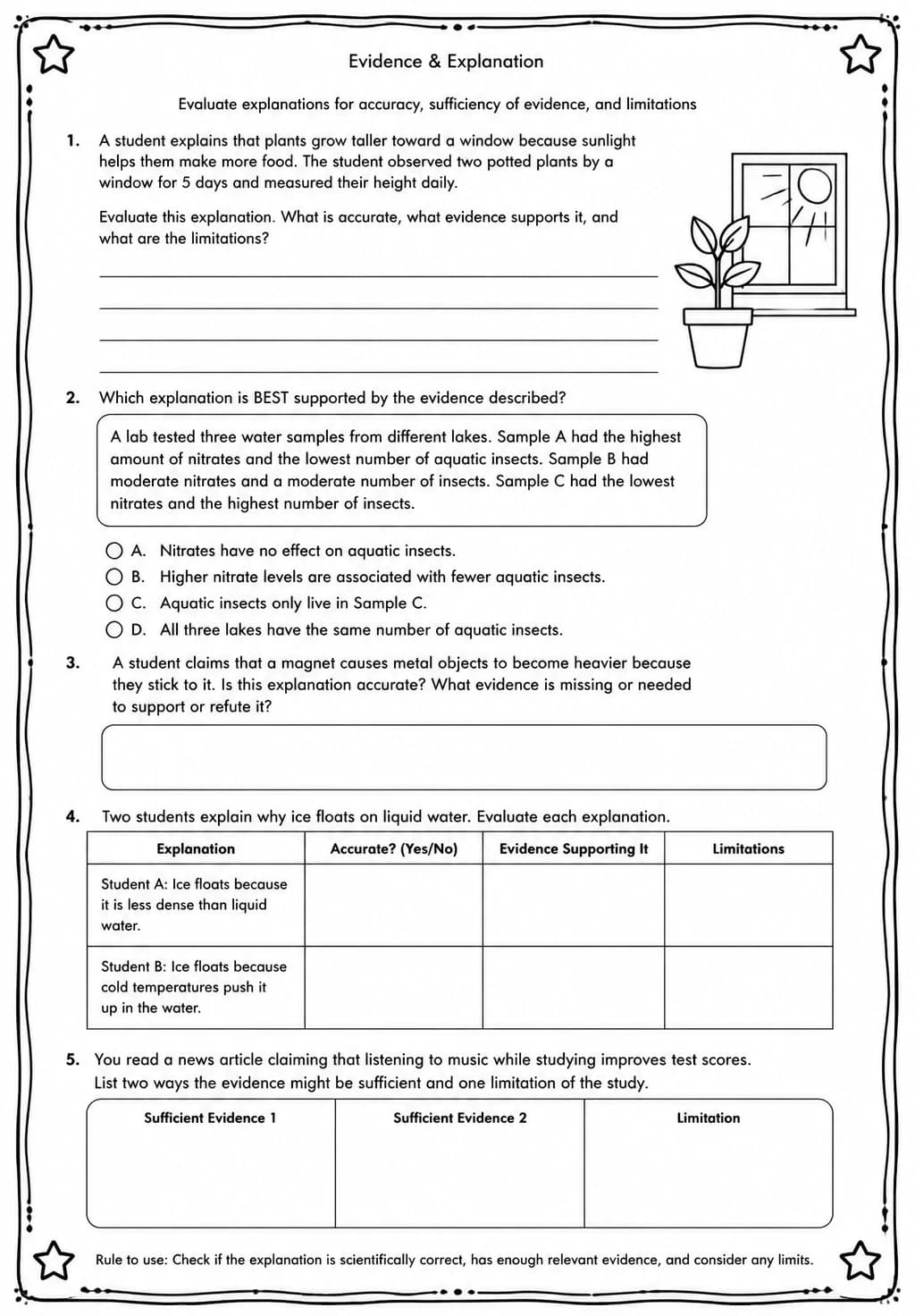
Evaluate explanations for accuracy, sufficiency of evidence, and limitations
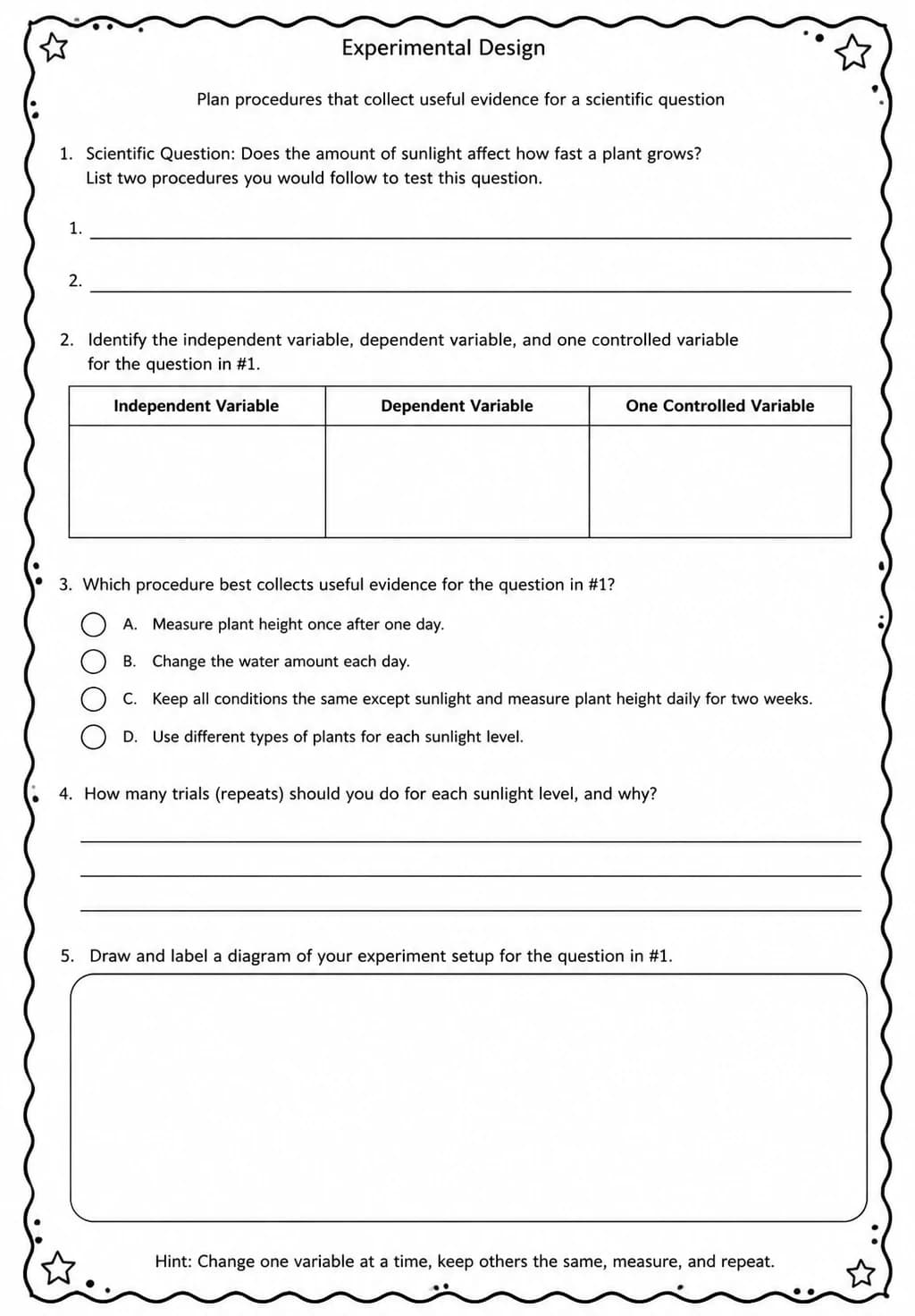
Plan procedures that collect useful evidence for a scientific question
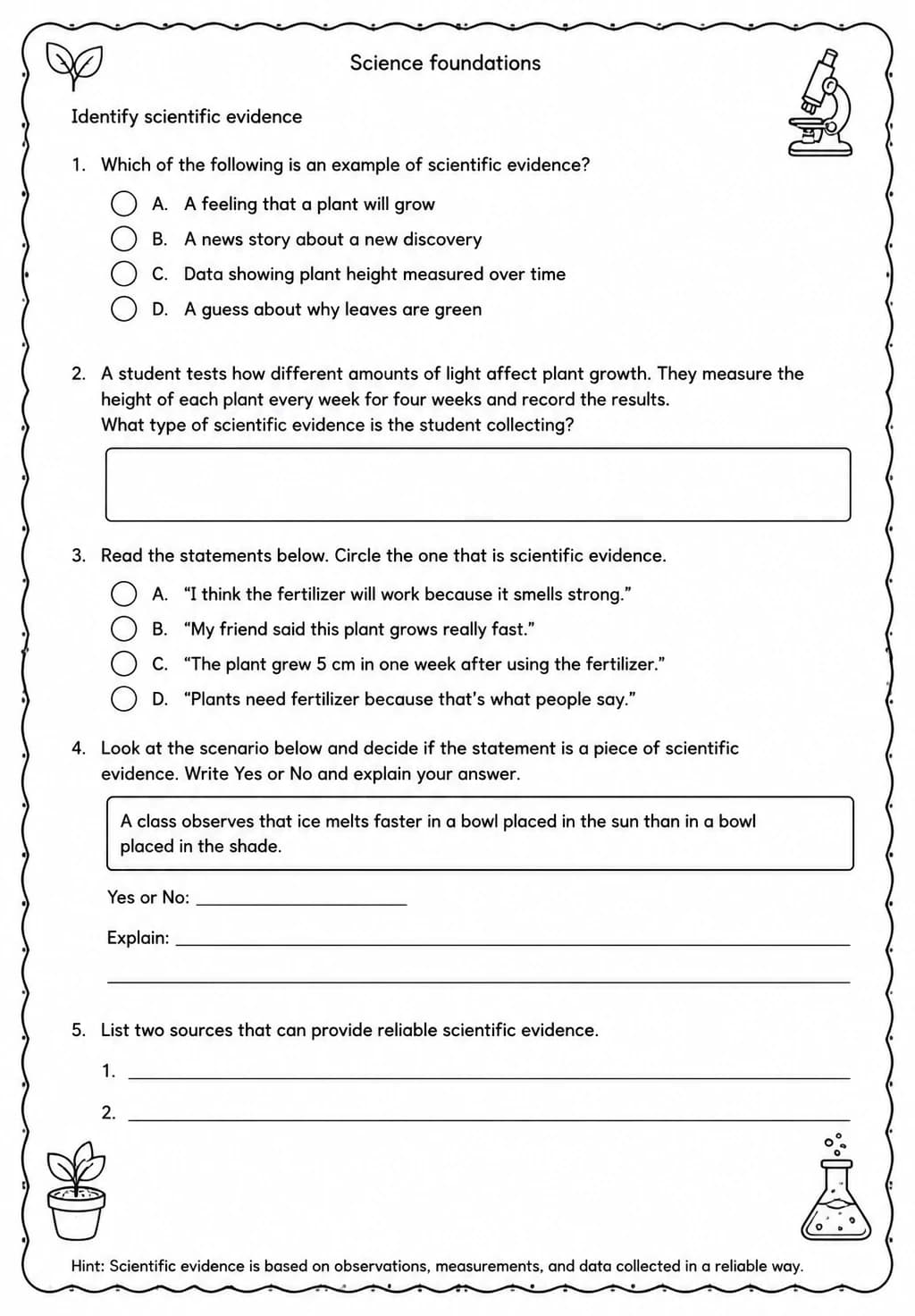
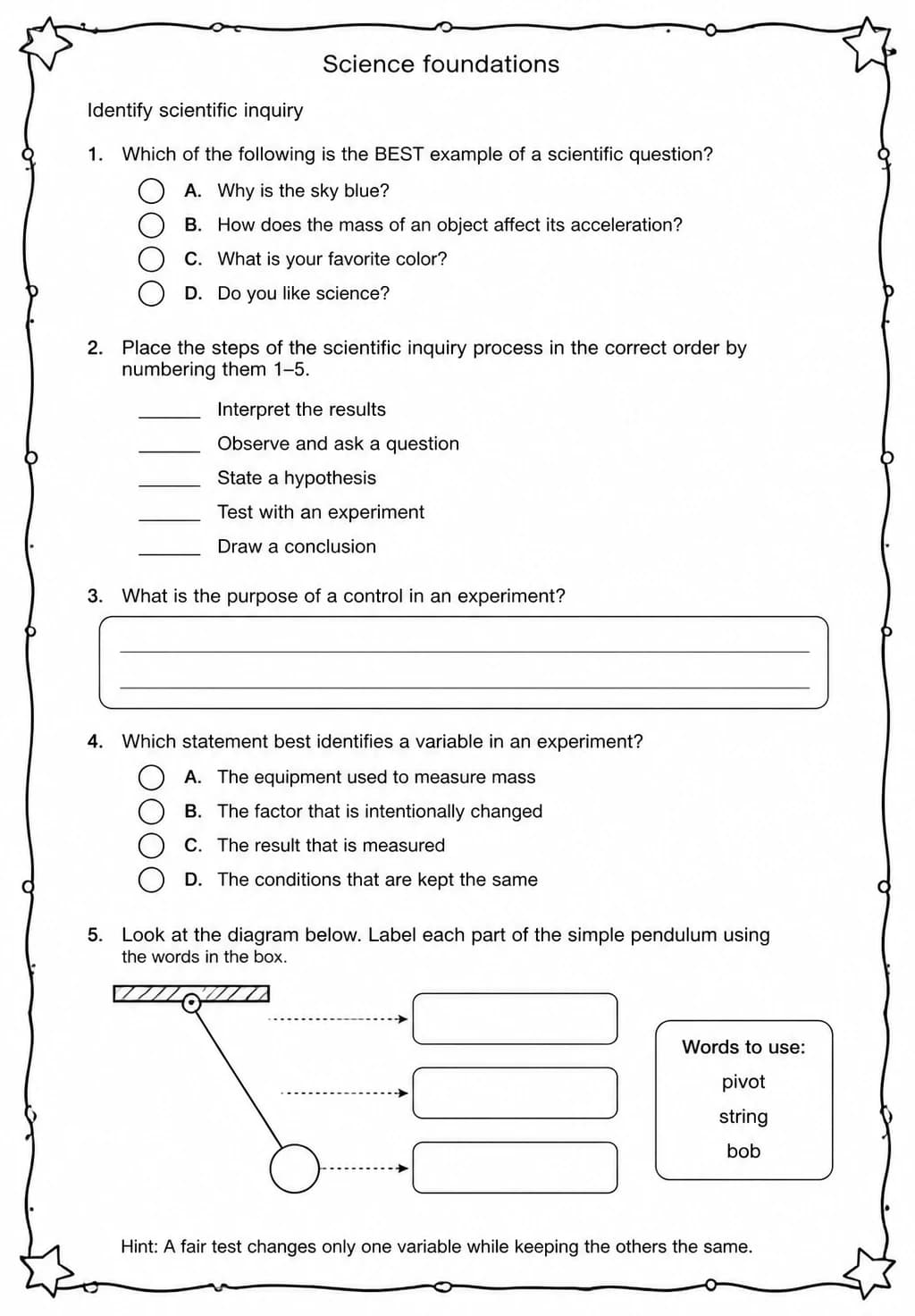
Identify scientific evidence