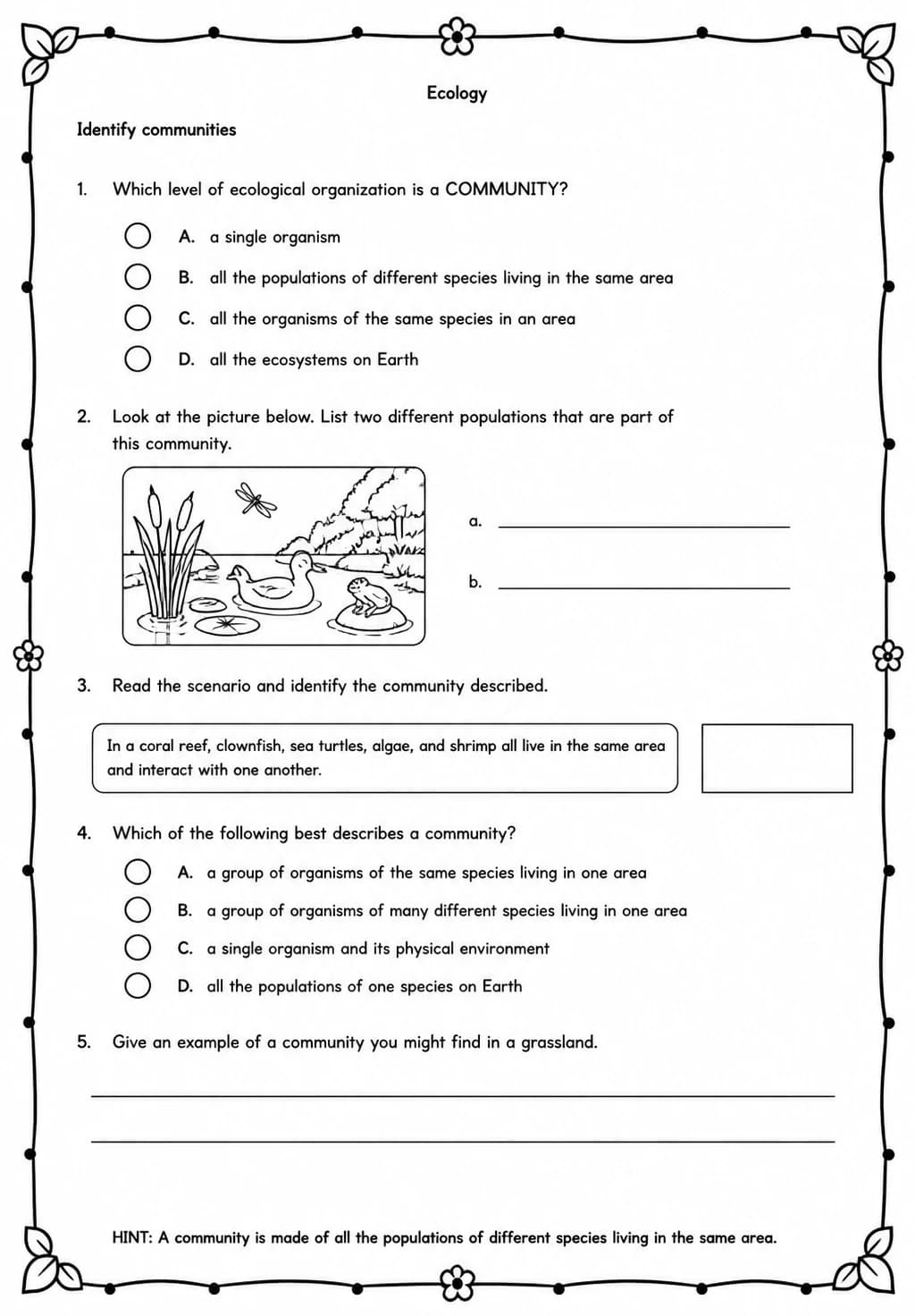
Trace matter and energy through food webs and ecosystem cycles
Free printable Life Science science worksheet for "Trace matter and energy through food webs and ecosystem cycles" — practice ecosystems. No-prep, print or assign online.
Students in Grades 9–12 use this worksheet to trace matter and energy as they move through food webs and ecosystem cycles, connecting producers, consumers, and decomposers in a coherent flow. Teachers can assign it during an ecosystems unit to help students visualize energy transfer and nutrient cycling at a system level. It supports Life Science standards requiring students to analyze interdependence within and among ecosystems.
Learning objectives
- Trace the flow of energy from producers through successive consumer levels
- Explain how matter is recycled through biogeochemical cycles in an ecosystem
- Analyze the role of decomposers in returning nutrients to the ecosystem
Answer Key

How to use this worksheet
- Click “Download Worksheet” and sign in with Google or email to get the PDF instantly.
- Print at home or in class for High School; it's no-prep, with no extra materials needed.
- Use the included answer key to mark it in seconds.
Frequently asked questions
Is the “Trace matter and energy through food webs and ecosystem cycles” worksheet free?
Yes. “Trace matter and energy through food webs and ecosystem cycles” is a free printable Science worksheet. Sign in with Google or email to download the PDF instantly.
What grade or age is this Science worksheet for?
It's designed for High School (ages 14–18), covering Ecosystems.
Does it come with an answer key?
Yes — a matching answer key is included so you can grade it in seconds.
Create more worksheets in our Worksheet Studio
Generate fresh worksheets for any grade, topic, and language — free.
Open the Worksheet StudioMore for High School

You might also like
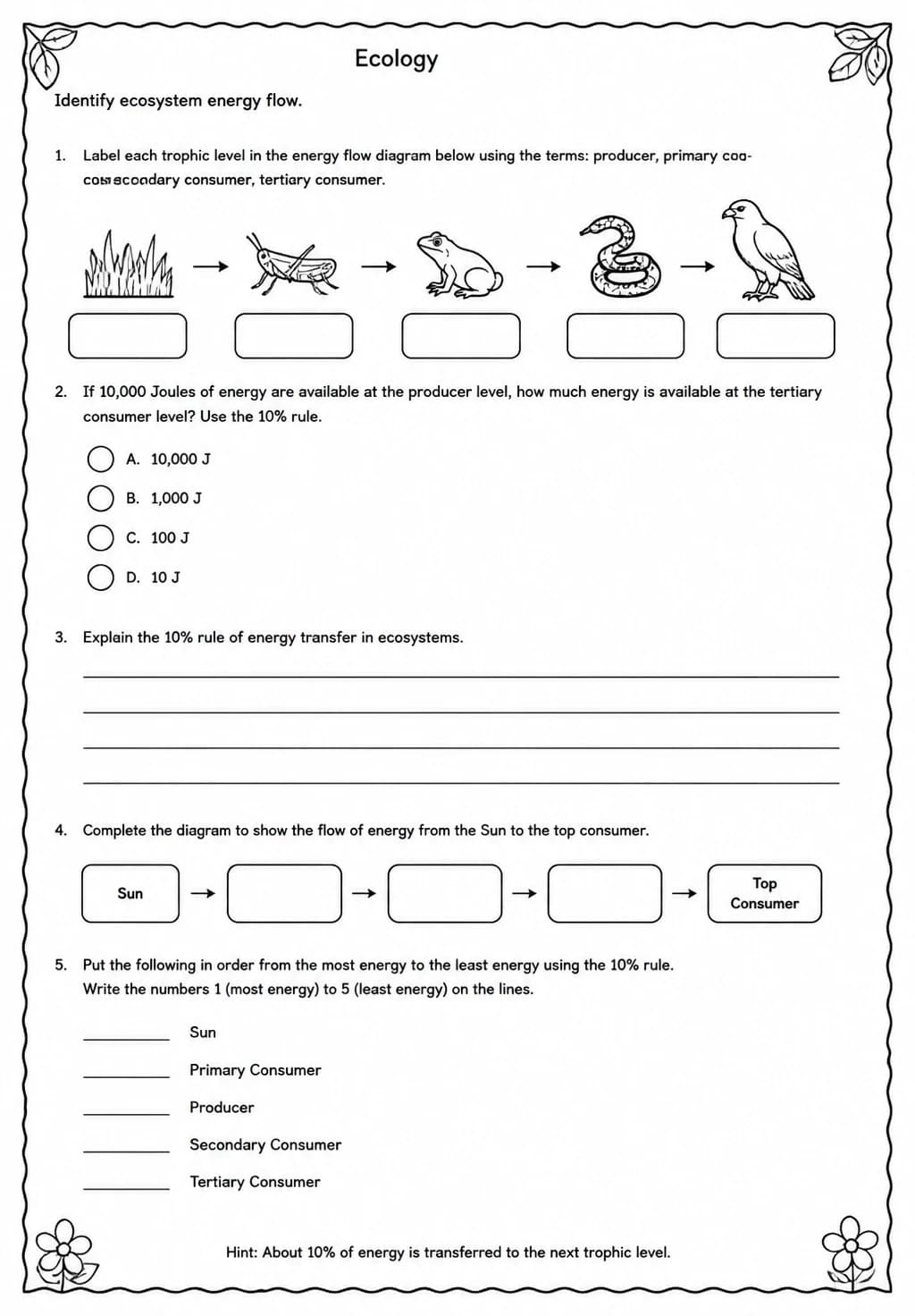
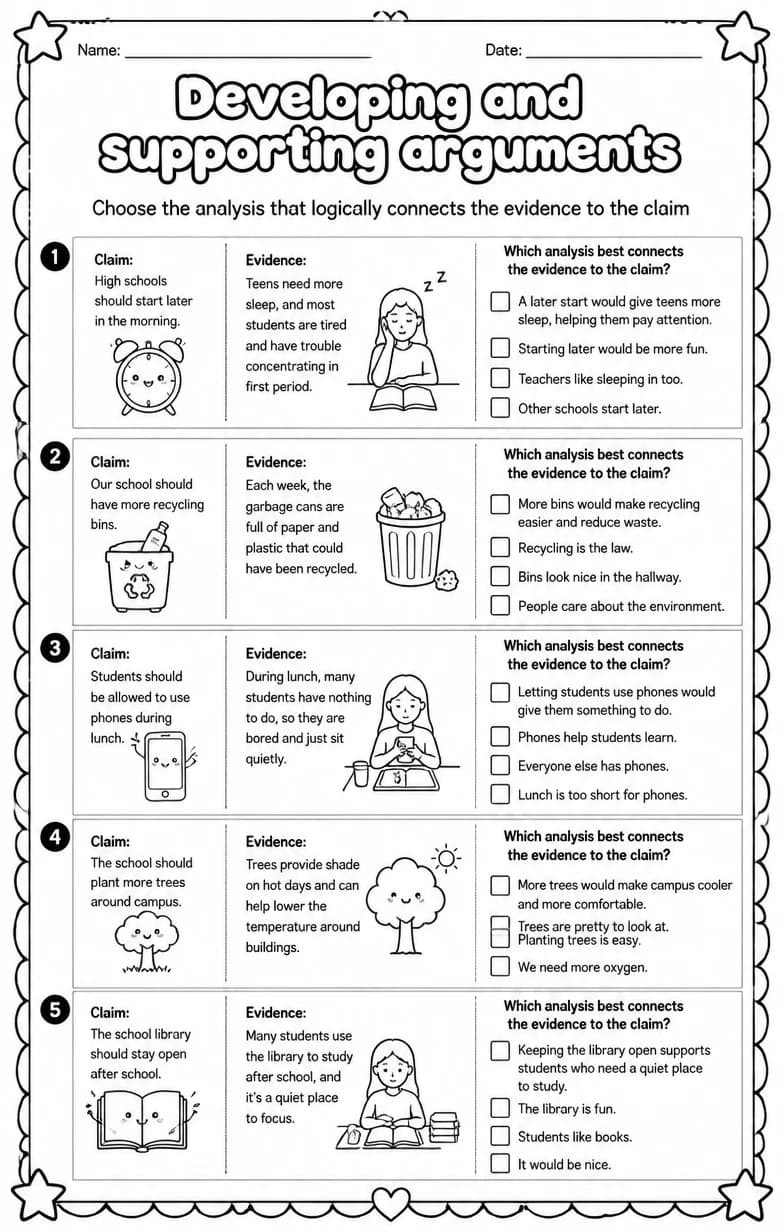
Identify ecosystem energy flow
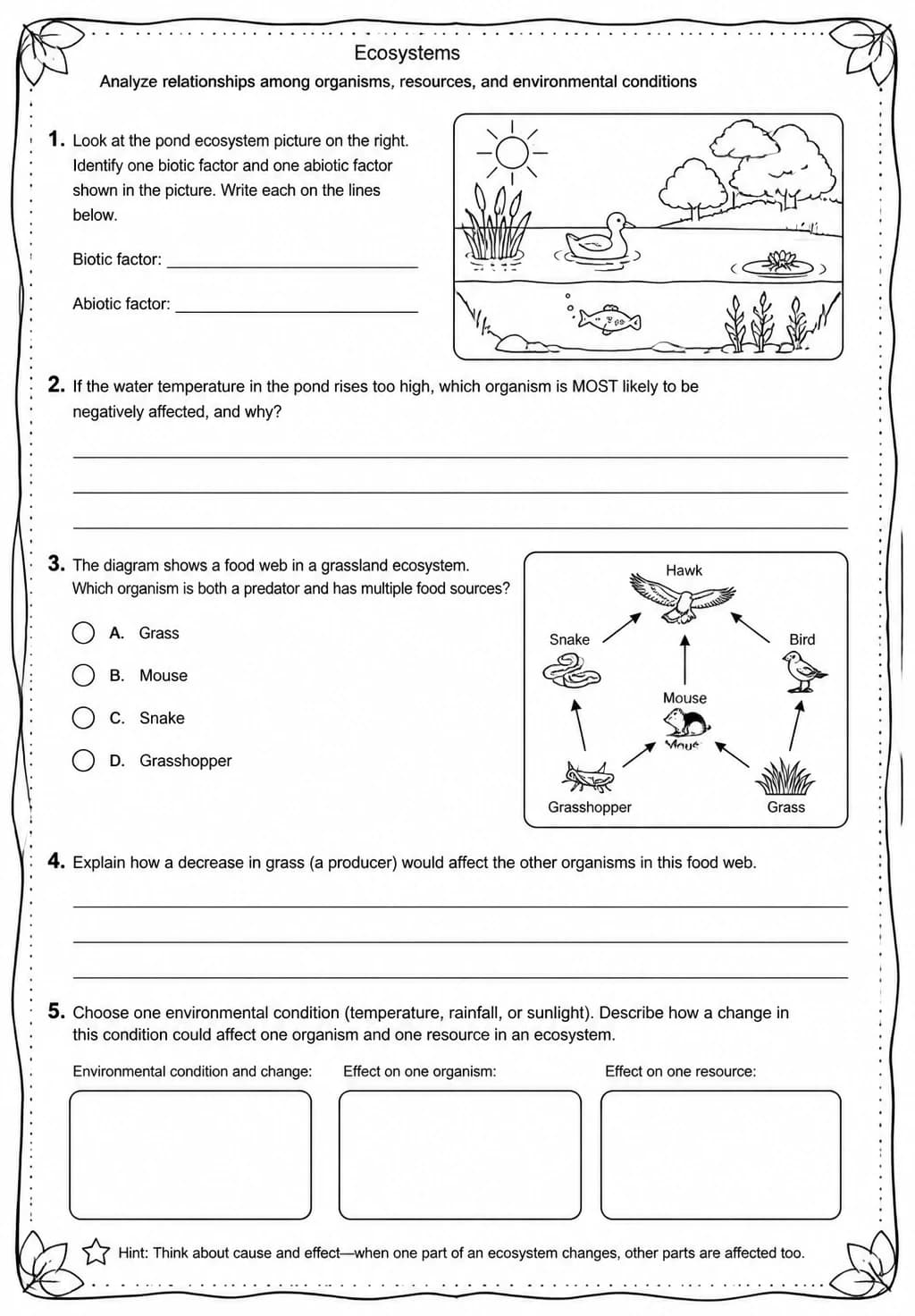
Analyze relationships among organisms, resources, and environmental conditions
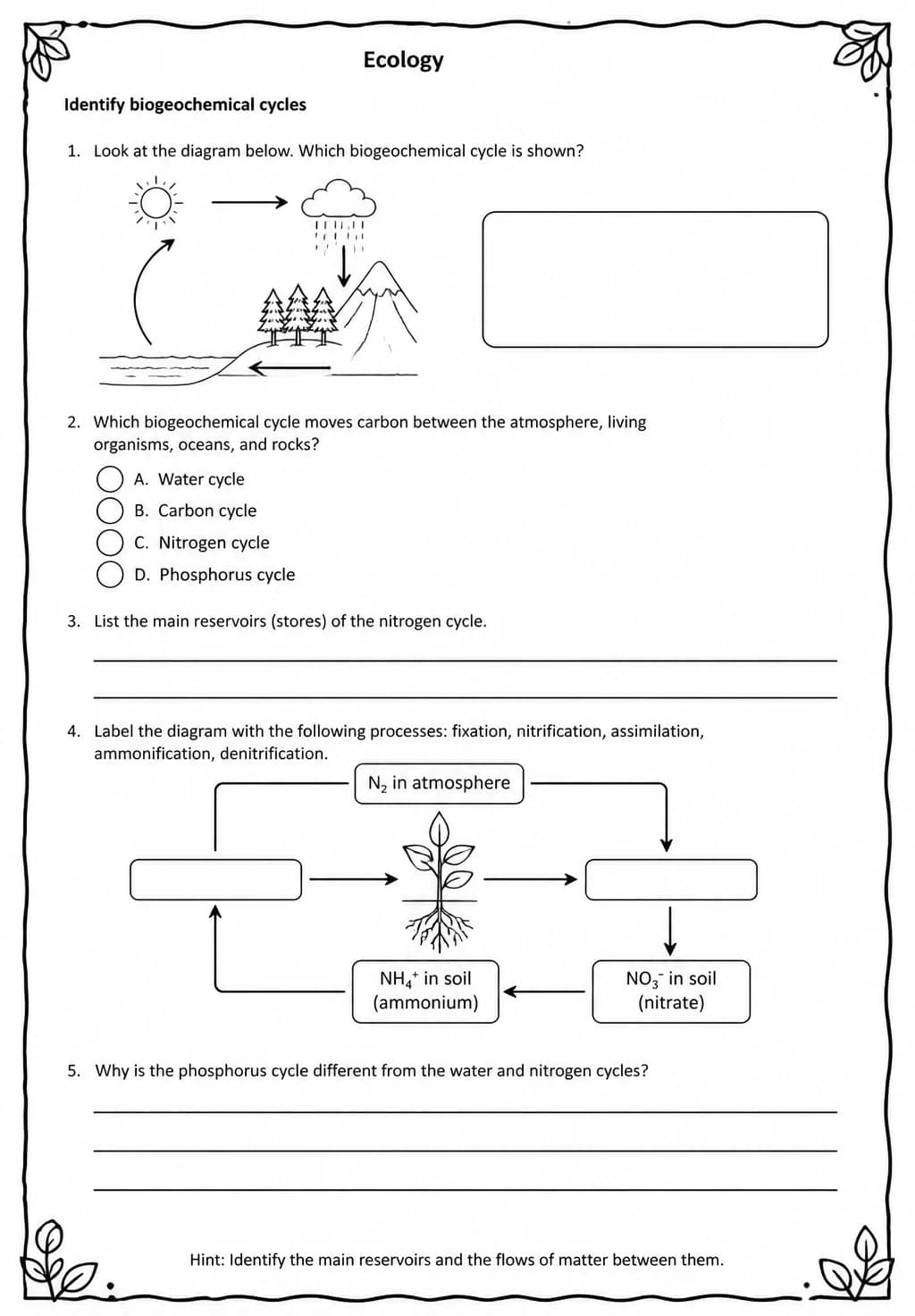
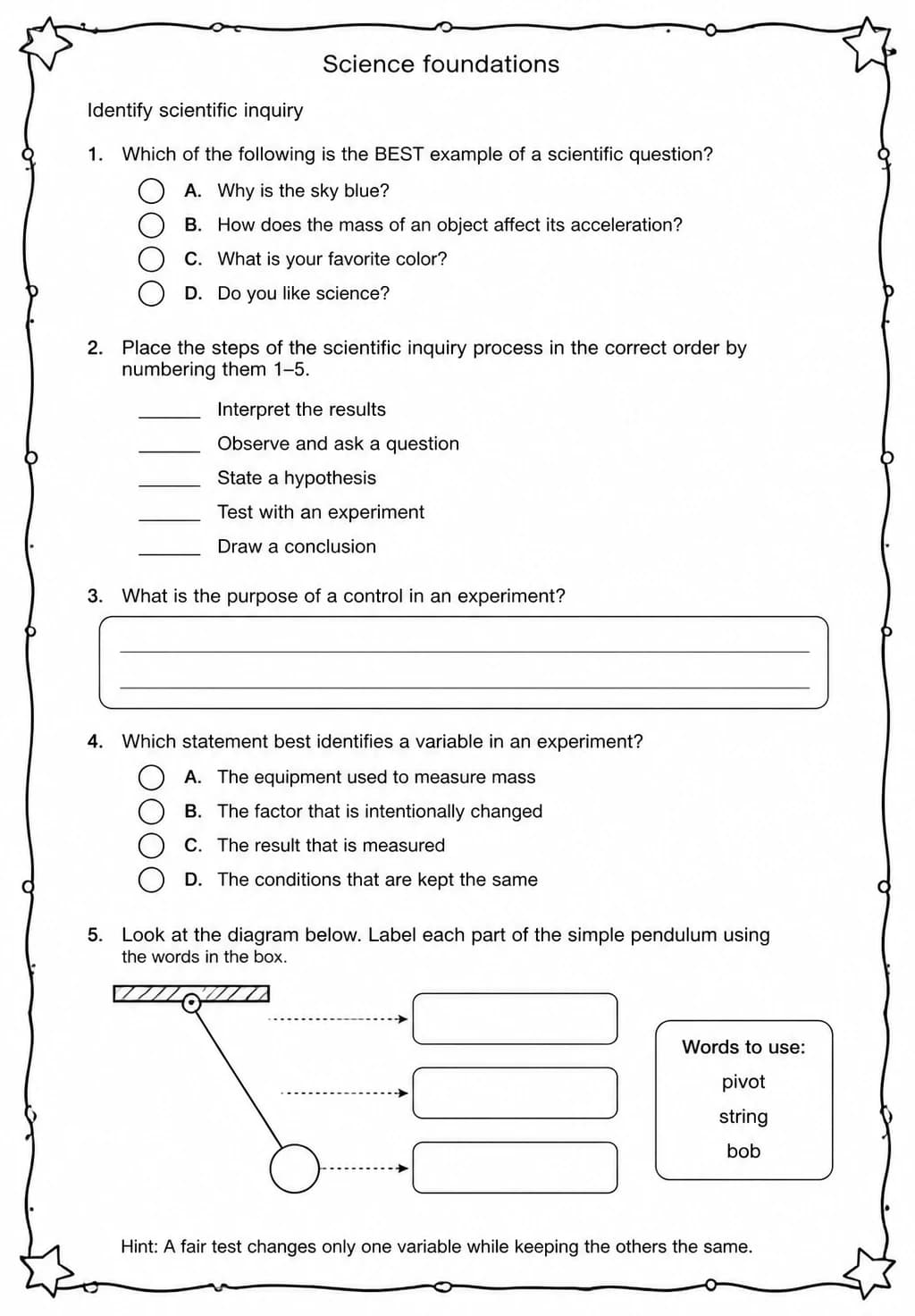
Identify biogeochemical cycles
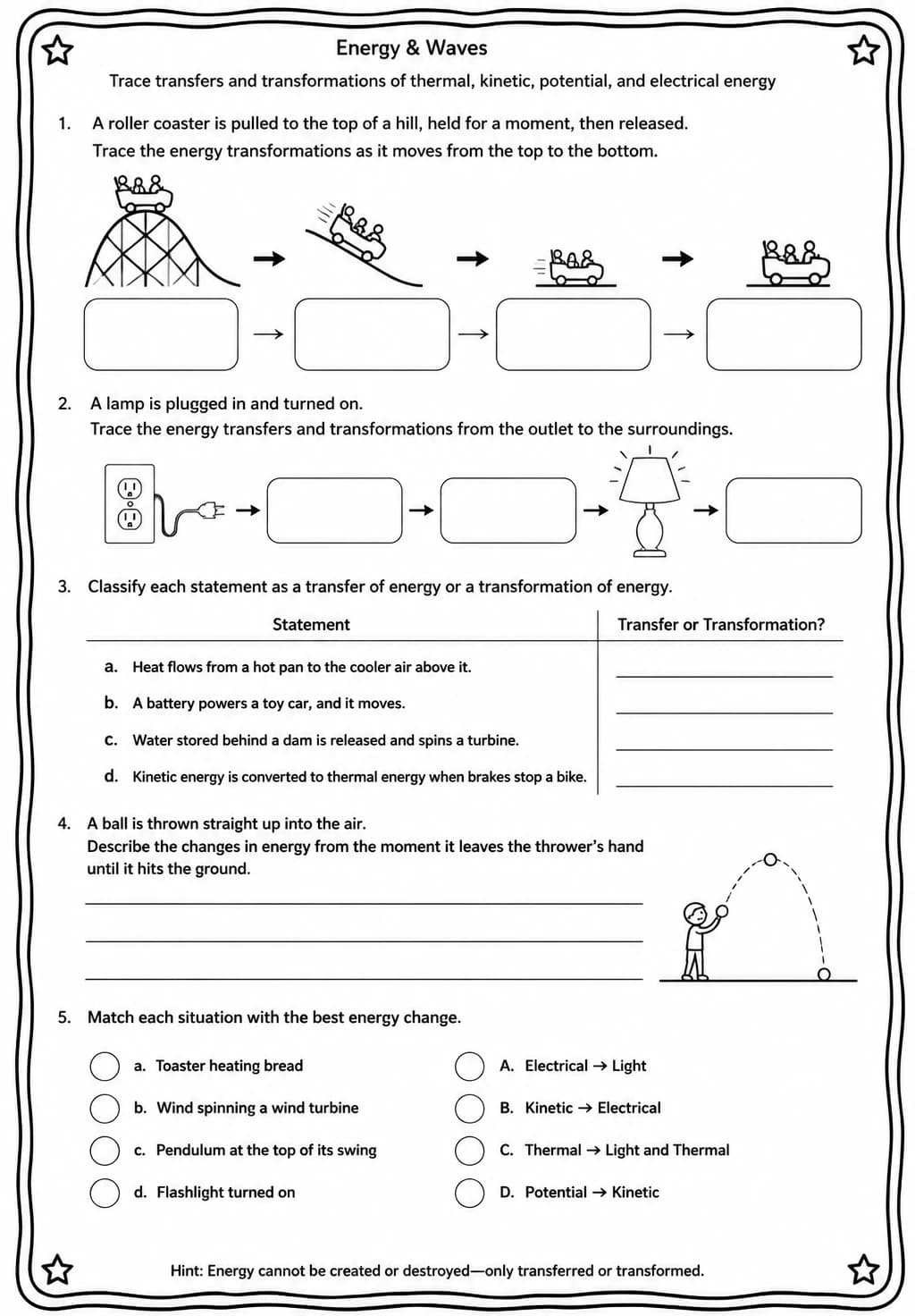
Trace transfers and transformations of thermal, kinetic, potential, and electrical energy
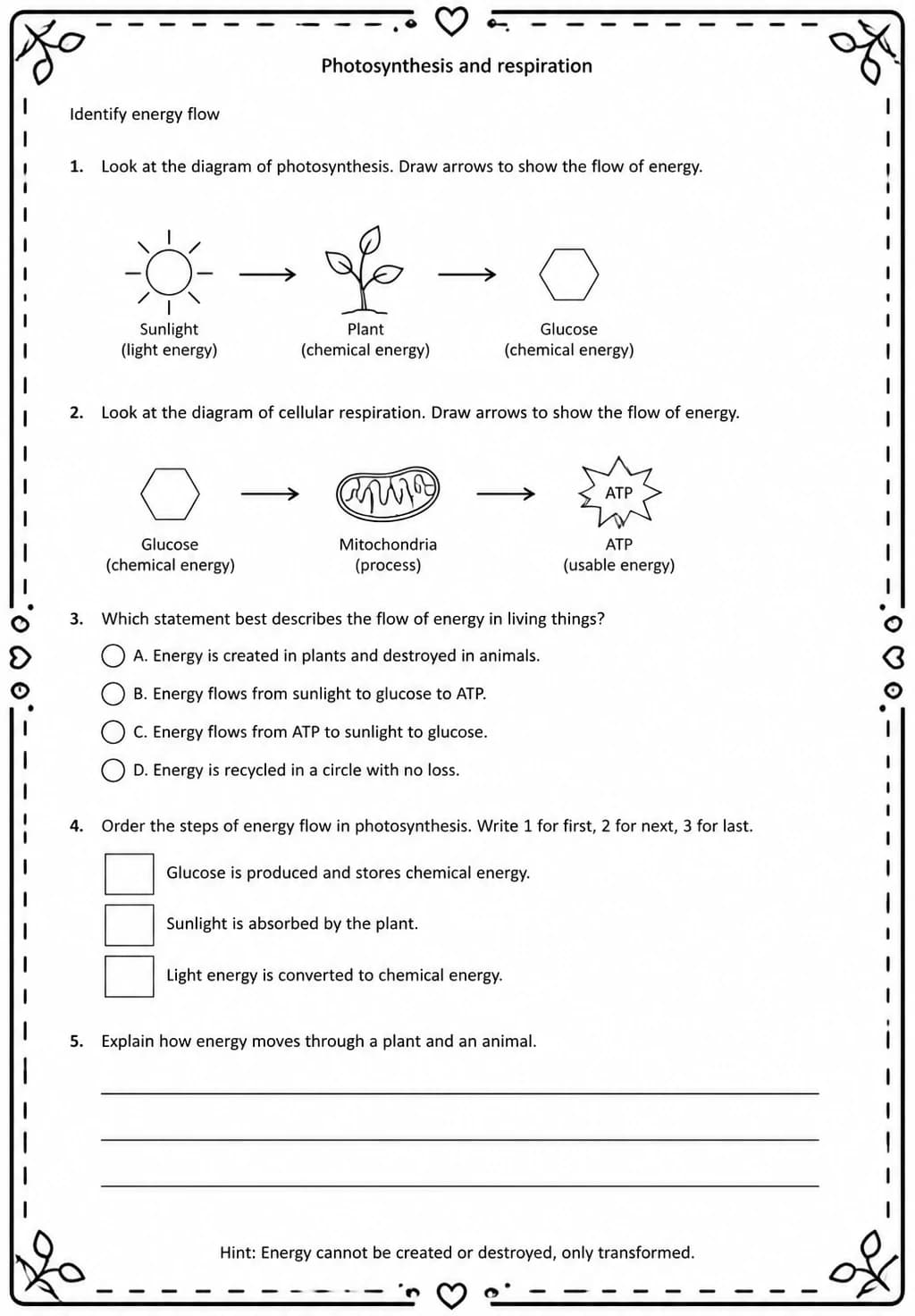
Identify energy flow