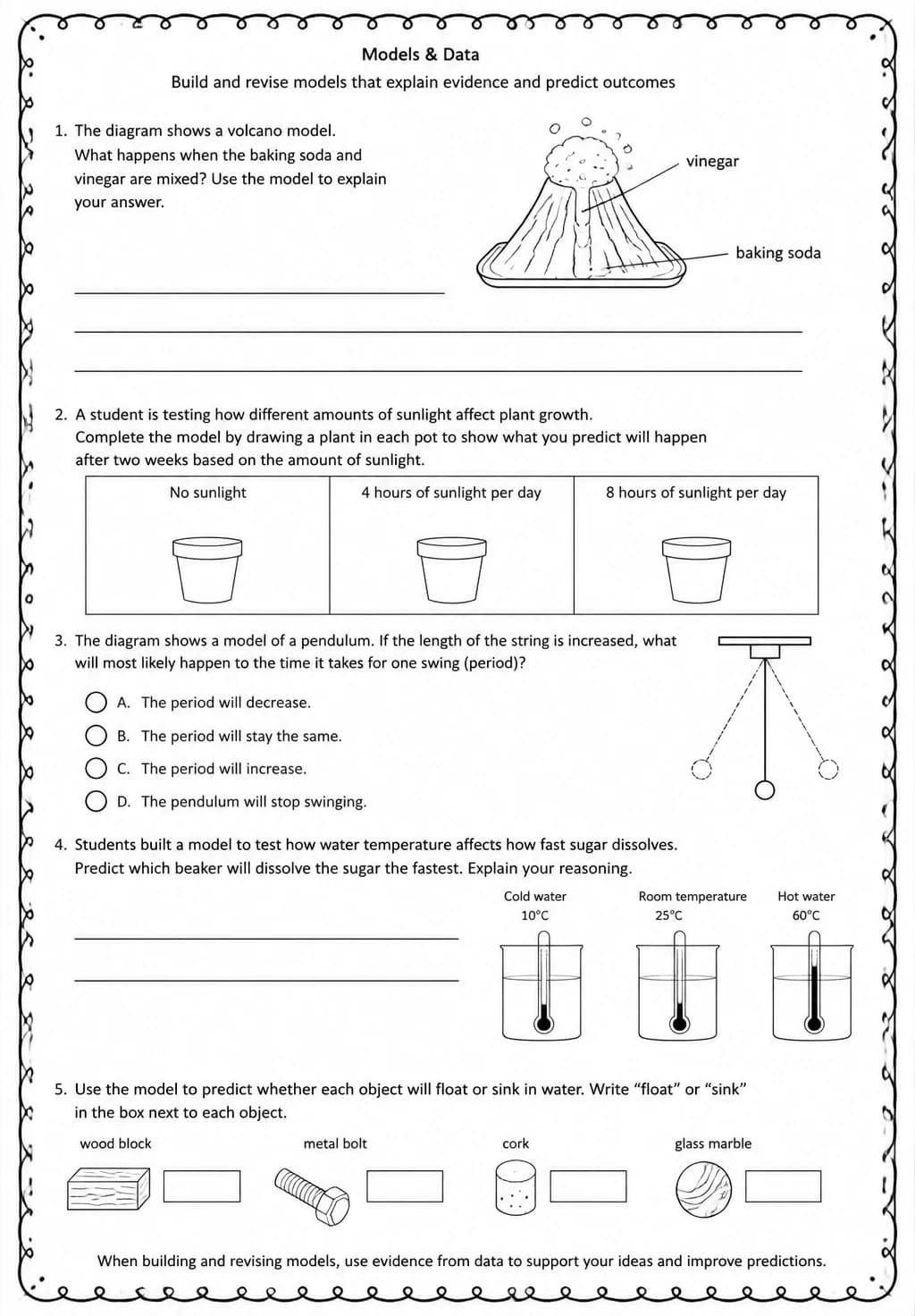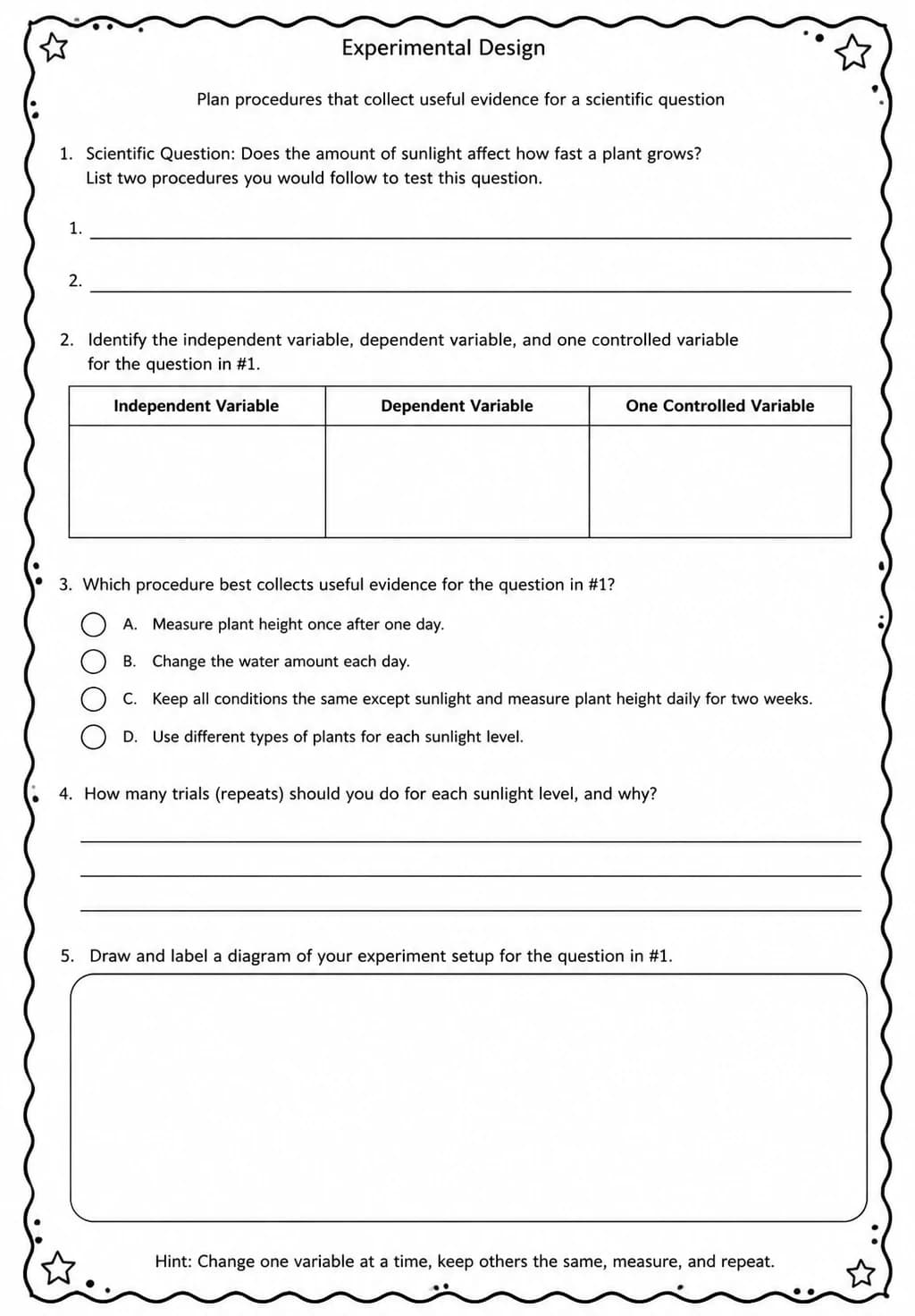
Plan procedures that collect useful evidence for a scientific question
Free printable Science Practices & Engineering science worksheet for "Plan procedures that collect useful evidence for a scientific question" — practice experimental design. No-prep, print or assign online.
High school students develop scientific thinking by planning procedures that collect useful, reliable evidence for a given scientific question in this challenging Experimental Design worksheet. Teachers can use it to guide students through the process of identifying variables, selecting measurement tools, and anticipating sources of error before conducting any lab work. It fits within the Scientific and Engineering Practices strand and strengthens skills that apply across all science disciplines.
Learning objectives
- Design a step-by-step procedure that would generate valid, useful evidence
- Identify independent, dependent, and controlled variables in the planned investigation
- Evaluate the procedure for potential sources of error or bias
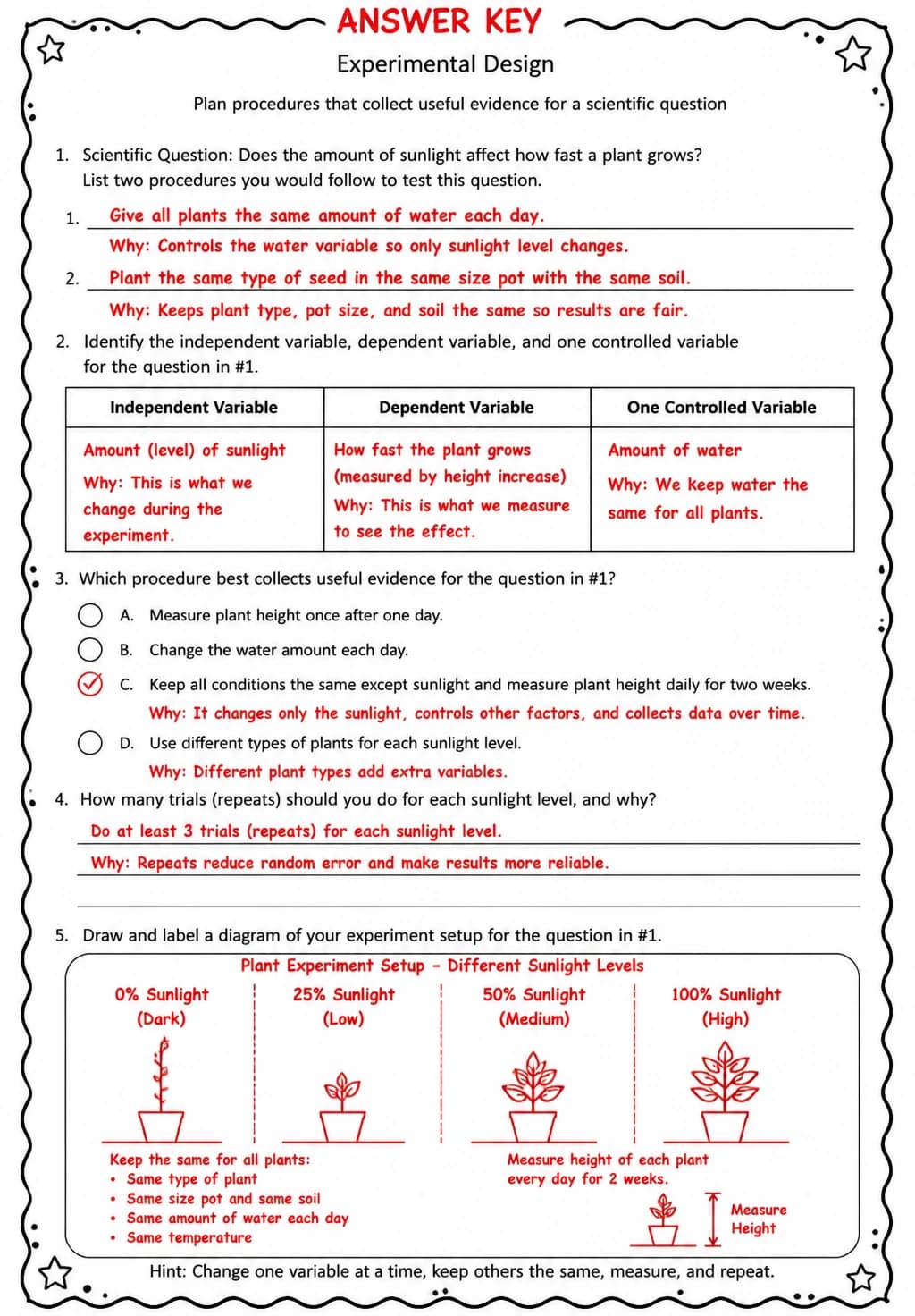
Answer Key
How to use this worksheet
- Click “Download Worksheet” and sign in with Google or email to get the PDF instantly.
- Print at home or in class for High School; it's no-prep, with no extra materials needed.
- Use the included answer key to mark it in seconds.
Frequently asked questions
Is the “Plan procedures that collect useful evidence for a scientific question” worksheet free?
Yes. “Plan procedures that collect useful evidence for a scientific question” is a free printable Science worksheet. Sign in with Google or email to download the PDF instantly.
What grade or age is this Science worksheet for?
It's designed for High School (ages 14–18), covering Experimental Design.
Does it come with an answer key?
Yes — a matching answer key is included so you can grade it in seconds.
Create more worksheets in our Worksheet Studio
Generate fresh worksheets for any grade, topic, and language — free.
Open the Worksheet StudioMore for High School

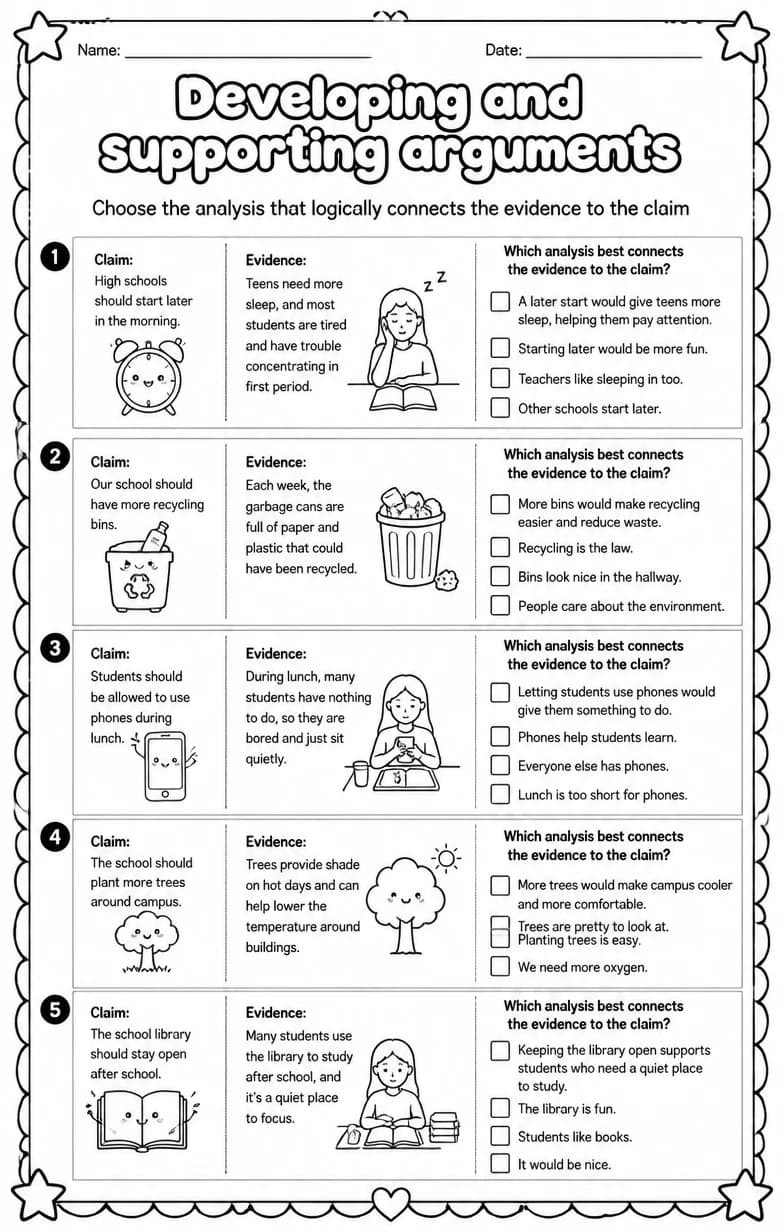
You might also like

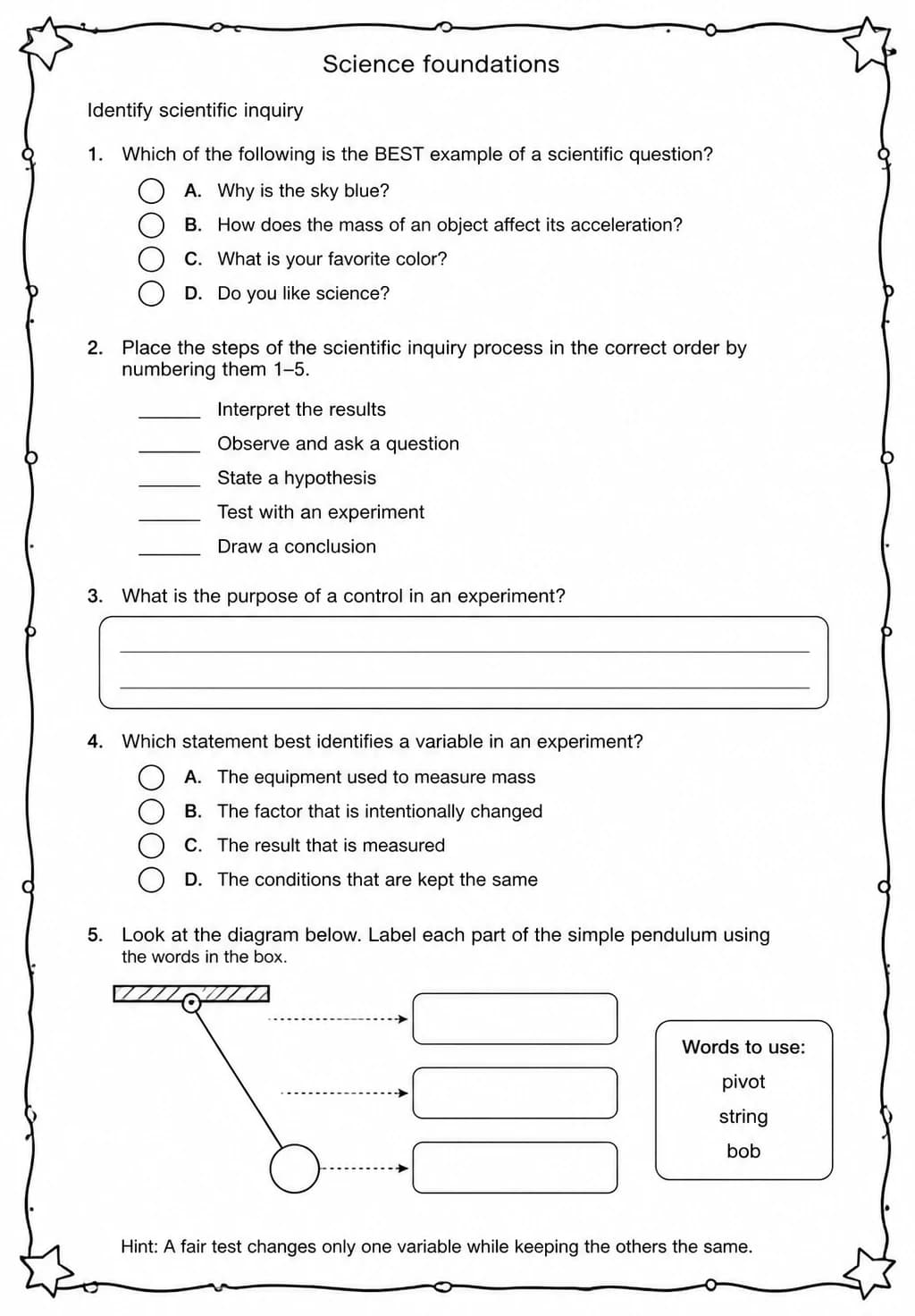
Identify variables, controls, and fair-test conditions in investigations
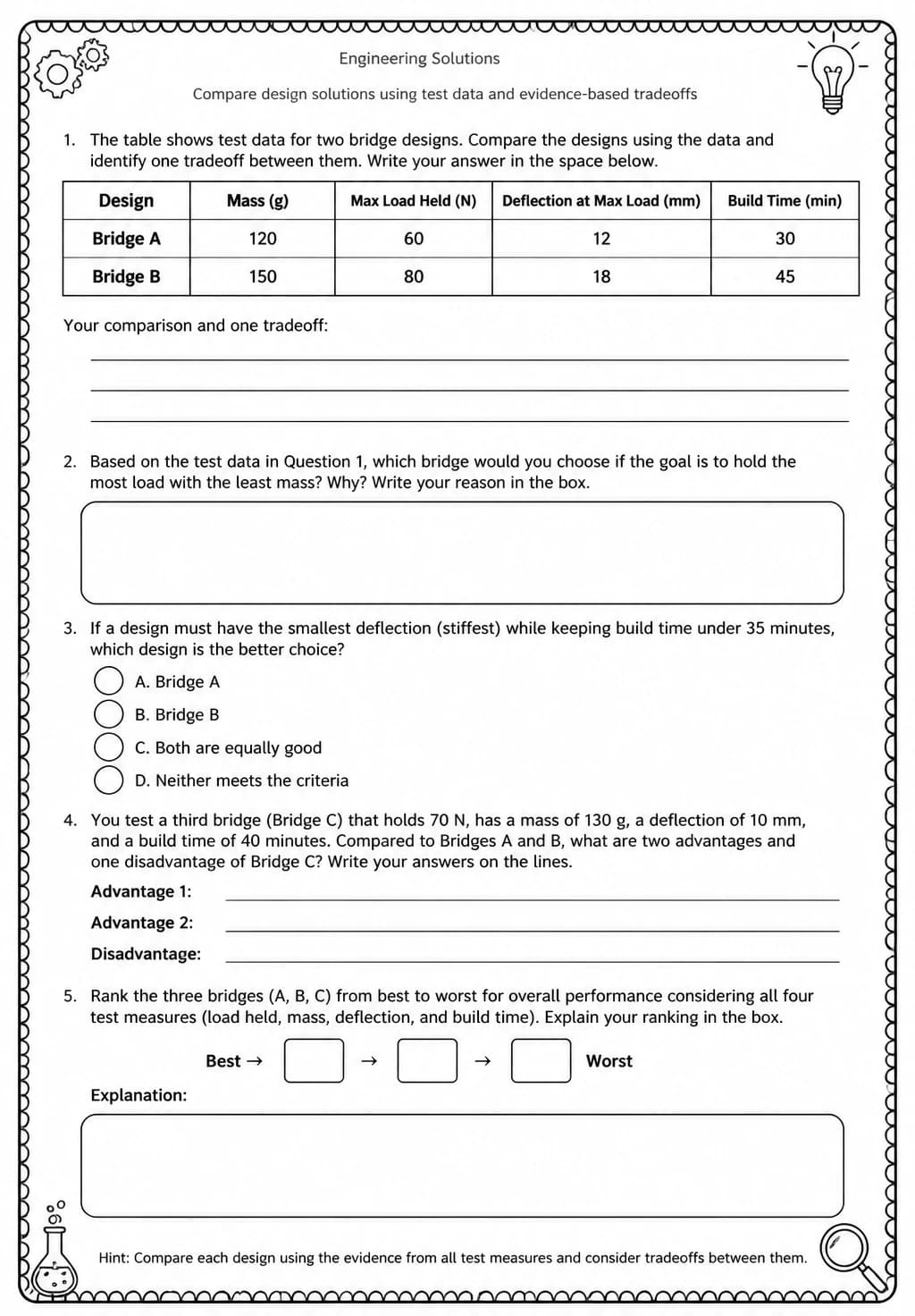
Compare design solutions using test data and evidence-based tradeoffs
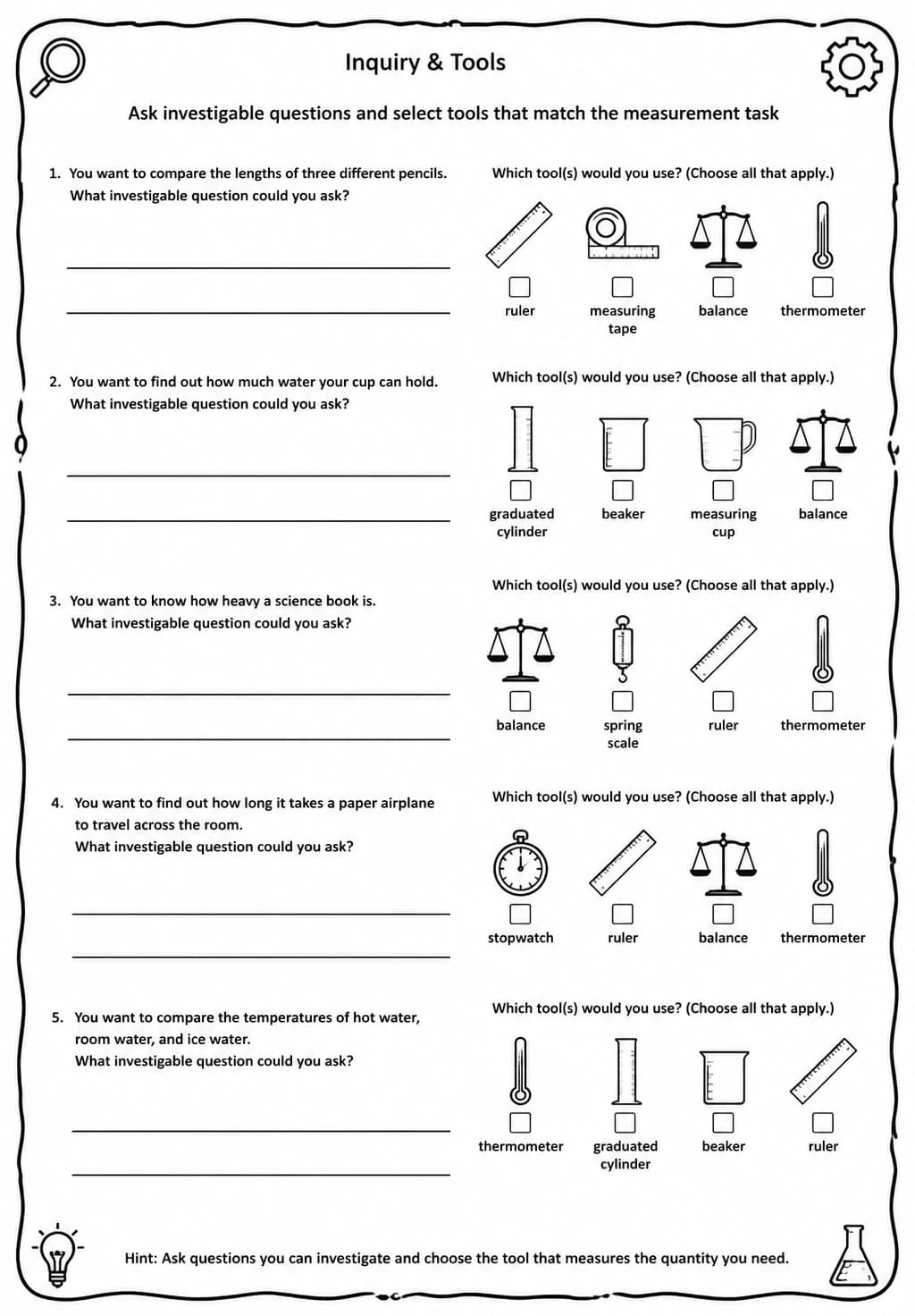
Ask investigable questions and select tools that match the measurement task
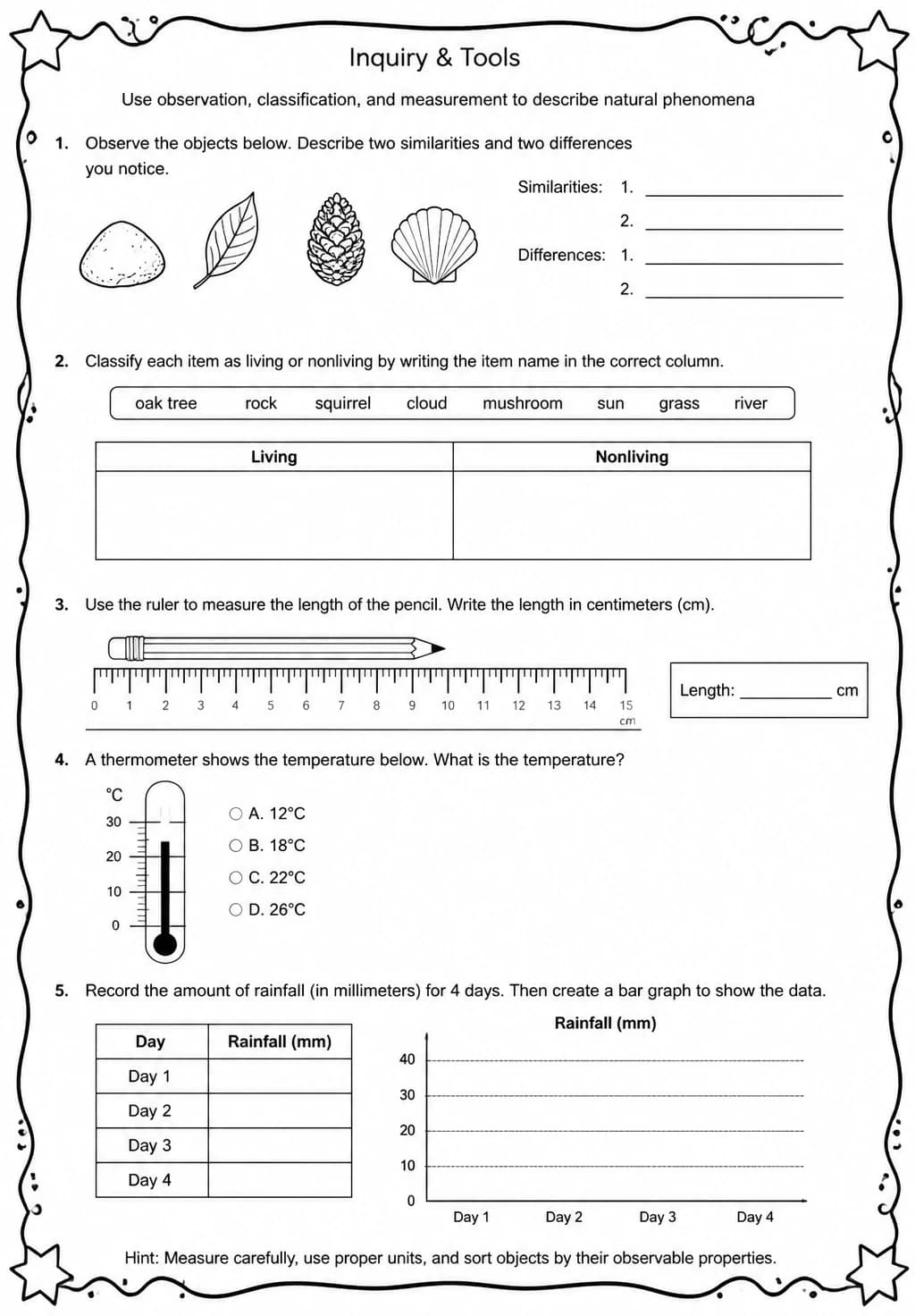
Use observation, classification, and measurement to describe natural phenomena
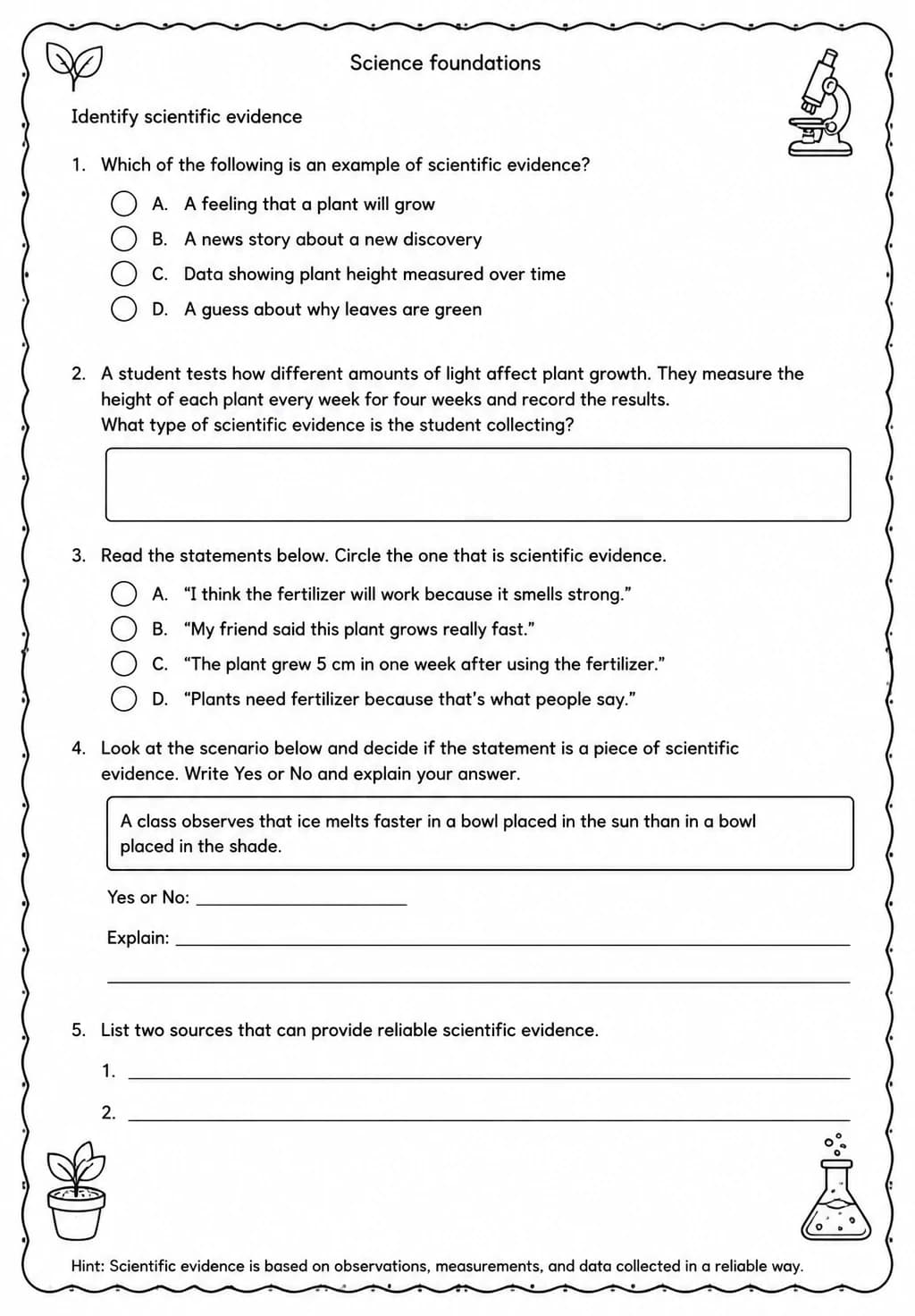
Identify scientific evidence