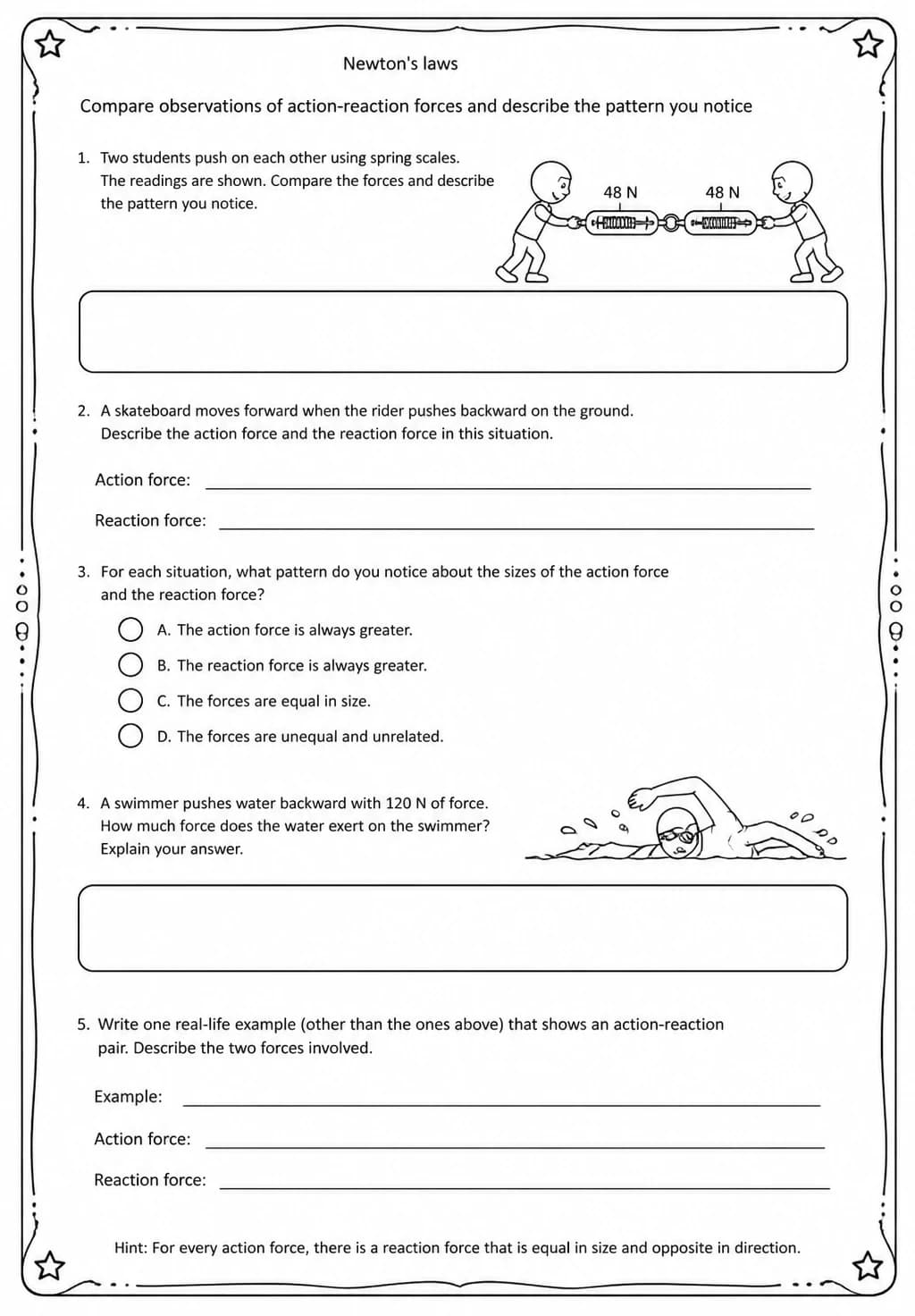
Compare observations of action-reaction forces and describe the pattern you notice
Free printable Grade 8 science worksheet for "Compare observations of action-reaction forces and describe the pattern you notice" — practice newton's laws. No-prep, print or assign online.
Middle school students compare observations of action-reaction force pairs and describe the patterns they notice, directly engaging with Newton's third law of motion. Teachers can use this worksheet as a structured follow-up to a demonstration or lab activity, helping students articulate the relationship between forces in a pair in their own words. It is central to the Physical Science Newton's Laws unit and develops both scientific language and reasoning skills.
Learning objectives
- Identify action-reaction force pairs in given physical scenarios
- Describe the pattern that every action has an equal and opposite reaction
- Use evidence from observations to explain Newton's third law of motion
Answer Key
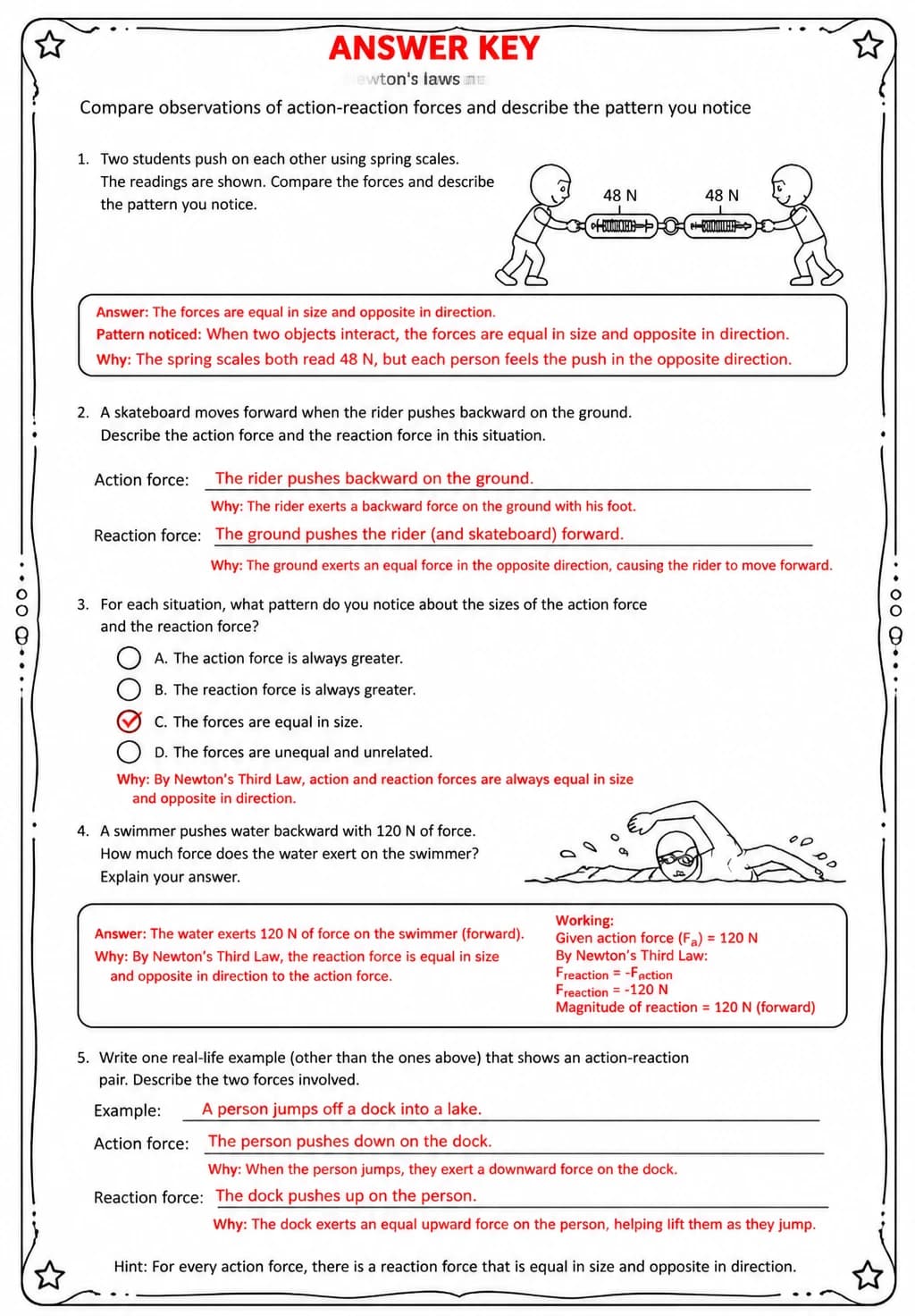
How to use this worksheet
- Click “Download Worksheet” and sign in with Google or email to get the PDF instantly.
- Print at home or in class for Middle School; it's no-prep, with no extra materials needed.
- Use the included answer key to mark it in seconds.
Frequently asked questions
Is the “Compare observations of action-reaction forces and describe the pattern you notice” worksheet free?
Yes. “Compare observations of action-reaction forces and describe the pattern you notice” is a free printable Science worksheet. Sign in with Google or email to download the PDF instantly.
What grade or age is this Science worksheet for?
It's designed for Middle School (ages 11–14), covering Newton's laws.
Does it come with an answer key?
Yes — a matching answer key is included so you can grade it in seconds.
Create more worksheets in our Worksheet Studio
Generate fresh worksheets for any grade, topic, and language — free.
Open the Worksheet StudioMore for Middle School

Complementary and supplementary angles

Solve one-step multiplication and division equations with decimals and fractions
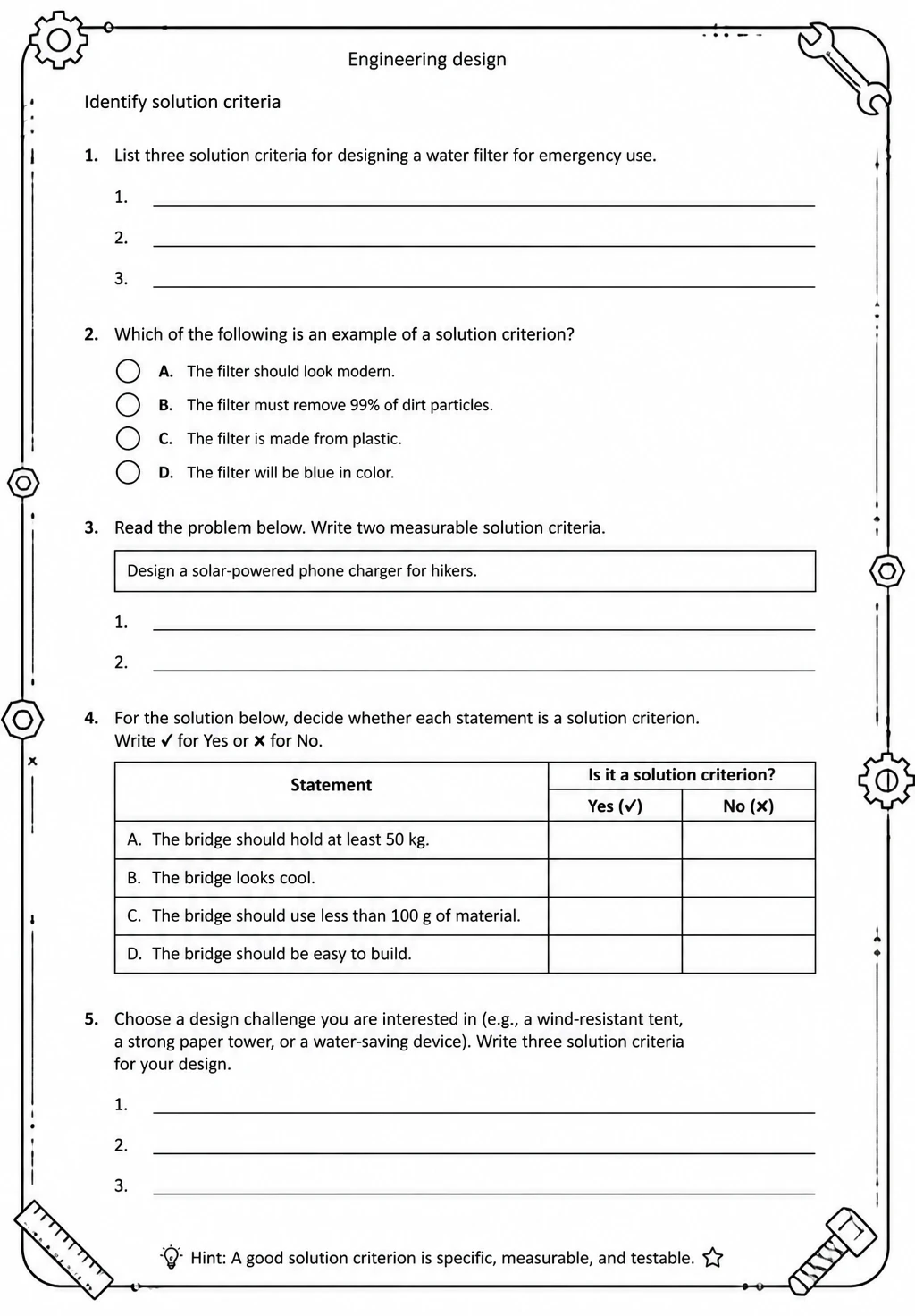
Identify solution criteria
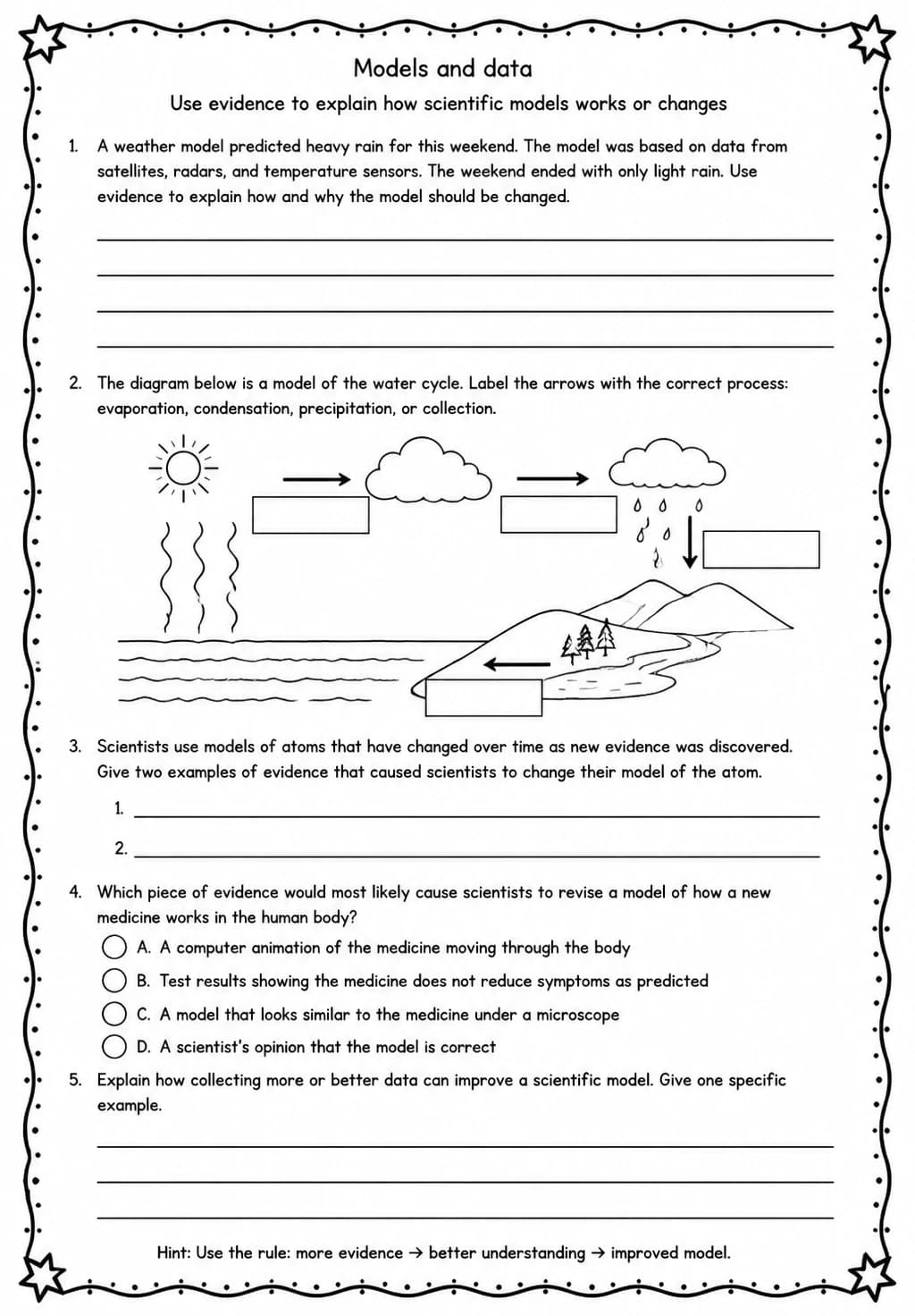
Use evidence to explain how scientific models works or changes
You might also like

Compare observations of force and acceleration and describe the pattern you notice
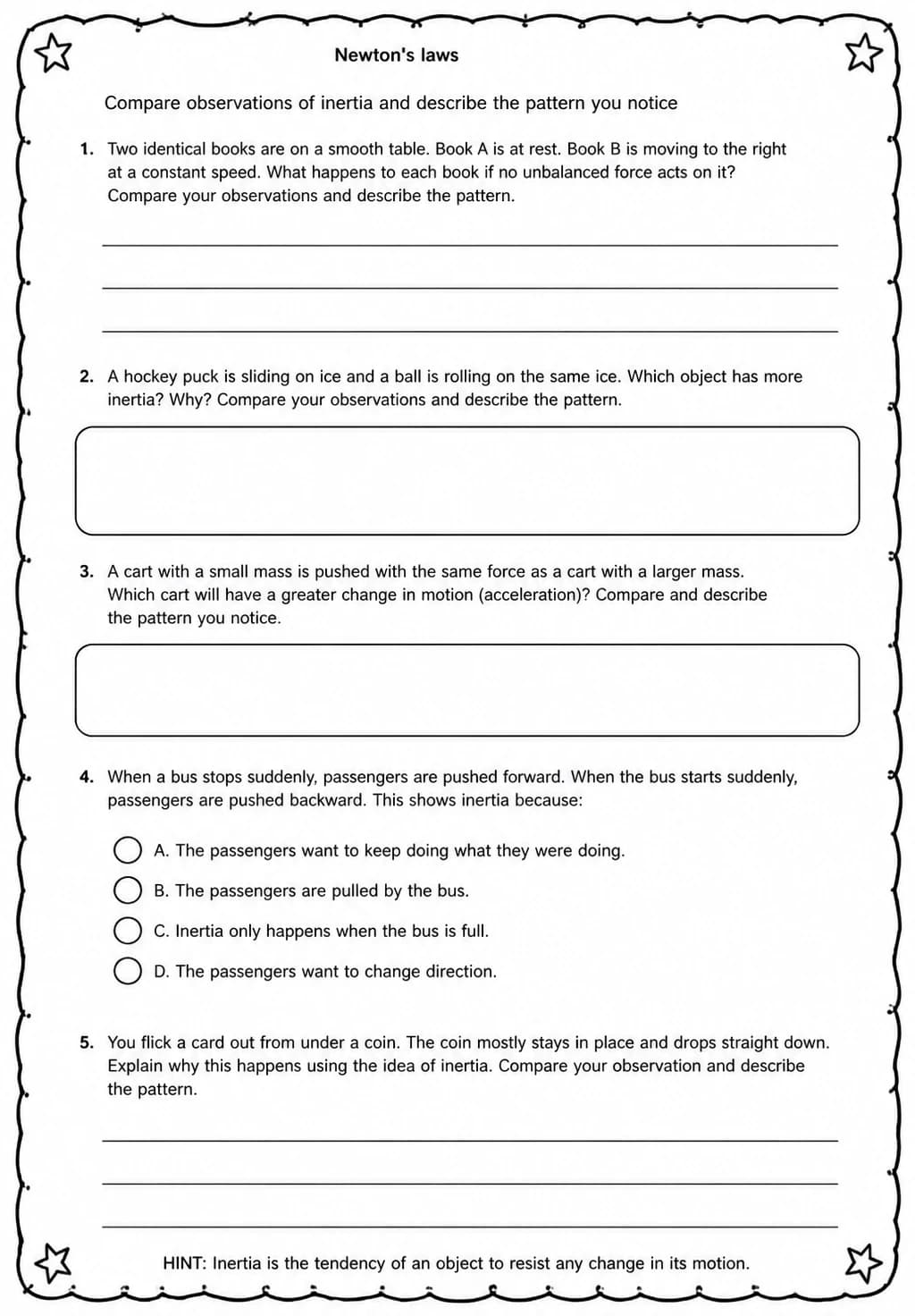
Compare observations of inertia and describe the pattern you notice

Compare observations of collisions and describe the pattern you notice
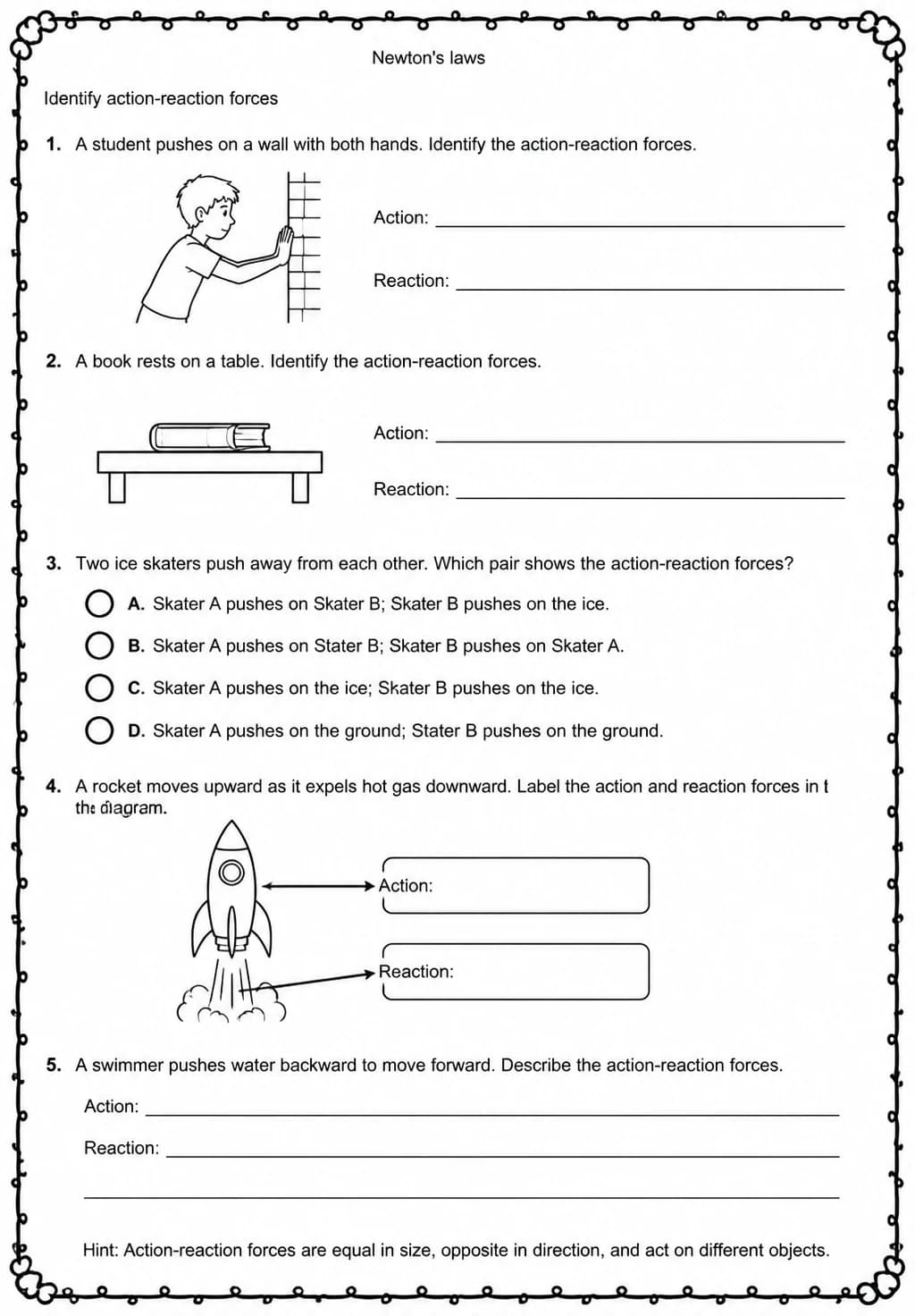
Identify action-reaction forces
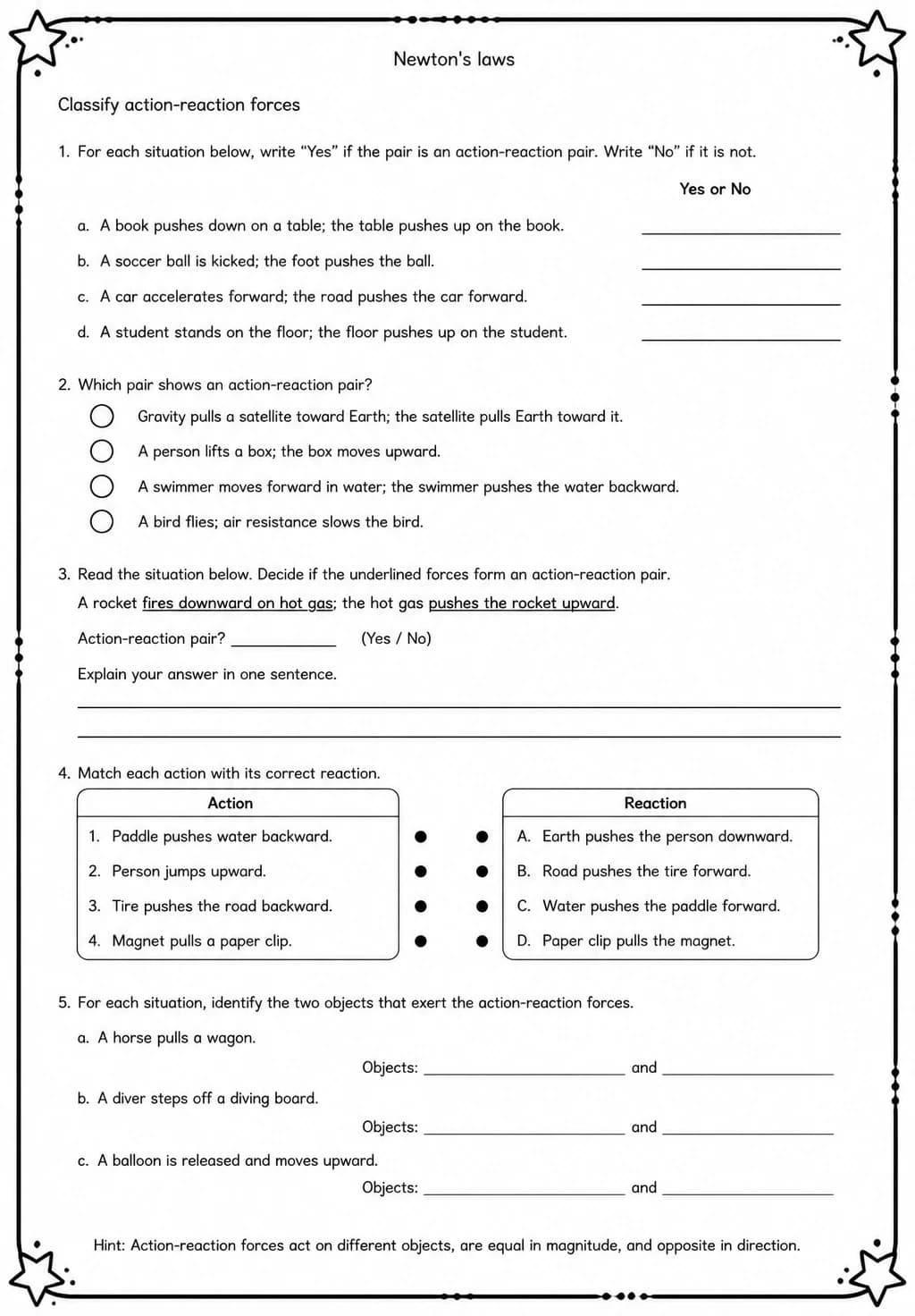
Classify action-reaction forces
