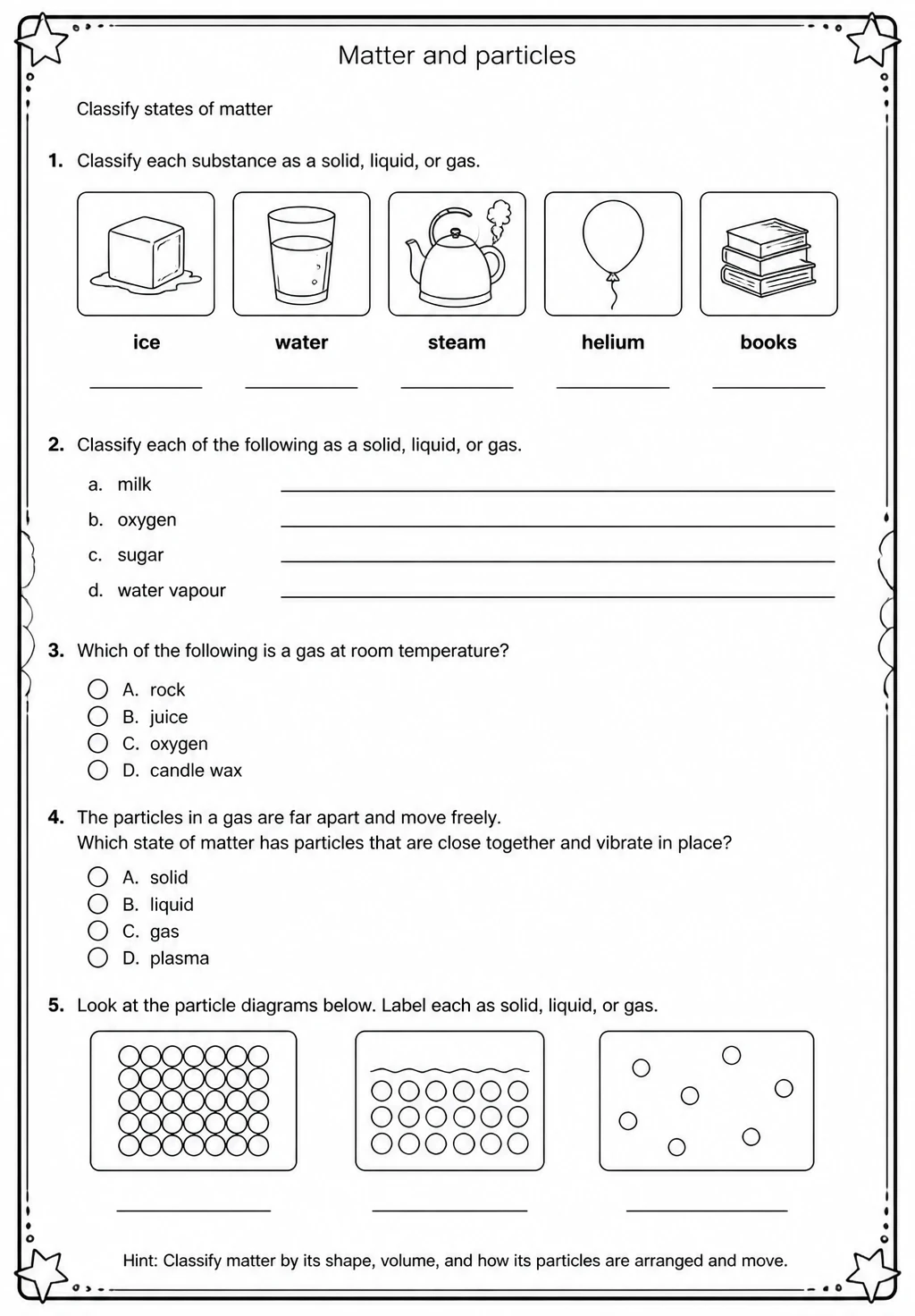
Classify states of matter
Free printable Grade 6 science worksheet for "Classify states of matter" — practice matter and particles. No-prep, print or assign online.
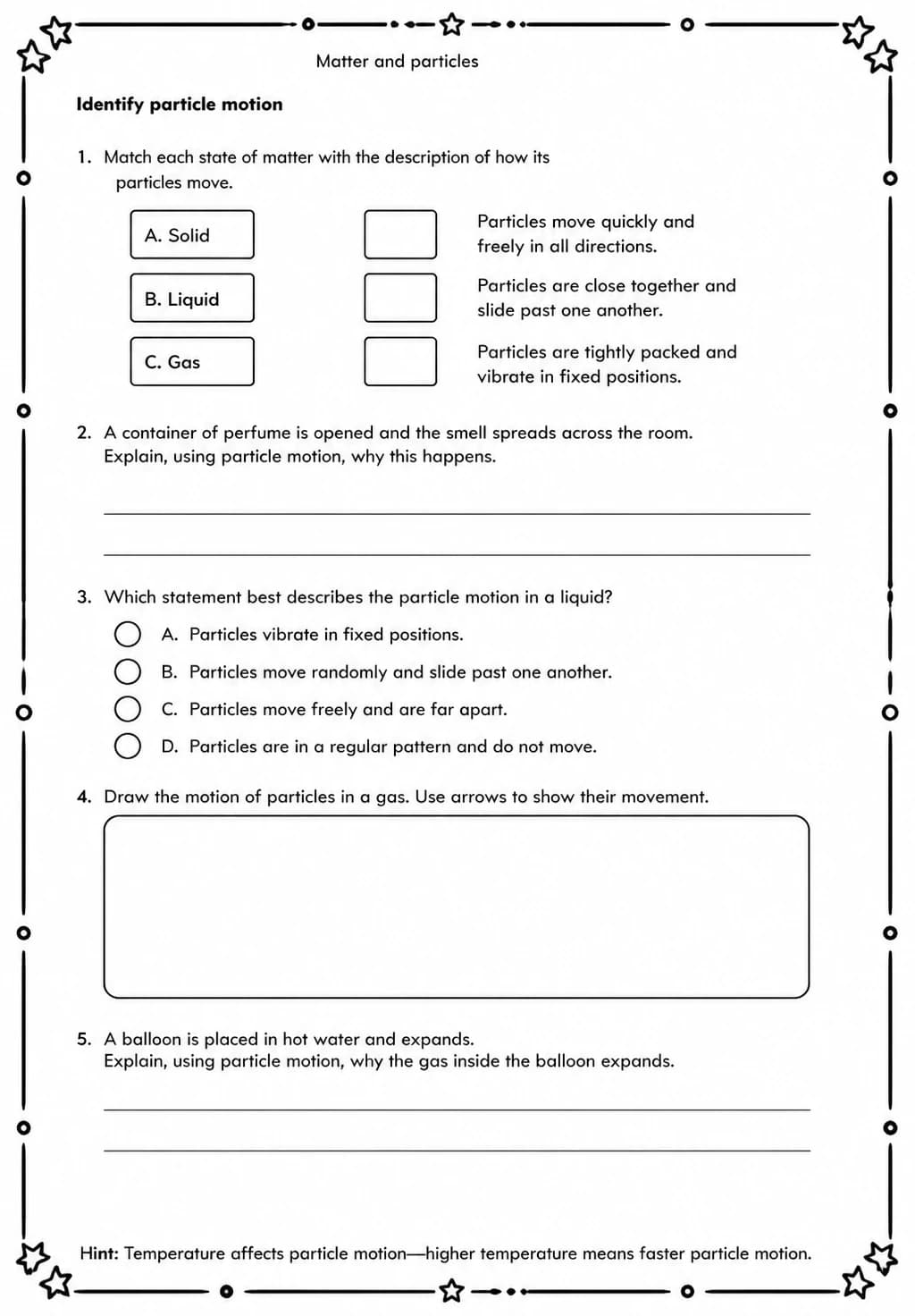
Middle-school students practice classifying states of matter — solid, liquid, gas, and plasma — in this challenging Physical Science worksheet focused on Matter and Particles. Teachers can use it to assess conceptual understanding and to push students to justify their classifications using particle-level reasoning. The hard difficulty level makes it well suited for review, enrichment, or pre-unit assessment in Grades 6–8.
Learning objectives
- Classify substances into their correct states of matter based on given properties
- Explain the arrangement and movement of particles in each state of matter
- Justify classifications using evidence related to shape, volume, and compressibility
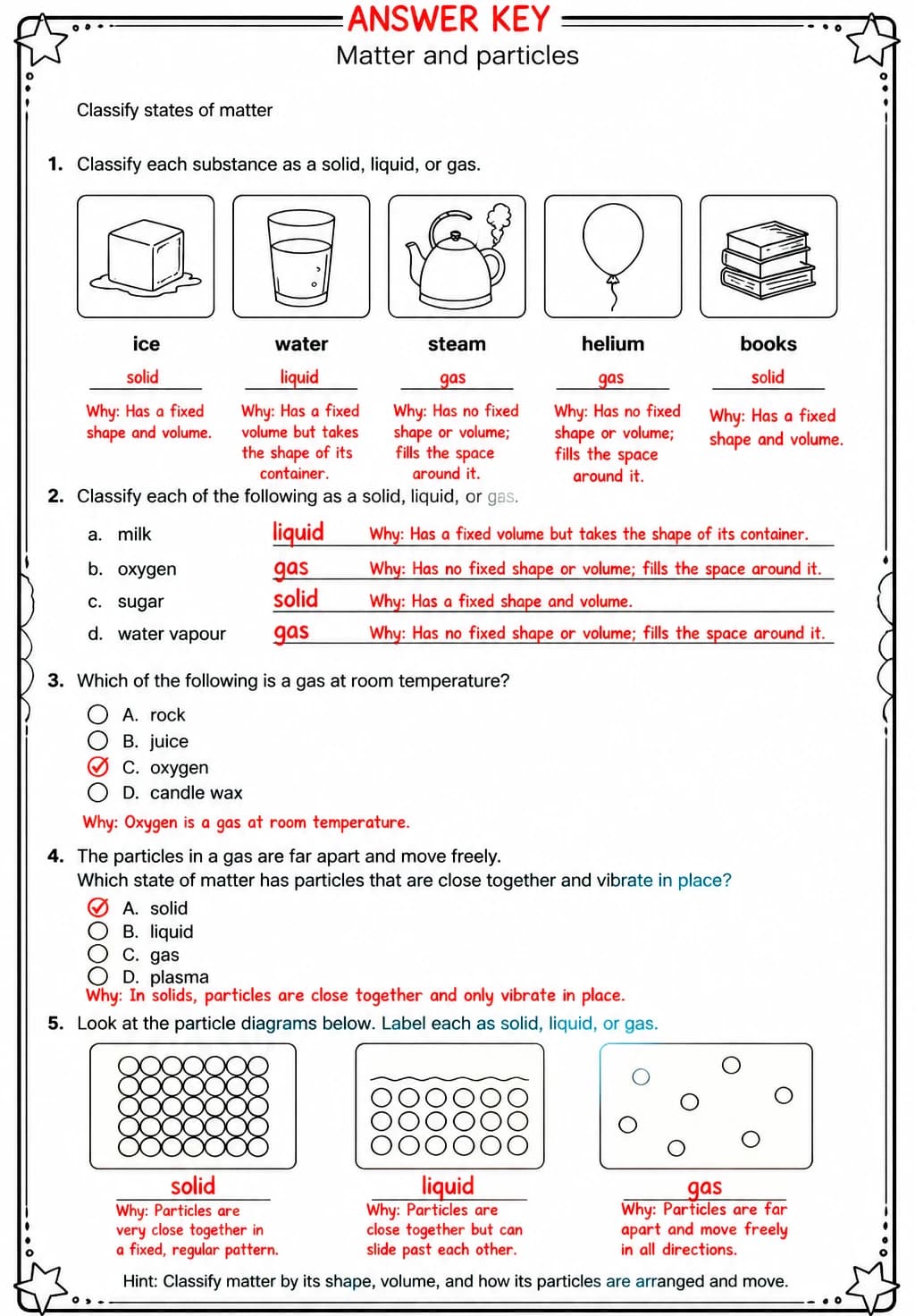
Answer Key
How to use this worksheet
- Click “Download Worksheet” and sign in with Google or email to get the PDF instantly.
- Print at home or in class for Middle School; it's no-prep, with no extra materials needed.
- Use the included answer key to mark it in seconds.
Frequently asked questions
Is the “Classify states of matter” worksheet free?
Yes. “Classify states of matter” is a free printable Science worksheet. Sign in with Google or email to download the PDF instantly.
What grade or age is this Science worksheet for?
It's designed for Middle School (ages 11–14), covering Matter and particles.
Does it come with an answer key?
Yes — a matching answer key is included so you can grade it in seconds.
Create more worksheets in our Worksheet Studio
Generate fresh worksheets for any grade, topic, and language — free.
Open the Worksheet StudioMore for Middle School

Complementary and supplementary angles

Solve one-step multiplication and division equations with decimals and fractions
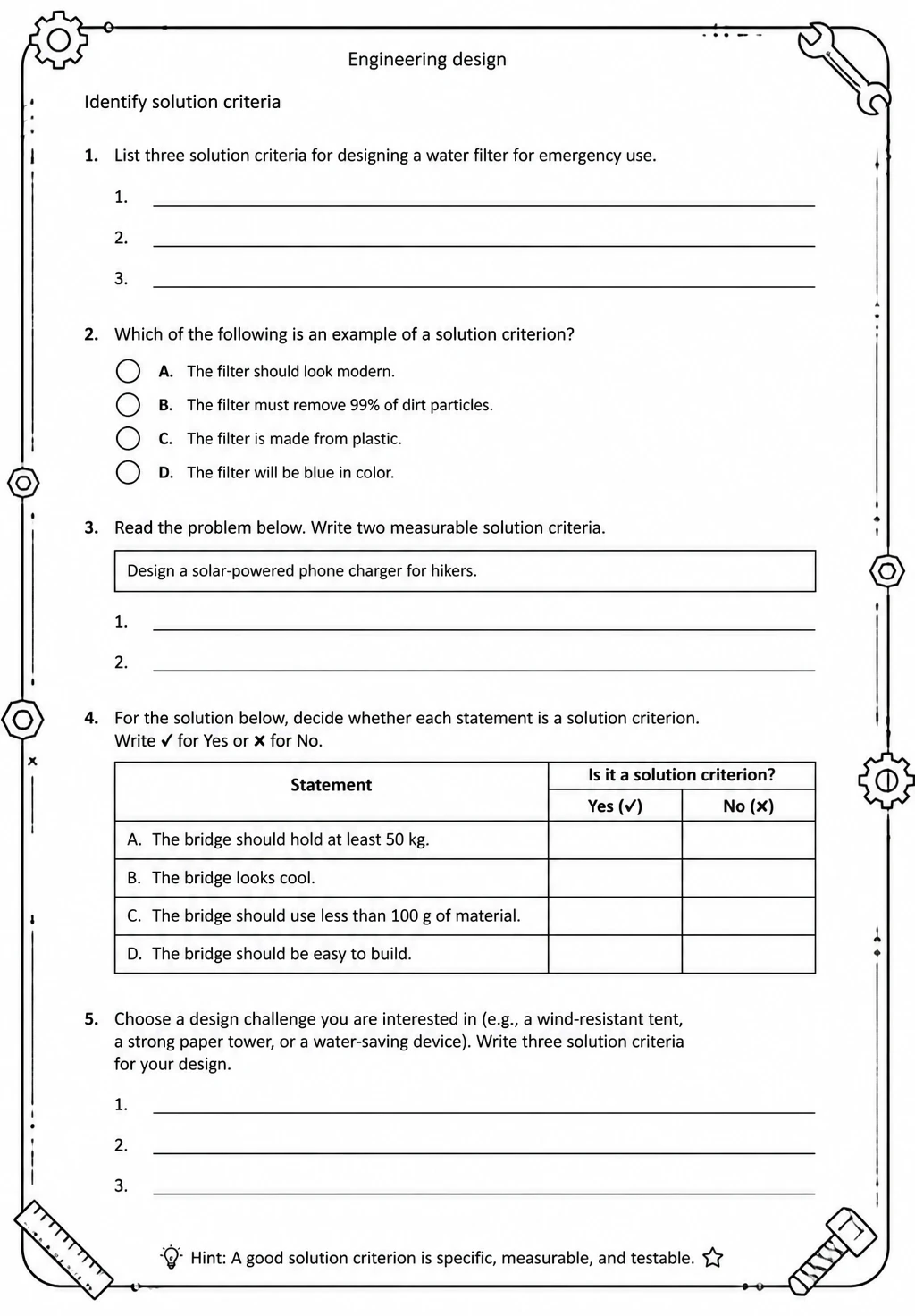
Identify solution criteria
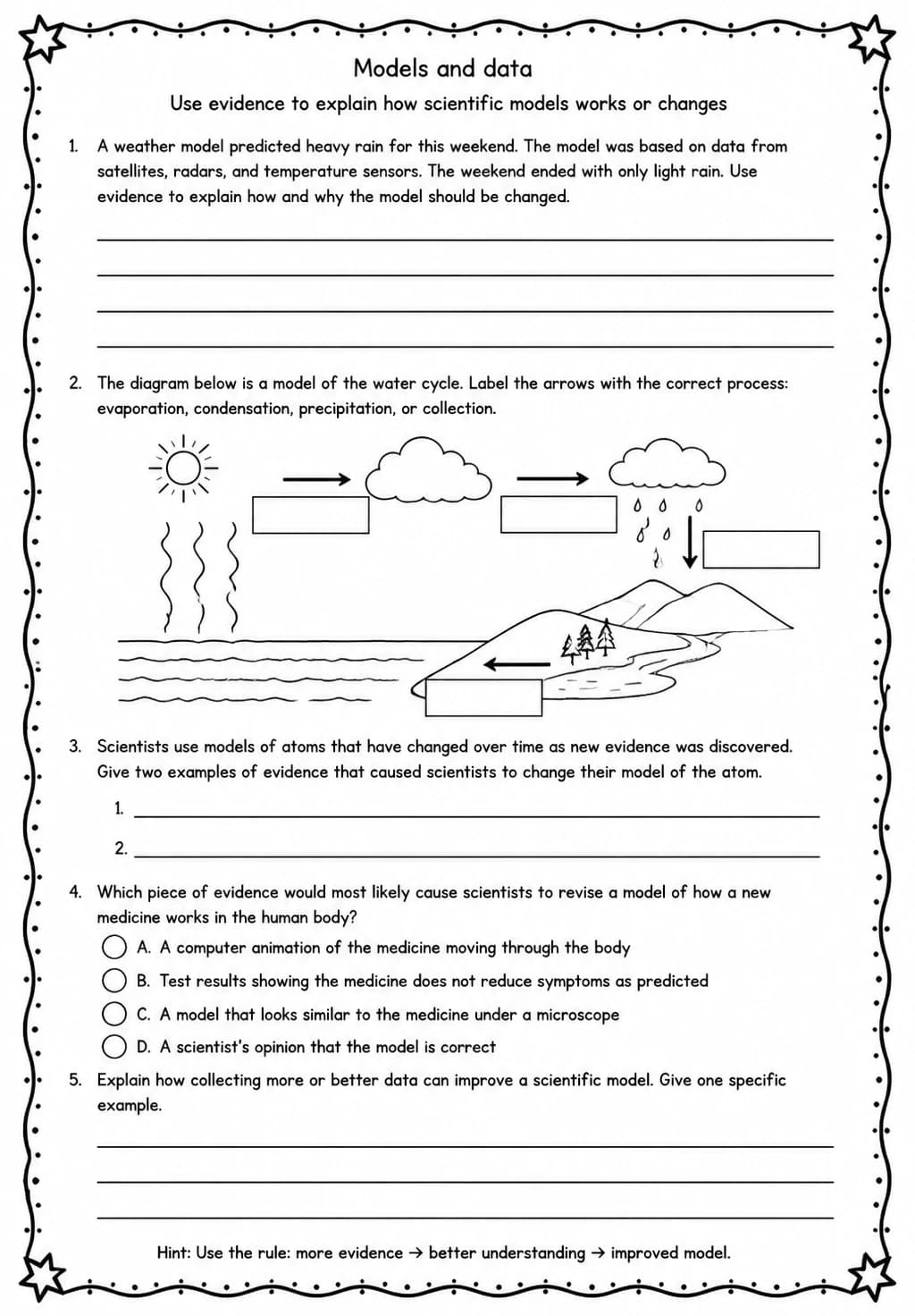
Use evidence to explain how scientific models works or changes
You might also like
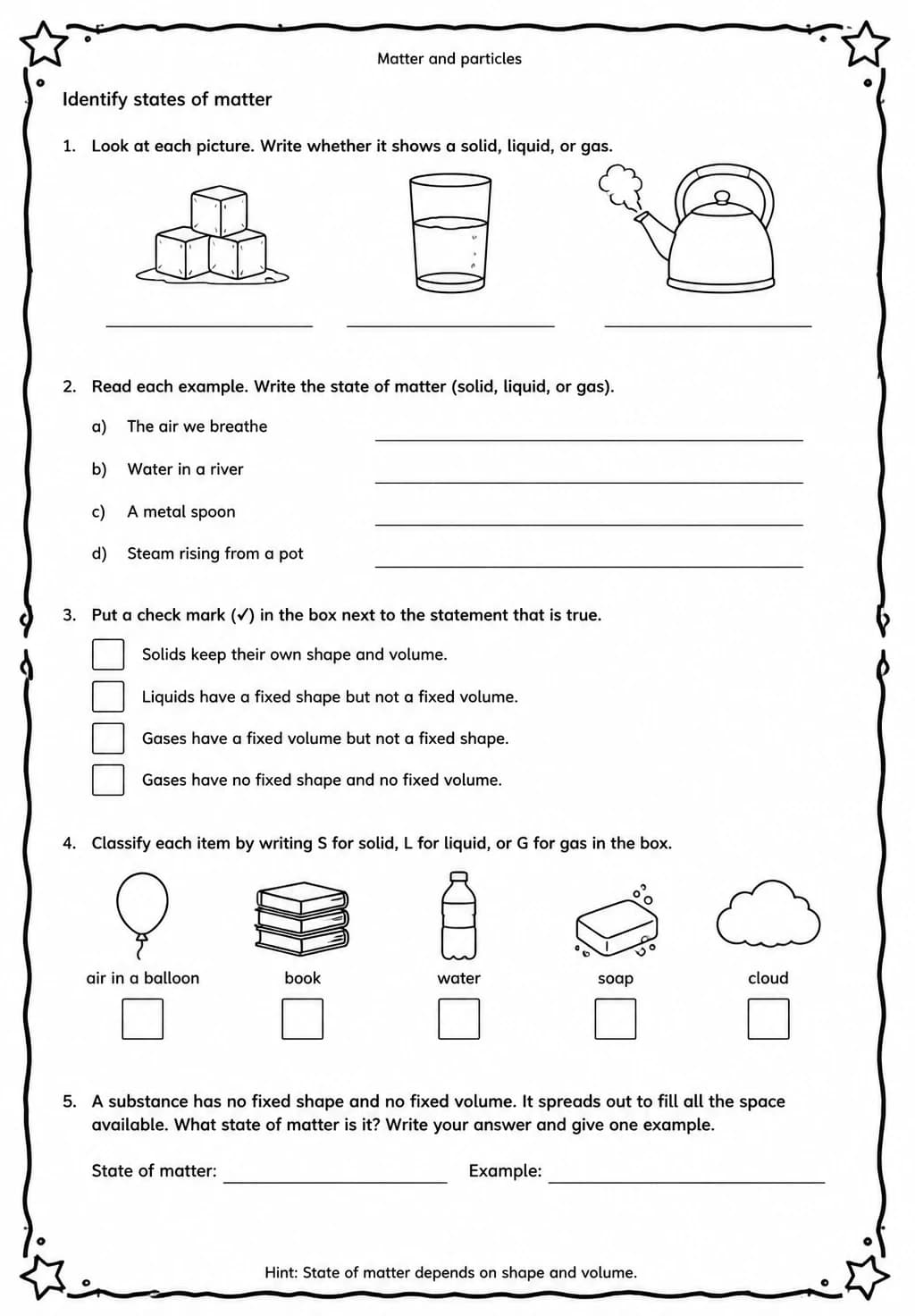
Identify states of matter
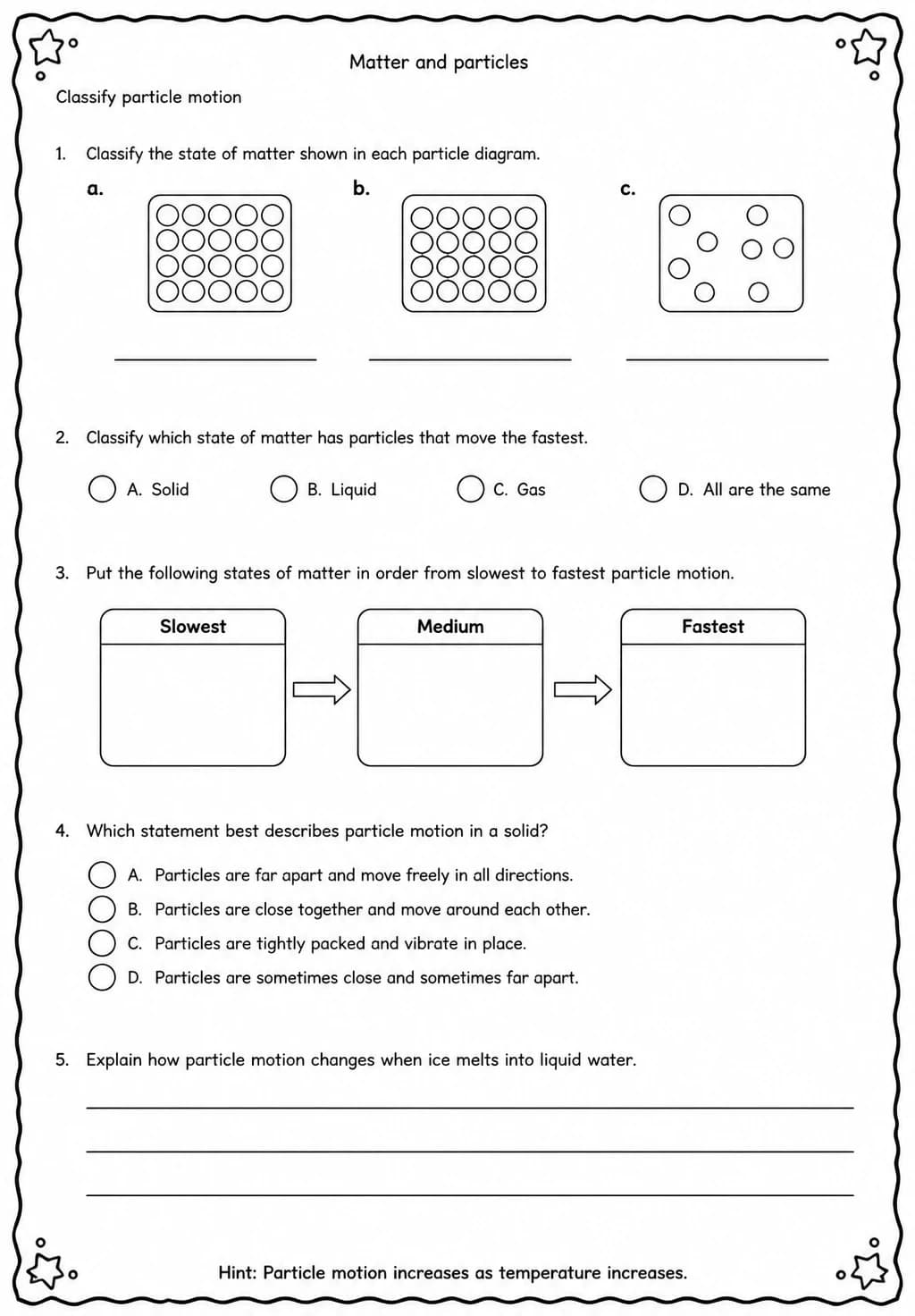
Classify particle motion

Classify phase changes
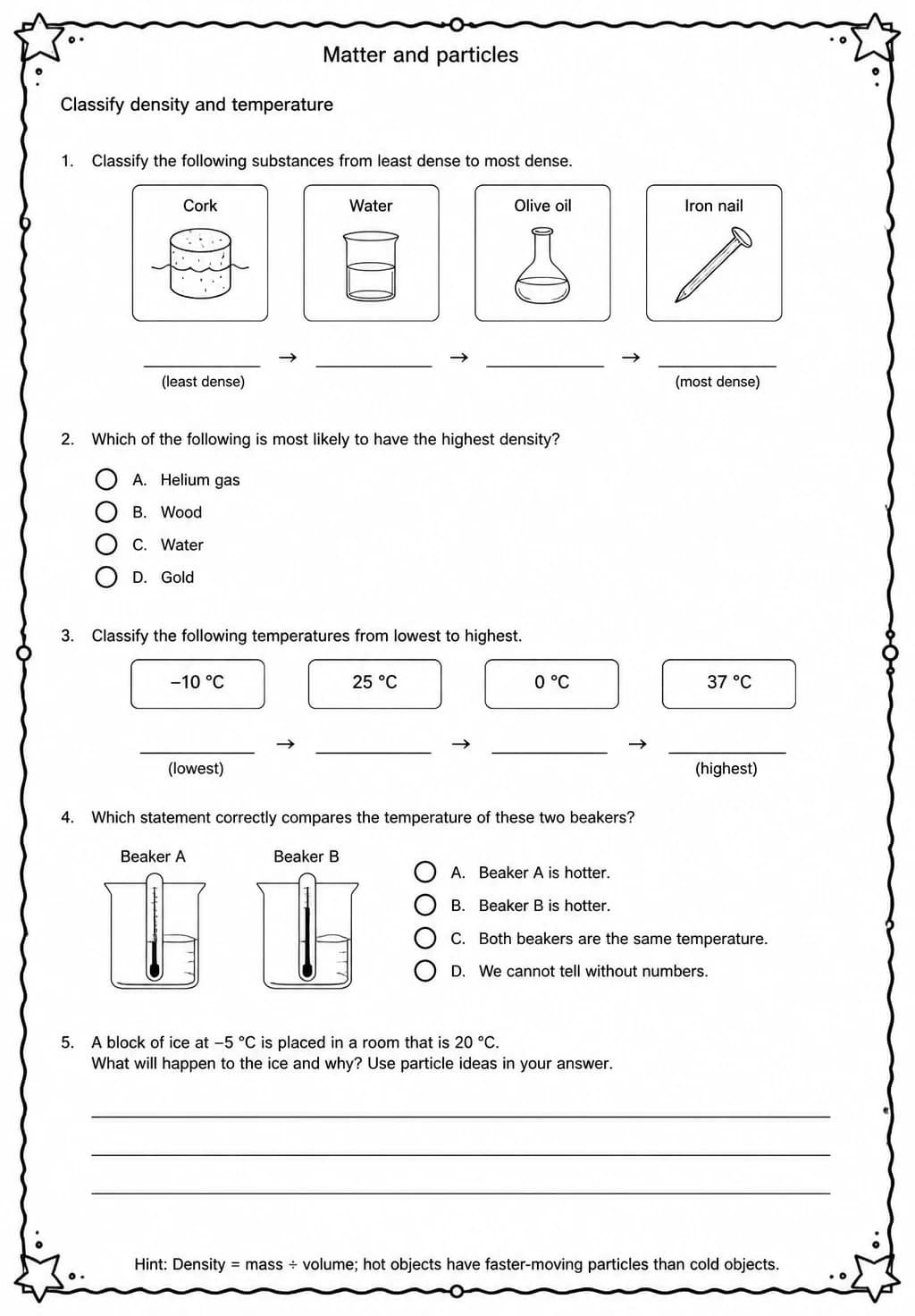
Classify density and temperature
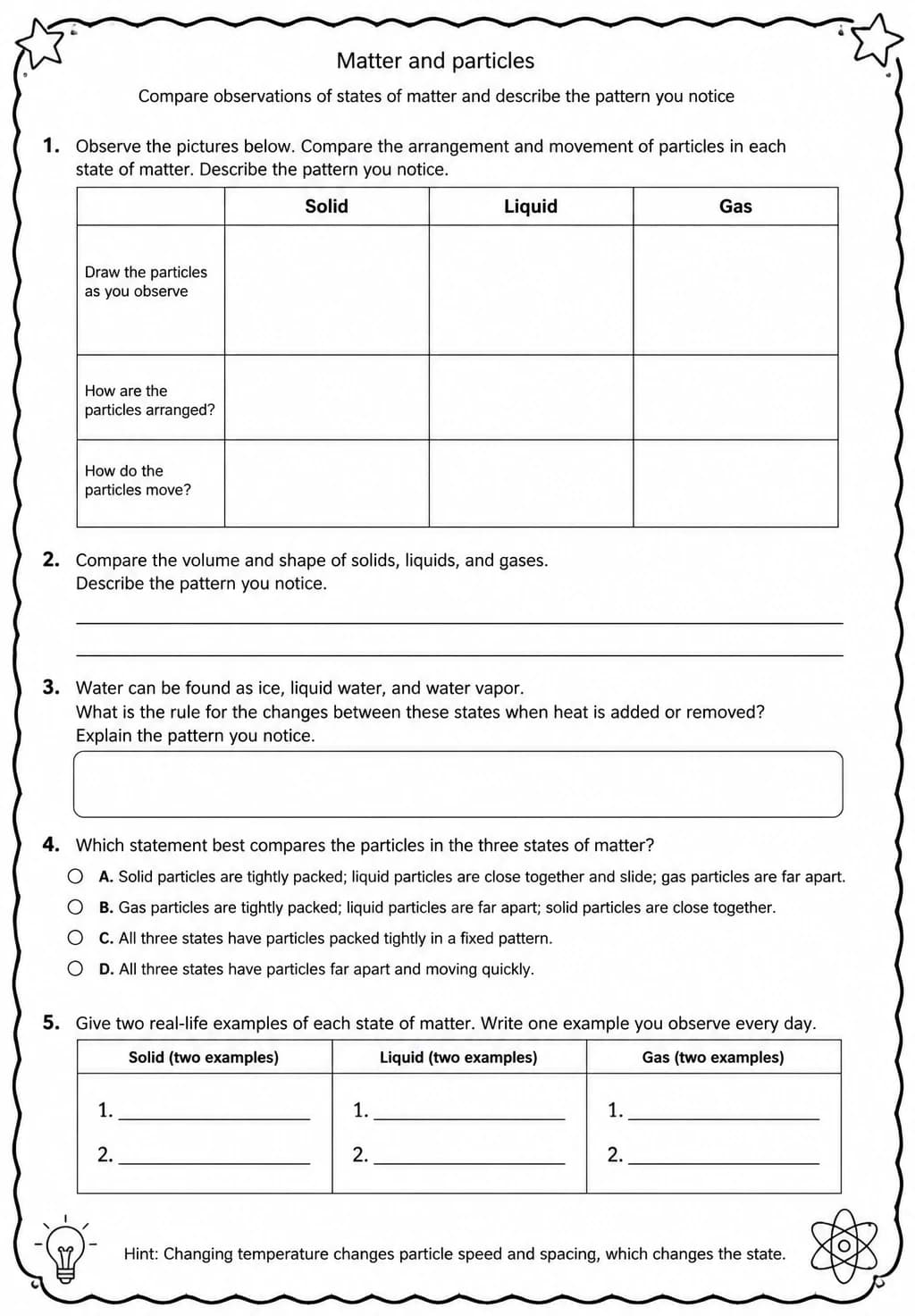
Compare observations of states of matter and describe the pattern you notice