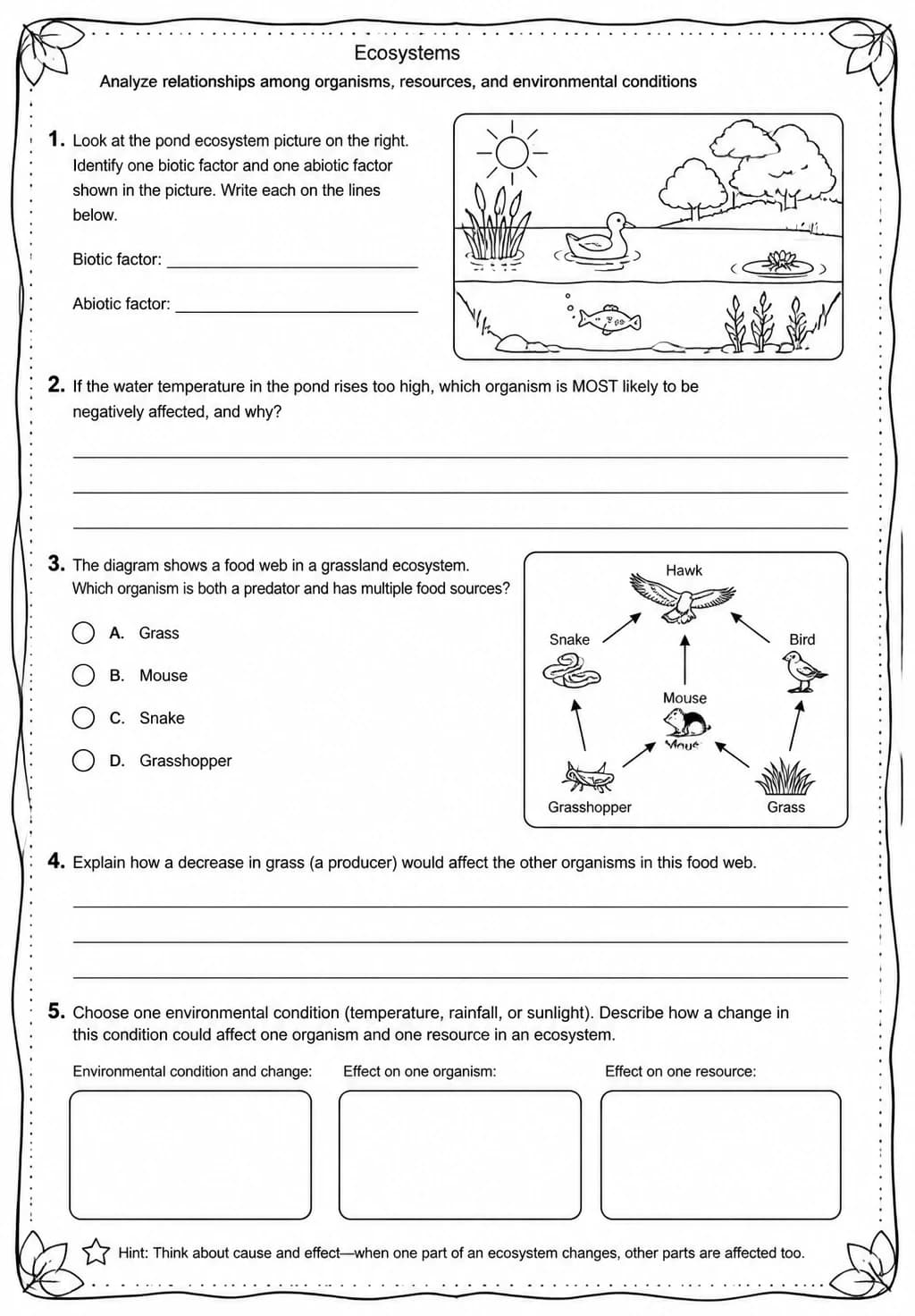
Analyze relationships among organisms, resources, and environmental conditions
Free printable Life Science science worksheet for "Analyze relationships among organisms, resources, and environmental conditions" — practice ecosystems. No-prep, print or assign online.
High school students analyze complex relationships among organisms, resources, and environmental conditions in this challenging Life Science worksheet on ecosystems, examining how changes in one component ripple through the whole system. Teachers can use it as a synthesis task after instruction on ecological interactions, encouraging students to apply systems thinking and use evidence to explain dynamic ecosystem behavior. The worksheet anchors the Ecosystems strand in real-world ecological analysis.
Learning objectives
- Analyze how changes in resource availability affect organism populations within an ecosystem
- Explain feedback relationships between organisms and their environmental conditions
- Predict ecosystem-level consequences of shifts in species relationships or resource supply
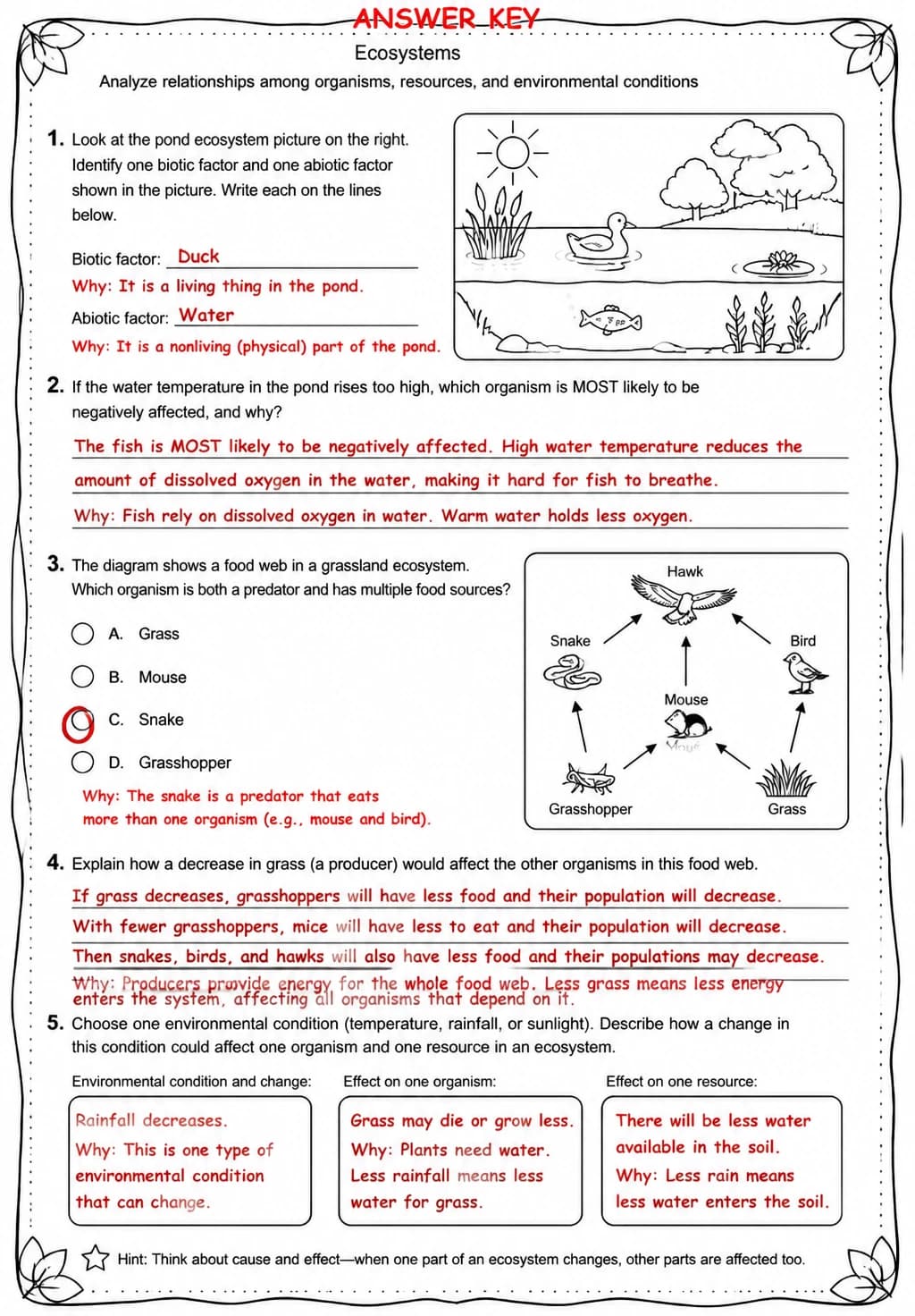
Answer Key
How to use this worksheet
- Click “Download Worksheet” and sign in with Google or email to get the PDF instantly.
- Print at home or in class for High School; it's no-prep, with no extra materials needed.
- Use the included answer key to mark it in seconds.
Frequently asked questions
Is the “Analyze relationships among organisms, resources, and environmental conditions” worksheet free?
Yes. “Analyze relationships among organisms, resources, and environmental conditions” is a free printable Science worksheet. Sign in with Google or email to download the PDF instantly.
What grade or age is this Science worksheet for?
It's designed for High School (ages 14–18), covering Ecosystems.
Does it come with an answer key?
Yes — a matching answer key is included so you can grade it in seconds.
Create more worksheets in our Worksheet Studio
Generate fresh worksheets for any grade, topic, and language — free.
Open the Worksheet StudioMore for High School

You might also like

Trace matter and energy through food webs and ecosystem cycles
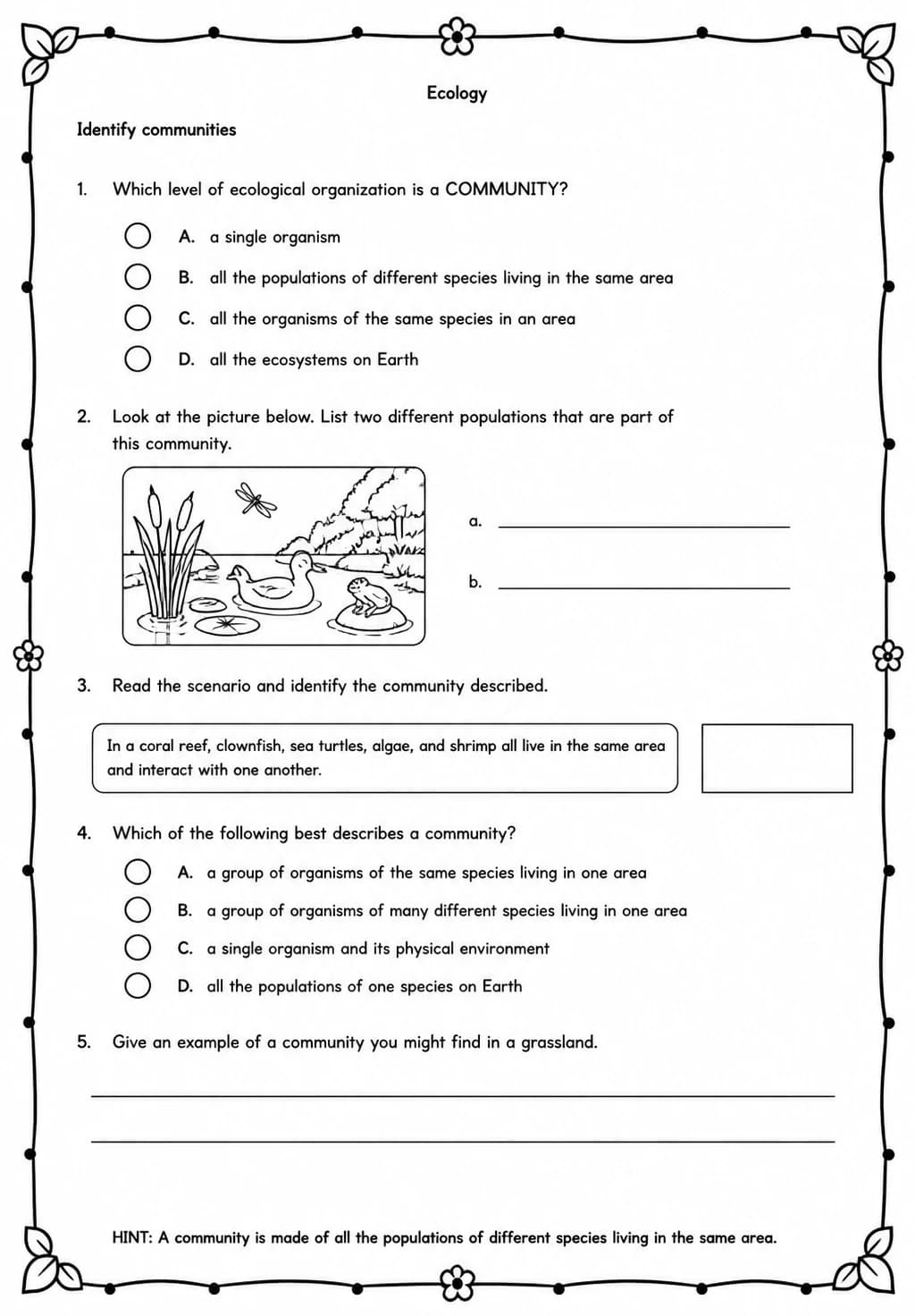
Identify communities
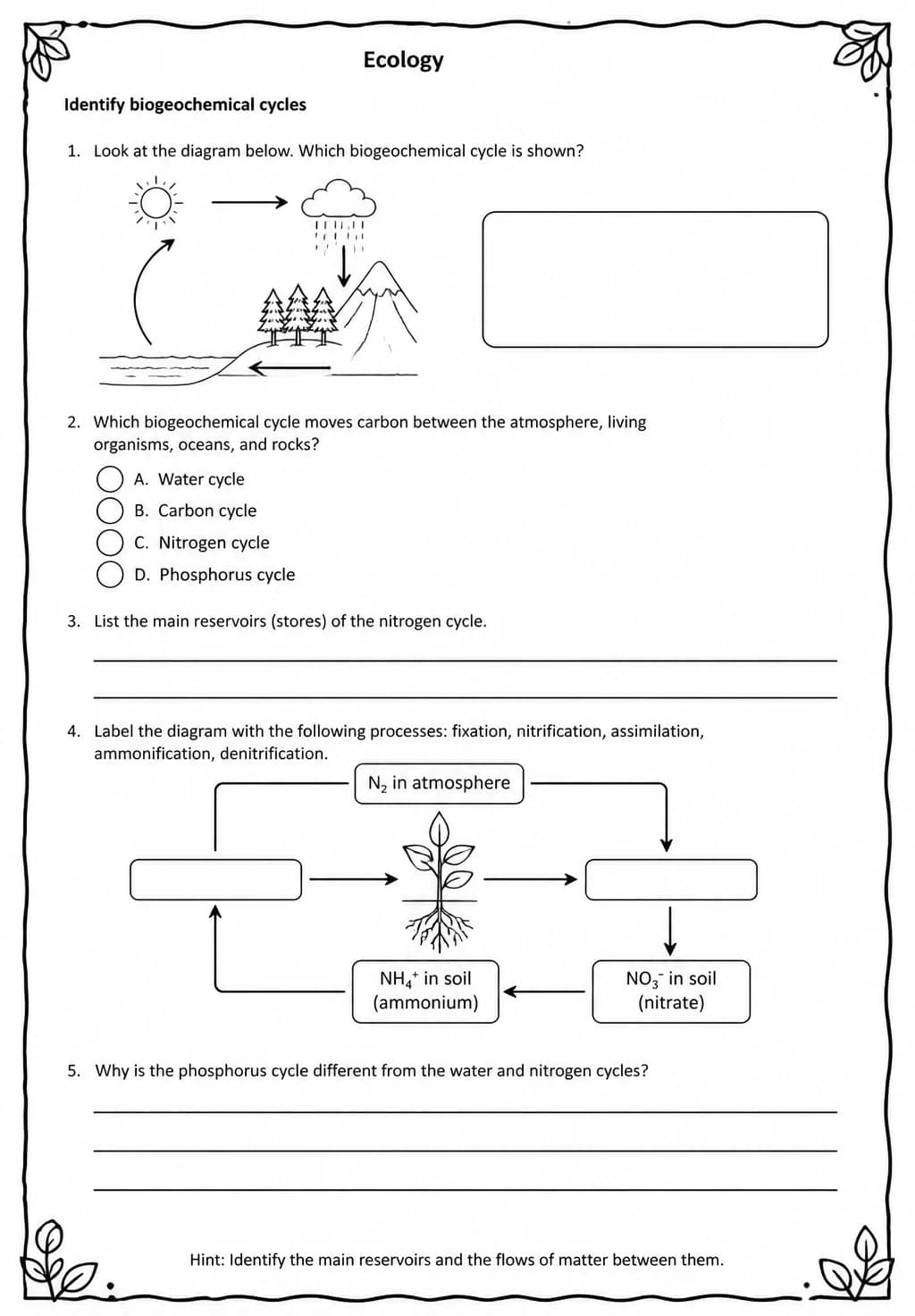
Identify biogeochemical cycles
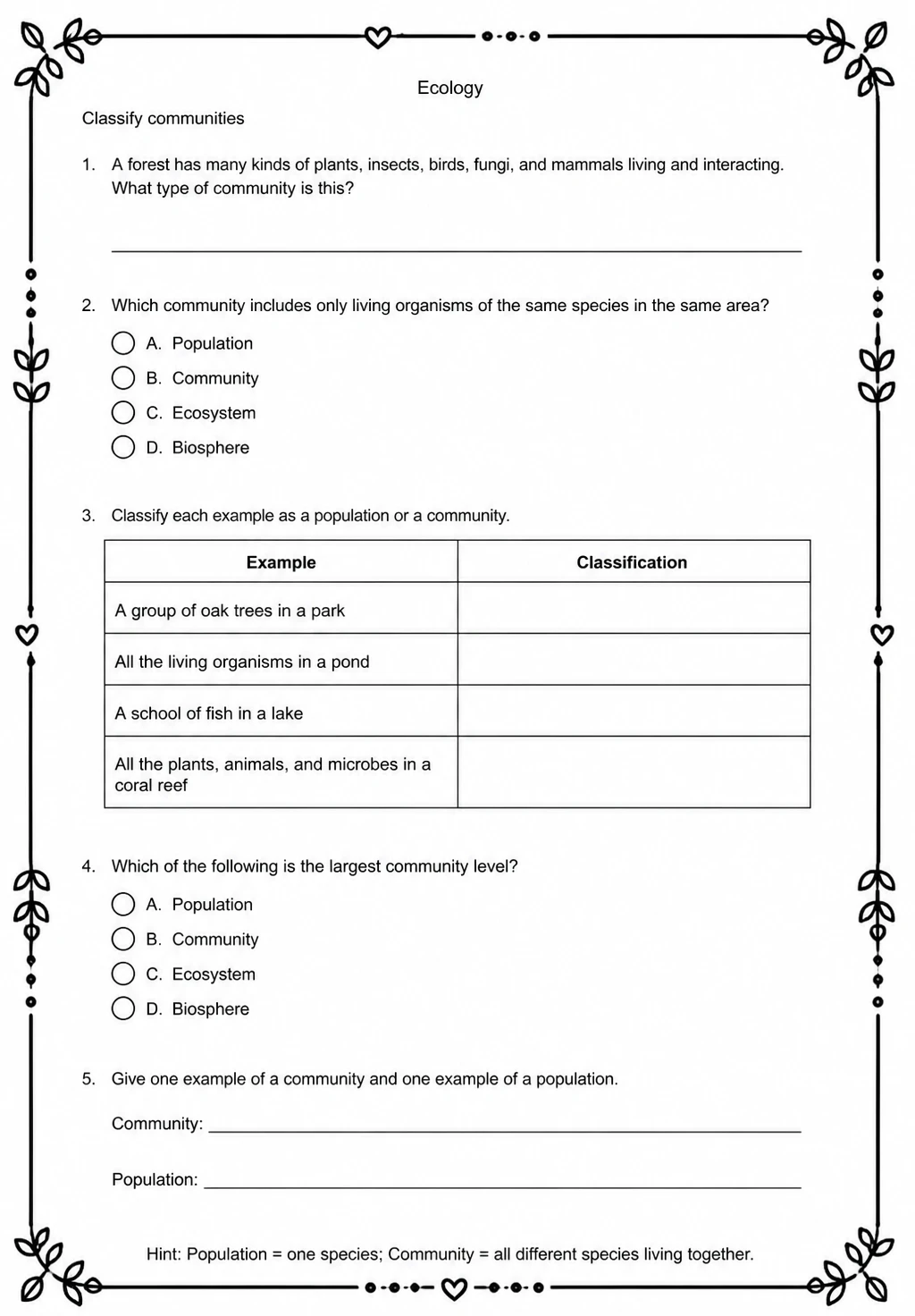
Classify communities
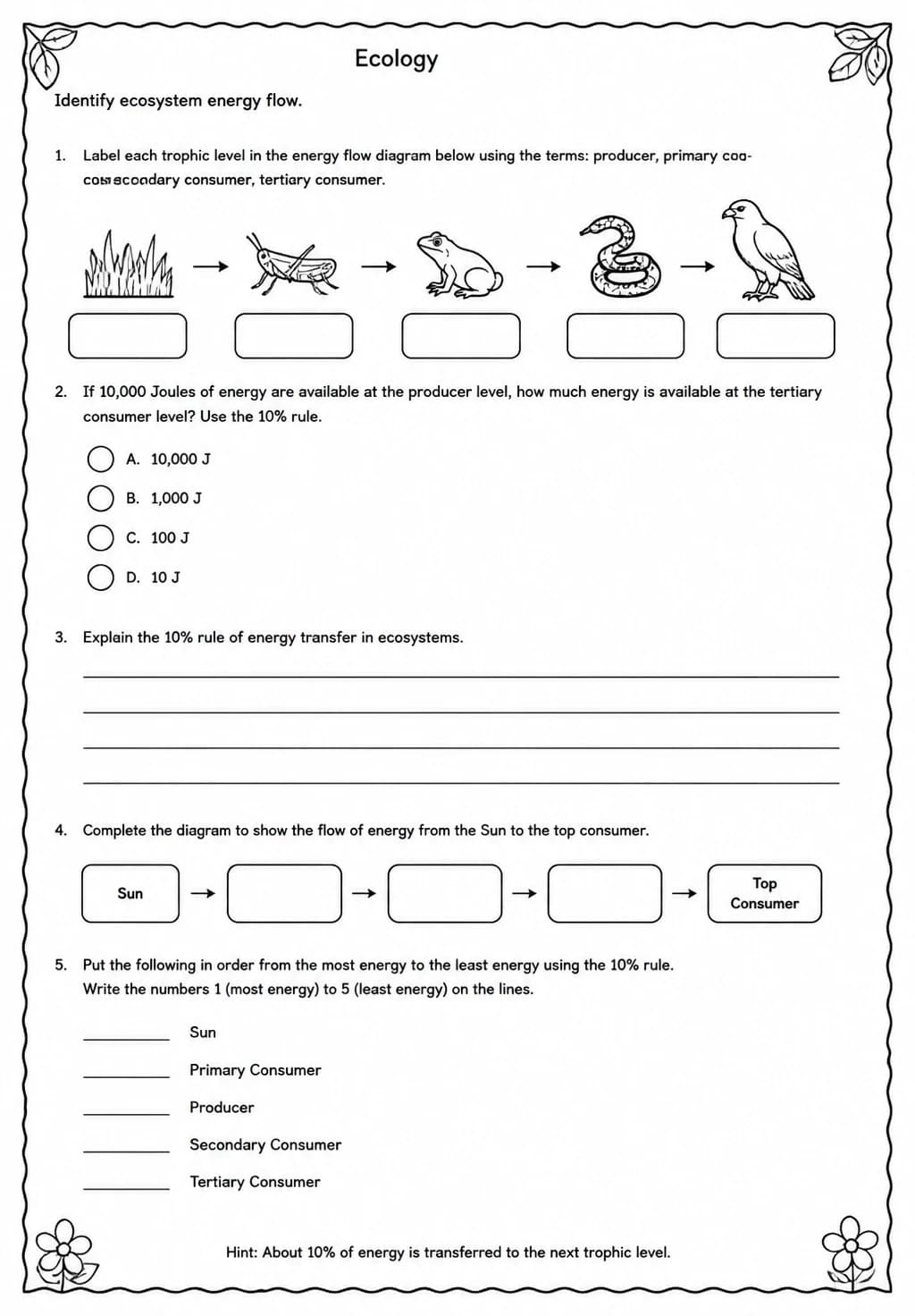
Identify ecosystem energy flow