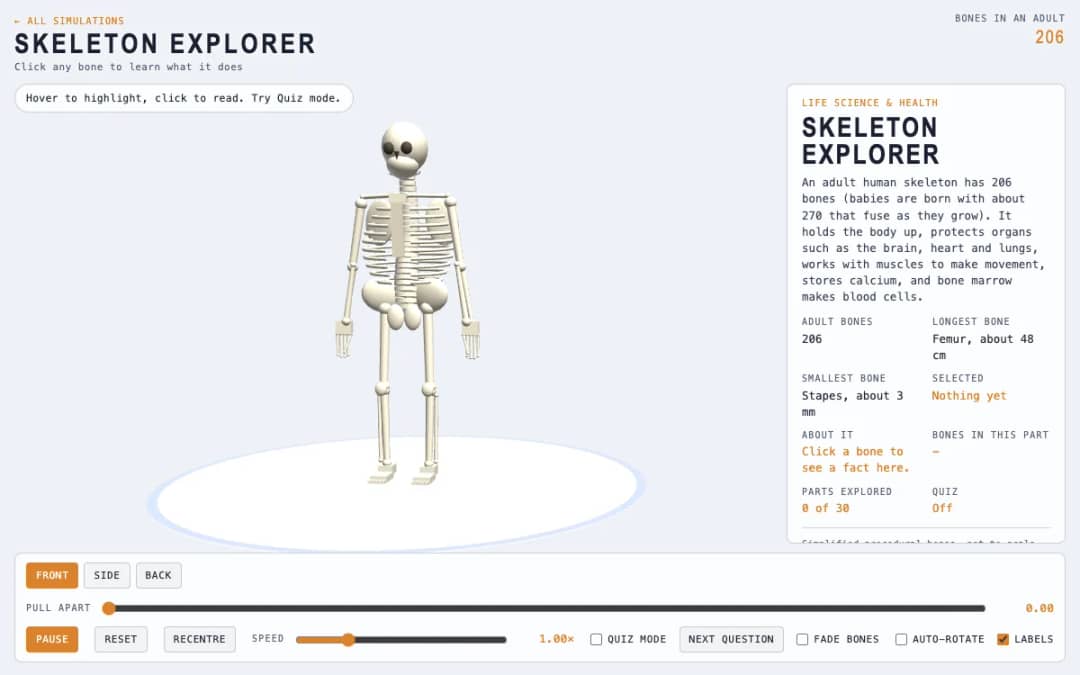
A 3D skeleton can be rotated, pulled apart and examined part by part. Students hover to highlight bones, click to read facts, and switch on Quiz mode to test their knowledge.
—
KiwiBee uses optional Google Analytics, Google Ads, and Meta Pixel cookies to understand adult visitors, measure completed sign-ups, and improve campaigns. Essential cookies always stay on. OpenAI’s ChatGPT Ads Pixel also measures page views and completed enquiries after advertising consent, and may use hashed contact details for matching. Privacy policy
3D Shapes Explorer is an interactive classroom tool for teaching solid shapes and their properties. Students and teachers turn a cube, cuboid, prism, pyramid, cylinder, cone, sphere or one of the five regular solids, then tap the shape to count its faces, edges and vertices together, with numbered labels and a see-through mode for the hidden ones. Each shape shows the 2D shapes that make up its faces, Euler's rule for corners, edges and faces, and a pattern finder for prisms and pyramids with 3 to 12 sides on the base. Further tabs unfold every solid into its nets, work out volume and surface area with the formula and the working shown, and slice the shape to reveal its cross-section.
Yes. It runs in any modern browser, including interactive whiteboards, tablets and phones, with no sign-up or download.
Sixteen solids: the cube, cuboid, triangular, pentagonal and hexagonal prisms, triangular, square, pentagonal and hexagonal pyramids, cylinder, cone, sphere, and the five regular (Platonic) solids: tetrahedron, cube, octahedron, dodecahedron and icosahedron. Prisms and pyramids can be changed to have anywhere from 3 to 12 sides on the base.
A face is a flat surface of a solid, an edge is where two faces meet, and a vertex (plural vertices, also called a corner) is where edges meet. Tap Faces, Edges or Corners, then tap the shape to count them one at a time, or press Count for me.
On the Net tab, drag the slider or press Unfold to open the solid out flat. Press Another net to see different valid nets of the same shape. A cube has exactly 11 nets. A sphere has none, because its curved surface cannot be flattened without stretching or tearing.
Yes. The Measure tab has a slider for every dimension, labels the lengths on the shape, and shows the formula with the numbers substituted in. A cuboid can also be filled with 1 cm cubes, one layer at a time.
ដាក់វាចូលទៅក្នុង LMS ប្លក់ ឬគេហទំព័រថ្នាក់រៀនរបស់អ្នក — ឥតគិតថ្លៃ។
<iframe src="https://kiwibee.io/km/simulations/3d-shapes-simulation/embed" title="3D Shapes Explorer | KiwiBee" loading="lazy" allowfullscreen style="width:100%;height:min(70vh,620px);min-height:420px;border:0;border-radius:16px"></iframe>បន្តស្វែងរក
A 3D skeleton can be rotated, pulled apart and examined part by part. Students hover to highlight bones, click to read facts, and switch on Quiz mode to test their knowledge.
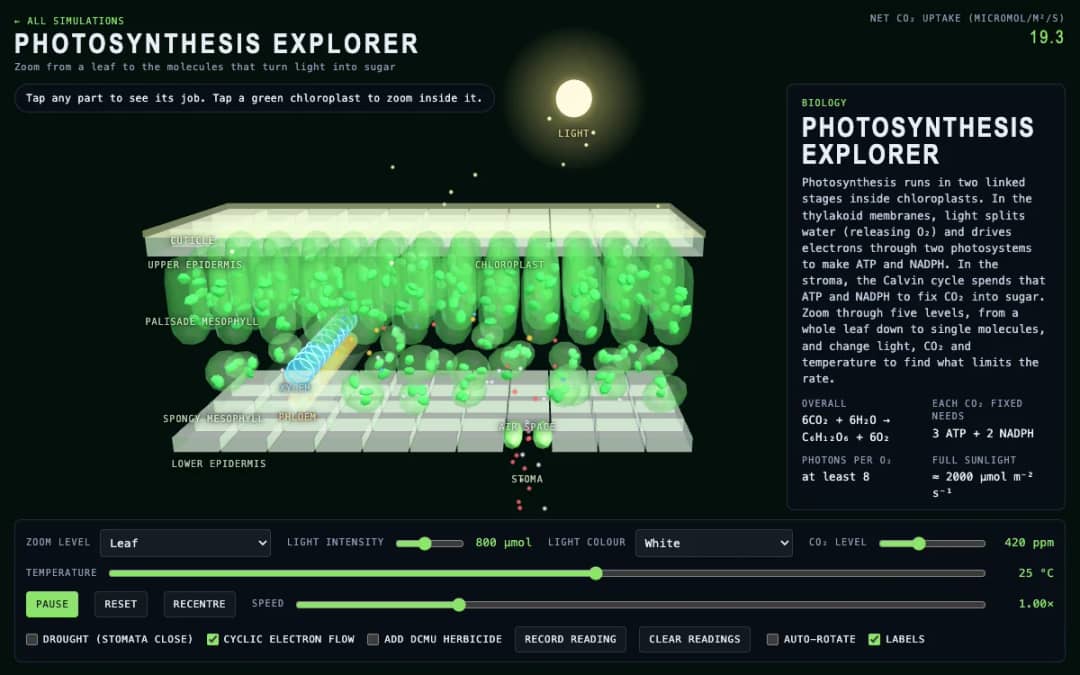
Zoom through five levels of photosynthesis in 3D: a leaf cross-section, a chloroplast, the thylakoid membrane with its electron transport chain and ATP synthase, the Calvin cycle and a 3D rate graph. Change light, CO₂ and temperature and record readings.
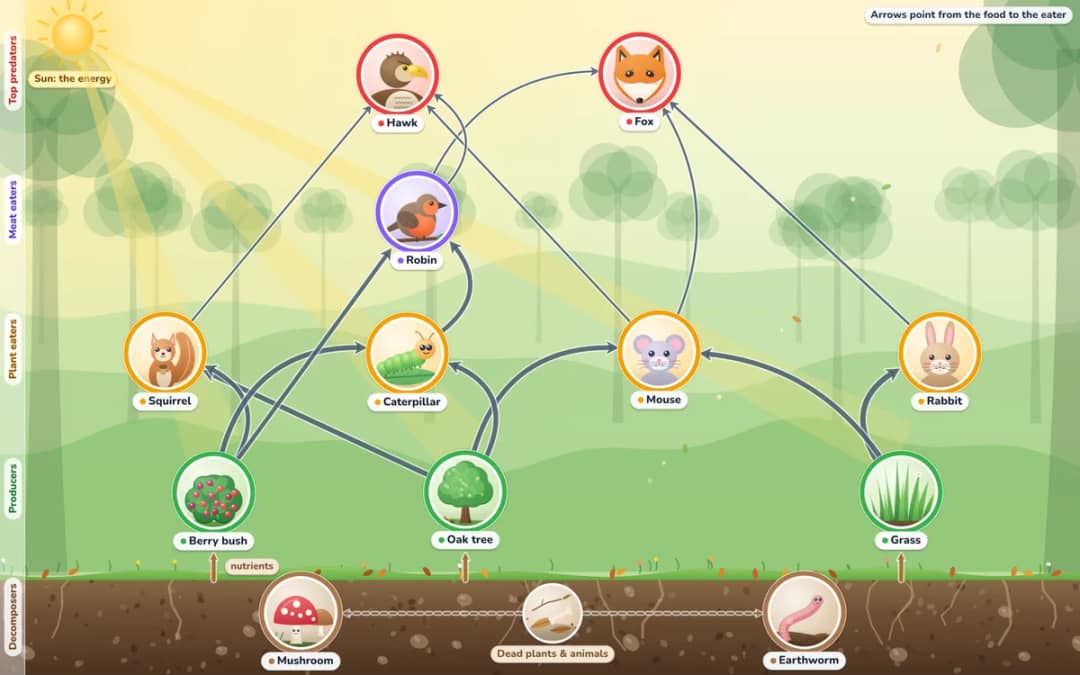
Explore woodland, pond and ocean food webs. Tap a living thing to see what it eats and what eats it, take one away and watch the whole web change, and see why energy runs out at the top of the pyramid.
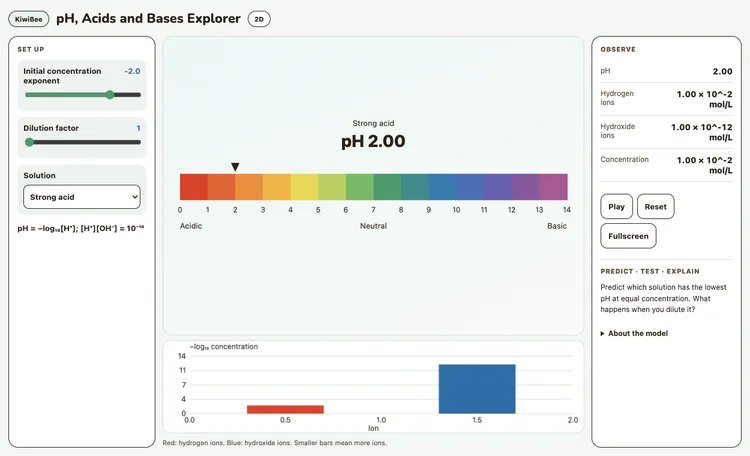
Compare strong and weak acids and bases at equal concentration. Dilute them and inspect hydrogen and hydroxide ions.

Step through binary increment and parity with a Turing machine’s tape, states and transition table. Change the input and explain each instruction.
ពីម៉ូដែលទៅភស្តុតាង
ប្រើសន្លឹកកិច្ចការដើម្បីកត់ត្រាការព្យាករណ៍ ការសង្កេត និងការពន្យល់ បន្ទាប់ពីសិស្សបានស្វែងយល់។
ទីតាំងការងារសម្រាប់គ្រូដោយឥតគិតថ្លៃ KiwiBee នាំមកនូវការរៀបចំមេរៀន សន្លឹកកិច្ចការ ឧបករណ៍ក្នុងថ្នាក់ និងសៀវភៅពិន្ទុ ទាំងអស់នៅកន្លែងតែមួយ។
ចាប់ផ្តើមឥតគិតថ្លៃ និងបង្កើតថ្នាក់ដំបូងរបស់អ្នក
 ទំព័រដើម
 ដំណោះស្រាយទាំងអស់
 តម្លៃ
 អំពីយើង
 KiwiBee សម្រាប់អង្គការមិនស្វែងរកប្រាក់ចំណេញ
 ព្រឹត្តិការណ៍ និងសិក្ខាសាលាអនឡាញ
 សម្រាប់អង្គភាពធំ
 សម្រាប់សាលារៀន
 សម្រាប់មជ្ឈមណ្ឌល
 សម្រាប់ប្រធានក្រុម
 សម្រាប់គ្រូ
 AI និងធនធាន
 ធនធាន
 សន្លឹកកិច្ចការសម្រាប់បោះពុម្ព
 កញ្ចប់មេរៀន
 ការពិសោធន៍និម្មិតអន្តរកម្ម
 ឧបករណ៍គ្រូ
 ស្ទូឌីយ៉ូ AI
 គំនិត និងការស្រាវជ្រាវ