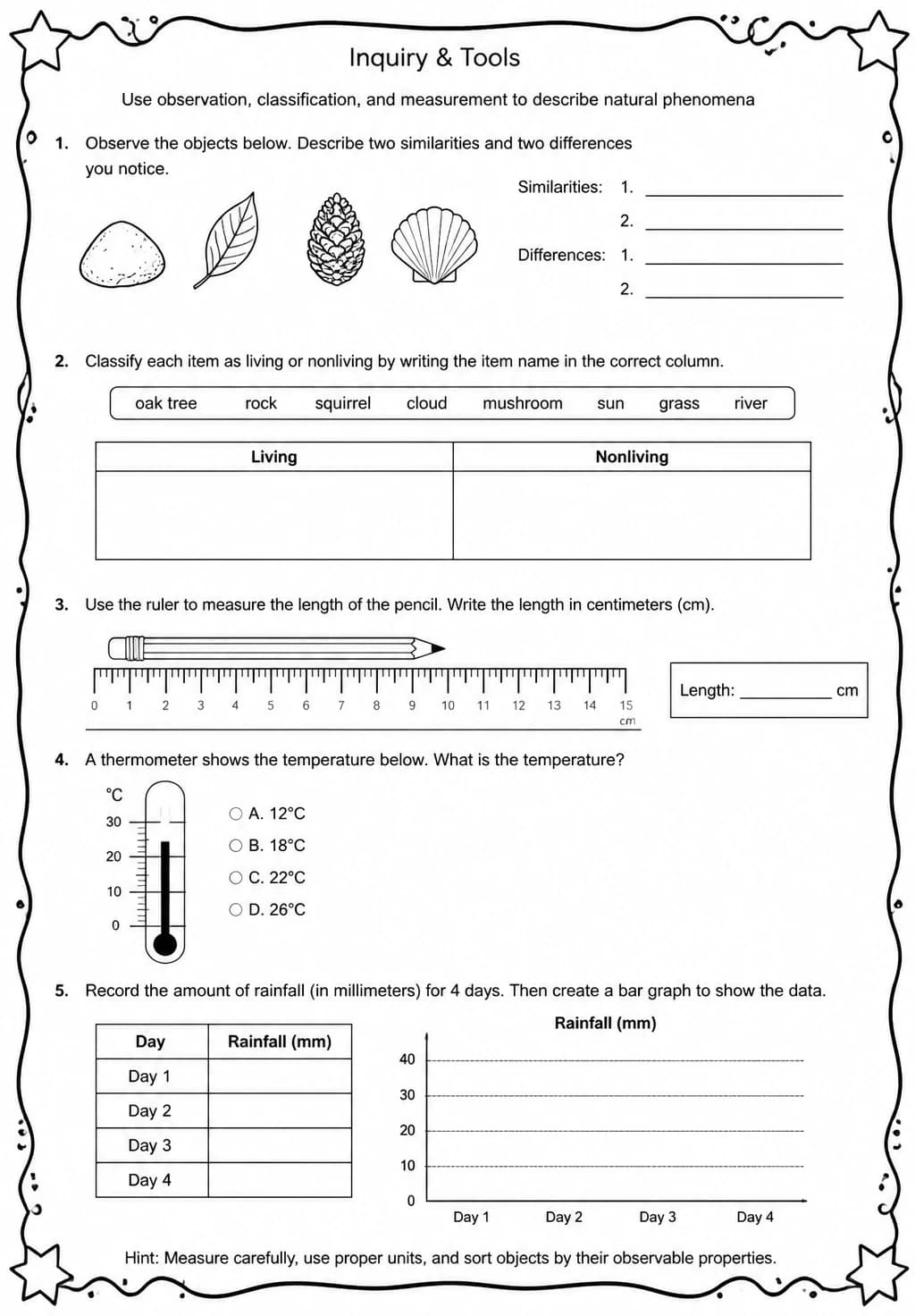
Use observation, classification, and measurement to describe natural phenomena
Free printable Science Practices & Engineering science worksheet for "Use observation, classification, and measurement to describe natural phenomena" — practice inquiry & tools. No-prep, print or assign online.
High school students apply core scientific practices in this Inquiry and Tools worksheet, using observation, classification, and measurement to describe natural phenomena with precision and objectivity. Teachers can use it at the start of a unit to calibrate students' scientific reasoning skills or as a process-focused task that complements experimental work. The emphasis on method over content makes it transferable across biology, chemistry, physics, and earth science contexts.
Learning objectives
- Apply observation, classification, and measurement skills to describe a natural phenomenon
- Use appropriate scientific vocabulary and units when recording observations and measurements
- Organize and interpret collected data to draw evidence-based conclusions
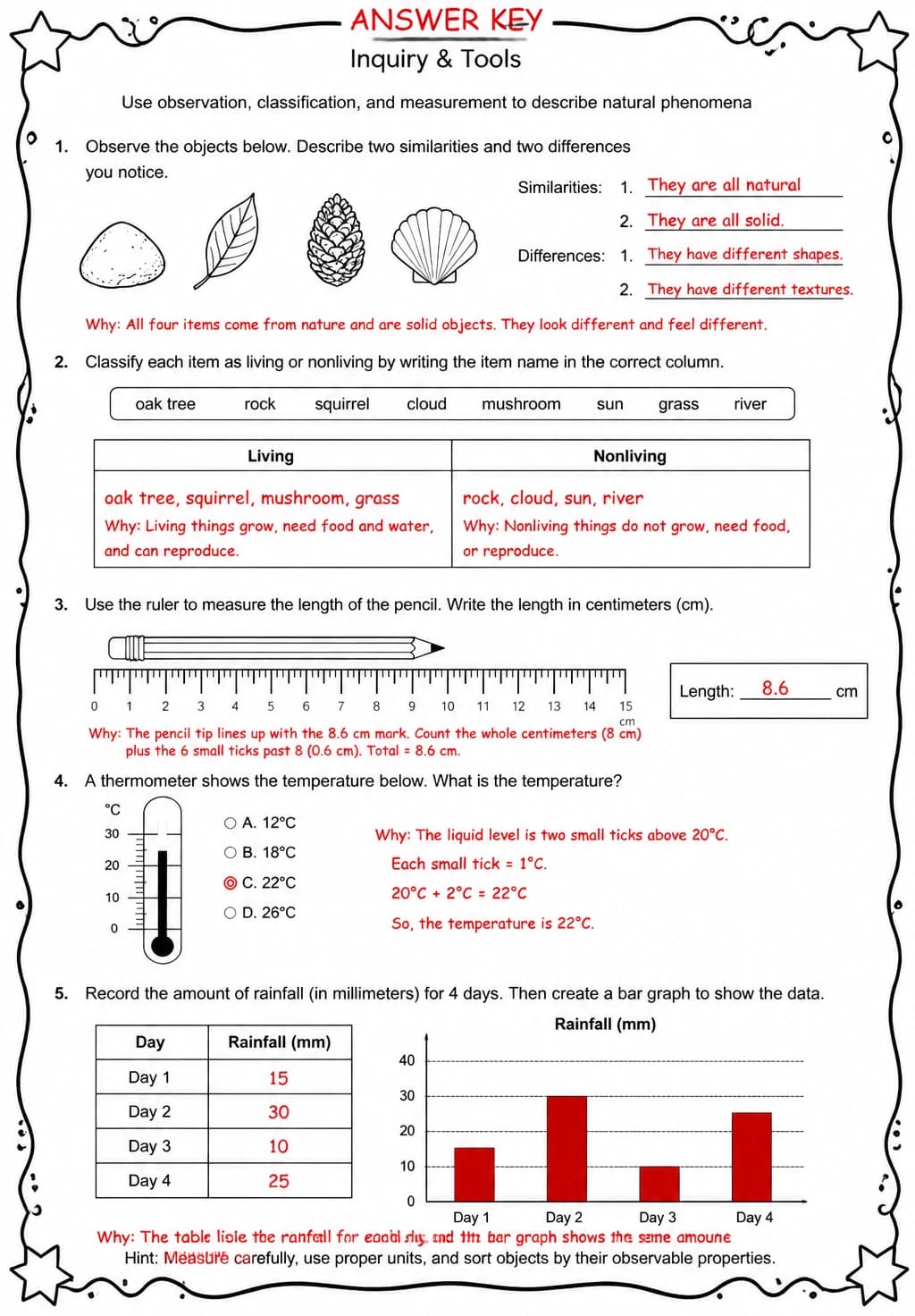
Answer Key
How to use this worksheet
- Click “Download Worksheet” and sign in with Google or email to get the PDF instantly.
- Print at home or in class for High School; it's no-prep, with no extra materials needed.
- Use the included answer key to mark it in seconds.
Frequently asked questions
Is the “Use observation, classification, and measurement to describe natural phenomena” worksheet free?
Yes. “Use observation, classification, and measurement to describe natural phenomena” is a free printable Science worksheet. Sign in with Google or email to download the PDF instantly.
What grade or age is this Science worksheet for?
It's designed for High School (ages 14–18), covering Inquiry & Tools.
Does it come with an answer key?
Yes — a matching answer key is included so you can grade it in seconds.
Create more worksheets in our Worksheet Studio
Generate fresh worksheets for any grade, topic, and language — free.
Open the Worksheet StudioMore for High School

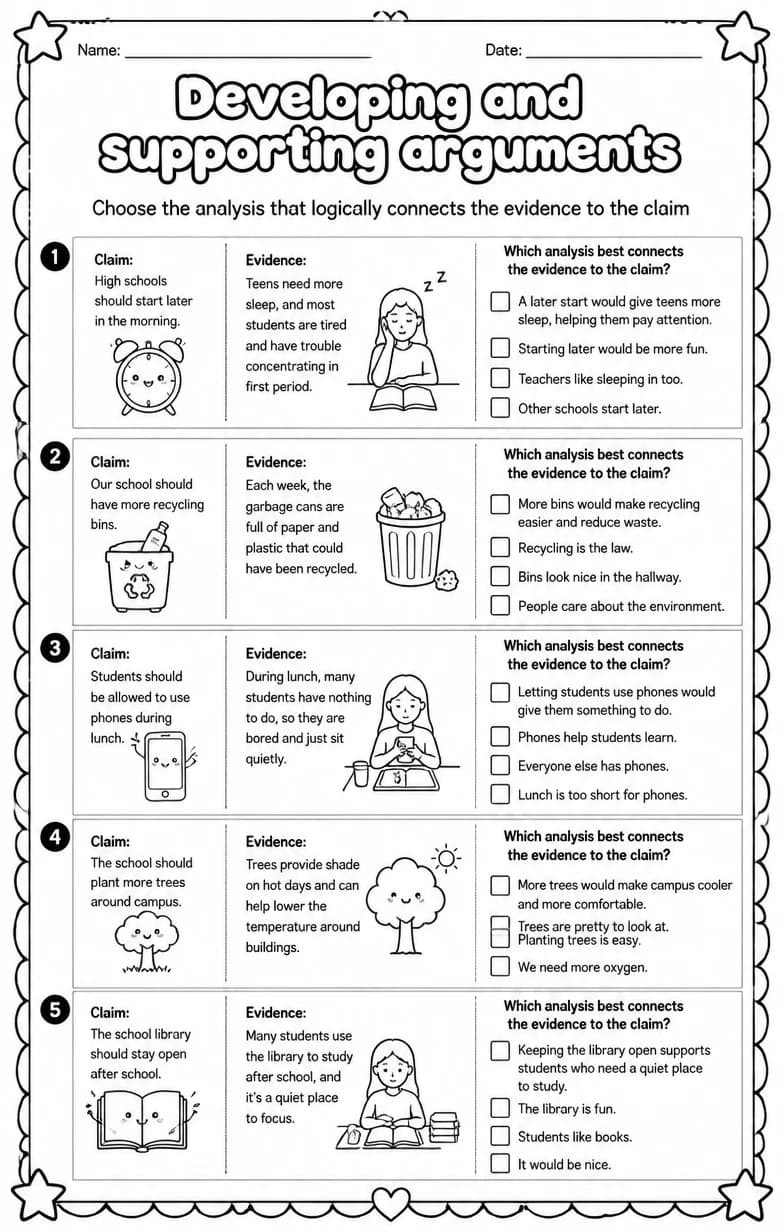
You might also like
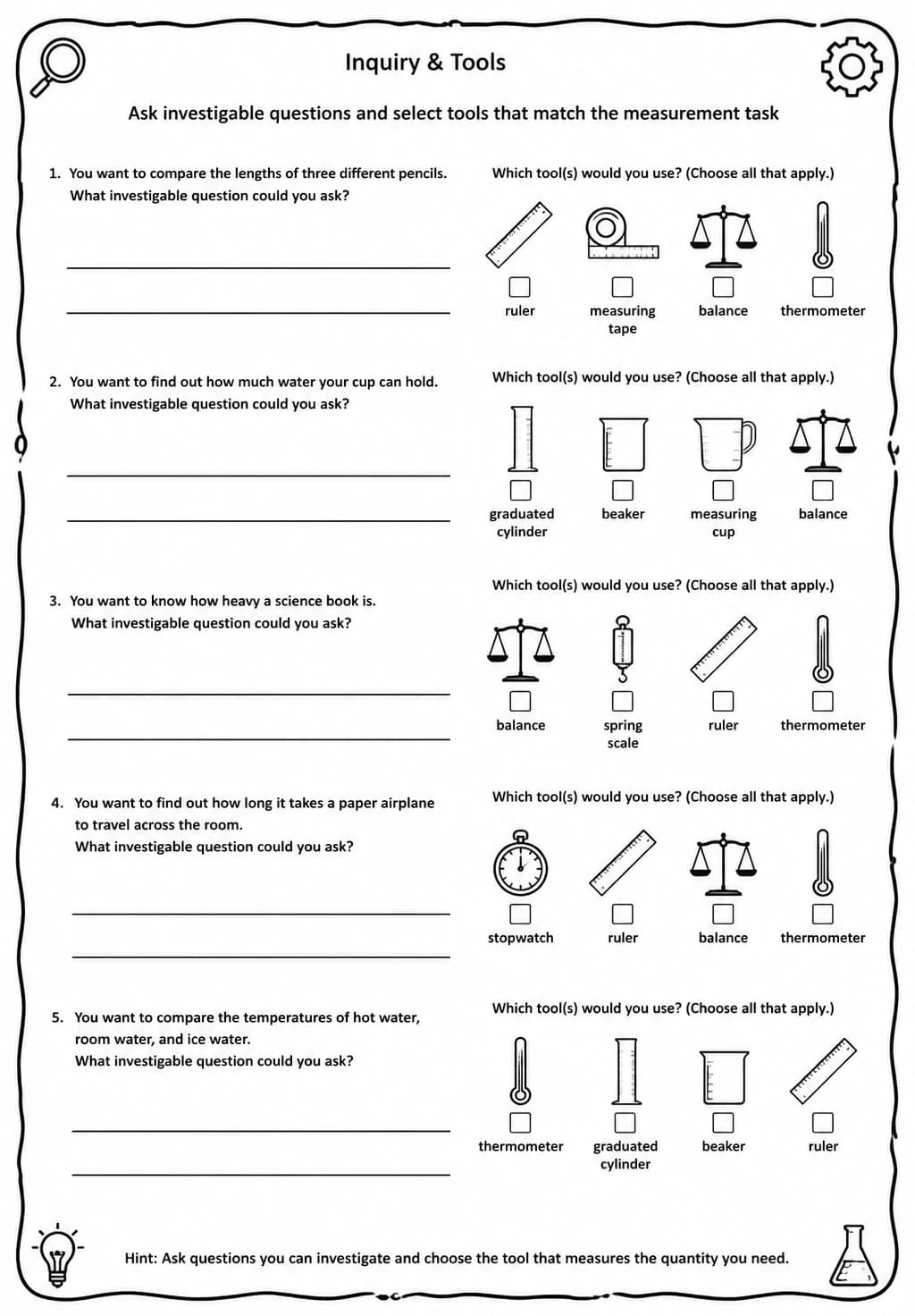
Ask investigable questions and select tools that match the measurement task
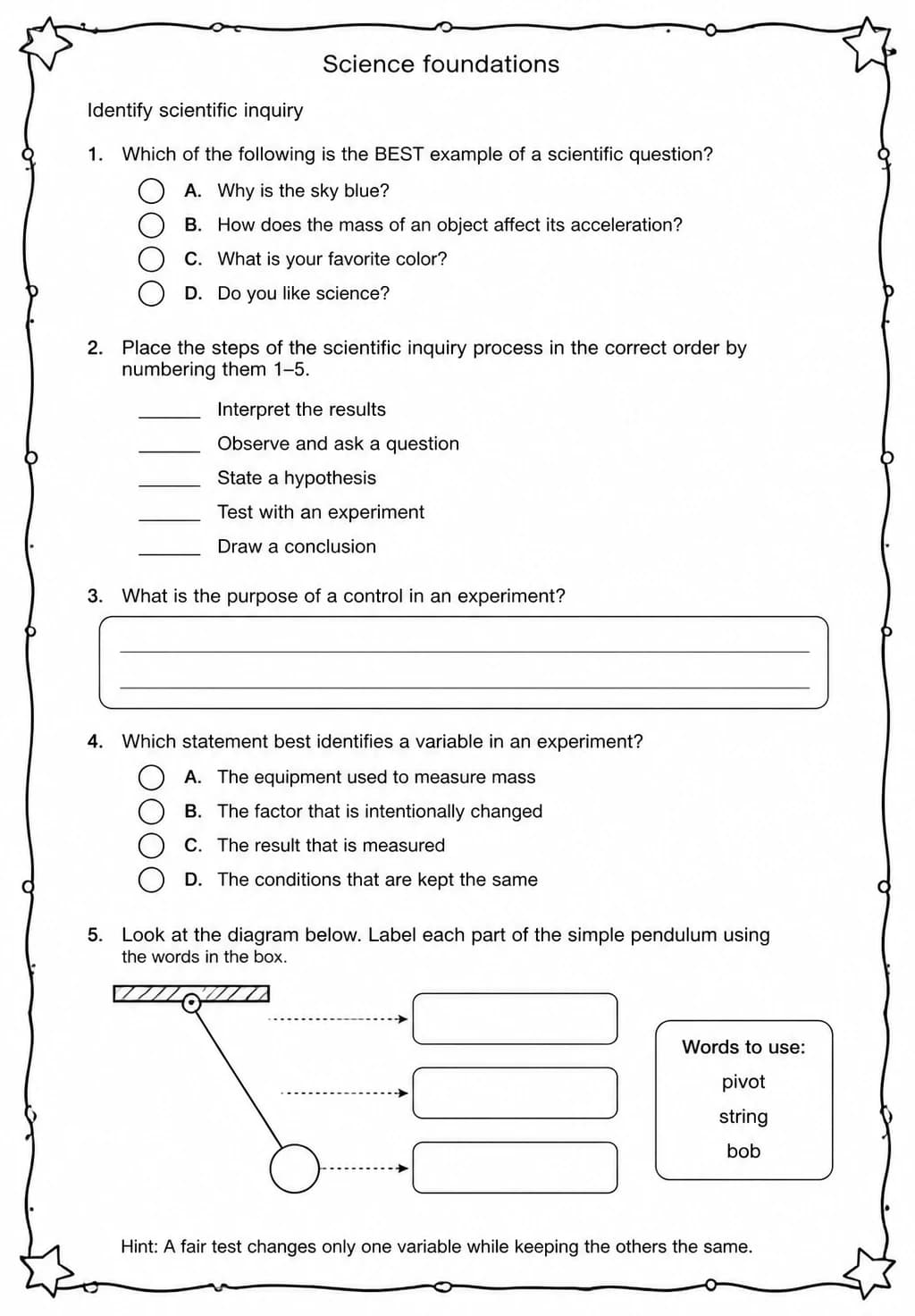
Identify scientific inquiry
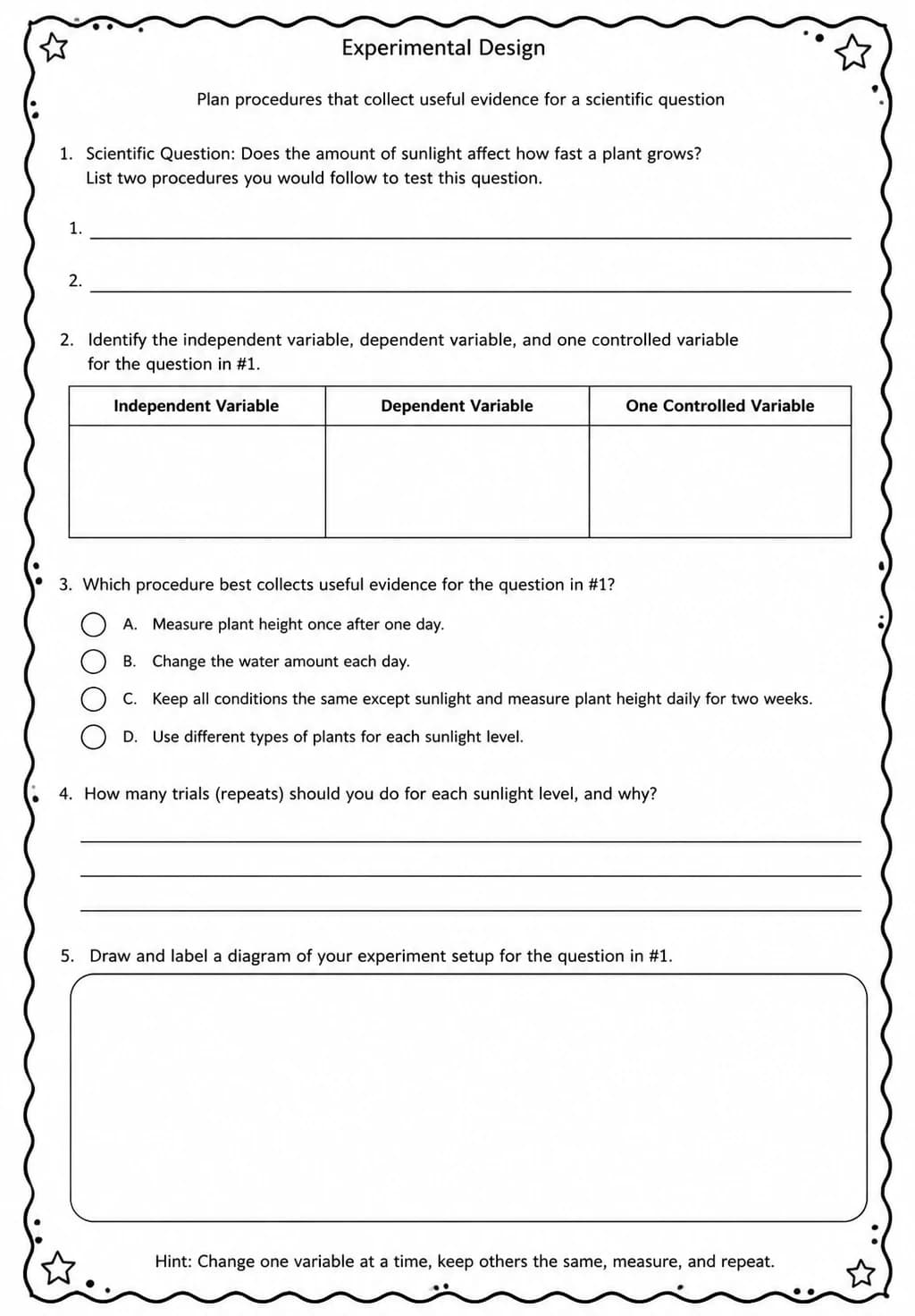
Plan procedures that collect useful evidence for a scientific question
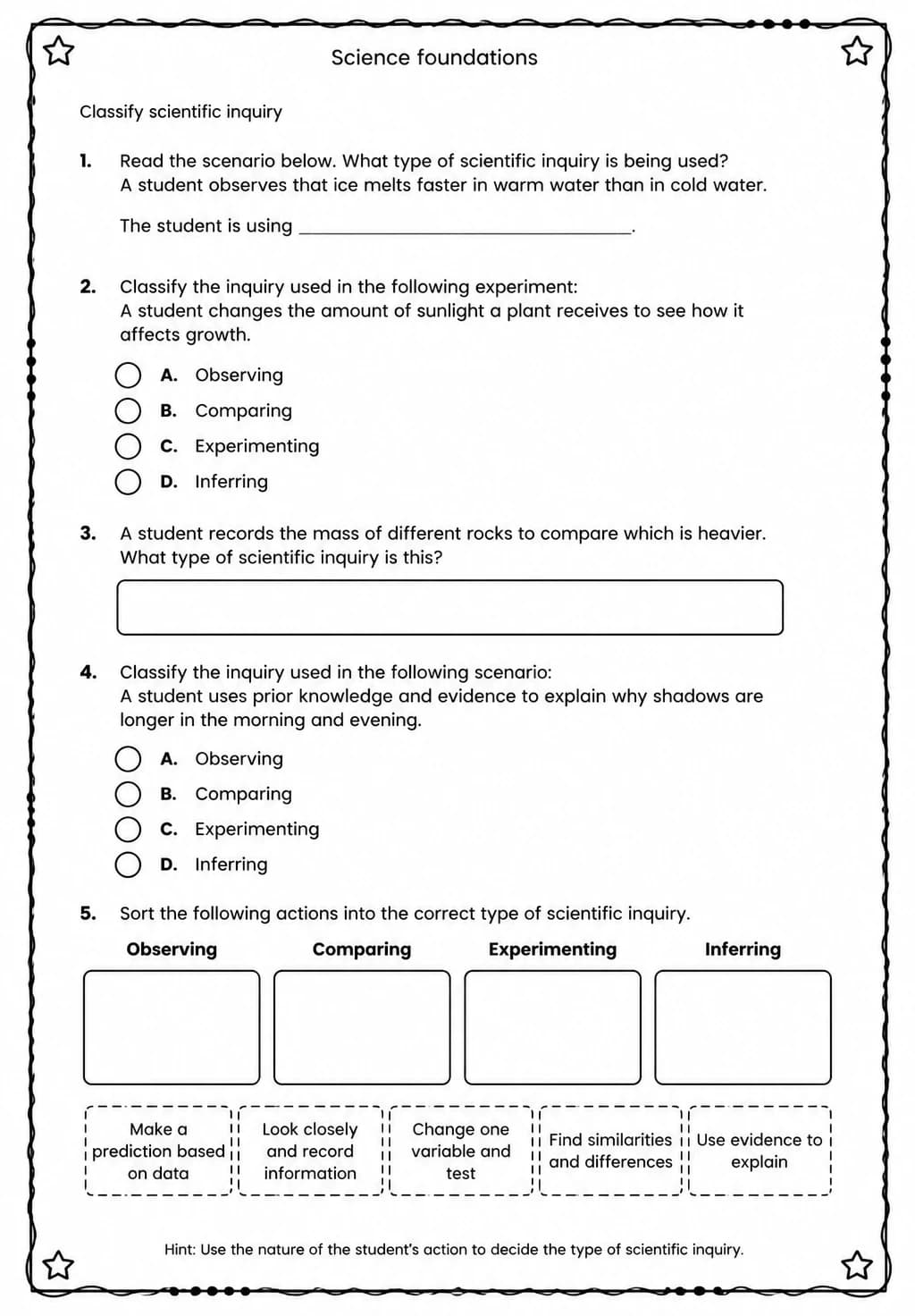
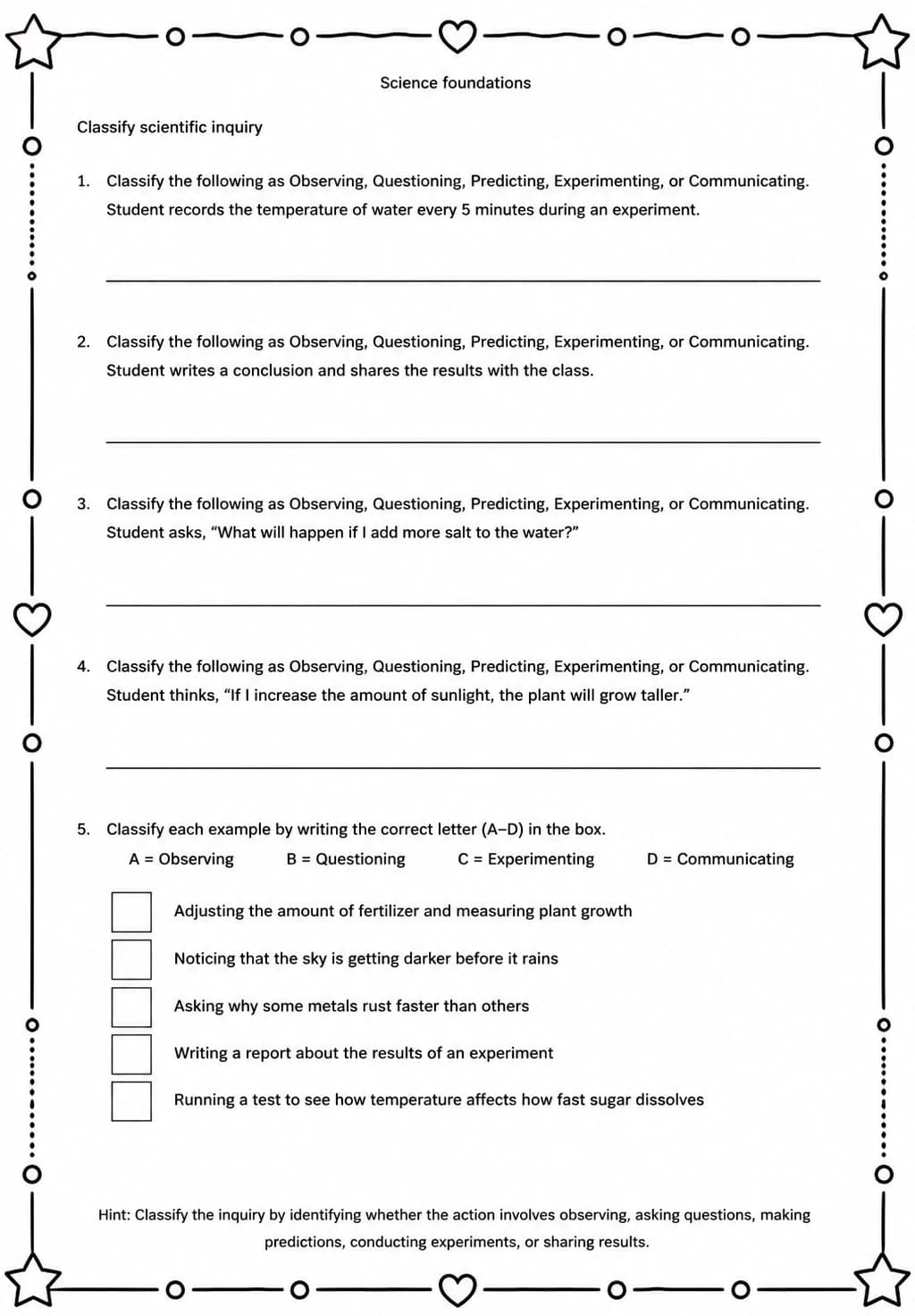
Classify scientific inquiry
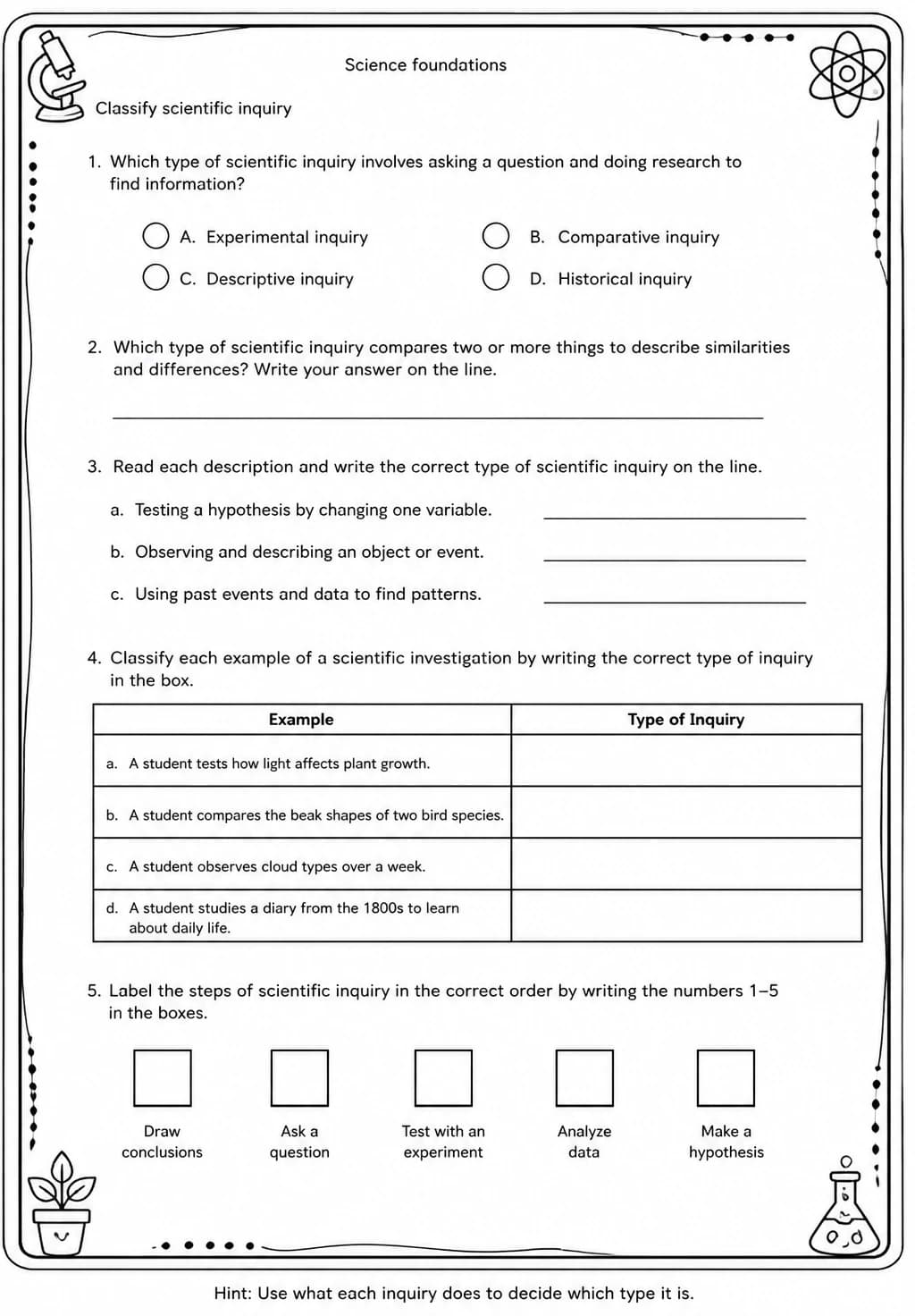
Classify scientific inquiry