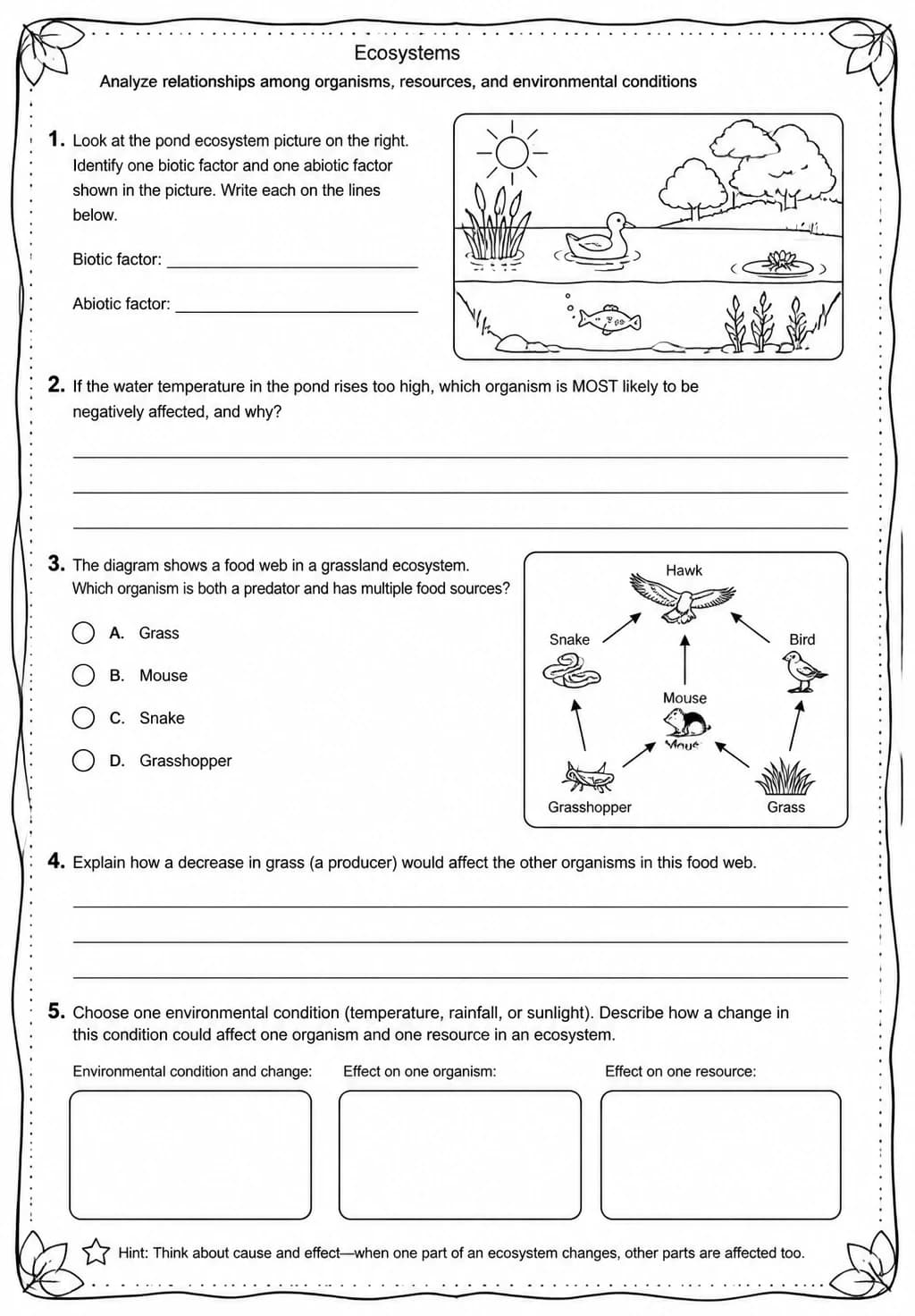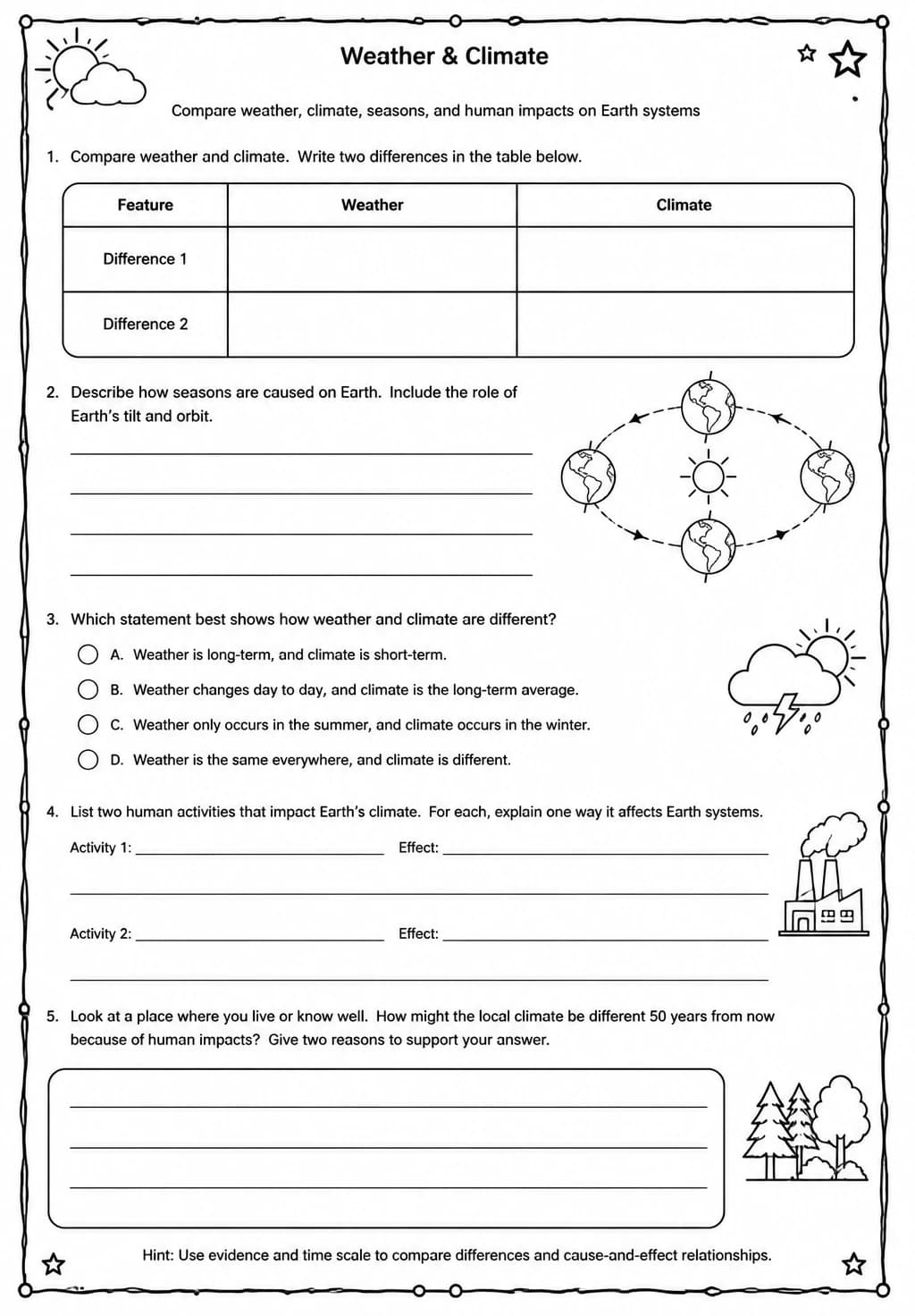
Compare weather, climate, seasons, and human impacts on Earth systems
Free printable Earth & Space Science science worksheet for "Compare weather, climate, seasons, and human impacts on Earth systems" — practice weather & climate. No-prep, print or assign online.
High-school students in grades 9–12 tackle a broad comparative analysis in this Earth Science worksheet, examining how weather events, climate trends, seasons, and human activities interact to shape Earth's systems over time. Teachers can use it to synthesize multiple strands of the Weather and Climate unit, pushing students toward systems-level thinking and evidence-based comparison. It suits structured writing, pre-assessment, or exam review.
Learning objectives
- Compare weather, climate, and seasonal patterns and explain how each differs in scale and duration
- Analyze human impacts on Earth systems including climate change, land use, and pollution
- Synthesize evidence from multiple Earth science domains to evaluate changes in Earth systems
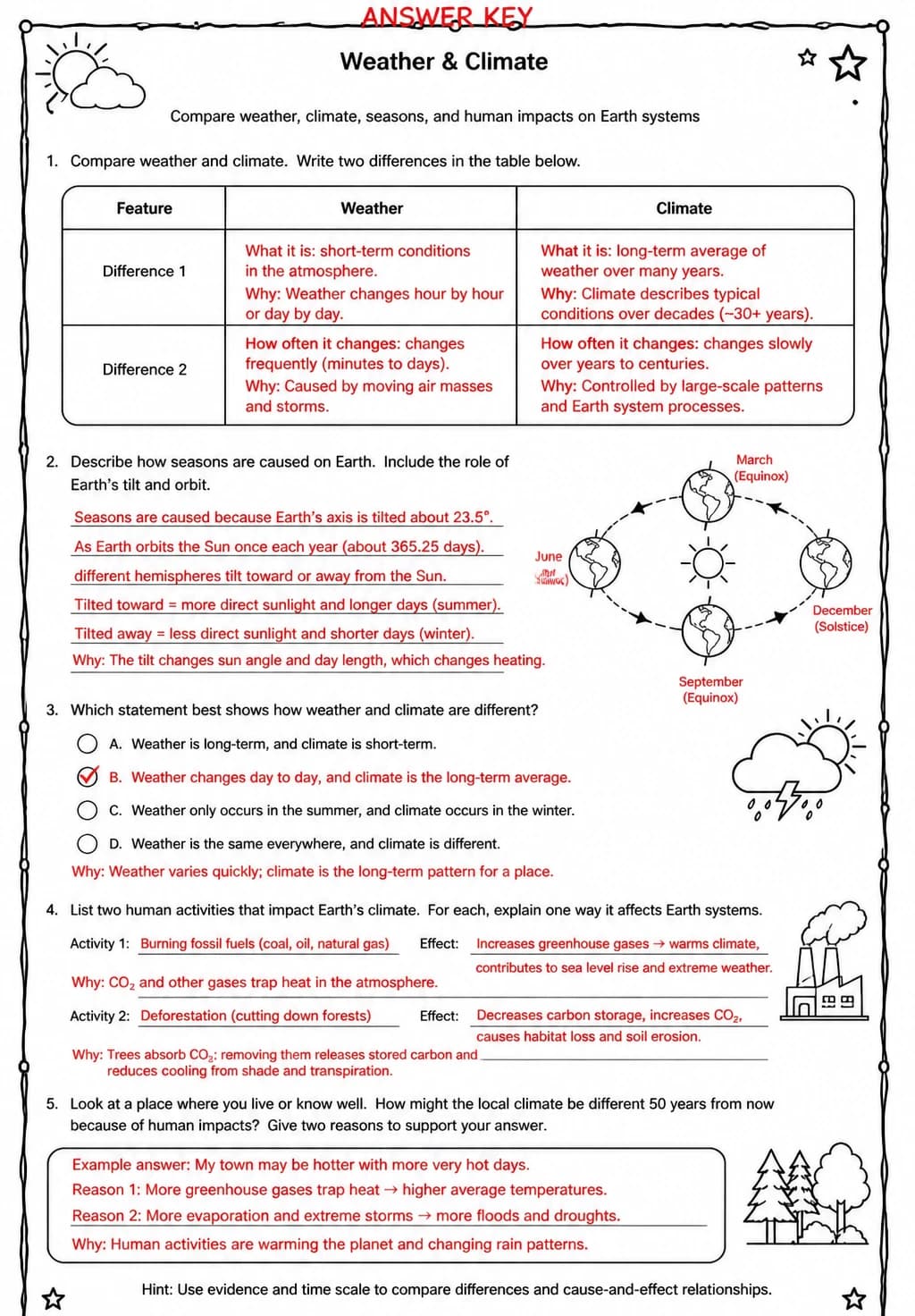
Answer Key
How to use this worksheet
- Click “Download Worksheet” and sign in with Google or email to get the PDF instantly.
- Print at home or in class for High School; it's no-prep, with no extra materials needed.
- Use the included answer key to mark it in seconds.
Frequently asked questions
Is the “Compare weather, climate, seasons, and human impacts on Earth systems” worksheet free?
Yes. “Compare weather, climate, seasons, and human impacts on Earth systems” is a free printable Science worksheet. Sign in with Google or email to download the PDF instantly.
What grade or age is this Science worksheet for?
It's designed for High School (ages 14–18), covering Weather & Climate.
Does it come with an answer key?
Yes — a matching answer key is included so you can grade it in seconds.
Create more worksheets in our Worksheet Studio
Generate fresh worksheets for any grade, topic, and language — free.
Open the Worksheet StudioMore for High School

You might also like

Use weather observations and data patterns to describe atmospheric conditions
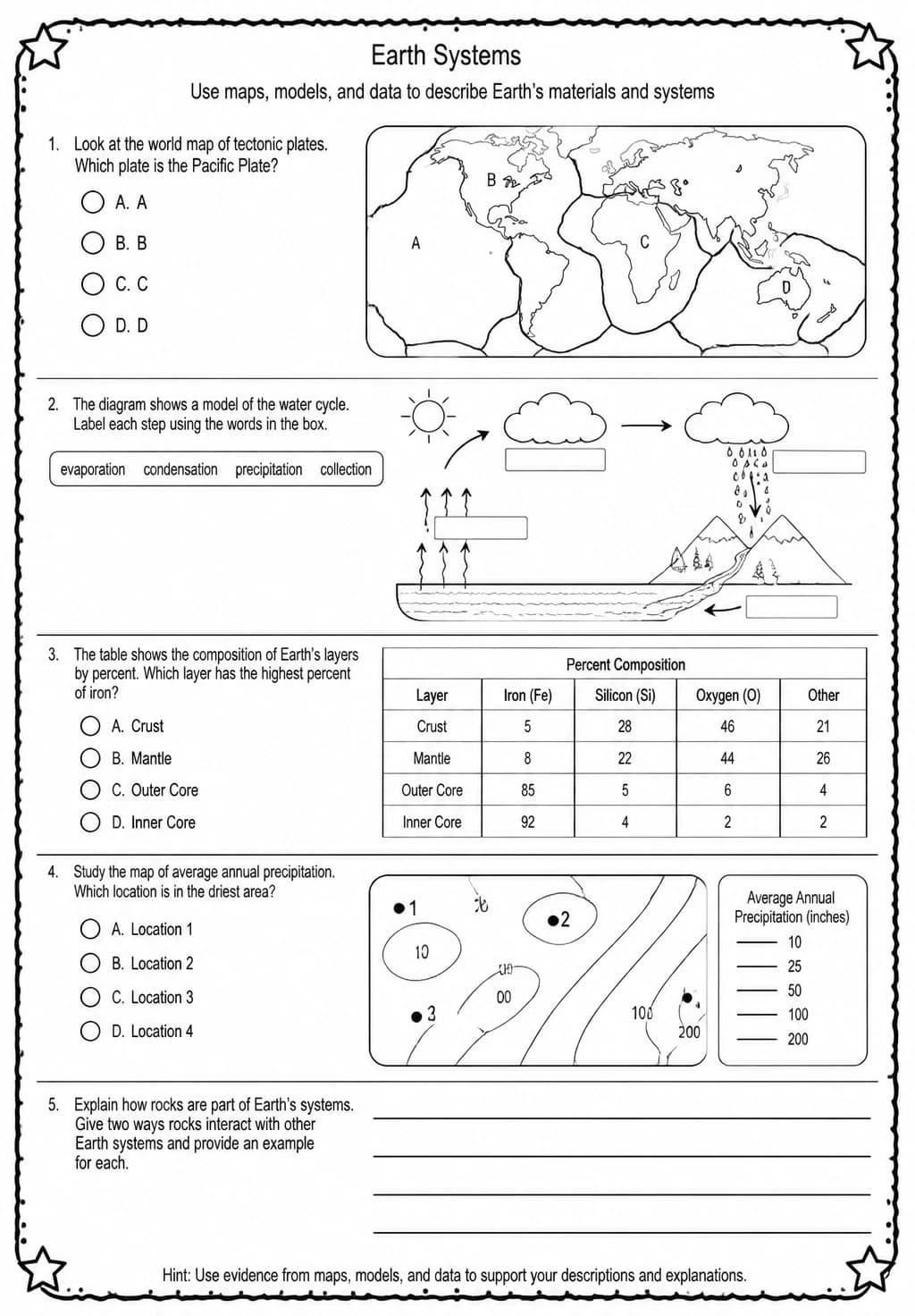
Use maps, models, and data to describe Earth's materials and systems
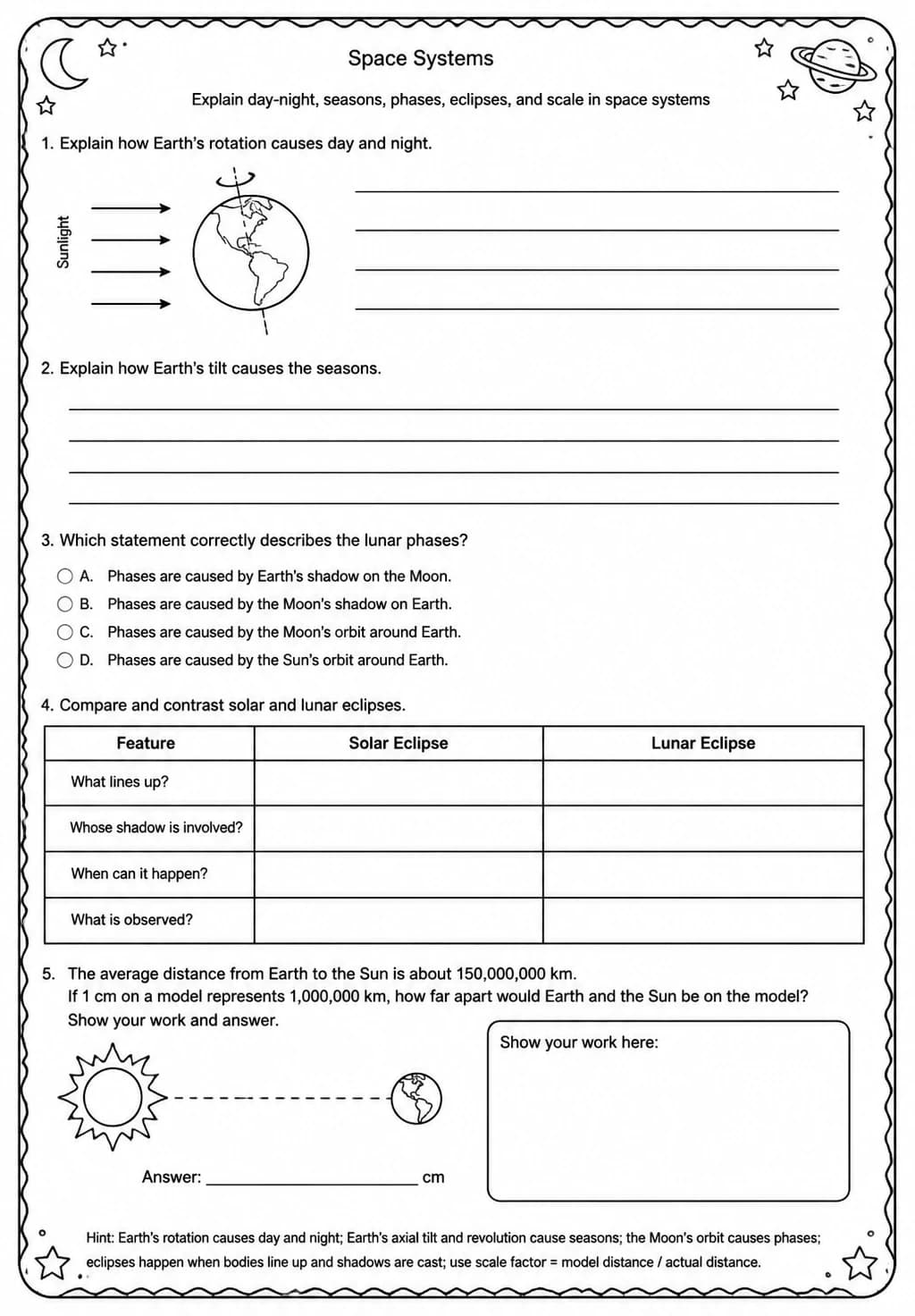
Explain day-night, seasons, phases, eclipses, and scale in space systems

Explain how rocks, landforms, water, and geologic processes change Earth's surface
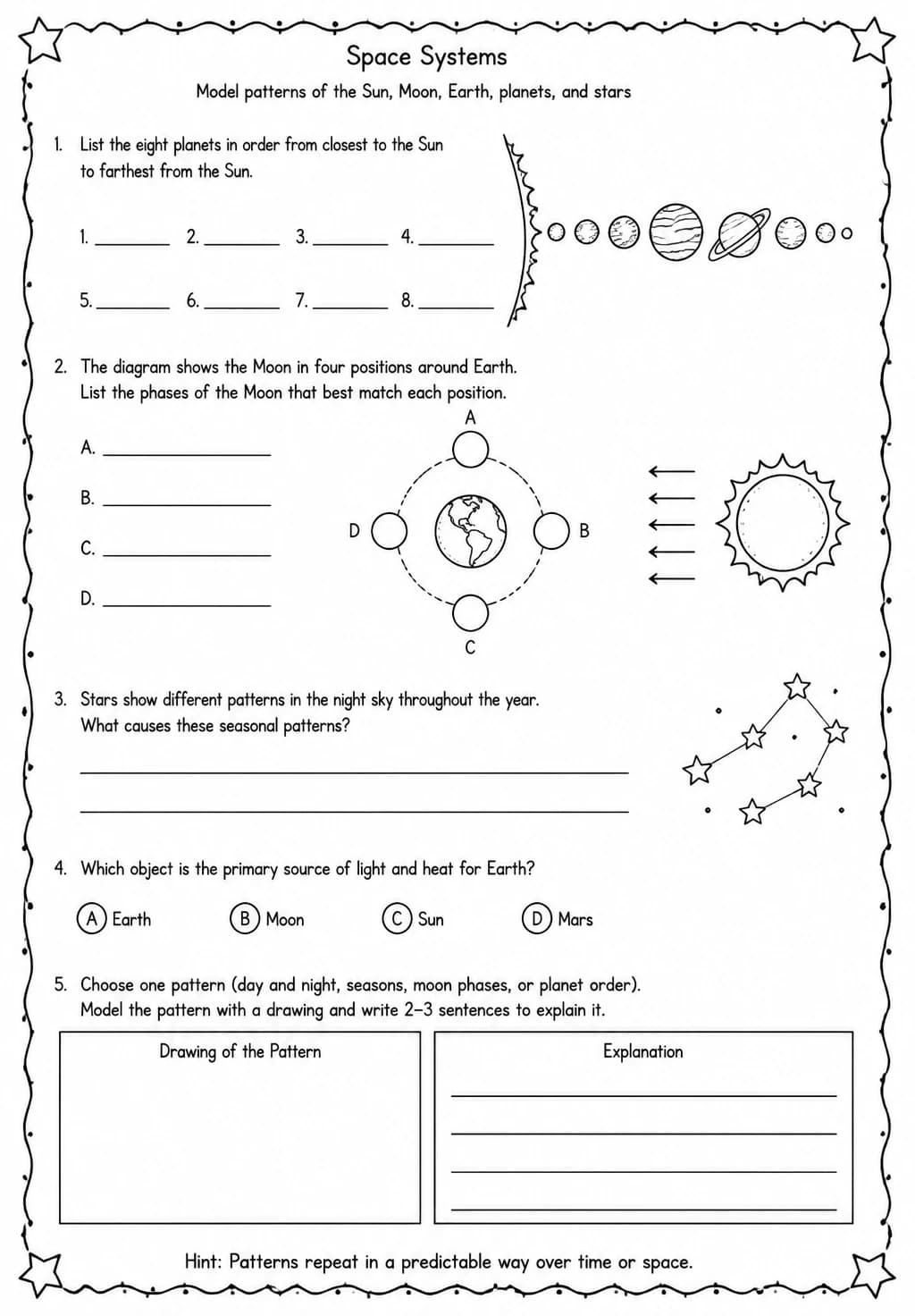
Model patterns of the Sun, Moon, Earth, planets, and stars