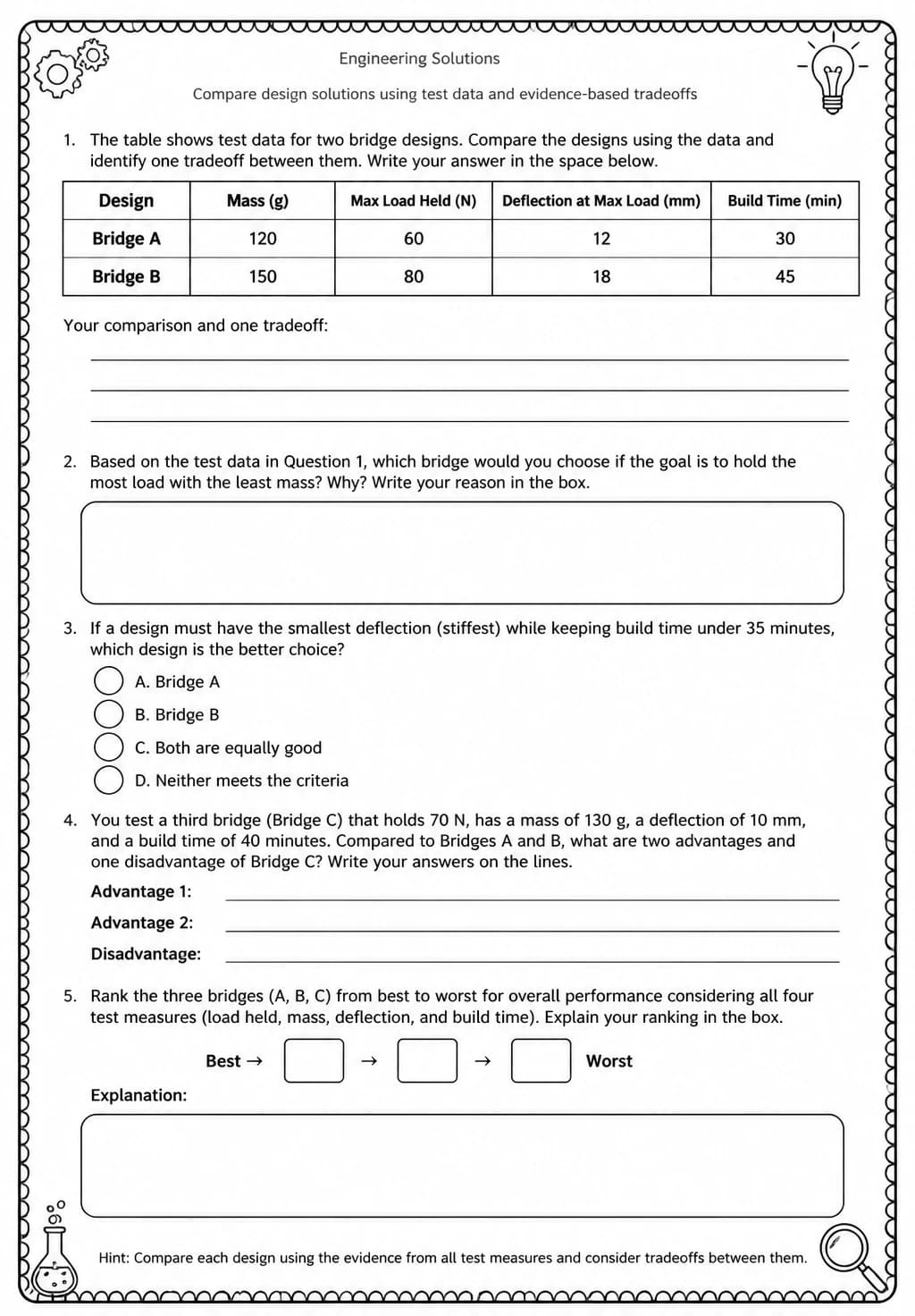
Compare design solutions using test data and evidence-based tradeoffs
Free printable Science Practices & Engineering science worksheet for "Compare design solutions using test data and evidence-based tradeoffs" — practice engineering solutions. No-prep, print or assign online.
This high-school worksheet asks students in grades 9–12 to compare engineering design solutions by analyzing test data and weighing evidence-based tradeoffs, a core skill in Engineering Solutions. Science and engineering teachers can use it to help students move from intuitive judgment to data-driven reasoning when evaluating competing designs. It fits well in project-based learning units, lab debrief sessions, or exam preparation.
Learning objectives
- Analyze test data to compare the performance of different engineering design solutions
- Identify and explain evidence-based tradeoffs between competing design approaches
- Justify a design recommendation using quantitative and qualitative evidence
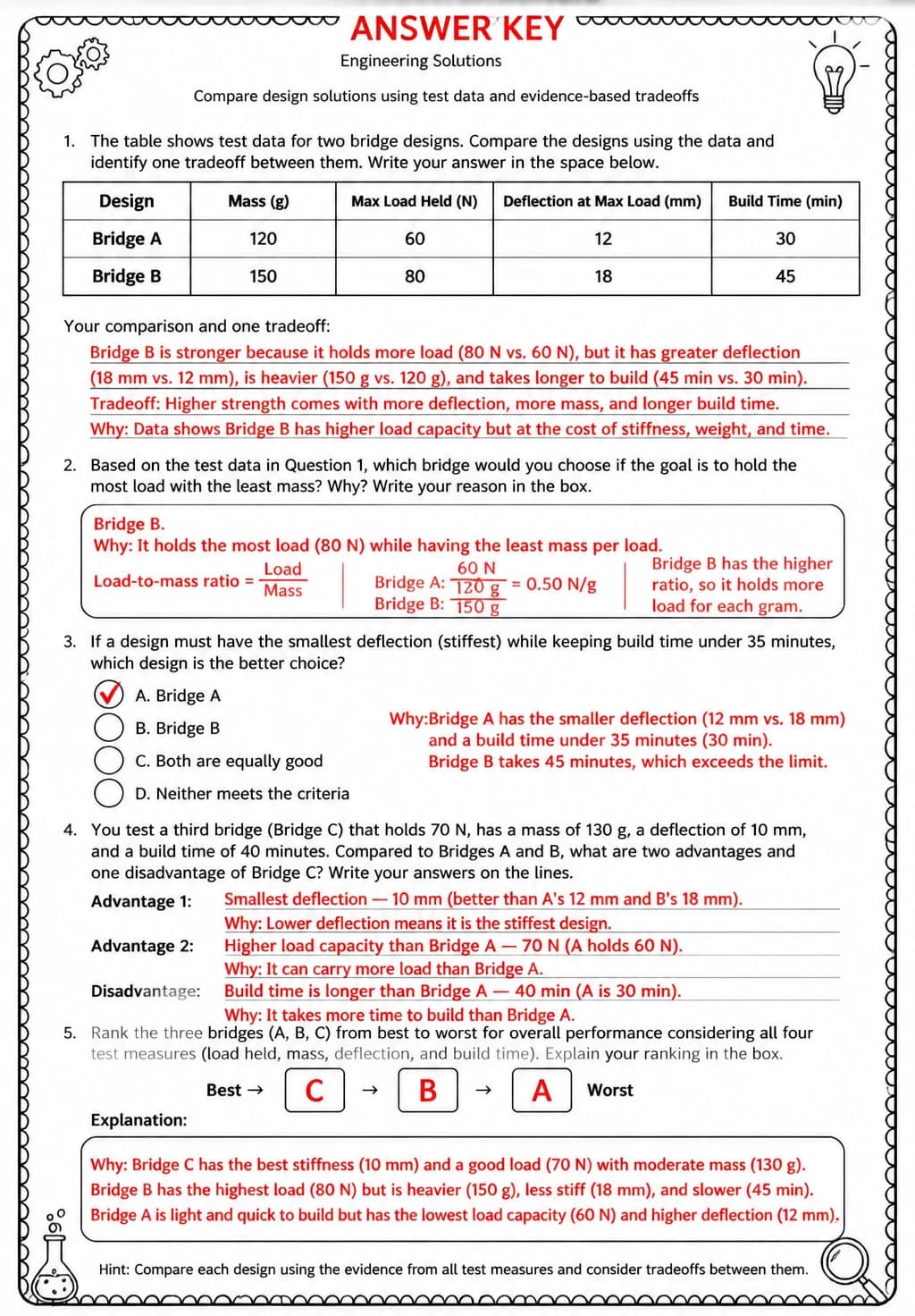
Answer Key
How to use this worksheet
- Click “Download Worksheet” and sign in with Google or email to get the PDF instantly.
- Print at home or in class for High School; it's no-prep, with no extra materials needed.
- Use the included answer key to mark it in seconds.
Frequently asked questions
Is the “Compare design solutions using test data and evidence-based tradeoffs” worksheet free?
Yes. “Compare design solutions using test data and evidence-based tradeoffs” is a free printable Science worksheet. Sign in with Google or email to download the PDF instantly.
What grade or age is this Science worksheet for?
It's designed for High School (ages 14–18), covering Engineering Solutions.
Does it come with an answer key?
Yes — a matching answer key is included so you can grade it in seconds.
Create more worksheets in our Worksheet Studio
Generate fresh worksheets for any grade, topic, and language — free.
Open the Worksheet StudioMore for High School

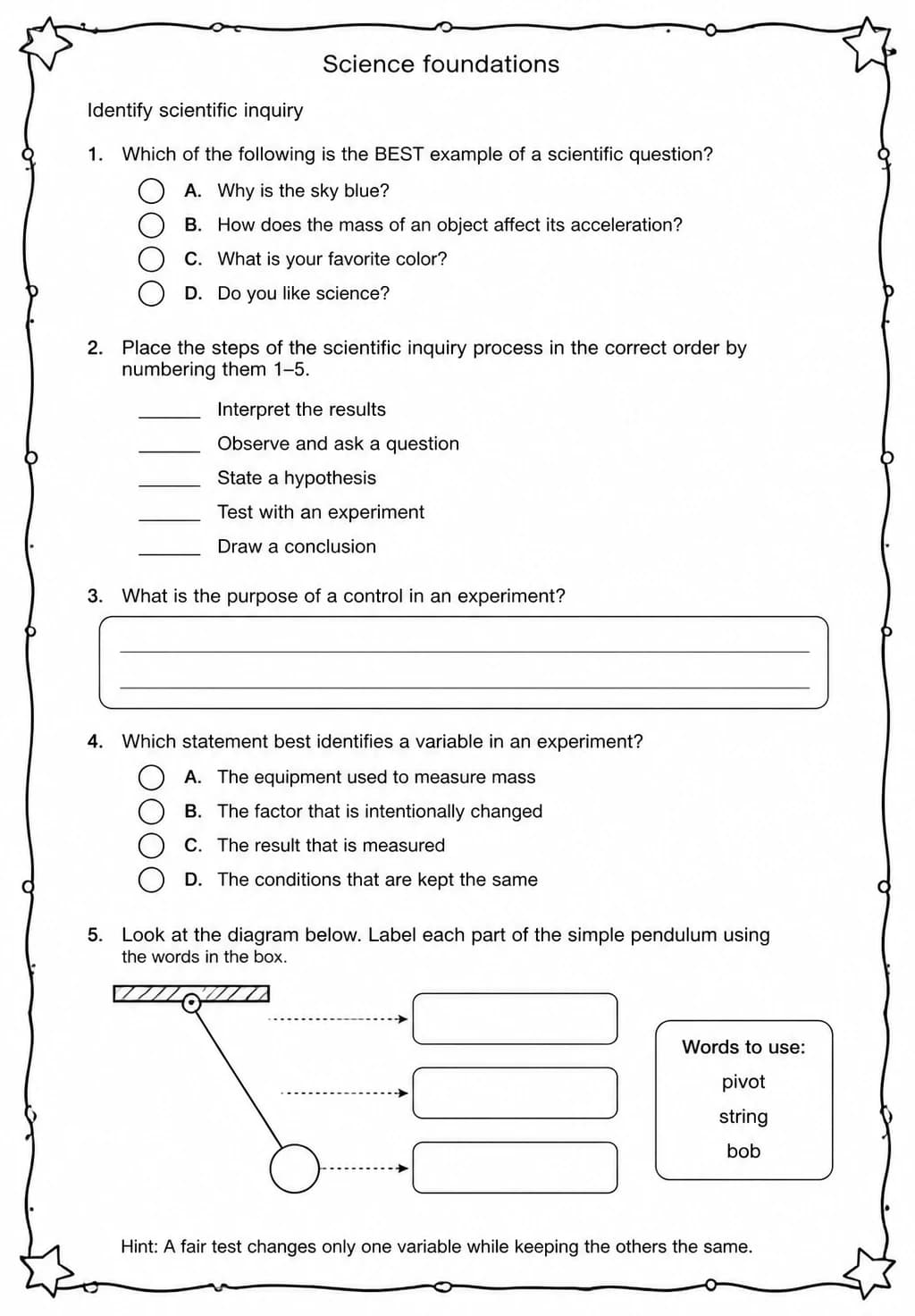
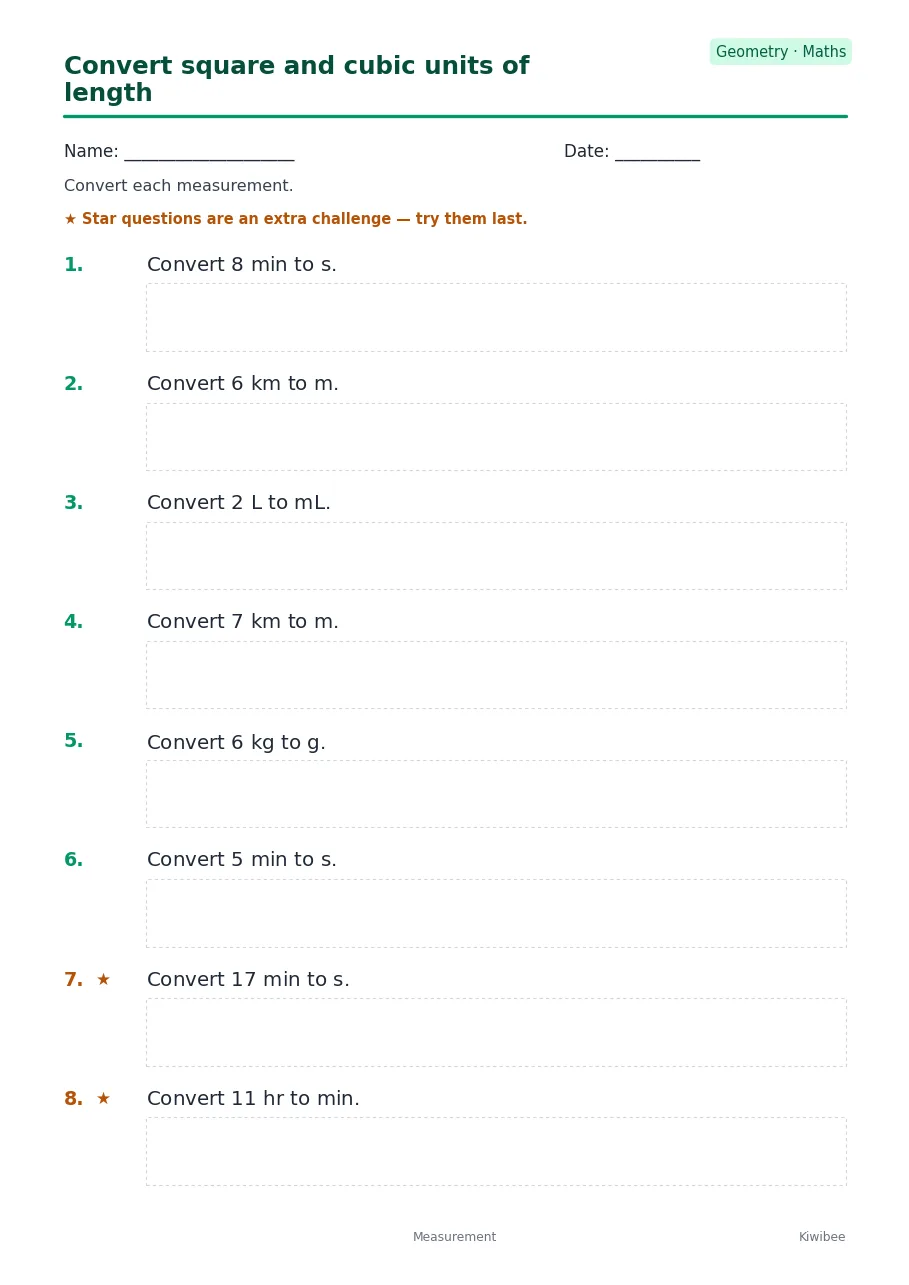
You might also like
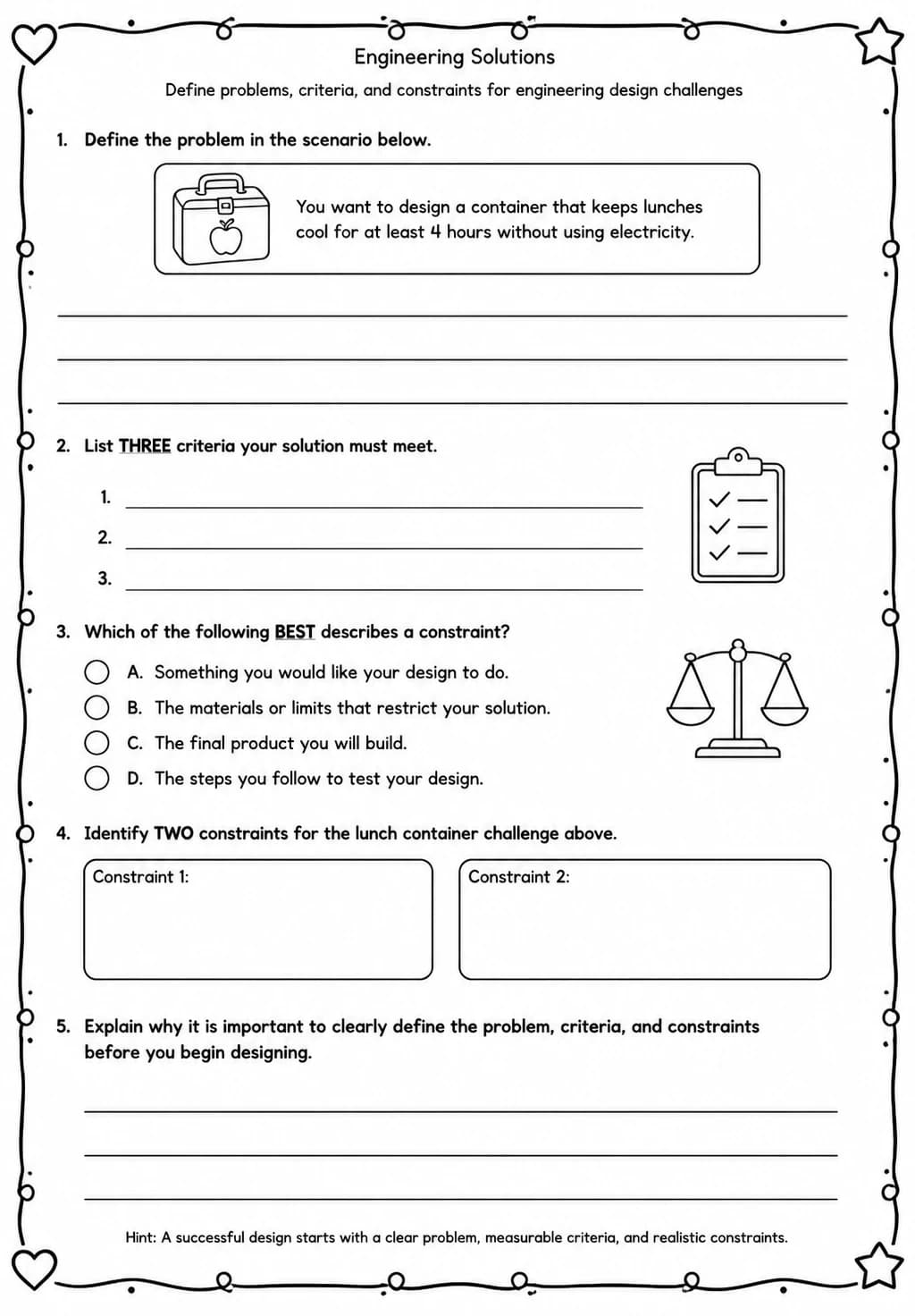
Define problems, criteria, and constraints for engineering design challenges
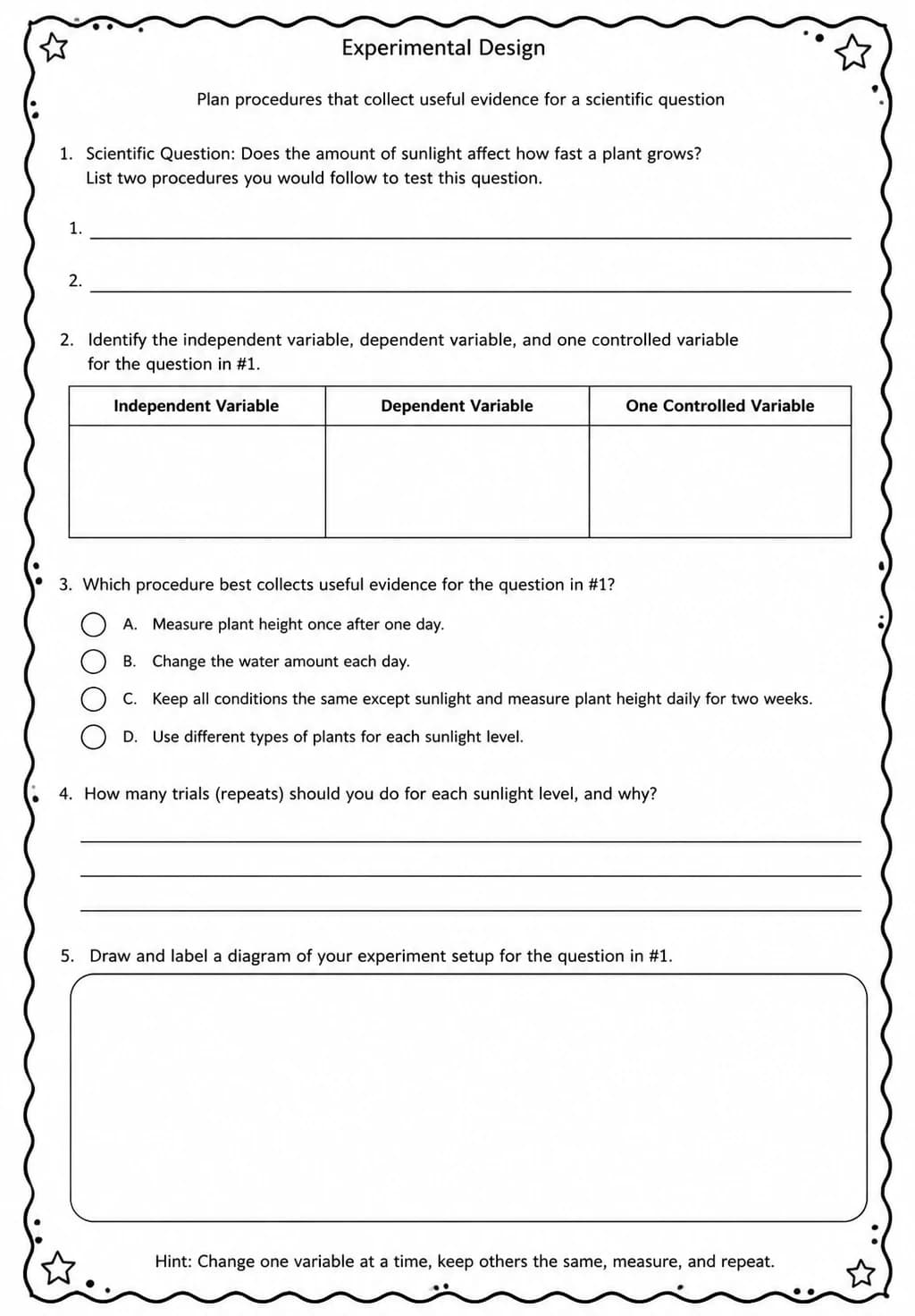
Plan procedures that collect useful evidence for a scientific question
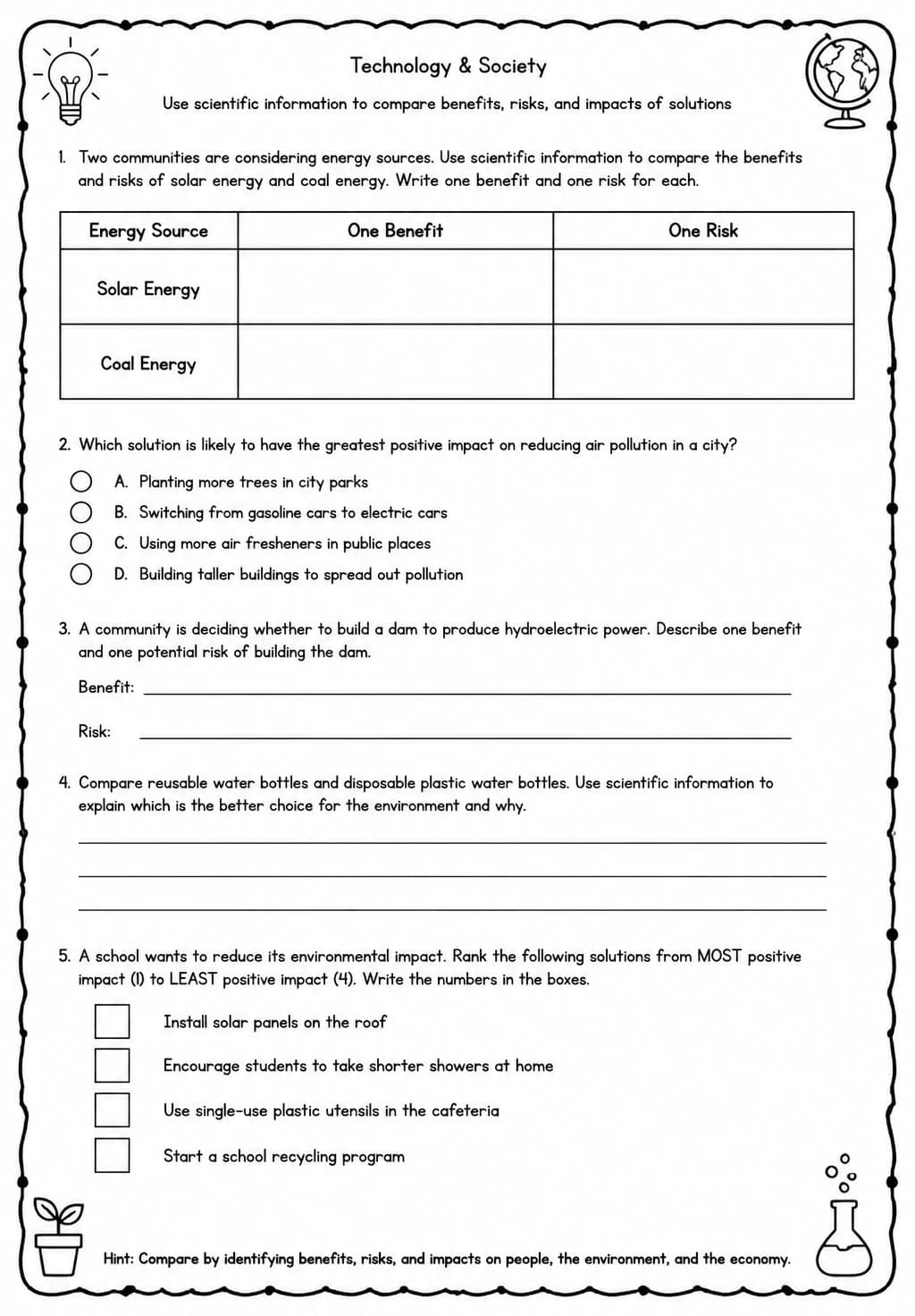
Use scientific information to compare benefits, risks, and impacts of solutions

Identify variables, controls, and fair-test conditions in investigations
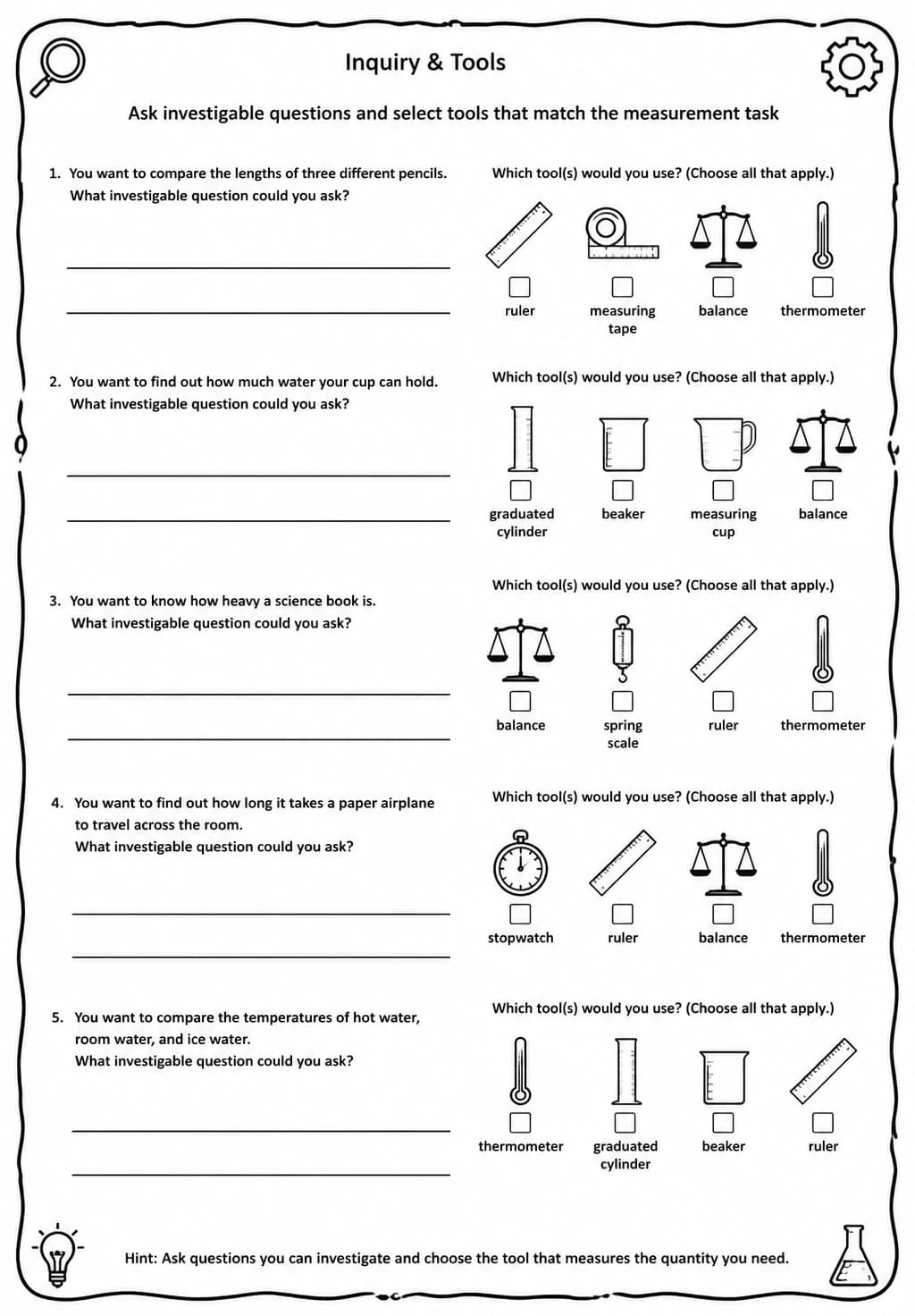
Ask investigable questions and select tools that match the measurement task