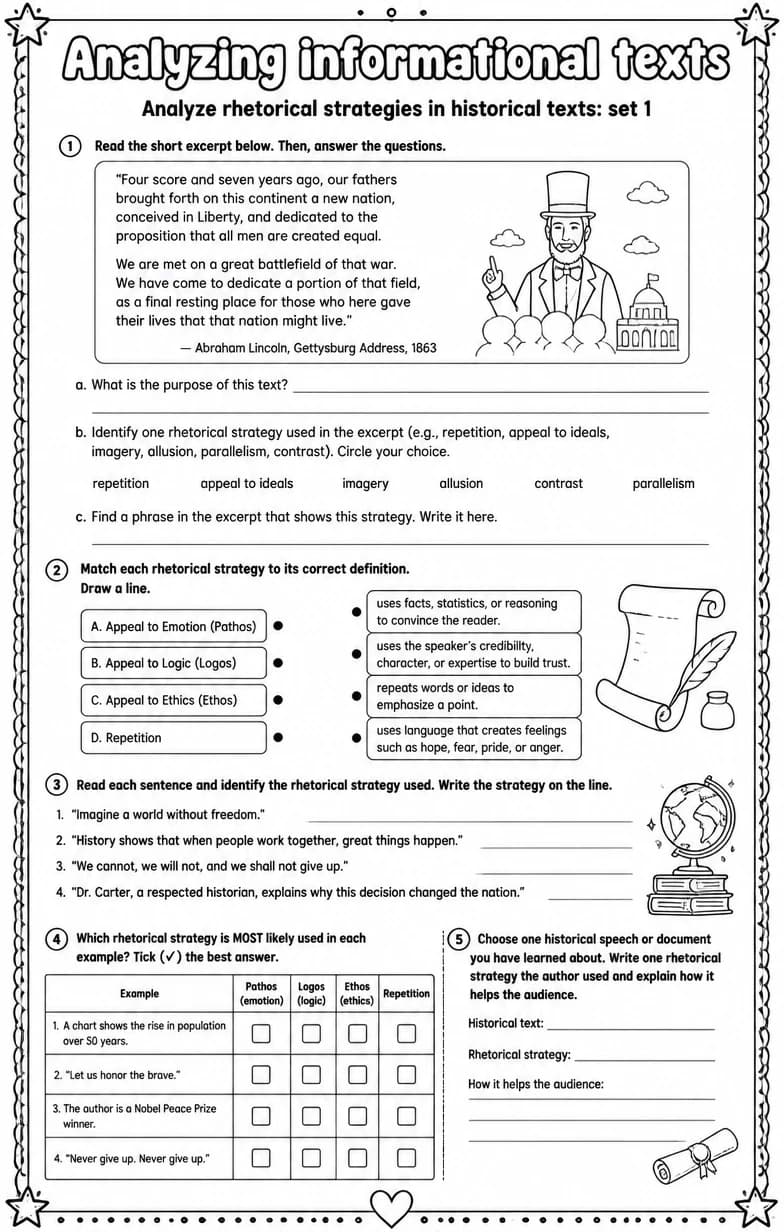
Analyze rhetorical strategies in historical texts: set 1
Free printable Grade 11 English worksheet for "Analyze rhetorical strategies in historical texts: set 1" — practice analyzing informational texts (reading strategies). No-prep, print or assign online.
This worksheet guides students through close reading and analysis of rhetorical strategies in historical informational texts. Teachers can use it to develop critical thinking and reading comprehension skills by having students dissect persuasive elements in primary sources. Ideal for high school English classes focusing on reading strategies and historical document analysis.
Learning objectives
- Identify rhetorical strategies used in historical texts to influence audiences
- Analyze the effectiveness of persuasive techniques within primary source documents
- Evaluate the impact of diction, tone, and structure on the author's argument
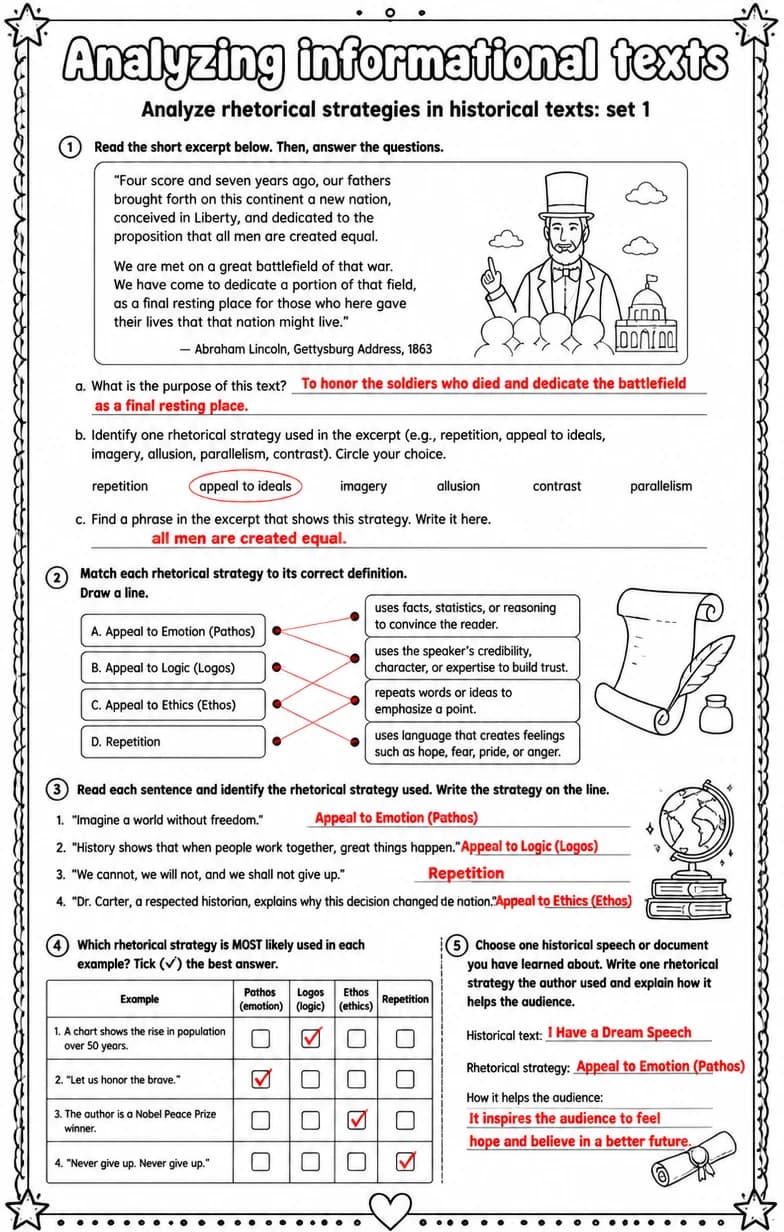
Answer Key
How to use this worksheet
- Click “Download Worksheet” and sign in with Google or email to get the PDF instantly.
- Print at home or in class for High School; it's no-prep, with no extra materials needed.
- Use the included answer key to mark it in seconds.
Frequently asked questions
Is the “Analyze rhetorical strategies in historical texts: set 1” worksheet free?
Yes. “Analyze rhetorical strategies in historical texts: set 1” is a free printable English & Reading worksheet. Sign in with Google or email to download the PDF instantly.
What grade or age is this English & Reading worksheet for?
It's designed for High School (ages 14–18), covering Analyzing informational texts.
Does it come with an answer key?
Yes — a matching answer key is included so you can grade it in seconds.
Create more worksheets in our Worksheet Studio
Generate fresh worksheets for any grade, topic, and language — free.
Open the Worksheet StudioMore for High School

You might also like
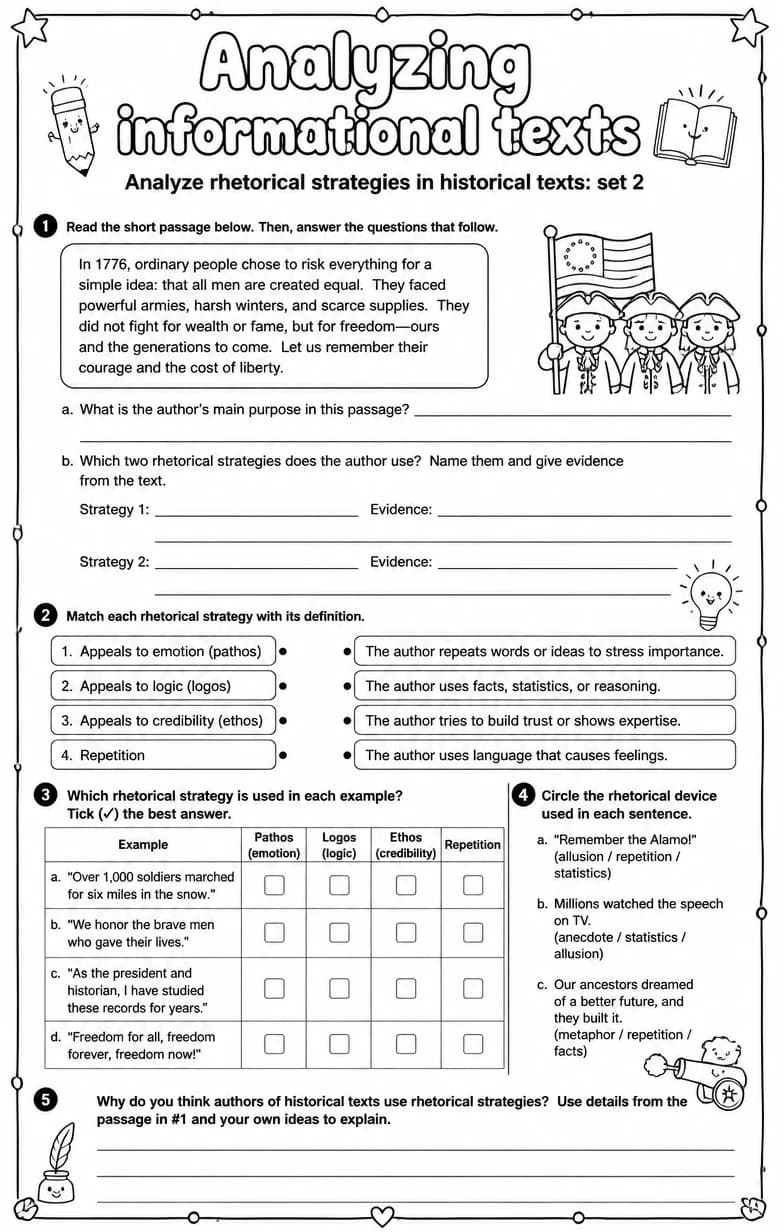
Analyze rhetorical strategies in historical texts: set 2
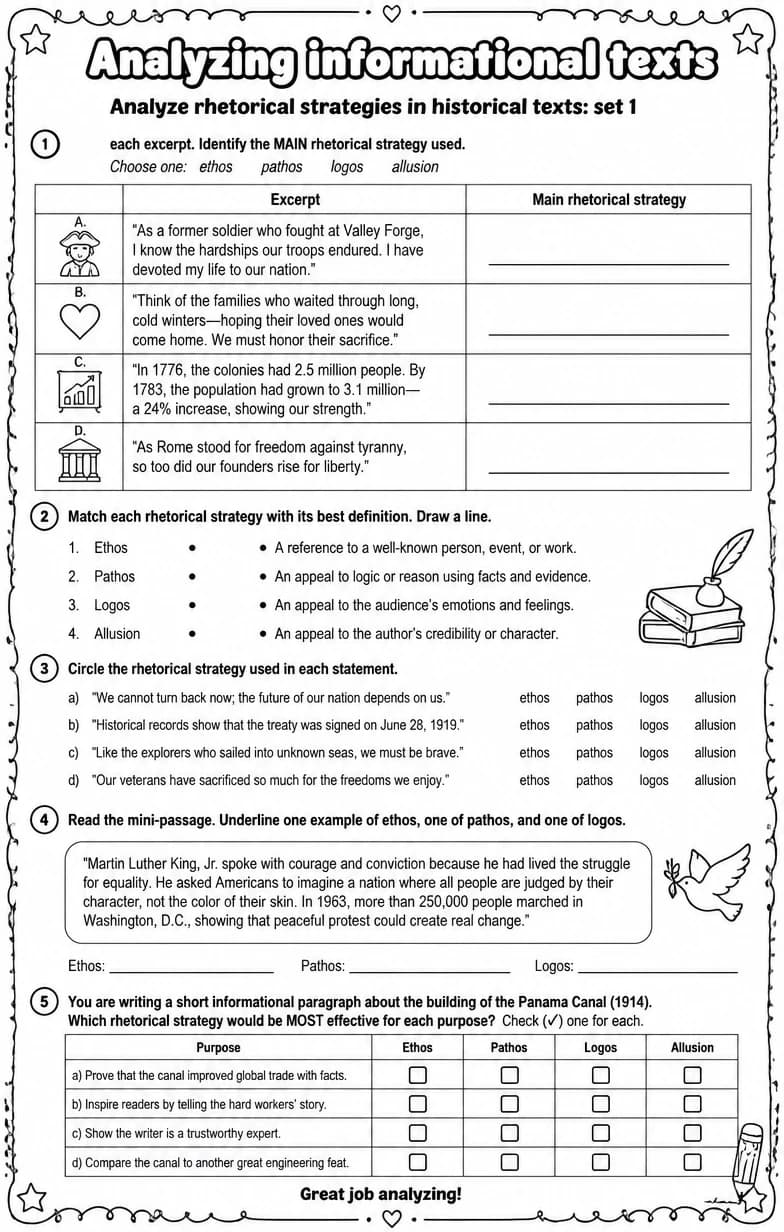
Analyze rhetorical strategies in historical texts: set 1
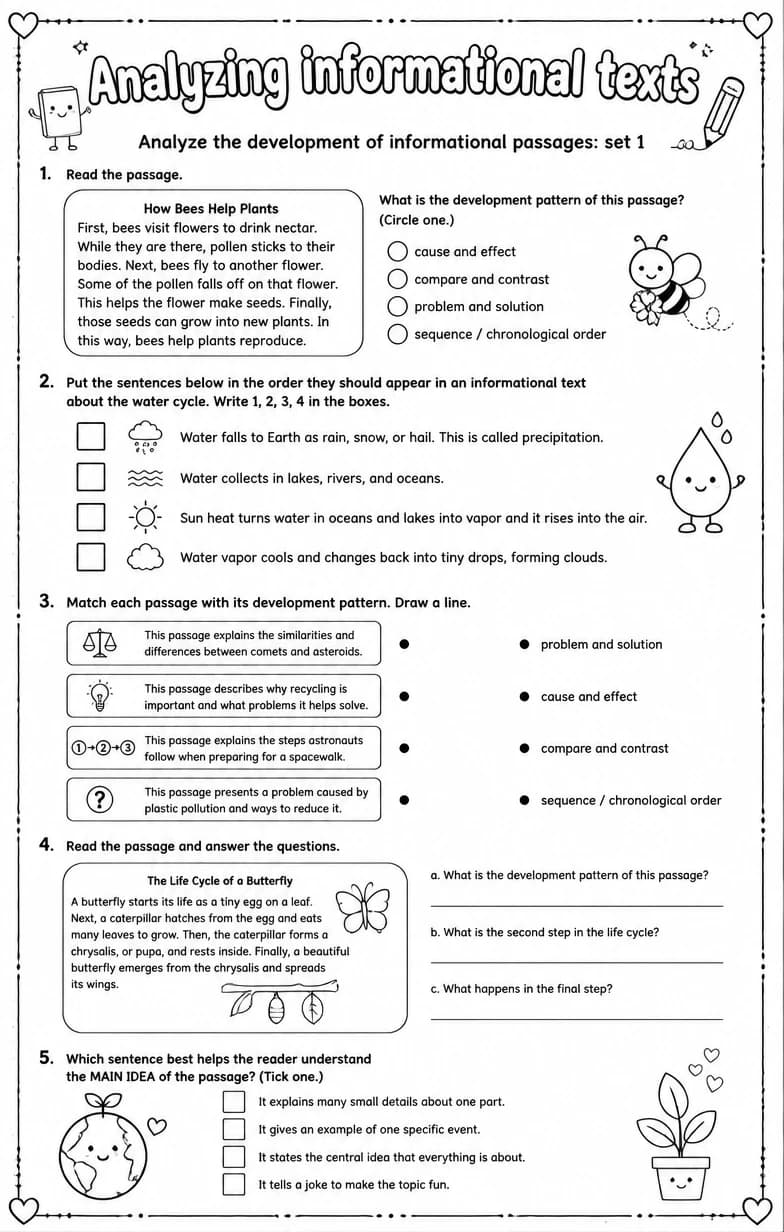
Analyze the development of informational passages: set 1
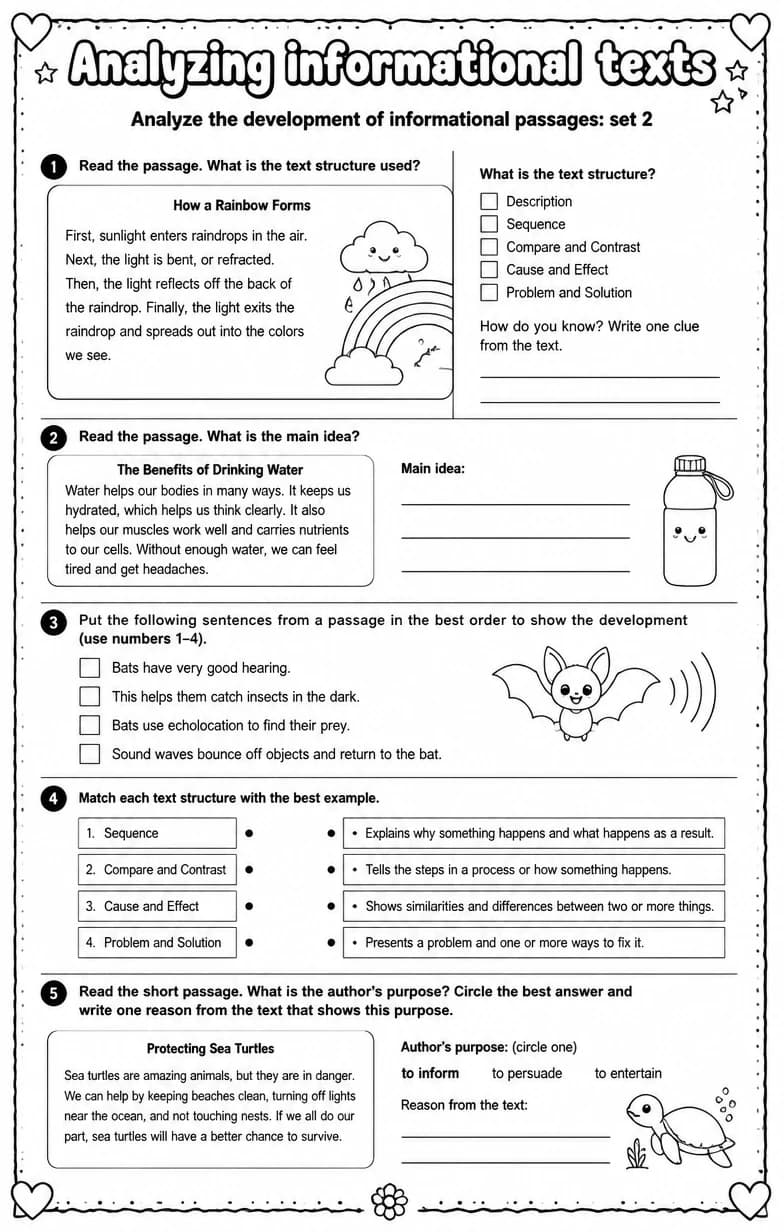
Analyze the development of informational passages: set 2
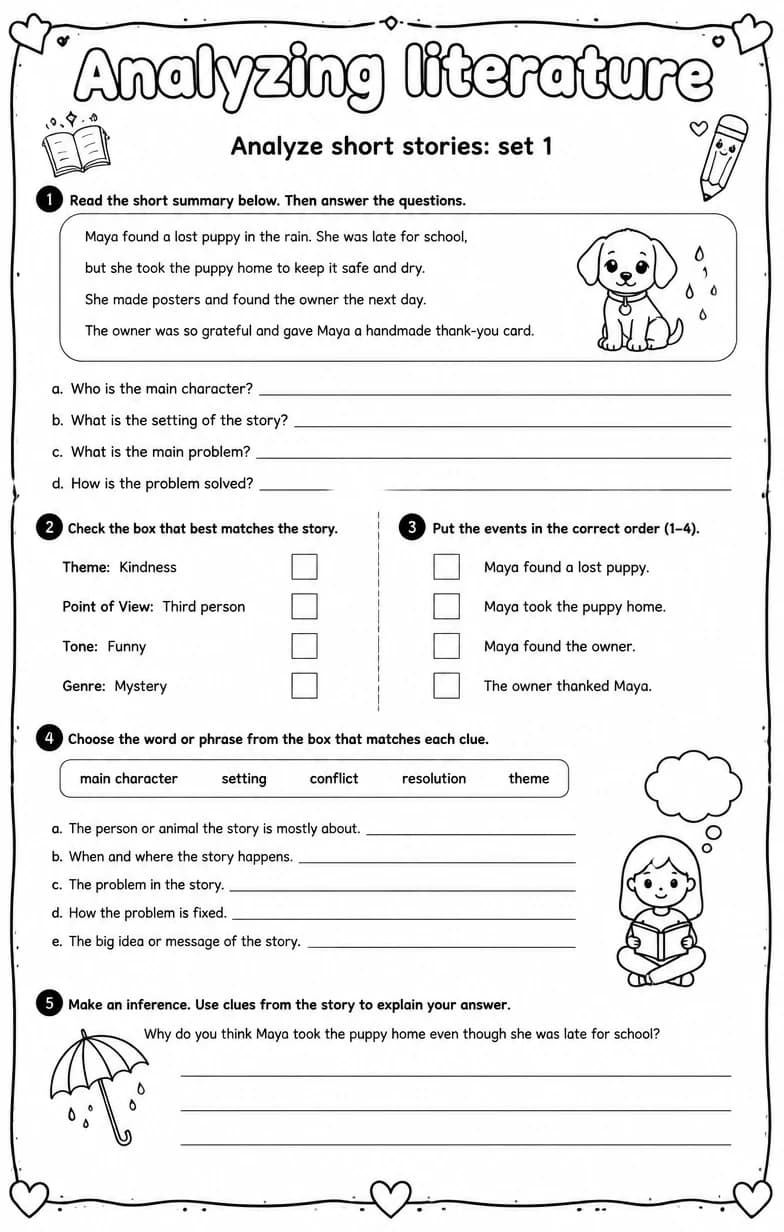
Analyze short stories: set 1